Executive Overview
Fashion has long served as a silent megaphone for social dissent. For generations, the clothes an individual wore communicated a precise ideological stance, functioning as a wearable manifesto that signaled allegiance to a countercultural movement. From the safety-pin-adorned garments of 1970s London punks to the oversized, flannel-draped frames of 1990s grunge enthusiasts, getting dressed was once an act of direct confrontation against the status quo.
Today, however, that dynamic has fundamentally fractured. In an era defined by hyper-capitalism, algorithmic curation, and an unprecedented abundance of consumer choice, what was once considered countercultural has been thoroughly absorbed into the mainstream. Visual signifiers of nonconformity—such as Dr. Martens boots, safety pins, and distressed denim—have been decoupled from their ideological roots, transitioning from badges of radicalism into standard consumer aesthetics and office attire.
This transformation raises a critical question for contemporary culture: When every fringe aesthetic is instantly commodified, trend-forecasted, and sold back to the masses on digital marketplaces, what happens to the concept of subculture?
This investigative report explores the evolution of style as an instrument of dissent, tracking its historical trajectory from twentieth-century youth movements to the algorithmic "core" aesthetics of the twenty-first century. Drawing on archival insights, cultural commentary, and contemporary shifts in avant-garde design, we examine how modern creators are rejecting neat definitions in favor of chaos, irony, and radical reinvention.
Detailed Chronology: A Century of Style-Driven Resistance
To understand how modern style became so fragmented, one must look back at the historical arc of subcultural fashion. While distinct social groups have always existed, the twentieth century formalized the relationship between youth identity, music, and clothing.
The Early Foundations: 1900s–1950s
The early decades of the twentieth century laid the groundwork for modern subcultures. The fin-de-siècle bohemians rejected Victorian rigidity in favor of loose, uncorseted silhouettes and artistic expression. As the decades progressed, political and social strife gave birth to urgent acts of sartorial defiance:
- 1920s Germany: The jazz-loving, anti-Nazi "Swing Kids" used tailored English suits, long hair, and exuberant dancing to subtly defy the regimented conformity of the Hitler Youth.
- 1930s Harlem: Zoot suiters embraced dramatic, exaggerated silhouettes—long coats, high-waisted pegged trousers, and wide-brimmed hats—as a bold assertion of identity and resistance against systemic marginalization.
- 1940s Europe: The anti-fascist Zazous in France adopted flamboyant, oversized clothing to mock wartime austerity measures and political repression.
- 1950s America: The post-war era witnessed the birth of the modern teenager, accompanied by the minimalist, existentialist black-clad uniform of the beatniks and the leather-jacketed rock-and-roll rebel.
The Countercultural Explosions: 1960s–1980s
The 1960s introduced the countercultural hippie movement, characterized by floral prints, fringe, and a rejection of corporate consumerism. However, the subsequent decade brought a violent aesthetic correction.
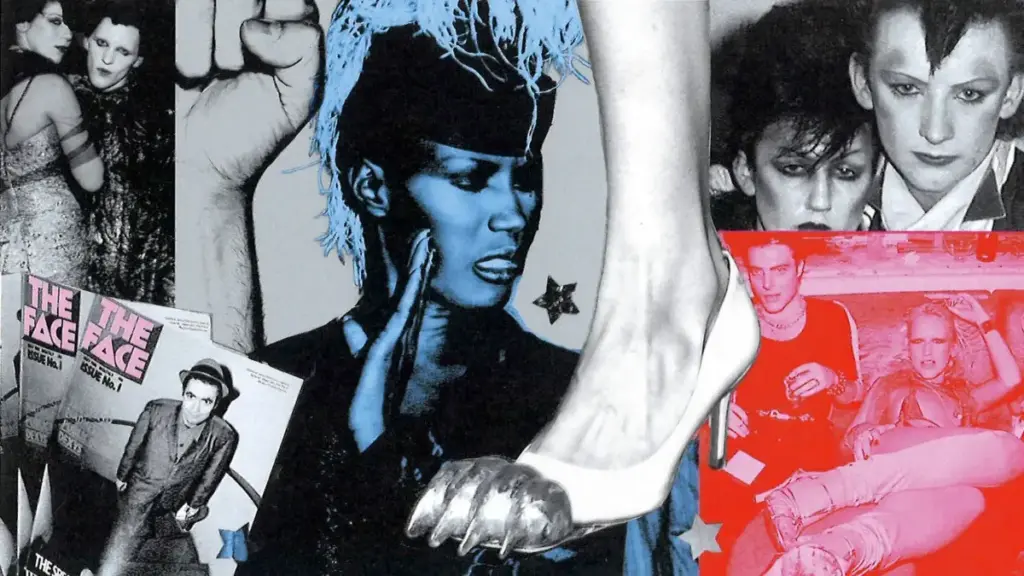
In the 1970s, punk rock emerged as a visceral reaction to economic decay and social disillusionment. Bud Thomas, library supervisor and operations manager at the University of Southern California’s ONE Archives, grew up in suburban Virginia during this era. Lacking local access to imported British fashion magazines like The Face or i-D, and unable to purchase leather trousers locally, Thomas engineered his own. Taking a sewing machine, zippers, and D-rings to old denim, he crafted garments à la Vivienne Westwood.
"When the reality you’re living in is so horrible, you have to go into your own head and create your own," Thomas reflects, highlighting how strife fuels ingenuity. "It’s that homespun kind of thing, because where else can you go?"
The 1980s accelerated this fragmentation. The decade bore witness to Blitz Kids, goths, New Romantics, and yuppies. Furthermore, the 1981 launch of MTV established a global conduit for alternative music and fashion, allowing fringe aesthetics to transcend geographic boundaries with unprecedented speed.
The Digital Fragmentation: 1990s–Present
By the 1990s, alternative styles had solidified into recognizable cultural markers, ranging from grunge and mall goths to what Thomas describes as "JCPenney punks." Entering the twenty-first century, the advent of high-speed internet birthed emos, scenesters, and analog hipsters.
Today, this evolution has culminated in a digital landscape where aesthetic micro-trends emerge and dissolve in a matter of weeks, driven by data analytics, e-commerce livestreams on Whatnot, international proxy-buying sites like Mercari, and peer-to-peer closet sales.
Supporting Context & Metrics: The Commodification of Dissent
The shift from underground subculture to mainstream aesthetic is not merely a stylistic evolution; it represents a fundamental restructuring of how culture is consumed.
In past decades, acquiring a subcultural look required geographic migration, membership in a local community, or extensive resourcefulness. Goths and New Romantics spent hours combing thrift stores for Edwardian tunics or military surplus. Late-2000s hipsters sought out outdated technologies to project authenticity.
Today, however, the digital economy has streamlined this process. According to market research and trend analysis firms such as WGSN, the rise of "core" aesthetics—ranging from cottagecore to gothcore—has transformed complex social movements into digestible, easily searchable online categories.
The Dilution of the Symbol
When items associated with rebellion become universally accessible, their symbolic weight shifts. Consider the trajectory of key items:
- Safety Pins: Initially utilitarian tools used to mend torn working-class clothing, safety pins were adopted by punks as decorative hardware before becoming globally recognized symbols of anti-establishment sentiment. Today, they are standard motifs in mass-market fashion lines.
- Dr. Martens: In the 1990s, these durable boots served as a distinct community signal within lesbian and alternative circles. Today, they are ubiquitous office-and-casual attire, stripped of their countercultural friction.
- Thrifting and Upcycling: What was once a survival strategy for impoverished youth or an explicit rejection of fast fashion has transformed into a mainstream, middle-class leisure activity.
As these elements are absorbed into the corporate business model, the traditional framework of subculture breaks down. The friction that once defined nonconformity has been smoothed away by convenience.
Official Statements & Industry Perspectives
Cultural archivists, designers, and theorists are actively grappling with what it means to dress rebelliously in a world where rebellion itself is packaged and sold.
Bud Thomas distills the psychological core of dressing against the grain into a simple question:
"How do you say ‘fck you’ without saying ‘fck you’? Wardrobe and costume are part of that."
However, Thomas acknowledges that the proliferation of online moodboards and hyperspecific niche aesthetics has created a vacuum. When aesthetic elements are divorced from their historical and political contexts, they are reduced to flat images on a screen.
In response to this hyper-curated, algorithmic conformity, a new wave of avant-garde creators is pushing back through irony, chaos, and a deliberate refusal to make logical sense:
- The Women’s History Museum (New York): This collective reimagines clothing as found objects and found objects as clothing, crafting tactile pieces featuring claw-footed pumps and salvaged armor made from coins.
- Dollar Store Couture: Transforming 99-cent-store finds into garments that are charmingly grotesque, this project subverts the luxury fashion pipeline entirely.
- CFGNY: Self-described as a "vaguely Asian" art collective, CFGNY uses garments to question the mechanics of industrial production and the societal implications of being perceived as "other."
- Independent British Designers: Creators like Matty Bovan and John Alexander Skelton utilize anachronistic amalgams of historic and modern textiles to revive the raw, scrappy ingenuity of past decades.
Thomas views these contemporary efforts as vital counterweights to algorithmic uniformity. "It’s turning things sideways. It’s looking at things backwards," he notes, praising creators who recontextualize mainstream tropes until they transform into something entirely alien. "Not the absence, but the excess and pushing the boundaries of all of it."
Future Outlook: The Playlist Era of Style
As we look toward the future of fashion and identity, the rigid boundaries that once separated musical genres, social groups, and dress codes have dissolved. We now live in a "playlist culture," where individuals curate their daily presentation the same way they curate a digital music queue—shuffling high and low references, eras, and subcultures without hesitation.
Today’s youth feel zero obligation to adhere to a singular, uniform aesthetic. It is entirely common to witness a Brooklyn electronic music fan wearing a 100-year-old Victorian nightgown alongside modern rave gear, or corporate-ready flats paired with a DIY, deconstructed outfit.
This decentralized approach to dressing signals a return to individual imagination. Rather than purchasing a pre-packaged identity from a corporate retailer, a growing segment of the population is rediscovering the satisfaction of scavenging flea markets, organizing clothing swaps, and personalizing garments by hand.
The enduring lesson of subcultural history is that the uniform of rebellion has never been fixed, and it never will be. As long as institutions attempt to codify and commodify human expression, individuals will find new, chaotic ways to subvert expectations. Ultimately, the future of style belongs not to the algorithm, but to the wearer—because in modern fashion, the wearer is the look.