Executive Overview
For something so fundamental to human survival, sleep has become a remarkably complex and commercialized domain. Modern society has engineered a multi-billion-dollar sleep-optimization industry dedicated to manufacturing rest through artificial means. Consumers now navigate a labyrinth of algorithmic trackers, blackout blinds, specialized circadian lighting systems, and AI-calibrated mattresses designed to engineer the perfect night’s slumber.
Yet, for all this technological innovation, sleep metrics continue to plummet. According to data from the Centers for Disease Control and Prevention (CDC), roughly one in three adults in the United States routinely report insufficient sleep, giving rise to an epidemic of chronic fatigue and burnout.
Amidst this landscape of high-tech interventions, the most scientifically potent and enduring sleep reset requires a radical technological subtraction rather than an addition. It relies on a practice as old as humanity itself: stepping outside and sleeping under canvas.
This comprehensive investigation explores the intersection of sleep science, evolutionary biology, and high-end experiential travel. By examining the physiological mechanisms that govern our internal clocks—and exploring the luxury tented retreats from Wyoming to Andalusia that are capitalizing on this paradigm shift—we analyze how the permeable boundary of the canvas tent offers a transformative antidote to modern exhaustion.

Detailed Chronology: The Evolution of Circadian Science and Outdoor Immersion
To understand why a night spent in a tent yields restorative effects that elude even the most luxurious five-star hotel rooms, one must examine the chronological milestones of modern chronobiology.
The Indoor Experiment of the 20th Century
For millennia, human sleep architecture was fundamentally synchronized with the rotation of the Earth. The transition from active daylight to absolute darkness dictated the metabolic and hormonal rhythms of our species. However, the rapid industrialization of the 20th century violently decoupled humanity from these natural environmental cues.
By the early 2000s, epidemiological data made it clear that humanity had retreated indoors, with contemporary adults now spending upwards of 90 percent of their lives enclosed within artificial structures. This indoor confinement exposed humans to two major disruptors: the near-total absence of dynamic natural sunlight during waking hours, and the pervasive, low-level glow of electrical lighting and digital screens long after sunset.
The Wright Landmark Study (2013)
A pivotal turning point in sleep science occurred when researchers began quantifying the biological cost of this indoor lifestyle. In a landmark study led by Dr. Kenneth Wright at the University of Colorado Boulder, scientists sought to discover what happens when human subjects are stripped of artificial lighting and exposed solely to natural solar cycles.

The methodology was deceptively simple: participants spent a summer weekend camping in the Rocky Mountains, relying exclusively on natural sunlight by day and campfire light by night. The results, published in Current Biology, were definitive. Dr. Wright’s team demonstrated that even a brief, weekend-long period of camping without artificial light completely reset the human circadian clock. Participants’ internal biological timing shifted back into precise alignment with the natural day-night cycle, proving that the human body possesses a rapid, highly responsive capacity to recalibrate when given the right environmental inputs.
The Modern Luxury Tented Movement (Present Day)
As the scientific community continued to validate the profound health benefits of nature immersion—popularized by researchers and authors like Florence Williams through concepts such as "nature pacing" and "awe dosing"—the travel industry began to pivot.
The rough, damp, and uncomfortable camping trips of the mid-20th century evolved into sophisticated, conservation-led luxury tented camps. Today, high-end operators across five continents have elevated the canvas tent from a survival tool to a therapeutic medium. By blending high-end hospitality with raw ecological immersion, these properties are bridging the gap between clinical sleep science and accessible, restorative travel.
Supporting Context & Metrics: The Physiology of Canvas
What makes sleeping under canvas biologically distinct from simply spending time outdoors, or sleeping in a standard brick-and-mortar hotel room? The answer lies in the concept of permeability.

A traditional building acts as a hard barrier against the natural world, sealing occupants away from environmental fluctuations. A tent, by contrast, creates a threshold rather than a wall. It filters the environment without fully shutting it out, creating a unique micro-ecosystem that actively supports deep, restorative sleep.
1. Melatonin Phase-Advancing
The primary pacemaker of the human circadian rhythm is the suprachiasmatic nucleus (SCN) in the brain, which responds dynamically to the blue wavelengths of natural sunlight. When individuals are confined to offices and homes lit by electrical lighting, the onset of melatonin—the hormone responsible for signaling sleepiness—is artificially delayed.
When exposed to the natural lighting dynamics of a tented environment, however, the body undergoes a biological phase advance. Melatonin secretion begins roughly two hours earlier compared to typical indoor environments.
2. Behavioral and Environmental Elimination
Beyond light exposure, canvas-enclosed living spaces eliminate a cascade of modern sleep disruptors:

- Acoustic Softening: While city dwellers are subjected to erratic traffic, sirens, and humming HVAC units, campers are enveloped in continuous natural white noise, such as the steady rush of a snow-melt creek or the rustle of wind through acacia trees. This ambient acoustic blanket masks sudden jarring noises that disrupt sleep cycles.
- Air Quality and Respiration: Enclosed, recycled indoor air often carries elevated carbon dioxide levels and chemical off-gassing from building materials and carpets. Tented environments offer continuous, fresh airflow, leading to deeper, less disrupted breathing throughout the night.
- Digital Detoxification: The absence of reliable Wi-Fi signals and cellular service inside remote tented camps removes the habitual compulsion for late-night digital scrolling. By eliminating blue-light exposure and psychological stimulation from devices, the nervous system is permitted to settle into a parasympathetic state.
Official Statements and Expert Analysis
Leading voices in sleep medicine and environmental psychology emphasize that the restorative power of sleeping under canvas is rooted in our evolutionary wiring.
"Our fundamental ability to know when we should fall asleep or wake up is tied to the pattern of the sun. When comparing individuals in their typical modern environments under electrical lighting compared to a typical day camping, researchers found that melatonin secreted approximately two hours earlier in the camping environment when participants were more in-tune with the natural light-dark cycles."
— Dr. Rebecca Robbins, Sleep Scientist at Brigham and Women’s Hospital and Assistant Professor at Harvard Medical School.
Dr. Robbins highlights that modern humanity’s departure from natural light curves has systematically pushed sleep timing later into the night, resulting in chronic sleep deprivation.
This perspective is echoed by environmental journalist and author Florence Williams, whose work investigates the intersection of nature and human health.

"There’s a thinner boundary between you and the natural world when sleeping under canvas. People typically go to bed about an hour earlier when they’re camping, and that’s important because we tend to get our deepest sleep and our best rest in the early parts of the night."
— Florence Williams, author of The Nature Fix: Why Nature Makes Us Happier, Healthier, and More Creative.
Williams also points to the psychological dimension of outdoor immersion—specifically the phenomenon of "awe dosing." Moments of contemplating an expansive, star-filled night sky or watching the sun sink below an unblemished horizon have been clinically proven to lower circulating cortisol levels, soothe the amygdala, and cultivate a psychological state conducive to profound rest.
Global Case Studies: Canvas-Cocooned Retreats Redefining Bedtime
For travelers looking to translate these scientific insights into a restorative getaway, a new wave of conservation-minded, luxury tented camps offers the ultimate bedtime reset.
Paintrock Canyon Ranch (Wyoming, USA)
Nestled along the fast-moving waters of Paintrock Creek in the foothills of the Bighorn Mountains, Paintrock Canyon Ranch operates as the headquarters for Ranchlands, a family-run, conservation-led enterprise. Days here are spent riding and hiking across 80,000 acres of sandstone canyons. As night falls, guests retire to safari-style canvas tents where the primary soundtrack is the constant, soothing rush of snow-melt water—a natural white-noise machine that guarantees deep, uninterrupted sleep.

Wilderness Mara (Masai Mara, Kenya)
Situated along a wildlife-rich marsh at the base of the Oloololo Escarpment, Wilderness Mara represents the gold standard of East African safari camp design. Comprising just 12 elevated canvas suites, the camp is entirely unfenced, allowing the acoustic rhythms of the African bush—from grazing hippos to distant lion calls—to filter directly through the canvas walls. Operating within a strict anti-poaching and low-impact tourism framework, the camp provides an immersive, screen-free environment that rapidly synchronizes the human biological clock with the equatorial sun.
Andean Tented Camps (Colca Valley and Altiplano, Peru)
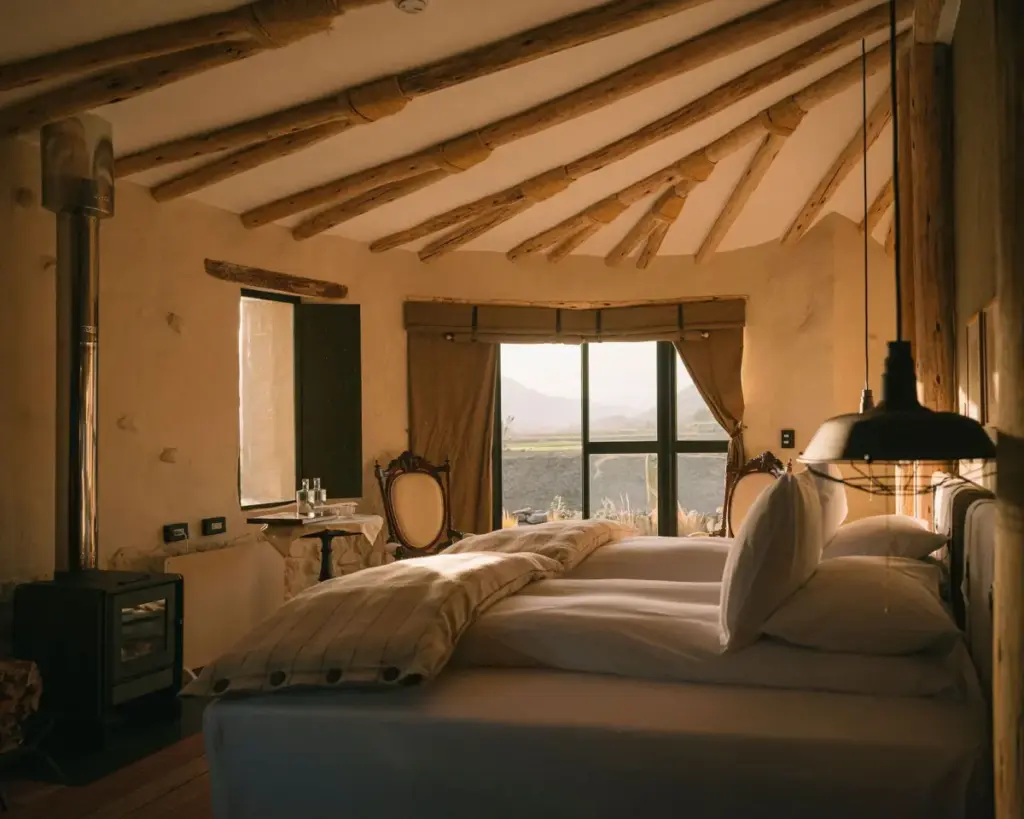
Blending contemporary expedition design with ancient landscapes, Andean operates a network of light-touch, solar-powered camps such as Puqio and Tinajani. Positioned across high-altitude valleys and volcanic grasslands, these properties utilize wood-burning stoves, natural textiles, and absolute silence to create high-altitude sanctuaries where thin air, pristine light, and profound isolation combine to deliver an unmatched neurological rest.
Suján Camps (Rajasthan, India)
Rooted in the heritage of royal hunting caravanserais and conservation-first tourism, Suján’s properties—including Sher Bagh, Jawai, and The Serai—interpret sleeping under canvas across wildly diverse terrains. Whether pitched beneath rewilded jungle canopy in Ranthambhore, among billion-year-old granite outcrops where leopards roam freely in Jawai, or within the golden dunes of the Thar Desert, Suján’s hand-stitched canvas suites offer open-air verandas and candle-lit interiors that maintain an unbroken connection to the natural elements.
George Scott Riding Safaris (Andalusia, Spain)
Demonstrating the traditional mobility of canvas lodging, George Scott Riding Safaris offers a mobile camp experience through Spain’s rugged Sierra Morena. Guests ride alongside expert caballeros across historical bridleways before arriving at pop-up tented camps—ranging from royal Rajasthani-inspired canvas structures to lightweight bell tents. With hot water bottles tucked into crisp sheets at night and hot coffee delivered at sunrise, the camp moves with the landscape, ensuring sleep is an organic continuation of the day’s physical journey.

Future Outlook: The Prescription for Natural Slumber
As the wellness industry continues to evolve, the pendulum is swinging away from synthetic solutions and toward biological rewilding. The realization that our sleep troubles are largely environmental—rather than intrinsic personal failures—is changing how we approach health and travel.
The future of sleep tourism will likely see medical professionals increasingly prescribing nature immersion and circadian realignment over pharmaceutical interventions. As urban centers become denser and screen time becomes more inescapable, the luxury of silence, darkness, and fresh air will transition from a recreational luxury to a clinical necessity.
Ultimately, the humble canvas tent reminds us of a fundamental truth: we are biological creatures shaped by the stars, the soil, and the sun. By stepping outside and pulling back the canvas flap, we do not merely go on vacation—we return home to our own biology.