Executive Overview
If fashion has historically used clothing as its primary canvas for subversion, narrative, and shock value, the paradigm has decisively shifted downward. As the global fashion industry navigates a collective pivot toward pared-back silhouettes, minimalist tailoring, and foundational capsule wardrobes, designers have funneled all of their eccentricities, subversions, and avant-garde impulses straight to the floor.
The year 2026 will be remembered in style archives as the moment footwear officially turned freaky.
From the rubber big-toe caps and tilted heels of Studio Constance’s groundbreaking collaboration with Havaianas to the weaponized, multi-inch toe points of Saint Laurent and the nostalgia-soaked, chewable PVC jelly heels of Chloé, footwear has evolved into a realm of stylistic risk-taking. No longer just a functional anchor to an outfit, the shoe has become the avant-garde statement piece of the modern wardrobe.
This deep dive investigates the cultural and design mechanics driving the bizarre footwear revolution of 2026. By examining runway trajectories, market data from platforms like Lyst, celebrity endorsements, and the psychological intersection of comfort, kink, and high fashion, we unpack how the industry traded conventional elegance for delightfully unhinged footwear.
Detailed Chronology: How the Runway Went Wild
The transformation of footwear from a polite accessory to a grotesque, sculptural art form did not happen overnight. It has been a meticulously calculated runway progression, unfolding across international fashion capitals and cementing itself through a series of viral shockwaves.
Early 2026: The PVC and Molded Futuredom
The tone for the year was set during the early spring collections, where designers began experimenting heavily with unorthodox materials. At Jack McCullough and Lazaro Hernandez’s highly anticipated debut for Loewe, footwear was reimagined not as something stitched from leather or suede, but as futuristic booties molded entirely from transparent and neon PVC. Paired with mix-and-match neon socks, these shoes blurred the lines between hosiery and hardware, signaling that conventional construction was out the window.
Simultaneously, Chanel sent shockwaves through the style ecosystem with its viral "heel-only" sandals. Pushing the conceptual boundaries of what defines a shoe, these barely-there structures left critics and consumers questioning the physics—and the purpose—of footwear.
August 2026: Copenhagen Fashion Week and the Havaianas Upheaval
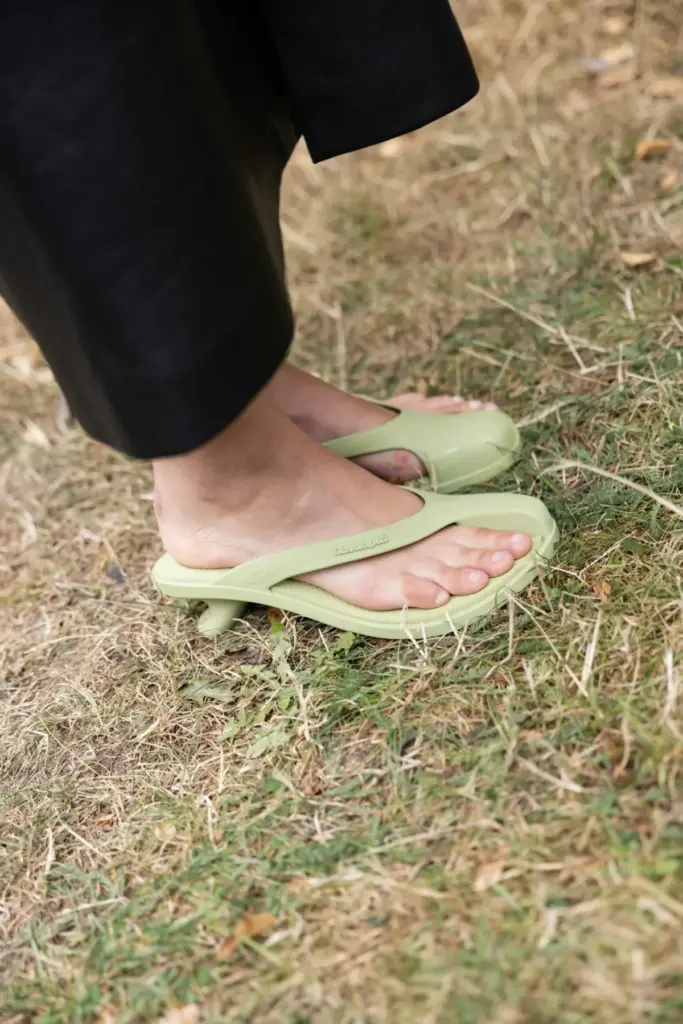
As the fashion calendar shifted to Copenhagen Fashion Week in early August, the Danish capital became the epicenter of a broader debate over the identity of Scandinavian style. Amid discussions of minimalism and functionalism, one runway moment cut violently through the noise: Studio Constance’s debut of the world’s first-ever heeled sandal by Havaianas.
Merging the ubiquitous, democratic comfort of Brazilian rubber flip-flops with high-fashion geometry—complete with a rubber big-toe cap and a dramatic, tilted kitten heel—the shoe confirmed every suspicion. By late summer, flip-flops had been elevated, distorted, and rendered utterly bizarre.
The Escalation of the Extremes
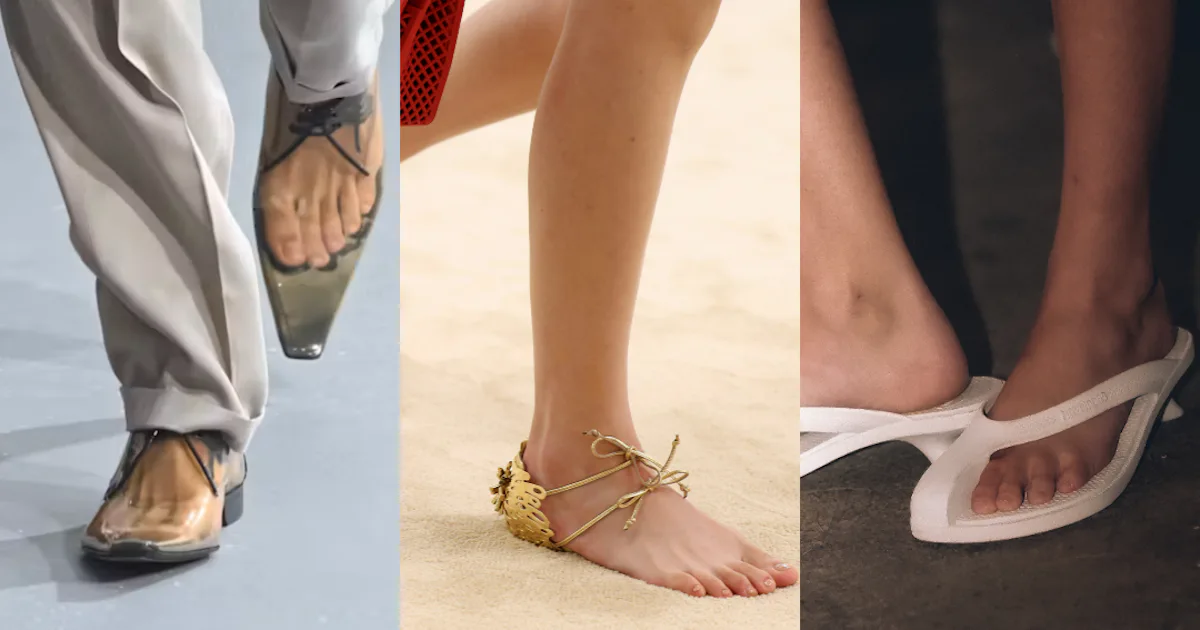
As the year progressed, houses like Saint Laurent under Anthony Vaccarello continued to stretch the anatomical limits of footwear. Vaccarello introduced razor-sharp, multi-inch toe points capable of rivaling medieval weaponry, alongside transparent PVC iterations of classic pumps and loafers. These designs allowed wearers to proudly showcase their pedicures while keeping their feet safely elevated above the grime of city streets.
Valentino, under the creative direction of Alessandro Michele, further contributed to the surrealist movement with the Révélé open-toe pumps. Featuring toe cleavage encased snugly by transparent PVC straps, these shoes created an oddly intimate, yet clinical framing for the foot, proving that the boundary between high fashion and fetishwear had officially dissolved.
Supporting Context & Metrics: The Data Behind the Freak
While runway spectacles often exist in a vacuum of high-concept art, the "freaky footwear" movement of 2026 is backed by hard market data and consumer demand.
The Lyst Index and the Jelly Renaissance
According to the Q2 Index released by fashion technology platform Lyst, unconventional and nostalgic footwear dominated consumer searches and sales. Skims’ jelly shoes and Chloé’s constantly sold-out heeled jelly sandals—reminiscent of miniature, translucent toys from childhood—topped the charts.
This surge points to a fascinating psychological dichotomy in modern consumer behavior:
- Minimalist Apparel: Consumers are investing in timeless, high-quality basics, clean lines, and neutral color palettes for their ready-to-wear pieces.
- Maximalist Footwear: To inject personality, irony, and edge into these simplified outfits, shoppers are turning to high-risk, conversation-starting shoes.
The Rise of the "Perverted" Aesthetic
Industry analysts note that footwear has become the primary vehicle for sartorial subversion because it is psychologically distant from the face. Wearing a bizarre silhouette or a hyper-extended toe point allows individuals to experiment with fetishistic, kinky, or surreal aesthetics in a way that feels playful rather than intimidating.
Clear PVC, toe cleavage, exaggerated proportions, and metallic toe caps all play into a broader cultural appetite for transparency and tactical exposure. Whether it’s Alaïa’s invisible jelly thong sandals or Marc Jacobs’ towering runway heels, the market is rewarding designs that challenge conventional notions of foot anatomy.
Celebrity Endorsements and Cultural Adoption
No fashion trend reaches critical mass without the stamp of approval from the cultural elite. In 2026, avant-garde footwear became the ultimate red-carpet and street-style flex for celebrities unafraid to court controversy with their wardrobes.
- Adéla in Saint Laurent: Spotted stepping out in Saint Laurent’s PVC and python Brigitte pumps, the artist bridged the gap between reptilian texture and synthetic transparency.
- Kylie Jenner in Chloé: The media mogul helped fuel the global waitlist for Chloé’s nostalgic jelly heels, styling them with understated loungewear to let the surreal footwear do the heavy lifting.
- Julia Fox and Charli XCX: True agents of sartorial chaos, Fox and XCX continually championed extreme silhouettes, pairing Marc Jacobs runway heels and Saint Laurent Babylone stilettos with dystopian streetwear.
- Chase Sui Wonders and Havana Rose Liu: Embracing structural minimalism paired with jarring accents, these rising style icons showcased Valentino’s Révélé pumps and Balenciaga’s Duchesse pumps, proving that even classic red-carpet styling has embraced the strange.
Official Statements and Industry Perspective
Designers and creative directors have been remarkably vocal about this tectonic shift in footwear design. No longer content with merely making shoes comfortable or classically beautiful, the modern design house views footwear as a sculptural playground.
"When the clothes on your back are quiet, your foundation has to scream," notes an anonymous senior accessory designer at a major European luxury house. "We spent years refining the perfect coat, the perfect trouser, the perfect white tee. There is nowhere left to go with apparel basics. Footwear is the last frontier where we can genuinely disturb, delight, and confuse the observer."
Industry commentators have dubbed this phenomenon "tactical perversion"—the deliberate infusion of kink, fetish-adjacent materials (like latex, high-gloss PVC, and straps designed to bind or expose the foot), and architectural distortion into everyday luxury goods.
Future Outlook: Where Do We Step From Here?
As the fashion industry looks past 2026 and toward future seasons, the question remains: is freaky footwear a passing novelty, or is it the new baseline for luxury accessories?
Evidence points to the latter. As manufacturing technologies improve—allowing for seamless PVC molding, engineered rubber hybridizations like the Havaianas-Studio Constance partnership, and ultra-lightweight structural supports—designers are no longer constrained by traditional shoemaking physics.
We can anticipate several key developments in the near future:
- The Democratization of the Weird: Mass-market and contemporary brands will inevitably adapt runway oddities, bringing toe-caps, exaggerated proportions, and jelly materials to accessible price points.
- Performance Meets Pathology: The convergence of comfort technology (orthopedic-adjacent soles, cushioned rubber) with avant-garde visual distortion will likely accelerate, appealing to consumers who refuse to sacrifice comfort for weirdness.
- The Death of the Round Toe: Traditional, unassuming shoe shapes face imminent cultural obsolescence. For the foreseeable future, if a shoe doesn’t make someone stop, stare, or slightly recoil in architectural wonder, it simply isn’t doing its job.
Pick your poison, weirdos. The ground has never looked so interesting.