In the modern landscape of high-demand careers, familial responsibilities, and relentless digital connectivity, finding a cohesive block of time for personal wellness has become an unprecedented luxury. For millions of individuals balancing the scales between professional obligations and domestic duties, the traditional 60-minute gym session is an increasingly unrealistic expectation.
Yet, the physiological necessity of physical activity remains immutable. As sedentary lifestyles continue to correlate with metabolic dysfunction, cardiovascular decline, and musculoskeletal strain, fitness professionals face a mounting challenge: how to deliver an effective, comprehensive stimulus to clients who have virtually no time to spare.
The answer lies not in prolonged endurance, but in strategic efficiency. By moving away from isolated movements and low-intensity endurance paradigms, forward-thinking trainers are championing a high-density, compound-movement approach. At the vanguard of this movement is a meticulously designed, 15-minute circuit routine engineered to target the upper body, lower body, and core simultaneously—proving that when executed with scientific precision, a quarter of an hour is all it takes to transform your health.
Executive Overview: The Science of Micro-Workouts
The traditional paradigm of physical conditioning often operates on the assumption that more is inherently better. However, contemporary exercise physiology increasingly supports the efficacy of short-duration, high-efficiency training sessions, commonly referred to as micro-workouts or time-efficient resistance circuits.
When time is limited, the body cannot afford the luxury of single-joint isolation exercises (such as a seated bicep curl or a leg extension). Instead, fitness experts leverage compound movements—multi-joint exercises that recruit multiple muscle groups and skeletal structures simultaneously. By stringing these movements together in a circuit format, exercisers elevate their heart rate, induce muscular hypertrophy, and improve neuromuscular coordination within a compressed window.
Key Takeaways of the 15-Minute Circuit Protocol:
Total-Body Integration: Every movement targets overlapping muscle groups across the upper body, lower body, and core.
Circuit-Style Execution: Perform 12 repetitions of each exercise consecutively, then repeat the entire sequence for a total of three rounds.
Scalable Intensity: Beginners can extend the duration with comfortable pacing and ample rest, while advanced trainees can shorten rest intervals to boost metabolic conditioning.
Form-First Philosophy: Prioritizing kinematic alignment over speed protects against injury and maximizes muscular engagement.
Detailed Chronology: Anatomy of the 15-Minute Circuit
To execute this routine safely and effectively, practitioners must treat each movement with deliberate focus. The workout is structured as a continuous circuit. You will complete 12 repetitions of an exercise before transitioning immediately to the next. Once all four exercises have been completed, you repeat the entire circuit from the beginning, aiming for a total of three full rounds.
1. Dumbbell Squat to Press
Prescription: 3 Sets | 12 Repetitions
Target Areas: Quadriceps, glutes, core, shoulders, and triceps.
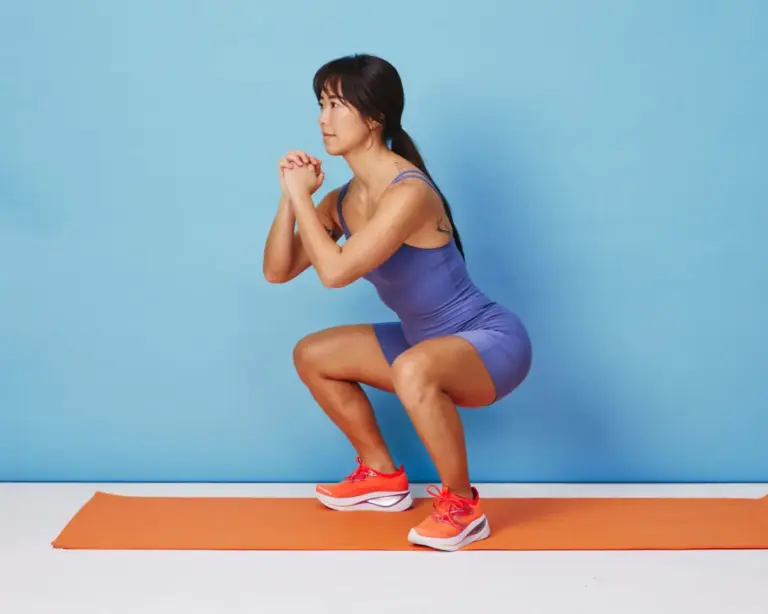
The dumbbell squat to press is the ultimate expression of total-body integration, seamlessly bridging lower-body power generation with upper-body pressing strength. Begin by holding a pair of dumbbells at shoulder height, feet positioned slightly wider than shoulder-width apart. Initiate the movement by hinging at the hips and bending the knees, descending into a deep squat while maintaining an upright torso.
As you drive through your heels to return to a standing position, use the momentum generated from the lower body to press the dumbbells overhead until your arms are fully extended. Lower the weights back to shoulder height as you prepare for the next repetition.
Trainer’s Tip:Avoid rounding your spine or allowing your torso to lean excessively forward during the descent. If you notice your form collapsing under the load, drop down to a lighter set of dumbbells immediately.
2. Dumbbell Deadlift to Row
Prescription: 3 Sets | 12 Repetitions
Target Areas: Hamstrings, glutes, erector spinae, latissimus dorsi, and rhomboids.
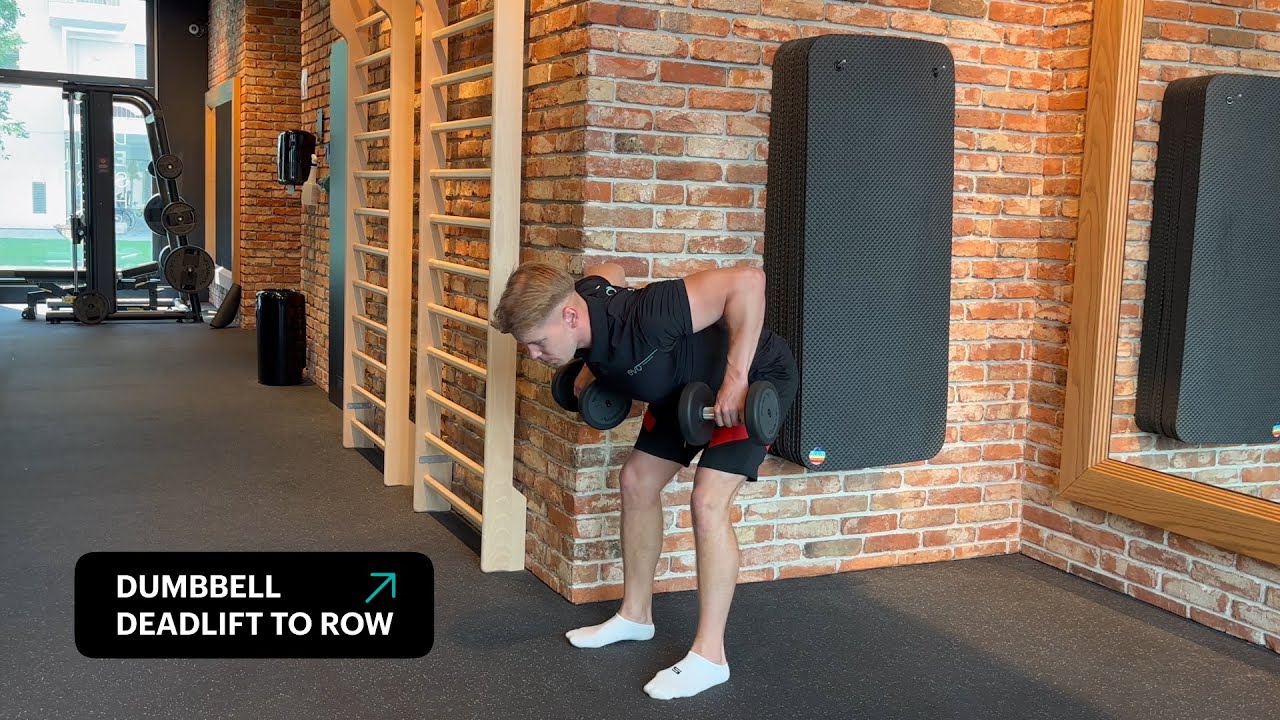
The posterior chain is frequently neglected in standard fitness routines, yet it is vital for posture, athletic performance, and injury prevention. This movement combines the hinge mechanics of a deadlift with the pulling power of a bent-over row.
Stand with your feet hip-width apart, holding dumbbells in front of your thighs. Hinge at your hips with a soft bend in your knees, lowering your torso until it is nearly parallel to the floor, ensuring your spine remains neutral. At the bottom of the hinge, perform a rowing motion by pulling your elbows toward your hips, squeezing your shoulder blades together. Lower the weights, then drive your hips forward to return to the starting upright position.
Trainer’s Tip:Keep your spine neutral and your core braced. Ensure your shoulders do not shrug upward as you execute the row. Beginners should practice the deadlift hinge pattern without weights first to groove the proper motor pathway.
3. Dumbbell Lateral Lunge to Curl
Prescription: 3 Sets | 12 Repetitions
Target Areas: Adductors, abductors, quadriceps, glutes, and biceps.
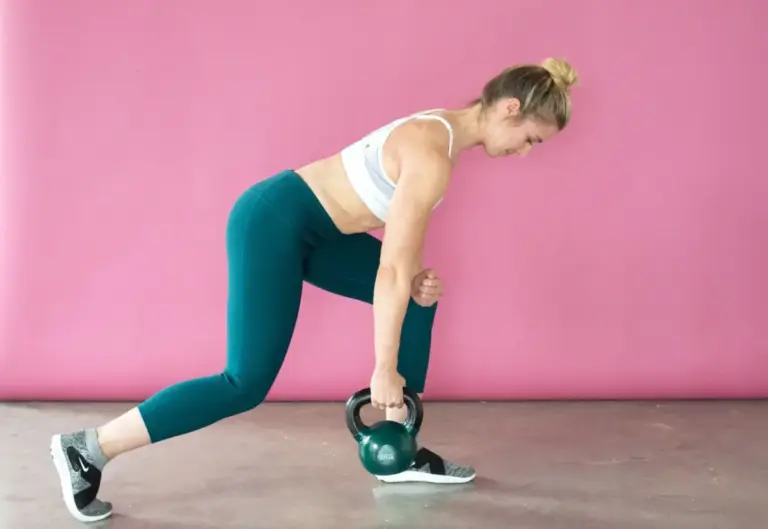
Traditional linear movements train the body in the sagittal plane, but daily life requires multi-planar stability. The lateral lunge introduces side-to-side mobility while challenging the upper body with a simultaneous bicep curl.
Stand tall with dumbbells at your sides. Take a wide step out to your right side, bending your right knee and pushing your hips backward while keeping your left leg straight. As you sink into the lateral lunge, curl the dumbbells up toward your shoulders, keeping your elbows pinned to your ribcage. Push off your right foot to return to the starting position while lowering the weights, then repeat on the left side.
Trainer’s Tip:Do not allow your torso to pitch forward or your lower back to round. Keep your chest proud, hinge deeply into the working hip, and maintain strict control over the bicep curl.
Shifting the workout to the floor, this compound movement addresses the anterior pushing chain while keeping the glutes under continuous isometric tension. Lie on your back with your knees bent, feet flat on the floor, and dumbbells held at the sides of your chest.
Drive through your heels to lift your hips toward the ceiling, creating a straight line from your knees to your shoulders. Simultaneously, press the dumbbells straight up over your chest. Lower the weights and your hips back toward the mat at the same time to complete one repetition.
Trainer’s Tip:Beginners may choose to lower their hips completely back to the mat between each repetition. Avoid excessive arching in the lower back at the top of the bridge; instead, focus on a hard squeeze of the glutes.
Supporting Context & Metrics: Navigating Pacing and Progression
When adopting a high-efficiency routine like the 15-minute circuit, understanding how to scale the workout to your current fitness level is critical for long-term adherence and safety.
The Learning Curve for Beginners
If you are returning to exercise after a prolonged hiatus or starting a fitness regimen for the first time, your cardiovascular and muscular systems will require time to adapt. Do not be discouraged if the routine takes longer than 15 minutes to complete initially.
Pacing: Move at a comfortable, sustainable tempo.
Rest Intervals: Take adequate breaks between exercises and sets to allow your heart rate to normalize and ATP stores to replenish.
Gradual Overload: As your aerobic capacity and muscular endurance improve over subsequent weeks, actively challenge yourself to reduce rest periods and increase your cadence.
The Golden Rule: Form Over Velocity
In the fitness industry, the pursuit of speed often compromises structural integrity. Rushing through repetitions to beat a timer increases shearing forces on the joints, elevates the risk of acute injury, and creates muscular imbalances.
True functional fitness is built on pristine biomechanics. If fatigue causes your form to break down—such as rounding the lower back during a deadlift or shrugging the shoulders during a row—you must either decrease the weight, slow down your tempo, or take a designated rest break.
Official Statements and Expert Guidance
To maintain clinical and professional safety standards, fitness practitioners emphasize the distinction between normal muscular fatigue and pathological distress.
"Exercise should consistently challenge your physiological boundaries, but it should never cross into the realm of acute trauma," notes structural integration specialists and physical therapists. "There is a profound difference between the dull, burning sensation of lactic acid accumulation in working muscle tissue and the sharp, localized pain indicative of joint stress or tendon strain."
Safety Protocol Checklist:
Listen to Your Body: If you experience sharp pain, popping, or radiating discomfort at any point during a movement, stop the exercise immediately.
Consult a Medical Professional: Persistent pain that lingers long after a workout concludes warrants a professional medical evaluation to rule out underlying structural issues.
Hydrate and Fuel: Even in a short 15-minute window, adequate hydration and baseline nutritional support are vital for optimal neuromuscular performance.
Future Outlook: The Evolution of Time-Efficient Training
As the modern workforce continues to embrace hybrid schedules and remote environments, the demand for hyper-efficient, home-friendly fitness solutions will only accelerate. The era of spending two hours commuting to a commercial gym, waiting for equipment, and performing leisurely workouts is giving way to a more pragmatic philosophy: maximum stimulus in minimum time.
Innovations in home fitness equipment—such as adjustable dumbbells, resistance bands, and compact multi-functional tools—are aligning perfectly with micro-workout protocols. Furthermore, as exercise science continues to validate the metabolic benefits of fragmented, high-density physical activity throughout the day, routines like the 15-minute compound circuit are poised to become the gold standard for busy professionals.
By stripping away the superfluous elements of traditional gym culture and focusing relentlessly on multi-joint, total-body movements, time-crunched individuals no longer have to choose between their careers, their families, and their health. With just 15 minutes and a pair of dumbbells, physical vitality is once again within everyone’s reach.