Executive Overview
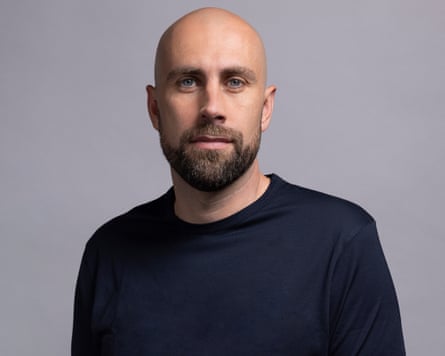
In the sprawling landscape of modern investigative journalism, few figures navigate the perilous intersection of international espionage, state-sponsored terror, and raw human tragedy quite like Josh Baker. A veteran foreign correspondent, filmmaker, and audio storyteller for the BBC, Baker has carved out a niche producing deeply immersive narrative series that challenge conventional geopolitical narratives. His acclaimed podcast, I’m Not a Monster, has earned a reputation for shattering black-and-white perspectives on radicalization, war, and accountability.
With the launch of his third series focusing on the vanishing of Austin Tice—a former US Marine turned freelance journalist who disappeared in Syria in 2012—Baker ventures deeper into the labyrinth of state-sanctioned disappearances, intelligence leaks, and modern geopolitical maneuvering. What began as an investigation into a missing person morphed into a narrative resembling a high-stakes espionage thriller, uncovering the grim machinery of the Assad regime’s industrial complex of torture and detention.
This article explores the trajectory of Josh Baker’s career, the harrowing origins of his investigative breakthroughs, the global implications of his reporting on cases like Shamima Begum and Austin Tice, and the profound human costs borne by those left behind in the ruins of the Syrian civil war.
Detailed Chronology
From the Newsroom to the Frontlines: Baker’s Early Career
Now 37, Josh Baker’s career trajectory is defined by a baptism of fire. He began his professional life as a night editor on the foreign desk of The Times, eventually branching out into field reporting covering the Serbian refugee crisis and conflicts across the Middle East. By the mid-2010s, he was directing Battle for Iraq, a co-production for the Guardian and PBS. Embedded with Iraqi special forces during the height of the military campaign against the Islamic State (IS), Baker quickly realized that the official narrative propagated by coalition forces—that ISIS was being swiftly and decisively routed—hid a much messier, more violent reality on the ground.
The Mosul Bombing and the Turning Point
The defining physical and professional turning point of Baker’s career occurred during the siege of Mosul. Caught in the center of the city as fighting raged around them, Baker and his team sought shelter for the night offered by a local family. In the dead of night, a radio operator woke the team, warning of imminent danger.
[Timeline of Key Events]
├── Mid-2010s: Baker covers Iraq conflict, embedded with special forces.
├── Mosul Siege: Baker survives an ISIS car bomb attack, breaking his back.
├── Post-Recovery: A confidential source shares a home video from Raqqa.
├── 2019–2021: Baker investigates Shamima Begum and Canadian intelligence links.
└── Present Day: Baker launches 'I’m Not a Monster' Season 3 focusing on Austin Tice.
The sounds of gunfire pierced the darkness, but Baker noted a distinct acoustic signature: "It was all going one way and it was all American weaponry. The sound is different when it’s ISIS." What he failed to hear in time was a massive articulated lorry maneuvering down the narrow street to deliver a massive car bomb.

"I know this bit because ISIS, the bastards, were filming from a drone," Baker recalls. The vehicle detonated directly outside the safe house, burying Baker beneath a collapsing structure and fracturing his back.
The Birth of I’m Not a Monster
Evacuated back to England for extensive medical recovery, Baker was contacted by a well-placed intelligence source who had heard about his near-death experience. This source showed Baker a chilling home video filmed inside Raqqa, then the de facto capital of the Islamic State. The footage showed a young American boy, Matthew, being forced by his handlers to assemble a suicide bomb.
Matthew was the eldest son of "Sam," an American woman who had fled to the caliphate with her young children after her husband became an IS sniper. Driven by a mix of trauma and fierce determination, Baker embarked on an unsanctioned mission to locate the boy. Seven months later, against staggering odds, he succeeded. This harrowing journey became the foundational first season of I’m Not a Monster.
The subsequent season, examining the case of British-born Shamima Begum, originated from a similar thread of serendipity. A Dutch ISIS bride, who had been in Mosul at the same time as Baker, messaged him on Twitter years later. She revealed she was residing in the same Syrian refugee camp as Begum. Baker, who had been an assistant producer on Welcome to the Mosque and was inside the East London mosque on the very day Begum and her school friends disappeared in 2015, utilized the tip to uncover the hidden mechanisms of Western intelligence—specifically exposing how Canadian operatives smuggled Begum across the Turkish border.
Supporting Context & Metrics and the Austin Tice Investigation
The Tragic Case of Austin Tice
Austin Tice, a former US Marine Corps officer and independent journalist, vanished at a checkpoint near Damascus in August 2012. If he remains alive, he holds the tragic distinction of being the second-longest detained journalist in global history.
Baker initially approached the story as a missing person investigation designed to bring answers to Tice’s grieving mother, Debra. However, the scope of the project exploded. "We thought we were looking for a missing person, and what we fell into was almost like a Bourne novel, utterly extraordinary," Baker notes. "A world of espionage, spies, dictatorship."
| Feature / Detail | Austin Tice Investigation | Previous IS Investigations (Sam / Begum) |
|---|---|---|
| Primary Subject | Missing US journalist/former Marine | Radicalized Western women & children |
| Geographic Focus | Syria (Damascus, regime-held areas) | Iraq (Mosul) & Northern Syria (Raqqa / Camps) |
| Primary Sources | Unprecedented intelligence leaks | Defectors, foreign brides, encrypted messaging |
| Core Theme | State-sponsored disappearance & espionage | Western citizenship, grooming, and accountability |
The investigation offers a grim window into the Syrian civil war’s past 14 years, granting listeners rare access to the regime’s industrial complex of disappearances and torture. Following the fall of the Assad regime, Baker and his team gained unprecedented access to these notorious facilities, transforming the hunt for the truth about Tice into an investigation of state-level atrocities.
Unprecedented Leaks and Intelligence Access
Navigating the corridors of power in Washington, D.C., differs vastly from dealing with official channels in London. According to Baker, British officials often direct journalists to institutional press officers who offer little substantive insight. Conversely, Washington’s dense network of intelligence officers, diplomats, and law enforcement personnel makes the security apparatus far more accessible, often intersecting at private dinners or social gatherings.
Despite facing an environment where sources grew increasingly tight-lipped during the Trump administration, Baker reports receiving a volume of intelligence leaks regarding Austin Tice unlike anything encountered in a decade of investigative work:
- Volume: Leaks have arrived from "every direction imaginable," cutting across multiple international intelligence agencies.
- Verification Challenges: A vast percentage of the incoming intelligence cannot be fully corroborated or legally published due to national security sensitivities.
- Geopolitical Stakes: The clues point toward a complex web of regional actors, exposing the limitations of American exceptionalism and foreign policy in the Middle East.
Official Statements and Industry Perspectives
The fallout from Baker’s journalistic endeavors has repeatedly rattled government agencies and sparked fierce public debates regarding national security, citizenship, and moral responsibility.
The Debate Over Citizenship Stripping
When the UK government stripped Shamima Begum of her British citizenship, citing national security concerns, it ignited an international controversy. Baker’s reporting—highlighting the active role of foreign intelligence agencies in facilitating her entry into Syria—bolstered arguments that Begum was primarily a victim of grooming and exploitation rather than an unredeemable terrorist mastermind.
Security analysts interviewed across Baker’s series overwhelmingly challenge the efficacy of citizenship revocation policies:

"Tens of thousands of people from potentially as many as 100 nations were convinced to go to Isis… You will struggle to find a security expert who will say that our current strategy—stripping people like Begum of statehood—is making us safer."
Navigating the Human Cost
Rather than focusing purely on grand geopolitical strategies, Baker’s work deliberately slows down the news cycle to center on human emotion. Reflecting on why he chose to anchor the Tice investigation partly around Debra Tice’s decade-long public crusade, Baker notes a deep personal resonance:
"What I identified with was his mother. I remember seeing her do a press conference, nine or 10 years into his disappearance, and thinking about my own mum. I’m from a single-parent household—we’re very close. I just thought, ‘Jesus Christ, what an awful existence to have.’"
This empathetic approach has not come without personal risk. Baker and his production teams have faced numerous death threats, reflecting the polarizing nature of stories that probe state complicity, identity, and the boundaries of governmental transparency.
Future Outlook
As I’m Not a Monster continues to redefine investigative audio journalism, the legacy of Josh Baker’s reporting points toward a fundamental shift in how complex foreign conflicts are communicated to the public.
- Re-examining Forgotten Detainees: The renewed spotlight on Austin Tice places immense pressure on international diplomats to account for missing journalists and non-state captives in post-Assad Syria. While Baker admits he has developed a "pretty decent idea" of what transpired, the definitive legal and historical closure remains a delicate diplomatic tightrope.
- The Evolution of Open-Source Intelligence (OSINT): As traditional state actors become more guarded, investigative journalists increasingly rely on decentralized networks, encrypted whistleblowers, and drone footage forensics to reconstruct historical events.
- Redefining Accountability: Baker’s transition away from daily hard-news reporting underscores a broader industry appetite for narrative journalism that refuses to reduce human catastrophes to sterile soundbites. By centering the victims, families, and complex intelligence networks, future investigations are poised to demand higher standards of transparency from Western and Middle Eastern governments alike.
Ultimately, Baker’s work serves as an enduring reminder that behind every geopolitical abstraction lies a human story waiting to be uncovered—and that the pursuit of truth often demands walking directly into the fire.