Executive Overview
In an era where the fitness landscape is often dominated by fleeting wellness trends and aesthetic-driven quick fixes, true transformations rooted in physiological necessity command our attention. This is the narrative of a mother who, at the age of 35 following the birth of her third child, was confronted with a profound medical crossroads. Diagnosed with premature ovarian failure—a condition resulting in the loss of normal ovarian function before the age of 40—she faced an accelerated entry into early menopause.
Beyond the expected vasomotor and hormonal disruptions, her medical team delivered a stark prognosis: she was at a significantly elevated risk of developing osteoporosis, a degenerative skeletal disease characterized by low bone mass and structural deterioration. Rather than accepting a trajectory of declining physical autonomy, she embarked on a meticulous, multi-year physical and nutritional reclamation project.

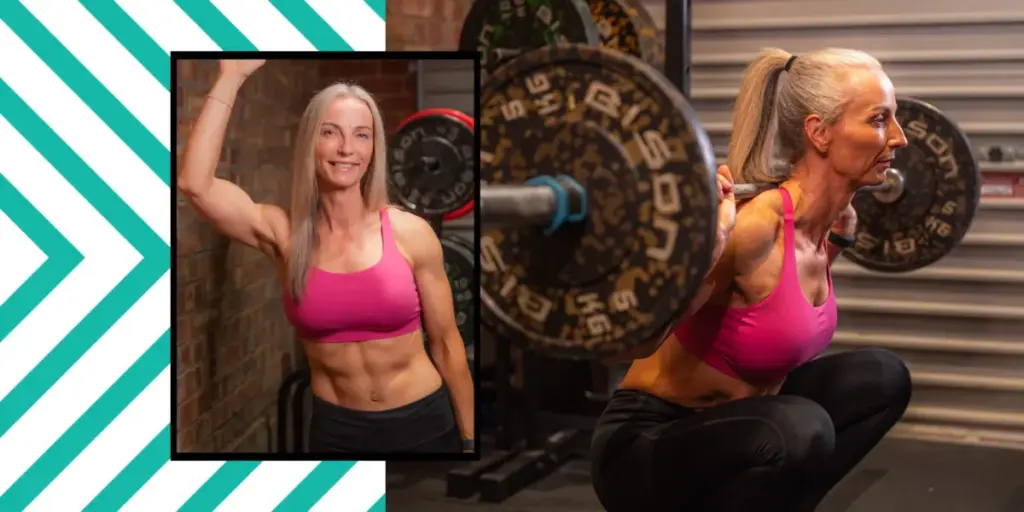
Today, at 47 years old, she stands as a testament to the adaptive capacity of the human body. Having shed over 50 pounds, built considerable lean muscle mass, and transitioned from a complete novice terrified of the weight room to an accomplished CrossFit practitioner, calisthenics enthusiast, and certified personal trainer, her journey offers a masterclass in longevity. This investigative feature explores the mechanics of her physiological turnaround, dissecting her transition through progressive training modalities, the science of bone-density preservation, and the structural pillars of mindset required to sustain a lifelong commitment to health.
Detailed Chronology: From Clinical Adversity to Gym Floor Mastery
Phase 1: The Postpartum Shock and the First Steps (Ages 35–36)
The journey began not in a high-performance training facility, but in the quiet, overwhelming exhaustion of postpartum recovery. At 35, her body was signaling distress. Chronic fatigue, minimal muscular architecture, stubborn weight retention, and the sudden onset of early menopause stripped her of her vitality. When her physician outlined the looming threat of early-onset osteoporosis due to estrogen deficiency, fear catalyzed action.

With zero prior experience in a traditional gym environment, the weight room felt like an intimidating fortress of specialized equipment and unwritten social codes. Eschewing the temptation to dive into complex routines, she implemented a strategy of gradual exposure:
- The Walking Foundation: She committed to a non-negotiable 40-minute daily walk. This low-impact cardiovascular baseline improved her insulin sensitivity, elevated her baseline caloric expenditure, and, crucially, helped build the mental habit of daily physical engagement.
- Cardio Circuit Introduction: Six months into her walking regimen, she integrated high-intensity cardio circuit classes once to twice weekly. This served as her bridge into group fitness spaces, gradually stripping away gym intimidation.
Phase 2: The Strength Training Revelation (Ages 36–41)
The inflection point of her physical evolution occurred roughly one year into her wellness journey, when an invitation from her sister-in-law led her to a group personal training class. Here, she encountered foundational resistance training for the first time.

Guided by professional coaching, she learned the mechanics of compound barbell and dumbbell movements:
- The Big Lifts: Squats, deadlifts, overhead presses, and lunges became the cornerstones of her weekly routine.
- The Neuromuscular Shift: Contrary to her initial fears of injury or bulk, she experienced an immediate neurological and psychological awakening. The sensation of moving external load under control instilled a profound sense of agency.
- Frequency and Habituation: She quickly scaled this practice to four days a week, cementing strength training as her primary physical modality.
Concurrently, she revolutionized her nutritional framework. Recognizing that training stimulus requires adequate structural building blocks, she adopted an iterative dietary approach:

- The 80/20 Rule: She prioritized whole, nutrient-dense foods for 80 percent of her intake while maintaining the psychological flexibility to enjoy social foods and treats during the remaining 20 percent.
- Protein Optimization: To support muscle protein synthesis and recovery from heavy lifting sessions, she anchored her meals around lean meats, seafood, and protein-fortified oats, while leveraging high-fiber fruits and vegetables to maintain satiety.
Phase 3: The CrossFit and Calisthenics Evolution (Ages 42–46)
After five years of consistent strength training, her local training facility transitioned into a CrossFit affiliate. Embracing the shift, she opened herself up to a new tier of athletic challenge. This phase introduced complex gymnastics-based calisthenics:
- Gymnometric Mastery: She incorporated ring work, pull-ups, and handstand progressions into her programming.
- The Shift in Metrics: Success was no longer solely defined by the weight on a barbell, but by spatial awareness, relative strength, neuromuscular coordination, and structural balance.
By the culmination of this phase, her physical transformation was complete. She had lost over 50 pounds, accumulated dense muscle tissue, and earned her personal training certification to demystify strength training for other women navigating midlife physiological shifts.

Supporting Context & Metrics: The Science of Midlife Recomp and Bone Health
Mitigating Osteoporosis Risk Through Mechanical Loading
The foundational catalyst for this transformation—premature ovarian failure and early menopause—drastically reduces circulating estrogen levels. Estrogen plays a vital, protective role in bone remodeling by inhibiting osteoclasts (cells that break down bone tissue) and supporting osteoblasts (cells that form bone tissue). Without this hormonal shield, women face rapid bone mineral density decline.
Medical literature consistently points to Wolff’s Law, which posits that bone adapts in shape and density under the mechanical stress placed upon it. When subjected to high-magnitude, low-frequency mechanical loading—such as heavy compound resistance training (squats and deadlifts)—bones deform microscopically. This deformation signals osteocytes to direct bone-building cells to deposit mineral matrix along the lines of stress, directly counteracting osteoporotic degradation.

The Role of Body Recomposition
Her achievement of losing over 50 pounds while building significant muscle mass illustrates the physiological principle of body recomposition. While conventional weight-loss paradigms often rely on caloric restriction paired with steady-state cardio (which can inadvertently accelerate muscle wasting and lower resting metabolic rate), her protocol prioritized:
- Progressive Overload: Continually challenging skeletal muscles with increasing resistance to stimulate hypertrophy.
- Macronutrient Partitioning: Using high protein intake to preserve lean tissue during caloric deficits.
- Calisthenics Integration: Utilizing bodyweight movements to enhance relative strength-to-weight ratios, ensuring functional autonomy as she aged.
Expert Perspectives & Training Frameworks
Now operating at 47 years of age, her current training regimen reflects an advanced understanding of functional longevity. Her weekly schedule bridges heavy resistance training with high-skill calisthenics, designed to preserve structural integrity, neuromuscular pathways, and mobility.

Current Training Architecture
- Strength Training Frequency: 3 days per week centered around full-body compound lifts (squats, deadlifts) and multi-joint bodyweight movements (pull-ups, dips, handstand drills).
- Skill-Based Periodization: Rather than adhering to a static routine, her programming revolves around specific athletic objectives. Past cycles targeted pull-up mastery via scapular engagement, dead hangs, and band-assisted variations. Current cycles focus on the advanced press handstand—requiring elite overhead pressing strength, thoracic mobility, and profound core stabilization.
- Mobility and Recovery: Recognizing the limitations imposed by traditional high-impact cardio, she relies on daily stretching, targeted mobility flows, and continuous daily walking to sustain tissue health and joint lubrication.
Essential Training Arsenal
To execute her high-skill calisthenics and heavy lifting sessions safely and effectively, her equipment list remains remarkably streamlined:
- Gymnastics Block Chalk: Essential for mitigating palmar perspiration during high-rep pull-ups, muscle-ups, and hanging core work, ensuring secure bar purchase and preventing friction tears.
- Wireless Audio Technology (e.g., Apple AirPods): Facilitating immersive auditory focus to maintain rhythm and psychological drive through demanding training blocks.
The Three Pillars of Longevity and Behavioral Sustainability
The longevity of her transformation is not merely a product of physical programming, but of a robust psychological framework. She attributes her success to three foundational behavioral tenets:

1. Radical Micro-Goal Setting
Attempting to overhaul lifestyle, diet, and physical capacity simultaneously is a primary driver of fitness attrition. By starting with a single, manageable habit—a daily 40-minute walk—she built the baseline neural pathways required for consistency. Modern behavioral science supports this: micro-habits reduce cognitive friction. By breaking monumental goals (such as reversing osteoporosis risks or mastering gymnastics movements) down into binary, daily action items, she insulated her process against overwhelm.
2. Disconnecting Discipline from Motivation
A central insight from her decade-long journey is the unreliability of emotional motivation. Life as a mother, entrepreneur, and fitness practitioner inevitably presents days of acute fatigue and resistance. Her resilience stems from prioritizing discipline over fleeting emotional states. Whether a training session demands setting personal records or simply slowing down to drill fundamental movement mechanics, showing up is treated as a non-negotiable professional and personal mandate.

3. Cultivating Play Through Curiosity
Fitness failure often stems from monotony and ideological rigidity. By refusing to lock herself into a single dogmatic training style—migrating seamlessly from circuit classes to heavy powerlifting, CrossFit, and finally calisthenics—she preserved the psychological spark of play. Learning a handstand press or mastering a strict pull-up transforms exercise from a chore of physical maintenance into an interactive exploration of human capability.
Future Outlook: Redefining Aging for Women
The narrative established by this 47-year-old athlete challenges outdated societal and medical scripts surrounding midlife female physiology. For decades, menopause and perimenopause were framed strictly as periods of inevitable decline, marked by frailty, weight gain, and systemic withdrawal from vigorous physical pursuits.

By leveraging progressive resistance training, intelligent nutritional periodization, and an unwavering commitment to skill acquisition, she demonstrates that midlife can instead represent a physiological apex. Her evolution from an exhausted, intimidated postpartum mother to a powerhouse certified personal trainer signals a broader cultural shift. As clinical guidelines increasingly validate strength training as a frontline defense against sarcopenia and osteoporosis, stories like hers provide the blueprint: aging is not a passive surrender to biological timelines, but an active negotiation of strength, resilience, and vitality.