Executive Overview
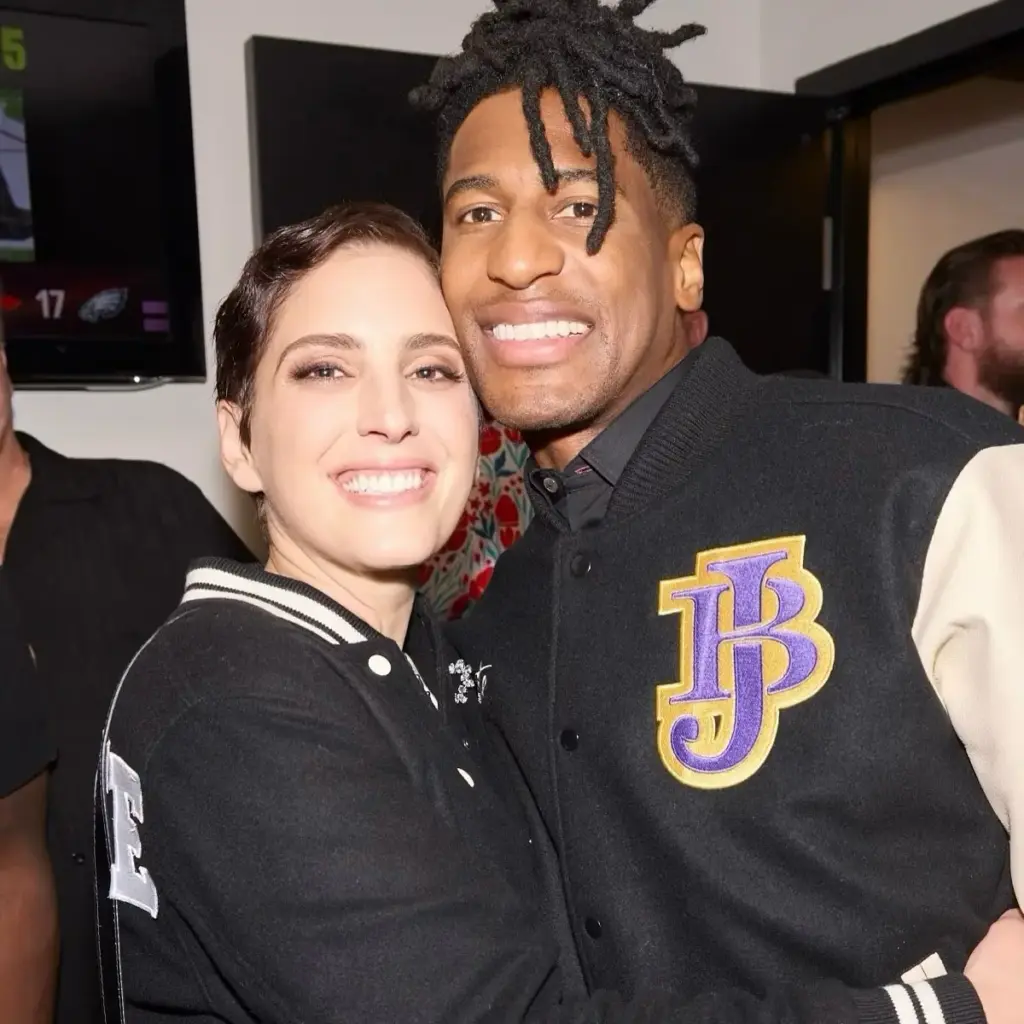
In the public eye, the intersection of art, romance, and unrelenting reality often plays out behind closed doors. For Grammy-winning musician Jon Batiste and his wife, acclaimed author and activist Suleika Jaouad, that intersection has been defined by a profound, decades-long battle with leukemia. Recently, the gravity of this shared life re-entered the public sphere when Batiste was forced to cancel several high-profile concert appearances due to urgent "personal circumstances."
That announcement served as a prelude to a deeply personal disclosure from Jaouad herself. Taking to social media on September 28, the 38-year-old writer revealed that she has returned to the hospital to undergo her third bone marrow transplant. The medical pivot comes after maintenance therapies, which had successfully kept her cancer at bay for a prolonged period, finally lost their efficacy.
This development marks yet another chapter in Jaouad’s harrowing, highly publicized journey through chronic illness—a journey that began with her initial leukemia diagnosis in 2010, followed by a harrowing relapse in December 2021, and another setback in the summer of 2024. Despite the physical toll, Jaouad’s announcement was not one of defeat, but of calculated resolve. Supported by an unyielding medical team, a menagerie of animals, a tight-knit circle of loved ones, and her husband of three years, Jaouad once again finds herself waiting for medical science to provide the breakthrough she needs.
This in-depth report explores the timeline of Jaouad’s medical journey, the impact on Batiste’s touring schedule, the evolving landscape of leukemia treatments, and the psychological and creative mechanisms the couple employs to endure the cyclical nature of chronic, life-threatening illness.
Detailed Chronology: A Decade-Plus Journey Through Leukemia
To fully understand the weight of Jaouad’s current hospitalization, one must look back at the trajectory of a disease that has shadowed her adult life. Her story is one of resilience punctuated by medical milestones, clinical setbacks, and the pursuit of creative survival.
1. The Initial Diagnosis (2010)
Jaouad was first diagnosed with acute myeloid leukemia in 2010 when she was just 22 years old. Fresh out of college and standing at the precipice of adulthood, her life abruptly shifted from career-building to survival. Over the next several years, she underwent grueling rounds of chemotherapy and her first bone marrow transplant. It was during this period that she began documenting her experiences, penning her award-winning New York Times column, "Life, Interrupted," which later formed the foundation of her bestselling 2022 memoir, Between Two Kingdoms: A Memoir of a Life Interrupted.
2. The Long Road to Remission and Marriage
Following years of arduous treatments, Jaouad achieved long-awaited remission. During these formative years, her relationship with multi-instrumentalist Jon Batiste deepened. The couple, who met as teenagers at a music camp, stood by one another through her health battles and his meteoric rise in the music industry—culminating in major Grammy successes and global acclaim. In February 2022, just the night before Jaouad underwent her second major bone marrow transplant, the couple quietly married in a hospital room, sealing their commitment amidst uncertainty.
3. The 2021–2022 Relapse
The hard-won remission was shattered in late 2021 when Jaouad announced that her cancer had returned. This prompted an emergency pivot back into the medical system, leading to the aforementioned February 2022 bone marrow transplant. Batiste famously balanced his support for Jaouad with his historic sweep at the 2022 Grammy Awards, where he won Album of the Year for We Are. In interviews following the procedure, the couple spoke candidly about the emotional whiplash of transitioning from the red carpet to the sterile environment of an oncology ward.
4. The Summer 2024 Setback
Just as Jaouad and Batiste appeared to be finding a sustainable rhythm—with Jaouad continuing her writing projects and Batiste maintaining an active touring and scoring schedule—signs of trouble emerged once again. In the summer of 2024, routine monitoring revealed that the leukemia was stirring. Maintenance therapies were quickly deployed to suppress the rogue cells, buying the couple precious time. However, these pharmacological interventions have a finite lifespan in the face of mutating cancer cells.
5. September 2025: The Third Transplant Announcement
By late September 2025, the limits of current maintenance protocols were reached. In her September 28 Instagram statement, Jaouad laid bare the reality of her medical prognosis:
"This week, I’m returning to the hospital for my third bone marrow transplant… To put it as plainly as I can, the treatments that have been keeping the leukemia at bay are no longer doing the trick. I’ve known another bone marrow transplant might be in my future. I was hoping the future was in less of a hurry."
Supporting Context & Metrics: Understanding Bone Marrow Transplants and Relapse
Bone marrow transplants (hematopoietic stem cell transplantation) represent one of the most complex, high-stakes procedures in modern oncology. To grasp the significance of Jaouad undergoing a third such procedure, it is essential to examine the underlying medical mechanics and statistics surrounding recurrent hematological malignancies.
The Mechanism of Bone Marrow Transplants
A bone marrow transplant involves destroying a patient’s diseased or damaged bone marrow using high-dose chemotherapy and/or radiation, and then infusing healthy blood-forming stem cells (harvested either from the patient prior to treatment, known as an autologous transplant, or from a compatible donor, known as an allogeneic transplant). For advanced or relapsed leukemia, allogeneic transplants are typically preferred because the donor immune cells can actively hunt down and destroy remaining cancer cells—a phenomenon known as the "graft-versus-leukemia" effect.
The Complexity of Multiple Transplants
Undergoing a single bone marrow transplant places an immense burden on the human body, compromising the immune system for months and carrying significant risks, including organ toxicity, infections, and graft-versus-host disease (GVHD). Needing a third transplant is statistically rare and clinically demanding. It indicates that previous donor cells or the patient’s own reconstituted marrow failed to permanently eradicate the malignancy, requiring clinicians to explore new donor matches, alternative conditioning regimens, and cutting-edge experimental protocols.
The Emotional and Economic Toll
Beyond the physiological metrics, chronic illness exacts a heavy psychological toll. Clinical studies consistently show high rates of post-traumatic stress disorder (PTSD), anxiety, and depression among long-term cancer survivors and their caregivers. For Jaouad and Batiste, their public platform has allowed them to destigmatize these mental health struggles, framing chronic illness not as a battle won or lost on a single day, but as a lifelong marathon requiring continuous adaptation.
Official Statements and Personal Reflections
The vulnerability displayed by both Jaouad and Batiste in their public communications has transformed their private ordeal into a masterclass in grace under pressure.
Suleika Jaouad on Science and Creative Survival
In her announcement, Jaouad reflected on the paradoxical nature of living with a chronic, progressive illness over more than a decade. She noted how the medical landscape has evolved since her initial 2010 diagnosis, yet underscored the frustrating gap between current scientific limits and patient needs:
"I’ve benefited from treatments that didn’t exist when I was first diagnosed, from protocols that once sounded experimental. Once again, I find myself waiting for the science to catch up to where I am. I need another breakthrough."
Despite admitting that she was "scared" of the impending procedure, Jaouad deliberately shifted the narrative toward the pillars holding her up. She detailed an eclectic, grounding support system:
"I have brilliant doctors I trust with my life. I have Jon, and my family, and the kind of friends who show up carrying games and flowers and inappropriate jokes. I have four dogs, two peacocks, and fourteen chickens."
Furthermore, Jaouad emphasized the therapeutic power of artistic expression. A proponent of art therapy and creative journaling, she observed:
"Illness has a way of shrinking life down to the dimensions of the body. I believe creative work makes the world big again. I have a plan, and I have a great deal of hope."
Jon Batiste on the Reality of Caregiving
Jon Batiste, whose recent concert cancellations stunned fans globally, has consistently modeled a grounded, unflinching approach to caregiving. Rather than offering platitudes about "defeating" cancer once and for all, Batiste has embraced the unpredictable nature of his wife’s condition. Speaking candidly to E! News in March 2025, Batiste encapsulated his philosophy:
"Sometimes the cancer will be gone. Other times, we’ll have to deal with what comes when it comes back and that’s just a part of our life. I support her in that."
By clearing his professional calendar to be fully present at her bedside, Batiste demonstrated that his commitment to Jaouad transcends the spotlight of the entertainment industry. His actions reinforce the reality that caregiving is an active, ongoing partnership requiring sacrifice, emotional agility, and unconditional presence.
Future Outlook: Navigating the Road Ahead
As Suleika Jaouad enters the sterile confines of the hospital ward for her third bone marrow transplant, the immediate future is defined by isolation, intensive medical monitoring, and recovery. The weeks following a transplant are notoriously critical, requiring strict infection-control protocols and rigorous physical rehabilitation as the new stem cells engraft and begin producing healthy blood cells.
For Jon Batiste, the coming months will involve balancing his return to creative output—scoring, writing, and eventually performing—with his primary role as a supportive partner in Jaouad’s recovery. While concertgoers may experience temporary disappointments as tour dates are rescheduled or canceled, the broader artistic and cultural community has responded with an overwhelming outpouring of solidarity and prayers.
The trajectory of Jaouad and Batiste’s journey serves as a poignant reminder of the fragility of human health and the enduring strength of human connection. As Jaouad waits for medical science to provide her next breakthrough, her words continue to resonate far beyond the medical community: illness may shrink the dimensions of the body, but love, community, and the creative spirit possess the infinite capacity to make the world large again.