Executive Overview
Every autumn, the global beauty and wellness landscape witnesses a predictable yet captivating shift in olfactory preferences. As the sweltering heat of summer dissipates into crisp, amber-hued mornings, consumers swap out light aquatic sprays and sugary coconut concoctions for heavier, more introspective profiles. For years, vanilla—in all its comforting, gourmand iterations—held an absolute monopoly over the fall and winter fragrance market. However, the fragrance industry is undergoing a sophisticated evolution.
According to recent beauty forecasts, trend analysts, and top-tier perfumers, the reigning monarch of the upcoming season is no longer the predictable sweetness of vanilla. Instead, fig—a complex, multifaceted note boasting a violet hue and a rich history deeply rooted in Mediterranean antiquity—has emerged as the definitive star of contemporary perfumery.
The appeal of fig lies in its remarkable versatility. Unlike one-note ingredients that can quickly become cloying, fig is a chameleon. Depending on which element of the tree is harvested—whether it is the milky, lush nectar of the ripe fruit, the crisp, chlorophyll-heavy vitality of the green leaves, or the deep, dry warmth of the woody trunk—fig can morph into an infinite number of scent profiles. It bridges the gap between fresh green notes and rich, woody gourmands, making it the ideal transitional bridge from summer warmth to autumnal introspection.
This comprehensive report examines the cultural and commercial resurgence of fig in the fragrance industry, details the mechanics of its unique composition, explores the standout products dominating the market this season, and offers an authoritative look at the future of modern scent trends.
Detailed Chronology: The Evolution and Resurgence of Fig in Modern Perfumery
To understand why fig is suddenly dominating beauty shelves, counter displays, and niche fragrance houses worldwide, one must trace its journey from an ancient symbol of abundance to a modern minimalist luxury staple.
Ancient Roots to Mid-Century Curiosities
The fig tree (Ficus carica) is one of the oldest cultivated plants in human history, deeply embedded in the mythologies of the Mediterranean, Middle East, and South Asia. For millennia, fig was utilized primarily for its fruit and its shade, though ancient Egyptians and Greeks recognized its aromatic qualities, incorporating its sap and leaves into primitive oils and balms.
However, fig as a dedicated, structural note in modern commercial perfumery did not truly find its footing until the late 20th century. In 1994, master perfumer Olivia Giacobetti revolutionized the industry when she created Philosykos for Diptyque. Translating to "friend of the fig tree," Philosykos was a radical departure from the heavy, opulent, aldehyde-driven fragrances of the 1980s. Instead of focusing solely on the sweet, jammy fruit, Giacobetti captured the entire tree—the sun-warmed bark, the bitter-green snap of the leaves, the milky sap, and the earthy weight of the roots. It set a new benchmark for green, woody storytelling in scent and proved that fig could be both avant-garde and deeply wearable.
The 2010s: The Niche Discovery Phase
Following the path paved by Diptyque, niche perfumers spent the next two decades experimenting with fig as an alternative to mainstream citrus and florals. It became a darling of indie and artisan perfumeries looking to craft "second-skin" scents. During this era, fig was often paired with coconut milk, tea leaves, or light musks. It occupied a sophisticated, understated space—frequently associated with coastal Italian vacations, sun-bleached driftwood, and Mediterranean orchards.
The 2026 Phenomenon: Mainstream Acceleration
While fig has long maintained a cult following among fragrance connoisseurs, the current market shift represents a massive commercial acceleration. Over the past several seasons, consumer tastes have pivoted away from synthetic sugar bombs toward earthier, more nuanced, and "grounding" ingredients. Following short-lived viral obsessions with green tea, matcha, and smoky incense notes, the beauty industry has gravitated toward fig as the ultimate synthesis of these trends.
Today, mainstream giants, clean-beauty pioneers, and ultra-exclusive niche houses alike are introducing fig-centric formulations. It is no longer just a niche curiosity for summer; it is being aggressively re-engineered for the cooler autumn and winter months through sophisticated blendings with spices, leather, amber, and deep woodsmoke.

Supporting Context & Metrics: The Science of Scent and Market Shifts
To appreciate why fig resonates so powerfully with contemporary consumers, one must examine the intersection of olfactory science, consumer psychology, and modern market metrics.
Olfactory Architecture: Decoding the Fig Note
What makes fig such a triumph in modern formulation is its chemical complexity. A single fig note is rarely just one synthetic molecule; it is a symphony of contrasting accords:
- The Leaves: Impart a sharp, green, slightly bitter, and herbaceous freshness. This provides the uplifting top note that appeals to lovers of clean, botanical, and tea-based fragrances.
- The Fruit: Delivers a rich, lactonic (milky), ripe, and honeyed sweetness. Unlike the sharp, sugary punch of artificial candy notes, fig fruit brings a velvety, textural depth that feels sophisticated and organic.
- The Wood and Bark: Ground the fragrance with dry, earthy, and balsamic undertones. When blended with cedarwood, vetiver, or sandalwood, the woody facets of the fig tree offer the warmth and security craved during colder months.
Consumer Psychology and the Demand for "Grounding" Scents
Market research from leading beauty trend forecasters indicates a massive surge in demand for functional fragrances—scents designed not just to smell pleasant, but to evoke specific emotional states such as calmness, focus, and grounding.
Following years of global uncertainty and sensory overload, consumers are seeking refuge in nature-inspired profiles. Earthy, woody, and green notes like fig act as a psychological anchor. They evoke organic landscapes, forest bathing, and rustic tranquility. The inclusion of lactonic (milky) facets in fig also triggers subconscious associations with comfort, warmth, and intimacy, making it a powerful rival to traditional vanilla comfort scents.
The Ultimate Autumn Fig Collection: Standout Fragrances for 2026
From accessible mass-market favorites to ultra-luxurious niche formulations, the current market offers an unprecedented variety of fig-forward perfumes and body mists. Here is the definitive curated guide to the best fig scents available right now:
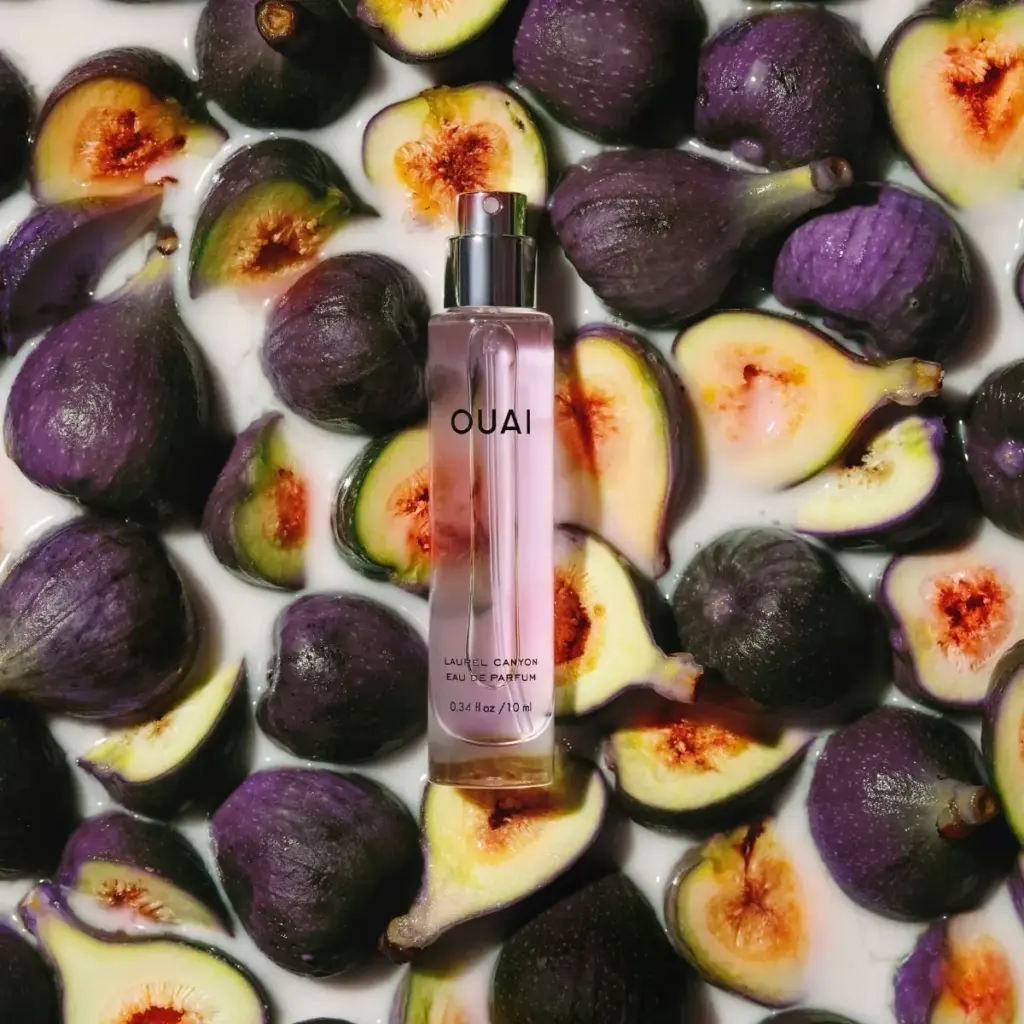
1. OUAI Laurel Canyon Eau De Parfum
- The Vibe: A sun-drenched yet deeply grounded walk through coastal California chaparral.
- Key Notes: Fig leaf, green mandarin, almond milk, jasmine, violet, orris root, cedarwood, soft musk, and tonka bean.
- Why We Love It: OUAI balances the crisp, bracing greenness of fig leaf with the comforting creaminess of almond milk and soft musk, making it an effortlessly chic everyday signature scent for the autumn transition.
2. PHLUR Father Figure Eau De Parfum
- The Vibe: Intimate, magnetic, and undeniably vivid.
- Key Notes: Fleshy fig, dewy cassis, creamy sandalwood, orris root, and vanilla Madagascar.
- Why We Love It: A cult-favorite for a reason, PHLUR’s Father Figure leans heavily into the tactile, fleshy elements of the fruit while wrapping the wearer in a warm, second-skin cocoon of sandalwood and Madagascar vanilla.
3. Josie Maran Bohemian Fig Body + Hair Fragrance Mist
- The Vibe: A bohemian, spice-market dream.
- Key Notes: Vetiver, vanilla orchid, bergamot, and smoky fig.
- Why We Love It: For those who prefer a lighter application or want to layer their scents, this multi-use mist infuses smoky fig with earthy vetiver and exotic vanilla orchid, providing a sensual warmth ideal for hair and body.
4. Cayla Gray Hearth the Perfume (Editor’s Pick)
- The Vibe: A crackling fireplace inside a rustic woodland cabin.
- Key Notes: Balsam, cardamom, fig leaf, fir needles, warm amber, and vetiver.
- Why We Love It: Selected by editors as the quintessential autumn and winter scent, Hearth pairs the sharp green vitality of fig leaf with heavy, resinous balsam, fir needles, and warming cardamom spices.
5. Lake & Skye 333 Sheer Fig + Salt Hair & Body Mist
- The Vibe: Bracing coastal air meets lush orchard fruit.
- Key Notes: Grapefruit blossom, clary sage, juicy bergamot, amberwood, cyclamen, marine accord, sandalwood, sea moss, and driftwood.
- Why We Love It: Proving that fig does not have to be heavy to work in cooler weather, this bright, woody mist incorporates marine and salt notes to create an invigorating, crisp profile that cuts cleanly through autumn chill.
6. Henry Rose London 1983 Eau de Parfum
- The Vibe: Edgy, artistic, and nostalgic, inspired by 1980s London counterculture.
- Key Notes: Fig, black pepper, water lily, jasmine, musk, blonde woods, upcycled orcanox, and sustainable vetiver bourbon.
- Why We Love It: A masterclass in tension and release, this formulation pairs sweet fig with the sharp bite of black pepper and sustainable vetiver, resulting in an assertive, high-fashion fragrance profile.
7. FASCENT I Fig You
- The Vibe: Botanical, zen, and unapologetically green.
- Key Notes: Green tea, sage, citruses, fig leaf, carrot seeds, vetiver, and cedarwood.
- Why We Love It: A standout from the niche clean-beauty space, this fragrance highlights the herbaceous and earthy components of the fig plant, backed by crisp green tea and grounding carrot seed.
8. Prada Les Infusions de Figue Eau de Parfum
- The Vibe: High-end minimalist luxury that melts seamlessly into the skin.
- Key Notes: Mandarin, fig accord, lentisk, and galbanum.
- Why We Love It: Prada’s sophisticated approach creates a vibrant, dynamic fragrance that evolves with your body chemistry, offering a sheer, woody second-skin experience.
9. Jo Malone Fig & Lotus Flower Cologne
- The Vibe: Shimmering, ethereal, and delicate.
- Key Notes: Fig leaf, lotus flower, and vetiver.
- Why We Love It: True to Jo Malone’s signature aesthetic, this cologne is light, transparent, and refined, blending aquatic florals with the subtle, clean greenness of fig leaf.
10. TOM FORD Figue Érotique Eau de Parfum
- The Vibe: Decadent, sensual, and fruit-forward with an opulent twist.
- Key Notes: Kadota fig accord, vert de bergamote, muscovado accord, fig leaf accord, ylang-ylang absolute, and vetiver essence.
- Why We Love It: Tom Ford brings signature drama to the trend, infusing rich Kadota fig with deep, caramelized muscovado sugar and exotic ylang-ylang for an intensely seductive evening profile.
Official Statements & Industry Perspectives
Industry leaders and master perfumers have increasingly pointed to botanical versatility as the driving force behind the current fig renaissance.
"Consumers today are looking for authenticity and complexity in their fragrance wardrobes," notes a senior product development executive at a major global fragrance house. "Vanilla will always have a place in the market because of its universal comfort, but people are experiencing gourmand fatigue. They want notes that tell a more intricate story—notes that feel alive, botanical, and multi-dimensional. Fig does precisely that. It gives you the sweetness of fruit, the bitterness of leaf, and the dry warmth of wood all in a single spray."
Furthermore, independent perfumers emphasize that fig’s unique chemical structure allows it to act as a brilliant bridge between opposing fragrance families. "You can take fig and push it in a completely green direction with herbs and tea, or you can drag it down into the shadows with amber, leather, and smoke," explains one prominent niche nose. "It is a dream ingredient to work with because it never stays static on the skin."
Future Outlook: Where the Fragrance Market Is Heading
As the beauty industry looks past the current autumn season and into the future of 2027 and beyond, what does the trajectory of fig and broader fragrance trends look like?
- Hyper-Regional and Upcycled Botanicals: Sustainability is no longer a marketing buzzword; it is a baseline consumer demand. Future fig formulations are expected to lean heavily into upcycled ingredients—such as utilizing leftover fruit pulp from the food industry or sustainably harvested wood branches—to create eco-conscious luxury scents.
- Cross-Category Integration: The fig trend will not remain confined to traditional eau de parfums. Expect to see an explosion of fig-infused home fragrances, luxury candles, hair oils, and body care regimens designed to layer seamlessly for a holistic, immersive olfactory experience.
- The Rise of "Dark" Greens: While spring and summer fig scents emphasize sparkling fruit and bright leaves, the future of autumn and winter perfumery will see the rise of "dark" or "gothic" greens—combinations of fig bark, black pepper, resins, and deep earth tones that challenge traditional seasonal boundaries.
Ultimately, fig has firmly cemented its status as more than a fleeting seasonal fad. It represents a mature evolution in consumer tastes—one that prizes nuance, emotional resonance, and botanical brilliance over one-dimensional sweetness. Whether you choose the crisp, solar-powered greenness of a leaf accord or the smoky, resinous warmth of a deep wood blend, investing in a fig fragrance this autumn is a masterclass in modern elegance.