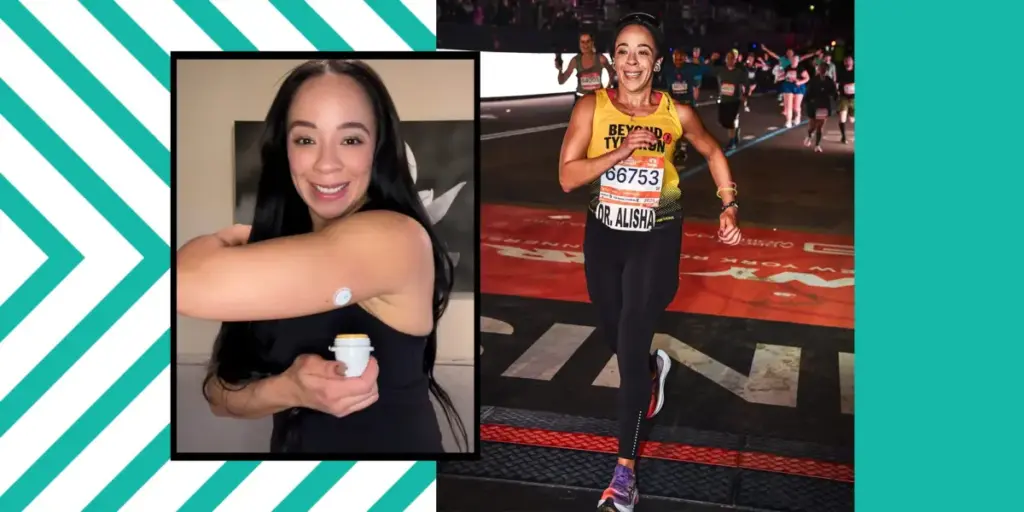
At the age of 35, Dr. Alisha Brown received a diagnosis that fundamentally altered her relationship with her own body: Type 1 Diabetes (T1D). While commonly understood as a pediatric condition, Brown’s diagnosis placed her directly within the statistical minority of adult-onset cases—specifically the 37 percent of patients diagnosed after turning 30. Thrust into a sudden medical crisis that culminated in a bout of diabetic ketoacidosis (DKA) and an intensive care unit (ICU) stay, Brown faced not only a daunting chronic condition but also a wave of restrictive medical advice warning her to scale back her lifelong passion for high-intensity movement.
Rather than accepting physical limitations, Brown embarked on a remarkable physiological and psychological reclamation. Overcoming initial dismissive medical guidance and the profound identity crisis of adult-onset chronic illness, she transitioned from a novice runner to a marathoner within six months. Today, she is shattering stereotypes about chronic conditions, preparing for her third Abbott World Major marathon, serving as a charity runner for organizations like Beyond Type 1 and Black Girls Run, and partnering with elite medical technology brands like Team Abbott. Her journey offers a masterclass in resilience, the critical importance of personalized medical advocacy, and the power of community in navigating life-altering health diagnoses.
Detailed Chronology: From Pandemic Burnout to the ICU
The Overtaxed Body and Unseen Red Flags
Leading up to her diagnosis, Brown, like many professionals navigating the final quarter of the year amidst the backdrop of the global pandemic, attributed her profound exhaustion to professional burnout. Working extended hours to wrap up major projects, managing a bustling career, and finalizing her doctoral studies made physical fatigue feel entirely normal.
However, unlike previous years where structured holiday breaks away from technology allowed her body to fully bounce back, the restorative reset failed to materialize. The definitive breaking point occurred not at her desk, but on the dance floor.
During a routine Zumba class—a choreography she knew intimately—her body simply refused to execute familiar movements. As subsequent songs played, a heavy sluggishness accumulated, prompting her regular instructor to note a stark shift in her physical output. Despite the glaring lack of coordination and energy, diabetes remained completely off her radar. She harbored zero family history of the condition, and her annual check-ups and lab results had consistently returned entirely clear.
The Urgent Care Intervention and DKA Diagnosis
Prompted by maternal intuition, Brown’s mother observed subtle weight loss and urged her to seek medical evaluation immediately, pressing with a pragmatic ultimatum: "Just go. If it’s nothing, then it’s nothing. But if it’s something, we need to know."
At urgent care, a comprehensive panel—including negative screenings for pregnancy and COVID-19—led the attending nurse practitioner to perform a simple finger-stick blood glucose test. The reading registered an alarming 362 mg/dL (compared to normal post-meal levels around 140 mg/dL and fasting ranges of 70 to 99 mg/dL).
Brown was suffering from diabetic ketoacidosis (DKA), a life-threatening medical emergency wherein the pancreas ceases insulin production entirely, forcing the body to break down fat for fuel at a toxic rate. This physiological collapse accounted for her extreme fatigue, uncharacteristic weight loss, and metabolic distress, landing her directly in the ICU.
Navigating the Psychological Identity Crisis
The psychological toll of waking up in an ICU with a lifelong chronic disease proved just as challenging as the physical recovery. Brown experienced an intense period of self-blame, replaying the months leading up to her diagnosis and castigating herself for pushing through abnormal fatigue and failing to consult a physician sooner.
Furthermore, adjusting to the daily administrative burden of living with T1D—frequent finger sticks, continuous glucose monitoring (CGM) sensor changes, quarterly endocrinology labs, and meticulous carbohydrate counting—triggered profound grief over the sudden loss of pre-diagnosis bodily autonomy.
Supporting Context & Metrics: The Reality of Adult-Onset T1D and Exercise Physiology
Understanding Adult-Onset Type 1 Diabetes
Type 1 diabetes is an autoimmune condition where the body’s immune system mistakenly attacks and destroys the insulin-producing beta cells in the pancreas. While historical medical dogma categorized T1D strictly as "juvenile diabetes," contemporary epidemiological research reveals that a significant portion of diagnoses occur in adulthood. According to recent clinical data highlighted in medical journals such as the American Journal of Managed Care (AJMC), roughly 37 percent of all T1D cases are diagnosed in patients over the age of 30.
Adult-onset T1D often presents diagnostic challenges because healthcare providers frequently misdiagnose adult patients with Type 2 diabetes due to age demographics, delaying essential insulin therapy and increasing the risk of acute metabolic crises like DKA.
The Battle Against Restrictive Medical Advice
In the immediate aftermath of her diagnosis, Brown encountered traditional endocrinological paradigms that heavily favored conservative activity restrictions. Initial physicians suggested that managing glucose levels with insulin and a strict low-carbohydrate diet was incompatible with high-volume athletic performance, predicting she would no longer be able to sustain her previous level of exertion.
This guidance was exacerbated by improper initial dosing strategies:
The Over-Insulinization Trap: Her first endocrinologist prescribed high basal and bolus insulin doses without factoring in her extensive physical activity history. This created a high risk of dangerous post-workout hypoglycemia (low blood sugar).
The Two-Year Pivot: It took nearly two years of self-advocacy before Brown secured care with an endocrinologist willing to collaborate dynamically. By evaluating her athletic demands, her new physician reduced her insulin dosages proportionally to exercise output, virtually eliminating dangerous post-workout hypoglycemic crashes.
Multidisciplinary Support: Modern athletic management of T1D requires specialized clinical partnerships. Once Brown’s endocrinologist connected her with certified diabetes care and education specialists (CDCES) and registered dietitians experienced in active T1D populations, her training trajectory transformed entirely.
Official Statements and Expert Perspectives
Redefining Chronic Disease Management
Medical authorities increasingly recognize that physical activity is not only safe for individuals with Type 1 diabetes but highly beneficial for long-term metabolic control, cardiovascular health, and mental well-being. Dr. Brown’s trajectory aligns with modern sports endocrinology insights, which emphasize individualized carbohydrate replacement, continuous glucose monitoring integration, and flexible insulin adjustments rather than blanket bans on vigorous exercise.
"When I was diagnosed, I had a few doctors tell me, ‘You’re not going to be able to sustain your level of activity.’… I wanted a healthcare team that would consider all of me. I was in the process of finishing my doctorate and working full-time. That’s stressful. I needed an outlet, and fitness has always been mine." — Dr. Alisha Brown
Community and Technological Empowerment
The evolution of diabetes technology—specifically Continuous Glucose Monitors (CGMs) such as the FreeStyle Libre 3 Plus—has revolutionized how endurance athletes manage T1D. Real-time data streams allow runners to preemptively counteract glycemic fluctuations mid-stride. However, technology alone is insufficient without a robust psychological support network.
Organizations such as Beyond Type 1, Black Girls Run, and digital peer communities play an indispensable role in combating the isolation frequently reported by newly diagnosed adults. As Brown notes regarding her progression from a single 5K to the New York City Marathon:
"My story is really about how much a community can make a difference in your life… Throughout this journey—my family, the people I work out with, other T1Ds—they all helped me stop hiding and start pursuing these awesome goals."
Future Outlook: Miles Beyond Limits
Scaling Global Endurance Landmarks
What began as a tentative return to the gym floor via strength training and a casual spring 5K in March 2025 has snowballed into an elite endurance schedule. Dr. Brown’s athletic calendar reflects a commitment to redefining what is physically possible with an autoimmune condition:
The Chicago Marathon: Focused on setting a personal record (PR) while actively fundraising for Black Girls Run.
The Sydney Marathon: Participating as an official member of Team Abbott, representing the medical technology manufacturer whose devices empowered her training safety.
The New York City Marathon: Returning for a repeat run with the Beyond Type 1 charity team.
In total, Brown’s racing schedule for the year encompasses three major marathons and over $13,000 raised for charitable foundations. According to performance analytics platforms like Strava and Runna, her training efficiency has improved to the point where she is tracking to slash her marathon finish times by upwards of 30 minutes, alongside noticeable gains in running form, VO2 max capacity, and sheer athletic self-confidence.
Key Pillars for Managing T1D Endurance
Drawing from her clinical background, academic rigor, and lived athletic experience, Dr. Brown outlines three foundational tenets for athletes managing chronic conditions:
Prioritize Sustainable Enjoyment: Avoid burning out under rigid, joyless training blocks. Diversify cross-training with barre, reformer Pilates, and strength conditioning (such as squats, hip thrusts, and hamstring curls) to protect joints and prevent overuse injuries.
Master Nutritional Fueling Protocols: For T1D runners, carbohydrate intake requires granular precision. Working alongside a clinical dietitian, Brown established a fueling strategy consuming 20 to 30 grams of carbohydrates every hour during long runs (utilizing gels, fruit snacks, and glucose gummies), paired with strategic hydration at every mile marker.
Know Your ‘Why’: Chronic illness often attempts to impose artificial ceilings on human potential. By adopting the mantra "miles beyond limits," Brown proves that chronic disease management does not mean shrinking one’s life, but rather expanding the boundaries of what resilient human biology can achieve.