
Executive Overview
In the modern fitness landscape, few phrases are thrown around with as much casual frequency—or misunderstood with as much regularity—as the instruction to "engage your core." Whether echoing from the front of a crowded Pilates studio, barked by an overzealous bootcamp instructor, or written into the digital programming of an app-based workout, the directive assumes a universal understanding of human anatomy that simply does not exist for the average exerciser. For most, "engaging the core" translates to an instinctive, superficial tensing of the stomach muscles, as though bracing for an impending blow.
This oversimplification, however, misses the mark entirely. True core engagement is a complex, multi-layered neuromuscular skill. It requires deliberate practice, an understanding of deep stabilizers, and the coordination of breath, pelvic alignment, and ribcage control. When executed correctly, it serves as the foundational cornerstone for every physical movement a human body can perform, directly translating to enhanced athletic performance, superior posture, and a drastically reduced risk of musculoskeletal injury.
Enter Holly Fivian, a seasoned personal trainer and the visionary founder of the strength-training platform Holsm. Fivian advocates for a paradigm shift in how fitness enthusiasts approach their physical conditioning, particularly encouraging women and beginners to establish a neurological connection with their deep core before they ever pick up a heavy barbell or attempt complex compound movements. According to Fivian, the gateway to mastering this elusive mind-muscle connection is not found in endless crunches or punishing sit-ups, but in a deceptively challenging, low-impact exercise borrowed from physical therapy: the dead bug.
This comprehensive report explores the anatomy of core activation, deconstructs why traditional abdominal exercises often fall short, and presents an authoritative, step-by-step masterclass designed to help you harness the full power of your deepest stabilizing muscles.
Detailed Chronology: The Evolution of Core Training and the Rise of Functional Stability
To understand the current obsession with deep core engagement, one must look at how the fitness industry has evolved over the past several decades.
The Era of Superficial Abdominal Training (1980s–1990s)
For generations, physical fitness paradigms were dominated by aesthetics rather than function. The prevailing wisdom of the 1980s and 1990s dictated that a strong core was synonymous with a "six-pack"—the rectus abdominis. Fitness culture was saturated with infomercials promoting ab-rollers, mechanical crunch machines, and endless repetitions of floor sit-ups.
While these movements certainly fatigued the superficial abdominal wall, they largely ignored the intricate network of deep stabilizing muscles that wrap around the spine and pelvis. Worse yet, the repetitive spinal flexion of traditional sit-ups frequently led to chronic lower back pain, disc issues, and postural imbalances, as practitioners unknowingly relied on their hip flexors rather than true core stabilizers.
The Functional Fitness Revolution (2000s–2010s)
As sports science advanced, researchers and physical therapists began to recognize that the human spine is designed primarily to resist movement, not to create it through endless flexion. This realization sparked the "functional fitness" movement. Pioneers in biomechanics shifted the spotlight away from the rectus abdominis and toward the transverse abdominis, the internal and external obliques, the multifidus, and the pelvic floor.
During this era, planks, side planks, and isometric holds became the gold standard of core conditioning. However, a gap remained: while trainers understood that clients needed to stabilize their spines, they frequently struggled to teach how to activate these deep muscular layers dynamically while moving the limbs.

The Modern Neuromuscular Approach (Present Day)
Today, the fitness industry is experiencing a third wave—one rooted in neuromuscular re-education and breathwork. Modern practitioners like Holly Fivian emphasize that core engagement is not a static state, but a dynamic, breath-guided process. The integration of clinical movements like the dead bug into mainstream strength training represents the culmination of decades of physical therapy research. By teaching the nervous system to maintain spinal and pelvic stability while the arms and legs move independently, trainers are bridging the gap between rehabilitation and high-performance athletics.
Supporting Context & Metrics: Why the Deep Core Matters
The human core is far more than a washboard stomach; it is a three-dimensional cylinder designed to protect the spine, transfer force between the upper and lower body, and regulate intra-abdominal pressure.
Anatomy of the Core Cylinder
To effectively engage the core, one must understand its constituent parts:
- The Roof: The diaphragm, which controls respiration and plays a critical role in managing intra-abdominal pressure.
- The Floor: The pelvic floor muscles, which support the pelvic organs and work in tandem with the diaphragm.
- The Walls: The transverse abdominis (acting like a natural weightlifting belt wrapping horizontally around the waist), the internal and external obliques (which control rotation and lateral flexion), and the rectus abdominis.
- The Back: The erector spinae and deep multifidus muscles, which stabilize individual vertebrae.
The Cost of Poor Core Engagement
According to epidemiological data from public health agencies, lower back pain remains one of the leading causes of global disability, affecting millions of adults annually. A significant percentage of these cases can be traced back to poor postural habits, muscular imbalances, and a failure to properly stabilize the spine during everyday lifting, bending, and twisting movements.
When the deep core fails to activate, the body compensates by overworking the hip flexors and lower back extensors. This compensation pattern accelerates wear and tear on lumbar discs and facet joints. Conversely, clinical studies on lumbar stabilization exercises consistently demonstrate that mastering deep core activation significantly reduces pain scores, improves functional capacity, and protects against future injury.
Official Statements and Expert Insights
Holly Fivian’s methodology challenges the "no pain, no gain" mentality that has historically dominated strength training. By stripping movement down to its foundational components, she prioritizes neurological precision over sheer volume.
"This is where everybody starts," Fivian tells Fit&Well, referring to the dead bug exercise as the ultimate diagnostic and training tool for core mastery.
"How your core feels during a dead bug is how I want it to feel during your other movements too. A properly performed dead bug should never feel easy."
Fivian emphasizes that the temptation to rush through abdominal exercises is counterproductive. When clients complain that core work feels too easy or boring, it is almost invariably because they are bypassing their deep stabilizers and relying on momentum, gravity, or superficial muscle gripping.
"Imagine there are magnets on your hip bones gently drawing towards one another while your navel gently draws inwards and upwards," Fivian explains, offering a vivid tactile cue for her clients. "Keep your neck, shoulders, and jaw relaxed."
This emphasis on relaxation in the upper body is crucial. When individuals attempt to tense their core, they frequently fall into the trap of clenching their jaws, elevating their shoulders, and holding their breath—actions that actually increase unwanted tension and disrupt the natural mechanics of the diaphragm.
The Masterclass: A Four-Step Dead Bug Progressions Routine
To help practitioners master the art of core engagement, Fivian has curated a progressive, four-step routine based entirely on variations of the dead bug. Each movement is designed to be performed for 3 sets of 30 seconds, with 15 seconds of rest between sets.
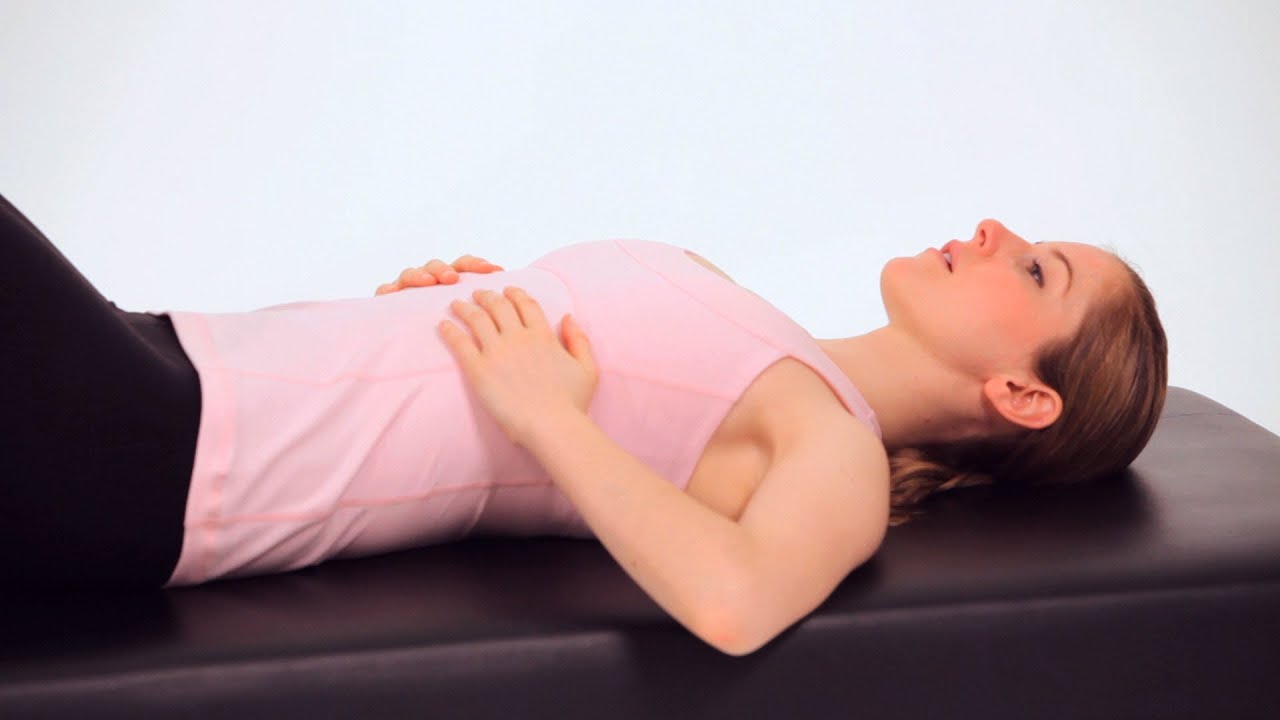
1. Diaphragmatic Breathing (Rib Cage Breathing)
Before you can stabilize your spine while moving your limbs, you must learn to control your breath and manage intra-abdominal pressure.
- How to Perform: Lie flat on your back with your knees bent and your feet flat on the floor. Place one hand on your chest and the other on your ribcage. Inhale deeply through your nose, allowing your ribs to expand outward and your abdomen to rise softly, ensuring your chest remains relatively still. As you exhale through pursed lips, feel your ribcage knit together and slide downward toward your hips.
- Trainer Tip: "Imagine there are magnets on your hip bones gently drawing towards one another while your navel gently draws inwards and upwards. Keep your neck, shoulders and jaw relaxed," says Fivian.
- Prescription: 3 sets | 30 seconds work | 15 seconds rest
2. The Classic Dead Bug
Once you can coordinate your breath, you are ready to introduce the foundational dead bug position, which tests your ability to maintain a neutral spine against gravity.
- How to Perform: Lie on your back with your arms extended straight up toward the ceiling over your shoulders. Lift your knees up so your hips are bent at 90 degrees and your shins are parallel to the floor (a tabletop position). Engage your core so that your lower back remains gently pressed against the floor without a massive arch developing.
- Trainer Tip: "Think about keeping your ribs and hips connected and in line, rather than allowing the ribs to flare upwards," says Fivian. Maintaining this sealed connection between your lower ribcage and your pelvis is the secret to unlocking true abdominal recruitment.
- Prescription: 3 sets | 30 seconds work | 15 seconds rest
3. Dead Bug Heel Taps
As you progress, you will begin introducing movement into the lower extremities, which challenges your core’s ability to resist anterior pelvic tilt (the tendency for the lower back to arch off the floor).
- How to Perform: Begin in the classic dead bug tabletop position with your arms extended upward and knees bent at 90 degrees. Maintaining your core bracing and keeping your lower back anchored to the floor, slowly lower one leg and tap your heel gently on the floor, then return it to the starting position. Alternate legs with each repetition.
- Trainer Tip: "If your ribs begin to flare, your pelvis changes position or your back starts to arch away as your heel lowers, shorten the movement and bring your knees closer to your chest," advises Fivian. Quality of movement always supersedes range of motion.
- Prescription: 3 sets | 30 seconds work | 15 seconds rest
4. Dead Bug Leg Extension
The pinnacle of this foundational progression, the dead bug leg extension significantly increases the lever length, placing maximal demands on your core stabilizers.
- How to Perform: From the tabletop position, slowly extend one leg straight out away from your body, hovering it a few inches above the floor, while simultaneously keeping your torso completely rigid. Exhale as you draw the leg back to the starting position, then repeat on the opposite side.
- Trainer Tip: "The lower and straighter the leg travels, the greater the demand on the core," notes Fivian. If you feel your lower back arching or your belly doming upward, regress the movement by extending the leg higher toward the ceiling rather than straight out toward the floor.
- Prescription: 3 sets | 30 seconds work | 15 seconds rest
Future Outlook
As the fitness and wellness industries continue to mature, the emphasis on functional longevity is poised to eclipse superficial aesthetic goals entirely. Exercises like the dead bug—once relegated to the quiet corners of physical therapy clinics—are rapidly becoming mainstream staples of intelligent workout programming.
The future of physical training lies in body literacy: teaching everyday exercisers not just what to do, but how to inhabit and control their bodies with precision. By trading mindless crunches for mindful, breath-integrated core stabilization, practitioners can build a bulletproof midsection that supports them not only in the gym, but through every single movement of daily life. Whether you are lifting heavy weights, chasing grandchildren, or simply sitting at a desk, mastering the deep core through progressive movements like Holly Fivian’s dead bug routine offers a timeless blueprint for lifelong strength, resilience, and vitality.