For decades, the grueling production schedules of British continuing dramas have served as the ultimate trial by fire for television talent. While streaming platforms and high-end television (HETV) command headlines for multi-million-pound budgets and cinematic scope, the foundational talent pipeline of the UK television industry continues to run through its longest-running soaps.
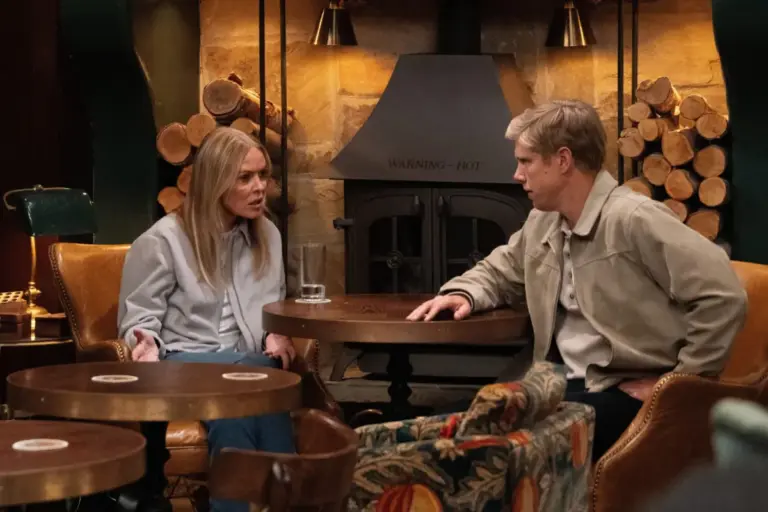
At the Edinburgh TV Festival, this dynamic took center stage during BBC Studios’ annual “The Network” talent workshop. Attendees were treated to a rare live script-reading featuring EastEnders stalwarts Adam Woodyatt and Gillian Taylforth—better known to millions as Albert Square’s Ian and Kathy Beale. More than a nostalgic trip down memory lane, the event showcased original work developed by emerging trainees working hand-in-hand with senior production teams and veteran actors.
Yet, behind the scenes, this workshop underscored a much larger, urgent conversation about the state of entry-level access, working-class representation, and upskilling within the British media landscape. As the industry faces economic tightening and shifting commissioning models, industry leaders are increasingly speaking out against the snobbery directed at continuing drama. Far from being "low-brow" television, soaps like EastEnders, Waterloo Road, and Casualty are being championed as the modern-day equivalent of repertory theatre—essential incubators that forge resilience, narrative discipline, and technical mastery in the next generation of screenwriters, directors, and executives.
Detailed Chronology and Festival Events
The convergence of veteran star power and raw, emerging talent defined the atmosphere at the Edinburgh TV Festival. The centerpiece of BBC Studios’ showcase for "The Network" program was a collaborative script-reading that brought together industry newcomers and household names.
The material read by Woodyatt and Taylforth was the direct product of a mentorship initiative. A contingent of trainees, specializing in story development and scripting, worked closely alongside senior members of the EastEnders production infrastructure. They crafted scenes specifically tailored for the festival, offering attendees a transparent look at the meticulous mechanics of soap writing.
Following the reading, a panel discussion featured Woodyatt, Taylforth, and Maisie Adair—a former program participant who successfully transitioned into a full-time role as an EastEnders storyliner. The session also offered a unique look at actor-turned-director dynamics. Adam Woodyatt, who has played Ian Beale since the soap’s inception in 1985, stepped behind the camera to direct the specially commissioned festival scenes.
Reflecting on his directorial debut during the panel, Woodyatt admitted with characteristic humor that he “actually learned a lot doing that,” joking that his primary takeaway was a stark operational rule: "Never try and be in the same scene that you’re directing as your first crack at it."
Gillian Taylforth, whom Woodyatt affectionately addresses as "Mum" both on and off-screen, admitted she grew emotional watching her fictional son helm the production. "I thought, ‘Oh bless him, that’s my boy!’" she shared, before drawing laughs from the audience by noting that Woodyatt still couldn’t resist directing her spatial awareness: "He has to tell me where the camera is. ‘Mum, look over there. That’s where you are.’ ‘Oh, alright,’ I’m terrible."
The collaborative spirit of the workshop was further championed by Kris Green, BBC Studios’ former Training Executive and current Script Executive for Silent Witness. Green, who previously navigated the rigorous writing rooms of EastEnders as a storyliner and script team member, emphasized the vital nature of these structured entry points. "These kinds of schemes are so important because the future of our industry is always relying on the next generation of creatives," Green noted. "We’ve got 12 storytellers this year; they’re fantastic, and we’re always as a group so surprised at how good they are… but they need to learn somewhere."
Supporting Context, Metrics, and Industry Impact
The practical benefits of cutting one’s teeth in continuing drama are well-documented among industry alumni, many of whom have gone on to shape the landscape of global streaming and prestige television.
Maria Odufuye, a former script editor on EastEnders whose credits now include Netflix’s sci-fi hit Supacell, Sky’s The Iris Affair, and the final season of Sex Education, credits the BBC soap with transforming her career trajectory. Despite earning a first-class degree in Drama and Creative Writing, Odufuye found that traditional academia could not replicate the breakneck speed and structural demands of a multi-weekly broadcast schedule.
"Being a born and bred East Londoner, working on EastEnders was a dream come true, and it completely shaped my career," Odufuye revealed. "Despite having a first-class degree… it was the hands-on experience of working in continuing drama that taught me the most and opened doors for me in High-End Television that otherwise I wouldn’t have had access to."
Odufuye emphasized that continuing drama functions as an equalizer, providing an invaluable gateway for working-class and historically underrepresented talent who lack pre-existing industry networks. "EastEnders gave me the speed, resilience, work ethic and understanding of story structure and hooks that later set me apart in HETV," she added.
Elizabeth Kwenortey, another former EastEnders script editor whose subsequent credits include Steven Knight’s SAS Rogue Heroes, House of Guinness, and ITV’s Grantchester, echoed these sentiments. During her tenure on Albert Square, Kwenortey worked on pivotal, high-profile storylines, including Kim Medcalf’s return as Sam Mitchell, Suki Panesar’s award-winning coming-out arc, and the romance between Keegan Baker and Tiffany Butcher.
Kwenortey noted that the rapid-fire production cycle provides a unique safety net wrapped in accountability: "It really was a space to make mistakes, to learn new things, but to gain insight and proximity to people who really know what they’re doing… It really showed me I had a chance to get into the television industry and learn."
Official Statements and Institutional Perspectives
As the television landscape grapples with budget contractions and a reduction in overall greenlit productions, industry leaders are raising alarms over the potential erosion of entry-level opportunities. However, heavyweights within the global streaming ecosystem are actively pushing back against historical snobbery toward continuing drama.
Anne Mensah, Vice President of Content at Netflix and an alumna of the BBC school drama Waterloo Road, used her platform to vigorously defend the soap and continuing drama genre. Speaking to media outlets at the festival, Mensah pointed out an under-discussed element of industry bias: class snobbery.
"It’s also because there’s a class thing," Mensah stated, addressing the institutional dismissal of continuing drama despite its powerhouse viewership figures. "People want to see themselves, and you can do that in clever ways. That’s why [shows like] Adolescence resonated because it was of the world of the people that were watching."
Mensah argued that continuing dramas offer a masterclass in television craftsmanship that cannot be replicated in shorter-run formats. Echoing this perspective, Adam Woodyatt drew a direct historical parallel between modern soaps and traditional theatrical institutions.
"We are the modern-day weekly repertory theatre, which is where people used to cut their teeth; in the theatre doing weekly rep on tour for months and months and months. That’s what we are now," Woodyatt asserted. "We need the whole genre to be strong."
Future Outlook: Preserving the Training Ground
The challenges facing the UK television sector moving forward are profound. As production budgets tighten and shorter episodic orders become the industry standard, the structured environments that allow for comprehensive training and upskilling are increasingly under threat.
When entry-level pipelines shrink, the ripple effects are felt across the entire ecosystem—from aspiring runners and script editors to actors stepping behind the camera for the first time, much like Woodyatt did at the Edinburgh TV Festival. Yet, the persistent advocacy of creators, executives, and veteran performers highlights a collective determination to protect these vital institutions.
Continuing dramas remain the lifeblood of British television storytelling. By continuing to open doors for working-class voices, fostering unyielding professional resilience, and providing an unmatched crucible for creative execution, soaps like EastEnders ensure that the future of the nation’s screen industry remains robust, diverse, and fundamentally secure.