Executive Overview
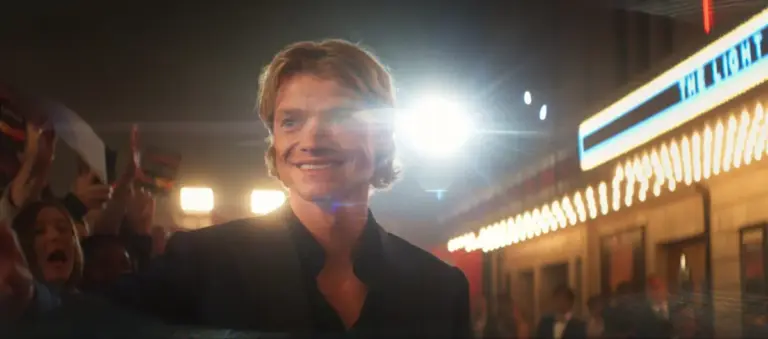
The intersection of high-stakes sports entertainment, celebrity star power, and corporate marketing has reached a fever pitch with the launch of DraftKings’ expansive new promotional blitz. Anchored by multi-platinum musician and actor Nick Jonas alongside comedic powerhouse Kevin Hart, the high-profile campaign is engineered to dominate television screens and digital platforms throughout the unfolding NFL and NBA seasons.
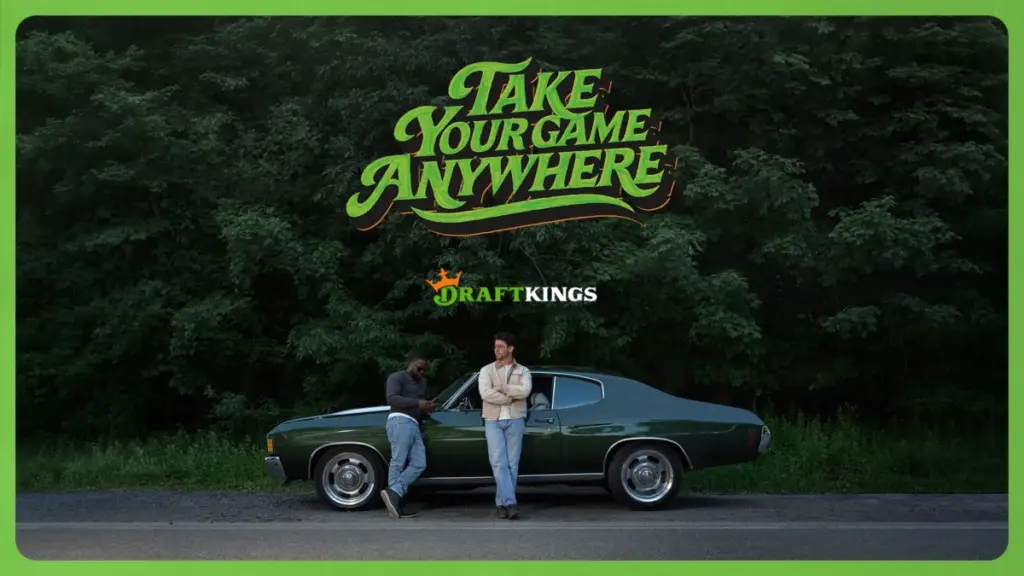
Yet, behind the polished aesthetics of a cross-country road trip depicted in the advertisements lies a grueling reality of commercial production: stifling heat, sealed windows, and a stationary vehicle mounted on a non-operational trailer during one of the year’s most oppressive summer heatwaves in the Northeast.
Beyond the cinematic trials of its principal actors, this multi-platform initiative represents a pivotal evolution for DraftKings as a corporate entity. While sports wagering continues to expand legislatively across the American landscape—currently active in a vast majority of jurisdictions while remaining prohibited in key states such as California, Texas, Georgia, and Minnesota—DraftKings is making a calculated push to capture consumer mindshare on a truly national scale. Driven by the recent proliferation of prediction markets and alternative gaming formats, the company is positioning itself not merely as a traditional sportsbook for states with legalized gambling, but as an interactive entertainment ecosystem accessible to fans nationwide.
With significant financial backing, heavy-hitting athletic cameos from sports icons like Chad Ochocinco and Carmelo Anthony, and the comedic chemistry of a proven cinematic duo, DraftKings is executing one of its most ambitious marketing gambits to date. This report provides an in-depth look at the mechanics of the campaign, the strategic vision driving the enterprise, the economic realities of sports-industry advertising, and what this signals for the future of fan engagement.
Detailed Chronology: From Concept to Production and the Heat of the Set
The genesis of the DraftKings campaign required a creative alignment capable of cutting through the saturated landscape of modern sports broadcasting. To achieve this, the sports-wagering giant partnered with creative agency Translation to conceptualize a narrative framework that would instantly resonate with mainstream audiences. The resulting concept—a sprawling, cross-country road trip featuring Kevin Hart and Nick Jonas—was designed to feel epic in scale, blending humor, high energy, and relatable camaraderie.
However, translating a cross-country odyssey into a controlled, cost-effective commercial production involves a distinct set of logistical hurdles. Nick Jonas, despite his extensive career touring the globe and traversing highways on luxury tour buses, quickly learned that commercial filmmaking operates under an entirely different set of physical laws.
Recalling the intense production schedule in the New York and New Jersey areas, Jonas detailed the stark unglamorous conditions of shooting on location during what meteorological data confirmed as one of the hottest stretches of the year.
"When you’re shooting like that, the vehicle that you’re in is on a practical trailer. It can’t be on. Therefore, the air conditioning can’t be on at all," Jonas revealed.
The physical constraints of the set compounded the environmental discomfort. To maintain continuity, eliminate ambient engine noise, and capture the precise lighting required for the camera shots, the vehicle’s windows had to remain completely rolled up.
"We were both kind of dying in the car, and the windows had to be rolled all the way up for it to look the right way for the camera shot," Jonas recalled with characteristic resilience. "But we survived."
The resulting dynamic on screen relies heavily on the contrasting personas of the two leads. Entertainment fans previously witnessed the interplay between Hart and Jonas in recent iterations of the blockbuster Jumanji franchise. In this commercial context, Hart’s hyper-kinetic, high-energy delivery functions as a comedic spark, while Jonas assumes the role of the grounded, deadpan straight man. This push-and-pull dynamic is precisely what the creative teams at DraftKings and Translation are banking on to rivet viewer attention during commercial breaks.
Chaucer Barnes, Chief Marketing Officer of Translation, illuminated the strategic intent behind the campaign’s tone. Addressing the challenges of breaking through consumer fatigue during live sporting events, Barnes noted, "We were trying to boil the ocean a little bit." DraftKings needed to convey complex structural changes within its business model to an audience accustomed to tuning out standard commercial breaks. "We need you to lean in because we actually have big news to deliver," Barnes emphasized.
Supporting Context & Metrics: The Financial Engine of Sports Advertising
The deployment of a campaign featuring elite-tier celebrities is backed by staggering financial commitments. In the hyper-competitive arena of sports gaming, brand visibility during live broadcasts is not merely a promotional luxury—it is an existential necessity. As legacy media consumption shifts, live sports remain the last true bastion of appointment-to-view television, commanding massive audiences and correspondingly astronomical advertising rates.
According to data compiled by iSpot, an authoritative tracker of brand ad-spending across television and digital platforms, DraftKings is one of the most prolific corporate spenders in the sports media ecosystem. During the 2025 NFL season, DraftKings poured approximately $69.5 million into television advertising alone. This massive capital expenditure ensured continuous saturation during pre-game shows, halftime analyses, and live game broadcasts. Similarly, during the concurrent NBA seasons, the company invested roughly $12.8 million in targeted commercial placements.
These multi-million-dollar outlays are carefully calculated investments designed to maximize return on customer acquisition. Historically, DraftKings has found exceptional success utilizing recognizable cultural icons to humanize the brand and foster consumer trust. According to iSpot analytics, some of the company’s most effective and widely liked historical campaigns have heavily featured Kevin Hart, whose broad comedic appeal bridges the gap between casual viewers and hardcore sports analysts.
By extending the current campaign deep into the football and basketball calendars, DraftKings is ensuring structural continuity. The television spots will not run as a brief, one-off flight; rather, they are structured as a long-running narrative arc. As the weeks progress, viewers will encounter various iterations of the Jonas-Hart road trip, supplemented by guest appearances from sporting legends such as former NFL wide receiver Chad "Ochocinco" Johnson and NBA Hall of Famer Carmelo Anthony. This layered approach ensures that fatigue is mitigated through rotating creative executions while maintaining a unified core message.
Official Statements and Strategic Shift: Beyond Traditional Sports Betting
To fully understand the weight of this marketing blitz, one must examine the fundamental regulatory and business evolution occurring within DraftKings. For years, the commercial narrative surrounding sports betting companies was inextricably bound to the patchwork of state-by-state legislative approvals.
Currently, sports wagering remains heavily regulated, with full operational approval realized in the majority of U.S. states. However, 11 states—most notably population-heavy markets such as California, Texas, Georgia, and Minnesota—continue to prohibit traditional sports betting. For companies reliant on state-by-state legalization, these exclusion zones represented significant blind spots in national marketing efficiency; running expensive national television campaigns meant paying for impressions in markets where users could not legally access the primary product.
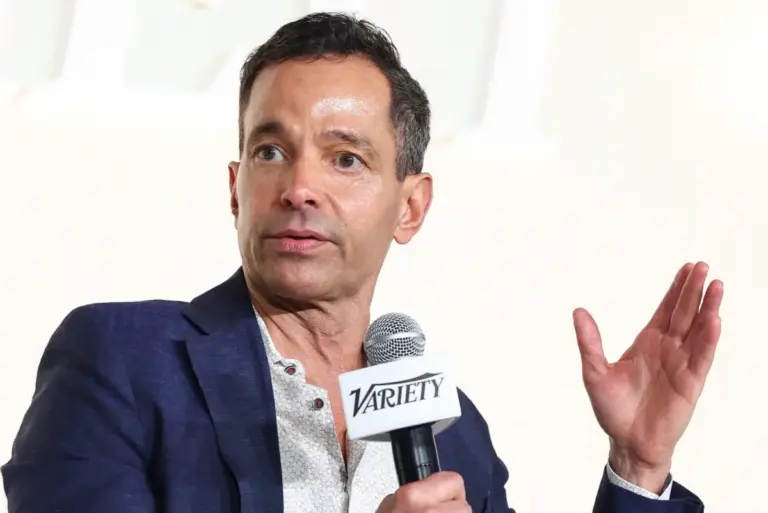
DraftKings is executing a strategic pivot to bypass this limitation. Stephane Sherman, Chief Marketing Officer of DraftKings, shed light on this paradigm shift during a recent executive interview. The core objective of the new campaign, according to Sherman, is to educate consumers that they can interact with the DraftKings brand irrespective of state-specific sports-wagering laws, largely thanks to the rapid ascent of prediction markets and ancillary gaming products.
"It is a real change for us from a business standpoint," Sherman stated, emphasizing that the expansive campaign will actively "invite more fans to be a part of the DraftKings experience."
This evolution repositions DraftKings from a strict bookmaking enterprise into a broader digital entertainment and prediction platform. By offering nationwide interactive experiences that comply with federal and state frameworks outside of direct sports betting, DraftKings can justifiably advertise on national networks without wasting capital on unreachable audiences in non-wagering states.
Translation CMO Chaucer Barnes reinforced this sentiment, noting that the campaign’s overarching goal is to expand consumer literacy regarding the brand’s diversified service offerings. The creative challenge was to communicate this corporate expansion without alienating the core audience of sports enthusiasts who view DraftKings strictly through the lens of fantasy sports and game-day wagering.
Future Outlook: The Competitive Landscape and What Lies Ahead
As the sports entertainment calendar rolls deeper into the high-stakes months of winter and spring, the battle for consumer attention among sports-wagering giants will only intensify. DraftKings is by no means operating in a vacuum; fierce competitors such as FanDuel and BetMGM continue to deploy aggressive capital strategies, multi-platform media integrations, and high-profile celebrity sponsorships of their own.
The success of the Jonas-Hart campaign will serve as a bellwether for how effectively gaming conglomerates can pivot toward national, non-wagering engagement models. If DraftKings successfully leverages the comedic chemistry of its front-men and the star power of its athletic cameos to establish a broader entertainment footprint, it could permanently alter the playbook for digital marketing in regulated industries.
For Nick Jonas and Kevin Hart, the immediate aftermath of the campaign involves watching millions of sports fans react to their sweltering, window-sealed vehicle journey across America. For DraftKings, the stakes are vastly higher than a commercial production: they are betting that a unified, nationwide entertainment strategy can successfully capture the imagination of a continent, one game day at a time.