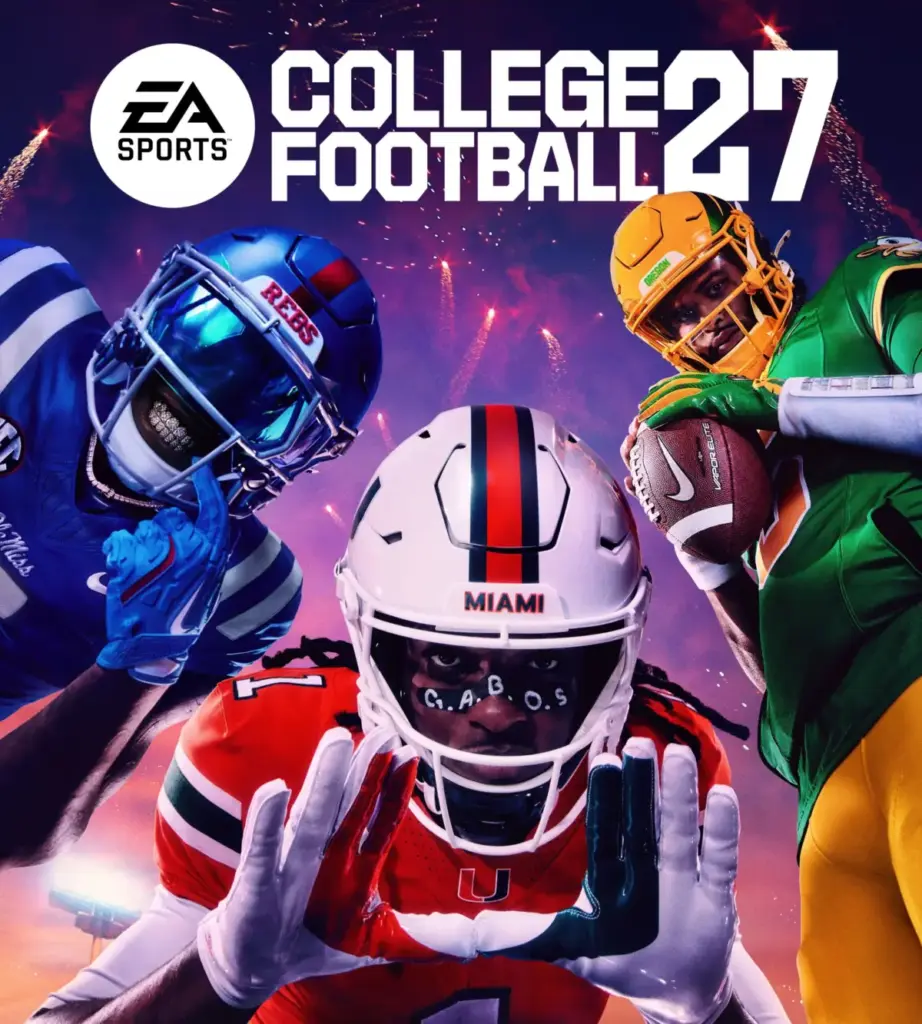
The intersection of athletics and high fashion has officially moved past the professional leagues and firmly into the collegiate ranks. When EA Sports unveiled the cover art for its highly anticipated College Football 27 video game, it did more than just announce the faces of its upcoming franchise iteration. It codified a cultural shift.
Gracing the cover are three of the most electrifying young talents in the sport: Miami Hurricanes wide receiver Malachi Toney, Oregon Ducks quarterback Dante Moore, and Ole Miss Rebels running back Kewan Lacy. Far from the generic, sanitized promotional imagery of the past, the cover presents these athletes as distinct cultural arbiters. Each player brings a sharply defined personal aesthetic that mirrors their approach on the gridiron—from Toney’s unapologetic, luxury-leaning streetwear and his signature G.A.B.O.S. (“Game Ain’t Based on Sympathy”) nose strip, to Moore’s relaxed West Coast cool, and Lacy’s unapologetic flash complete with diamond grillz.
This cultural milestone arrives at a time when sports and style are inextricably linked. Much like the NBA and Formula 1 before it, football has transformed the pre-game "tunnel walk" into a bona fide runway. Elite professionals like Travis Kelce, Jalen Hurts, and Tyrod Taylor have proven that athletic prowess and sartorial ambition go hand in hand, while stars like Caleb Williams challenge traditional gender norms with custom manicures.
Now, the incoming generation of collegiate athletes is inheriting this landscape, proving that personal expression is no longer an afterthought for modern football players—it is an essential pillar of their identity.
Detailed Chronology: From Gridiron to the Gaming Cover
The journey toward modern college football’s fashion revolution has evolved rapidly over recent years, driven by social media, changing NCAA Name, Image, and Likeness (NIL) policies, and a cultural shift among Gen Z athletes.
The Evolution of Athletic Self-Expression
Historically, football culture prioritized uniformity over individuality. Helmets, matching jerseys, and strict locker room codes were designed to strip away the personal in favor of the collective team unit. However, the rise of personal branding over the last decade cracked open the door for individual expression.
Players realized that their platforms extended far beyond the ninety minutes of game time. Social media channels like Instagram and TikTok transformed athletes into lifestyle influencers. By the time NIL legislation allowed college players to monetize their personal brands, the floodgates opened. Athletes were no longer waiting for the NFL draft to start building their portfolios; they were curating their identities from their freshman dorms.
The EA Sports College Football 27 Cover Reveal
The culmination of this cultural pivot materialized in Chicago during the official reveal event for College Football 27. Handpicked by EA Sports executives to represent the new era of the sport, Toney, Moore, and Lacy stepped onto the stage not just as elite competitors, but as style icons in their own right.
Dante Moore (Age 21): The Oregon Ducks quarterback leaned into Pacific Northwest nonchalance, arriving in a tailored beige loungewear set with his natural hair styled in a distinct ‘fro. His look encapsulated the understated, comfort-first ethos of his environment in Eugene.
Malachi Toney (Age 18): Representing Miami’s vibrant, high-stakes energy, Toney wore a crisp white t-shirt anchored by a striking gold "75" chain—a direct nod to his viral 75-yard touchdown against North Carolina State University during his breakout 2022 season.
Kewan Lacy (Age 19): The Ole Miss running back brought classic streetwear flair to the stage, sporting a white Supreme zip-up jacket paired with clean khakis and his signature grillz gleaming in the spotlight.
This carefully curated reveal signaled a monumental shift: video game developers are no longer just selling virtual gameplay; they are marketing cultural credibility.
Supporting Context & Metrics: The Business and Culture of Tunnel Walks
To understand why a video game cover featuring college athletes in streetwear matters, one must examine the broader economic and cultural ecosystem surrounding athlete fashion.
The Tunnel Walk Economy
The pre-game tunnel walk has evolved into a premier marketing real estate asset. Major fashion houses, independent streetwear labels, and luxury conglomerates routinely dispatch PR teams to secure placements on high-profile athletes.
NBA Precedent: The NBA paved the way, turning arena arrivals into high-fashion spectacles spearheaded by style pioneers like Russell Westbrook, LeBron James, and Shai Gilgeous-Alexander.
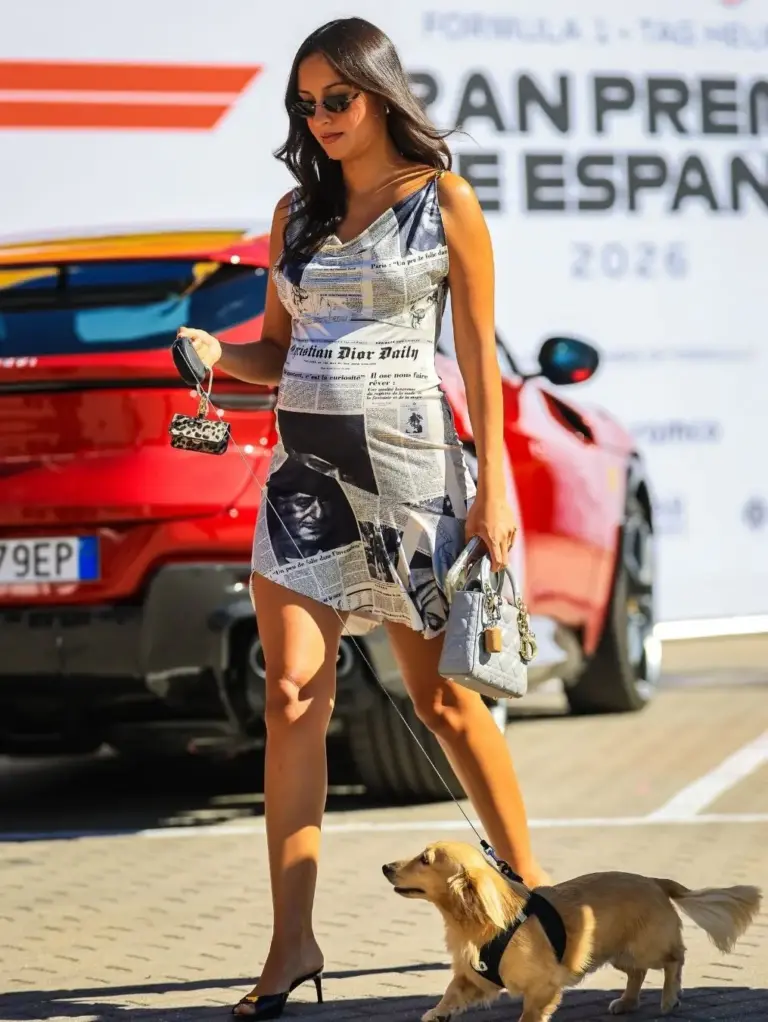
Formula 1 Boom: The "K-popification" and global explosion of F1 fandom introduced paddock fashion, where drivers wear bespoke designer overalls, vintage tees, and luxury accessories.
NFL Adoption: The NFL quickly caught up. Tight end Travis Kelce became a tabloid fixture due to his high-profile relationship and boundary-pushing outfits, while quarterbacks like Joe Burrow and Justin Jefferson earned coveted seats at the Met Gala. Other players, such as Odell Beckham Jr. and Saquon Barkley, have successfully crossed over into front-row fashion week fixtures and runway modeling for houses like Hermès.
The Institutional Infrastructure of Athlete Style
The mainstreaming of athlete fashion is no longer left to chance. Professional sports leagues now employ dedicated personnel to manage and elevate player aesthetics. A prime example is Kyle Smith, recognized as the NFL’s first-ever fashion editor, whose job is to bridge the gap between locker room culture and high-end couture.
While college athletes do not yet have access to full-time glam squads and institutional styling agencies, their exposure to digital media ensures they enter the collegiate ranks fully fluent in the language of contemporary fashion.
Official Statements: In the Words of the Cover Athletes
The athletes themselves possess a refreshing clarity regarding their style choices. Rather than relying on hired stylists to construct a fake persona, their fashion choices are rooted in authenticity, comfort, and personal narrative.
Malachi Toney on Authenticity and "Gatekeeping"
For Malachi Toney, fashion is an extension of his core philosophy, encapsulated by his mantra: G.A.B.O.S. (Game Ain’t Based on Sympathy). The acronym, worn proudly on his nose strip during games, has evolved from a motivational tool into a lifestyle statement.
"I feel like I have my own style," Toney tells Teen Vogue. "I wouldn’t look at anybody else—like ‘Oh, he’s putting on this brand, so I gotta put this on, too,’ or that I have to meet the same standard they’re at. I just want to be myself, for real."
When pressed on his wardrobe favorites, the 18-year-old wide receiver playfully admits to a protective streak over his preferred labels:
"I don’t want to say the brands. I like gatekeeping because people are going to start wearing them," Toney laughs. "लेकिन alright: I’m a fan of Paly, ERD, Chrome Hearts, and Better With Age. All the expensive stuff."
Dante Moore on Comfort and Regional Identity
Dante Moore approaches his wardrobe through the lens of functionality and the relaxed culture of the Pacific Northwest. For Moore, personal style is about staying loose and calm—traits he carries directly onto the football field.
"I like to be comfortable when it comes to my style and just being who I am," Moore explains. "That’s the same approach I take to the field and staying loose. My personal style lets me express the way I feel."
Discussing the regional influence on his everyday dress, Moore notes the contrast between coastlines:
"In my everyday life, I’m wearing pajamas or something along those lines. You’ll most likely find people wearing Nike or Dr. Martens. Nothing too crazy. We don’t really dress up as much [in Oregon]."
Kewan Lacy on Anti-Pressure and Organic Curation
Ole Miss running back Kewan Lacy takes an entirely organic approach to his wardrobe, refusing to let the pressures of public perception dictate his closet.
"Usually, I wear whatever unless there’s an event. That’s when I have to dress up," Lacy shares. "I feel like there’s no pressure to dress up. I’m not trying to impress anybody. I wear whatever catches my eye. I try to get pieces I like, and over time, they just come together for me."
Iron-Clad Mentalities Beyond the Closet
Beyond aesthetics, all three athletes share an unshakeable psychological framework for managing the intense pressures of being the new face of collegiate football.
Dante Moore:"Pressure is a privilege. So you’ve got to enjoy and embrace it."
Kewan Lacy:"I just take everything day by day. I don’t feel like there are any expectations from anybody. I try to make [my mom] proud the best I can. I try to be as successful as possible by not making the wrong decisions."
Future Outlook: The New Era of Football Culture
As Malachi Toney, Dante Moore, and Kewan Lacy prepare to navigate their college careers and eventual transitions to the professional leagues, they stand at the Vanguard of a redefined athletic culture.
The division between the jock and the tastemaker has officially collapsed. In the modern sports landscape, an athlete’s brand is built on a tripartite foundation: elite on-field performance, digital fluency, and distinct sartorial identity. EA Sports recognizing this reality by placing these three young men on the cover of College Football 27 signals that the industry values personality just as much as statistics.
As the July 2, 2026, gameplay access date approaches for MVP+ Membership subscribers, fans will not only be booting up their consoles to run pristine offensive schemes with these digital avatars; they will be interacting with cultural ambassadors who are actively modernizing what it means to be a football player.
Ultimately, these athletes prove that style in football is no longer just about looking good for the cameras. It is an extension of agency, an expression of individuality, and a testament to a generation refusing to stay inside the traditional boxes drawn for them.