In the modern fitness landscape, the prevailing cultural narrative often fixates on short-term milestones. Clients walking into gymnasiums and working with personal trainers routinely establish objectives centered around aesthetic transformations, dropping a dress size, or crossing the finish line of a local 5K run. While these milestones serve as fantastic, highly motivating targets that foster discipline and cardiovascular health, they represent only a fraction of what physical conditioning can—and should—achieve.
True physical longevity demands a paradigm shift. Beyond the immediate gratification of a leaner waistline or an improved cardiovascular output lies a more profound, enduring goal: "future-proofing" the human body. As the global population ages, health experts and longevity researchers are increasingly emphasizing "healthspan"—the number of years a person lives free from chronic disease and debilitating physical limitations—rather than mere lifespan.
Entering one’s 50s, 60s, 70s, and beyond with robust muscular strength, pristine balance, and unwavering joint stability is not a luxury; it is the ultimate determinant of independent living and quality of life. Muscle mass naturally declines with age—a degenerative process known as sarcopenia—which, if left unchecked, compromises metabolic health, increases the risk of falls, and robs individuals of their autonomy.
To combat this, fitness professionals advocate for a foundational, science-backed strength protocol. Regardless of an individual’s current age, baseline fitness level, or athletic background, incorporating three specific multi-joint, functional movements into a weekly routine can profoundly alter their trajectory of aging. By mastering the goblet squat, the plank with a knee drive, and the standard push-up, practitioners build an impenetrable armor of core stability, lower-body power, and upper-body resilience designed to withstand the test of time.
Detailed Chronology: The Evolution of Functional Longevity Training
The conceptualization of exercise as medicine—specifically tailored toward the geriatric and aging demographics—has undergone a massive transformation over the past several decades. Understanding how we arrived at today’s targeted strength protocols requires a look back at the historical milestones of physical culture and gerontological science.
The Era of Aerobic Dominance (1970s–1990s)
For decades, the mainstream fitness movement was almost entirely dominated by cardiovascular endurance. Propelled by the running booms of the 1970s and the aerobics crazes of the 1980s, public health messaging prioritized heart health, steady-state cardio, and weight loss via caloric expenditure. Strength training was largely viewed as a niche pursuit reserved for bodybuilders, powerlifters, or collision-sport athletes. Older adults were routinely advised to stick to light walking or swimming, while heavy resistance training was actively discouraged due to unfounded fears of cardiovascular strain and joint degradation.
The Geriatric Strength Revolution (Late 1990s–2010s)
A paradigm shift occurred as landmark clinical trials emerged from institutions like the Friedman School of Nutrition Science and Policy at Tufts University. Researchers demonstrated that even frail, institutionalized elderly individuals in their 90s could dramatically reverse muscle loss, improve functional mobility, and regain independence through progressive resistance training. This era dismantled the myth of inevitable age-related decline, proving that neuromuscular pathways and muscle fibers retain their plasticity well into advanced age. The fitness industry began shifting its gaze from cosmetic outcomes to functional capacity, laying the groundwork for modern "functional training."
The Modern Longevity Movement (Present Day)
Today, the conversation surrounding exercise has coalesced around the concept of functional longevity. Personal trainers, physical therapists, and preventative medicine practitioners no longer view exercise merely as a means to burn calories, but as an endocrine, neurological, and structural intervention. The focus has turned to movement patterns rather than isolated muscle groups. Exercises that mimic real-world biomechanics—squatting down to pick up an object, stabilizing the core to prevent falls, and pushing oneself up from the floor—have taken center stage. This contemporary framework prioritizes structural integrity, metabolic resilience, and neuro-muscular coordination, ensuring that individuals can navigate their later decades with grace, vigor, and absolute independence.
Supporting Context & Metrics: The Science of Sarcopenia and Functional Reserve
To truly appreciate the necessity of a future-proofing strength protocol, one must examine the physiological realities of aging and the metrics that govern physical independence.
The Silent Threat: Understanding Sarcopenia
Beginning around the age of 30, adults naturally begin to lose muscle mass and function at a rate of roughly 3% to 8% per decade, a rate that accelerates significantly after age 60. This age-related loss of skeletal muscle mass and strength is termed sarcopenia.
Sarcopenia is not merely a cosmetic concern; it is a multi-systemic pathology. The loss of type II (fast-twitch) muscle fibers diminishes explosive power, which is the primary physical attribute required to catch oneself during a sudden trip or fall. Simultaneously, bones respond to mechanical loading by laying down new mineral matrix (Wolff’s Law). Without adequate resistance exercise, bone mineral density declines, paving the way for osteopenia and osteoporosis, which drastically increases the risk of debilitating fractures.
The Concept of "Functional Reserve"
In physiology, "functional reserve" refers to the excess capacity that an organ or bodily system has over and above the baseline requirements of daily living. Just as a retirement fund provides financial security in later years, a physical functional reserve provides a safety net against illness, surgery, and the natural degradation of aging.
Consider the act of rising from a low armchair. For a young, fit individual, this requires only a fraction of their maximum lower-body strength. However, for an untrained individual experiencing age-related muscle loss, rising from a chair may require 80% to 90% of their maximum capacity, turning a mundane daily movement into a strenuous, high-risk endeavor. By intentionally building strength well above the baseline demands of daily life through movements like squats and planks, individuals expand their functional reserve, ensuring that ordinary tasks remain effortless for decades to come.
Prescriptive Metrics for Success
Implementing an effective longevity strength routine requires strict adherence to progressive overload and volume guidelines. For beginners and seasoned trainees alike, exercise scientists recommend the following parameter framework:
Frequency: Perform strength-based routines 2 to 4 times per week, allowing at least 48 hours of recovery between sessions targeting the same muscle groups.
Volume Progression:
Phase 1 (Novice): 1 set of 8 to 10 repetitions per exercise, 2–3 times weekly, utilizing a moderately heavy dumbbell or kettlebell.
Phase 2 (Intermediate): 2 sets of 10 to 12 repetitions per exercise once Phase 1 movements feel comfortable and unchallenging.
Phase 3 (Advanced Longevity): 3 sets of 12 repetitions per exercise, 3–4 times weekly.
Safety Threshold: Discontinue any movement immediately if sharp, localized joint pain occurs, and consult a qualified medical professional before embarking on any novel physical training regimen.
The Three Future-Proofing Pillars: Master Exercises for Independent Aging
To fortify the body against the ravages of time, fitness programs must transcend random workouts and focus on fundamental biomechanical patterns: squatting, core stabilization, and pushing. Below is the definitive three-exercise strength protocol designed to maintain power, stability, and balance across a lifespan.
+--------------------------------------------------------------------------+
|                       THE LONGEVITY STRENGTH PROTOCOL                    |
+--------------------------+-----------------------+-----------------------+
| 1. The Goblet Squat      | 2. Plank + Knee Drive | 3. The Push-Up        |
|--------------------------+-----------------------+-----------------------+
| • Targets: Quads, glutes,| • Targets: Deep core, | • Targets: Chest,     |
|   hamstrings, core, and  |   transverse abdomin-|   anterior shoulders, |
|   upper back.            |   is, hip flexors.    |   triceps, core.      |
| • Equipment: 1 dumbbell  | • Equipment: Exercise | • Equipment: Body     |
|   or kettlebell.         |   mat.                |   weight (or wall).   |
+--------------------------+-----------------------+-----------------------+
1. The Goblet Squat
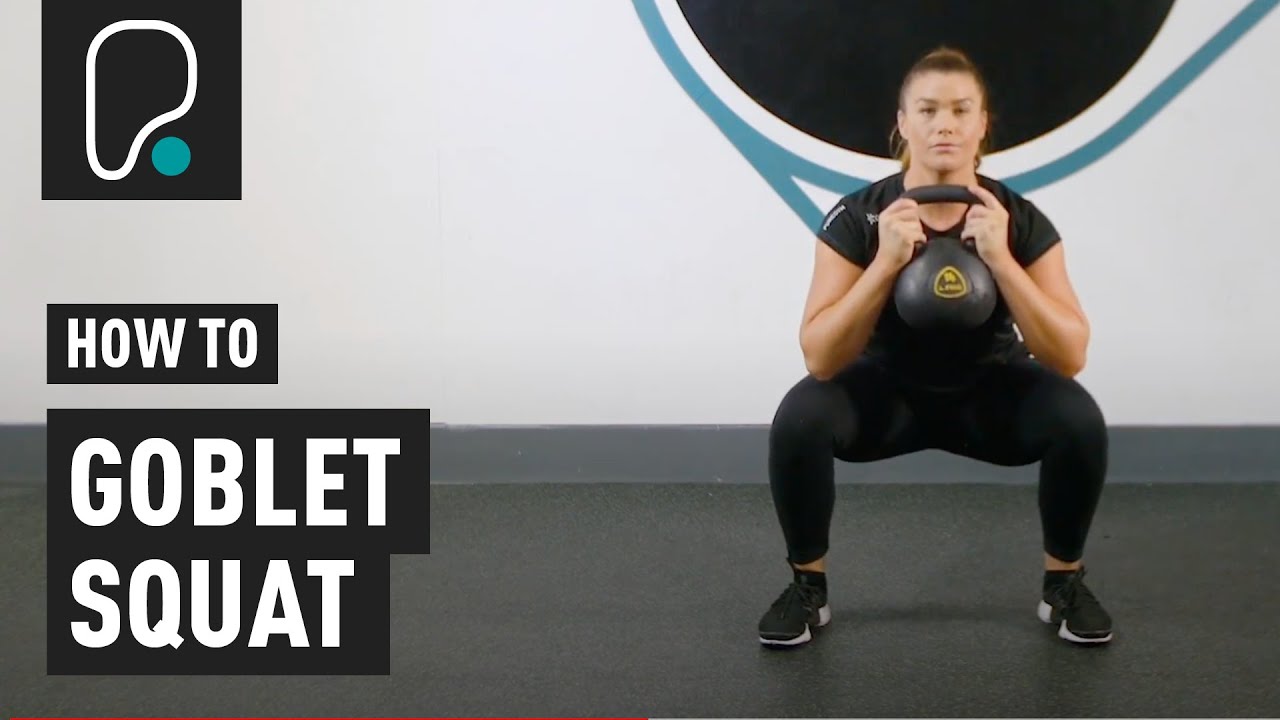
The squat is arguably the most vital functional movement pattern in human existence. From sitting down on a toilet seat and getting out of a car to picking up a grandchild or retrieving groceries from the floor, human life requires endless repetitions of the squat pattern. The goblet squat—performed by holding a moderately heavy dumbbell or kettlebell vertically against the chest—serves as an extraordinary teaching tool and strength builder.
Biomechanical Benefits
The goblet squat loads the body anteriorly (in the front). This front-loaded position naturally forces the practitioner to maintain an upright torso, engage the thoracic spine, and recruit the deep core musculature. It safeguards the lumbar spine while heavily engaging the quadriceps, glutes, hamstrings, and calves. Furthermore, holding the weight in front acts as a counterbalance, allowing individuals to achieve a deeper, more biomechanically sound range of motion in the hips and ankles without leaning excessively forward.
How to Perform the Goblet Squat
Stand with your feet slightly wider than shoulder-width apart, toes pointed outward at a comfortable angle (roughly 15 to 30 degrees).
Cup one end of a moderately heavy dumbbell or kettlebell vertically against your chest with both hands, elbows pointing down toward the floor. Keep your chest proud and your core braced.
Initiate the movement by pushing your hips backward and bending at the knees simultaneously, as if sitting down into an imaginary chair.
Descend smoothly until your thighs are at least parallel to the floor (or as deep as your mobility comfortably permits). Ensure your knees track in line with your toes and do not cave inward.
Pause briefly at the bottom, keeping your feet flat on the floor and your torso upright.
Drive forcefully through your mid-foot and heels, extending your hips and knees to return to the starting standing position.
Expert Trainer Tips: Avoid the common pitfalls of arching or rounding your lower back during the descent. If you struggle with depth or balance, position a sturdy chair or bench directly behind you as a physical target; lightly touch your glutes to the chair before ascending. Never let your heels lift off the floor.
2. Plank with Knee Drive
A robust core is the anchor of physical longevity. Without a stable torso, force transfer from the lower body to the upper body is compromised, leaving the spine vulnerable to injury. While traditional static planks are exceptional for endurance, dynamic variations like the plank with a knee drive introduce anti-rotation mechanics and hip flexion, mimicking the muscular coordination required during walking, running, and navigating uneven terrain.
Biomechanical Benefits
This compound isometric-dynamic movement forces the transverse abdominis, rectus abdominis, obliques, and shoulders to work in seamless unison. By lifting one foot and driving the knee forward while maintaining a rigid plank position, the body is challenged to resist gravity and rotational forces. This directly improves spinal alignment, strengthens the hip flexors, and fortifies the shoulder girdle—all critical components for preventing accidental falls in older adults.
How to Perform the Plank with Knee Drive
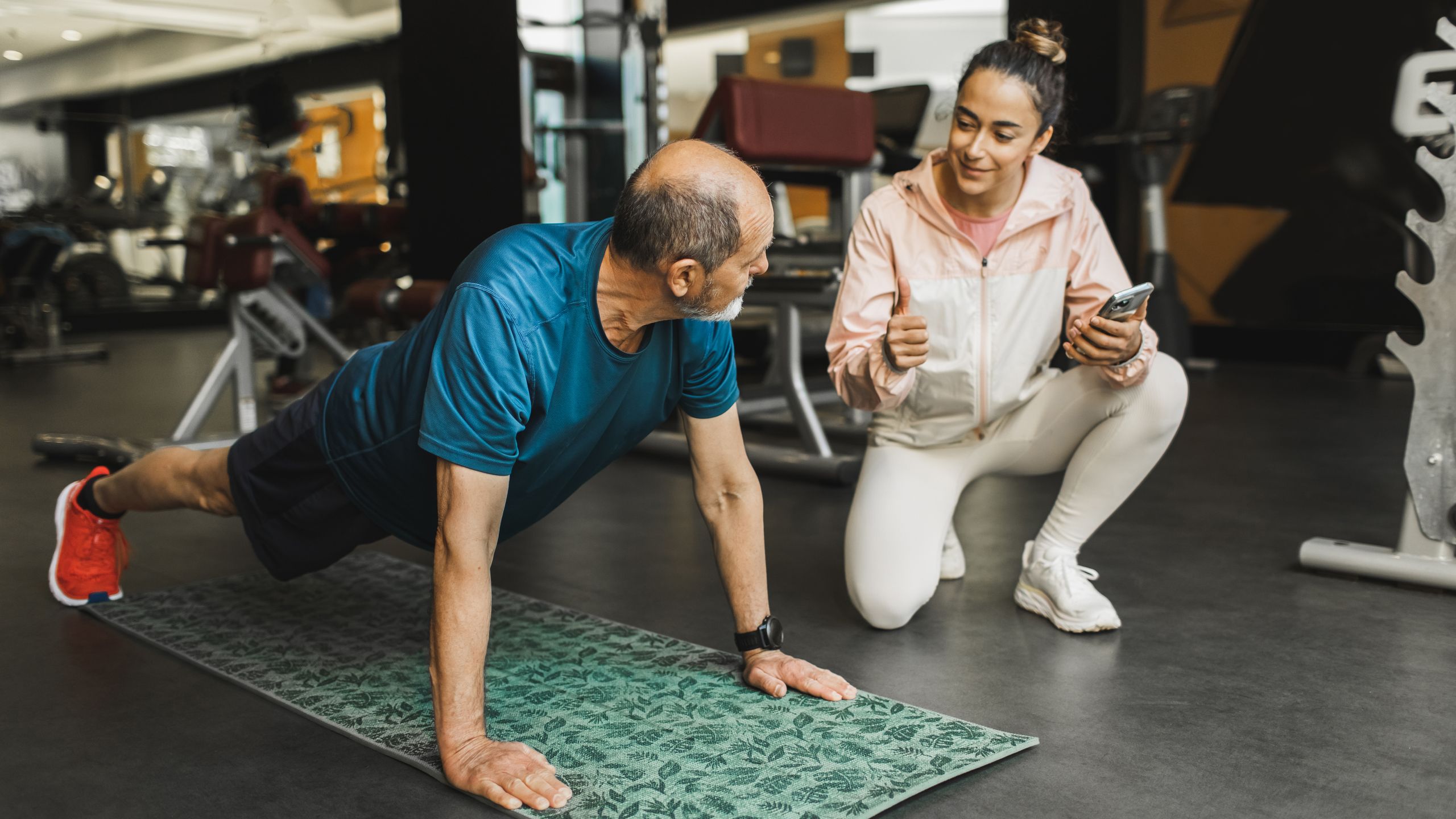
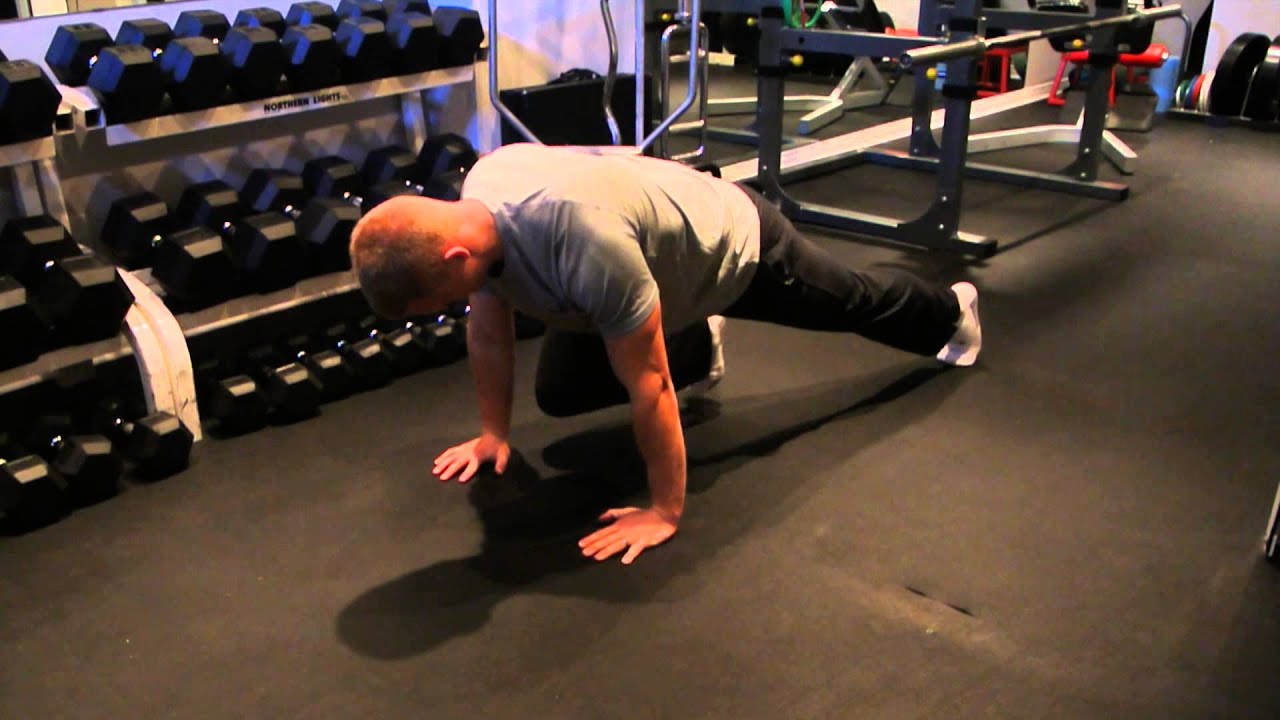
Begin in a high push-up position with your hands placed directly underneath your shoulders and your body forming a straight, rigid line from your head down to your heels.
Engage your core tightly by drawing your belly button in toward your spine and squeezing your glutes.
Keeping your hips completely level and stable, lift your right foot off the floor and slowly drive your right knee forward toward your chest.
Pause for a split second at the peak of the movement, ensuring your lower back hasn’t arched and your hips haven’t sagged.
Return your right foot to the starting position with control.
Immediately repeat the motion on the left side, alternating legs for a total of 8 to 12 repetitions per side.
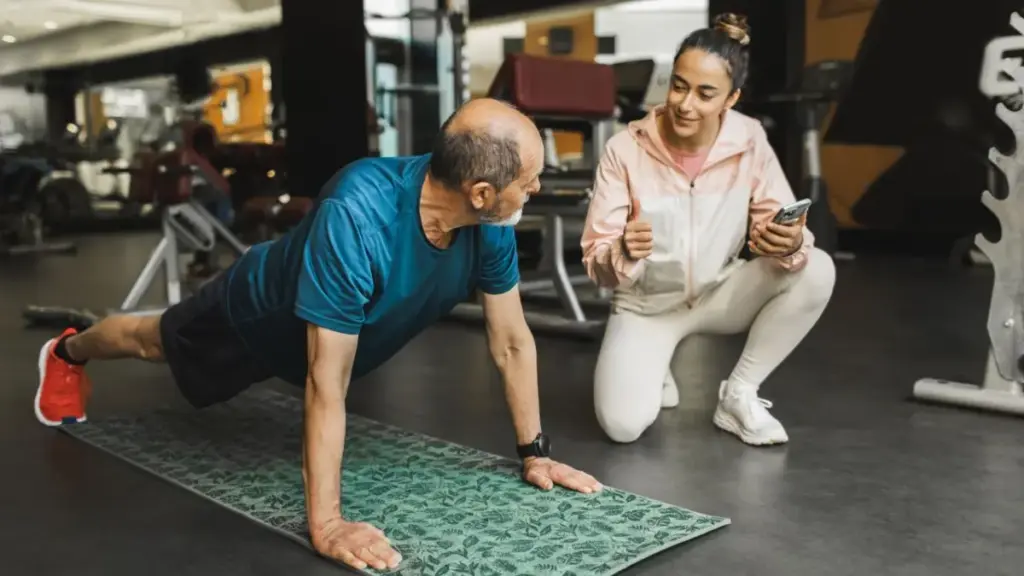
Make It Easier: If performing this movement from the floor proves too challenging for your wrists or core strength, regress the exercise by placing your hands on an elevated, stable surface such as a sturdy dining table, the back of a couch, or even flat against a wall.
3. The Push-Up
Upper-body pushing strength is frequently neglected in aging populations, yet it is indispensable. Whether you are pushing yourself up from a fallen position on the floor, opening a heavy door, or pushing a shopping cart, upper-body power is non-negotiable for daily functioning. The classic push-up is the undisputed king of upper-body bodyweight exercises.
Biomechanical Benefits
The push-up is a closed-chain compound movement that simultaneously targets the pectoral muscles of the chest, the anterior deltoids of the shoulders, the triceps brachii, and the entire core complex. Because the hands are fixed to the floor while the body moves through space, the push-up inherently trains the nervous system to coordinate multi-joint stability, enhancing bone mineral density in the wrists, arms, and shoulder girdles.
How to Perform the Push-Up
Assume a high plank position with your hands placed slightly wider than shoulder-width apart. Your fingers should point forward or slightly inward.
Align your body so that your head, hips, and heels form a rigid, uninterrupted straight line. Engage your glutes and brace your core.
Inhale as you bend your elbows, lowering your entire body toward the floor as a single unit. Your elbows should flare out at roughly a 45-degree angle relative to your torso—avoid flaring them straight out to the sides, which places undue stress on the rotator cuffs.
Lower yourself until your chest hovers just an inch or two above the floor.
Exhale powerfully as you press through your palms, extending your arms to push your body back up to the starting position.
Expert Trainer Tips: A common mistake during the ascent is allowing the chest to rise before the hips and torso, creating a wave-like motion that stresses the lower back. Maintain total-body tension so that your torso and hips rise simultaneously. As with the plank, beginners can easily scale this movement by performing incline push-ups with hands elevated on a stable table or wall.
Official Statements and Expert Perspectives
The philosophy of prioritizing functional longevity over superficial fitness metrics has garnered widespread endorsement across the global health, medical, and athletic conditioning communities.
Dr. Stuart Phillips, Professor of Kinesiology at McMaster University and a leading global researcher on muscle physiology and aging, notes:
"We spend an enormous amount of healthcare capital treating the consequences of physical frailty—specifically hip fractures and mobility loss resulting from sarcopenia. Yet, the most potent, cost-effective medicine we have to combat this degradation is progressive resistance exercise. Preserving muscle mass and neuromuscular function isn’t about looking good on a beach; it is the absolute bedrock of metabolic health and functional independence in later life."
The American College of Sports Medicine (ACSM), in its official position stand on physical activity and older adults, emphasizes:
"To maintain functional autonomy, older adults should engage in multimodal exercise programs that include a combination of aerobic, resistance training, balance, and flexibility components. Resistance training, performed at least two days per week utilizing major compound movement patterns, is essential for mitigating the loss of bone mineral density, improving glucose homeostasis, and preserving functional reserve."
Renowned physical therapist and movement specialist Dr. Kelly Starrett adds:
"If you want to age successfully, you have to audit your movement capacity today. Can you squat deep to the ground and stand back up without assistance? Can you support your own body weight? Can you stabilize your spine under load? These aren’t gym tricks—they are life skills. If you practice them consistently now, you bulletproof your body against the indignities of physical decline later."
Future Outlook: The Paradigm Shift in Personal Health and Longevity
As medical science continues to extend human lifespan, the critical societal challenge has pivoted from simply keeping people alive to ensuring those extra years are lived with vitality, cognitive clarity, and physical autonomy. The era of mindless exercise—where workouts are performed solely to chase sweat or burn off yesterday’s meal—is rapidly giving way to intentional, longevity-driven physical conditioning.
The integration of foundational strength movements like the goblet squat, the dynamic core plank, and the push-up into weekly routines represents a democratization of preventative healthcare. These movements require minimal equipment—a single kettlebell, a mat, and body weight—making them universally accessible regardless of socioeconomic status or geographical location.
Looking forward, the future of fitness will increasingly merge wearable biometrics with functional longevity screenings. Individuals will monitor not just their daily step counts, but their muscular power output, grip strength, and balance metrics as primary vital signs of long-term health. By adopting a "future-proofing" mindset today, practitioners of all ages can rewrite their biological narratives. Investing just a few hours a week in purposeful strength training guarantees that the golden years of life remain truly golden—defined not by dependency and decline, but by unyielding strength, freedom, and the boundless capacity to explore the world on one’s own two feet.