NEW YORK — In an era where the global beauty market is increasingly driven by olfactory obsession, legacy brands are finding that longevity requires reinvention. For Nest New York, a household name synonymous with luxury home ambiance for nearly two decades, the key to its next chapter of exponential growth lies not in the living room, but on the vanity.
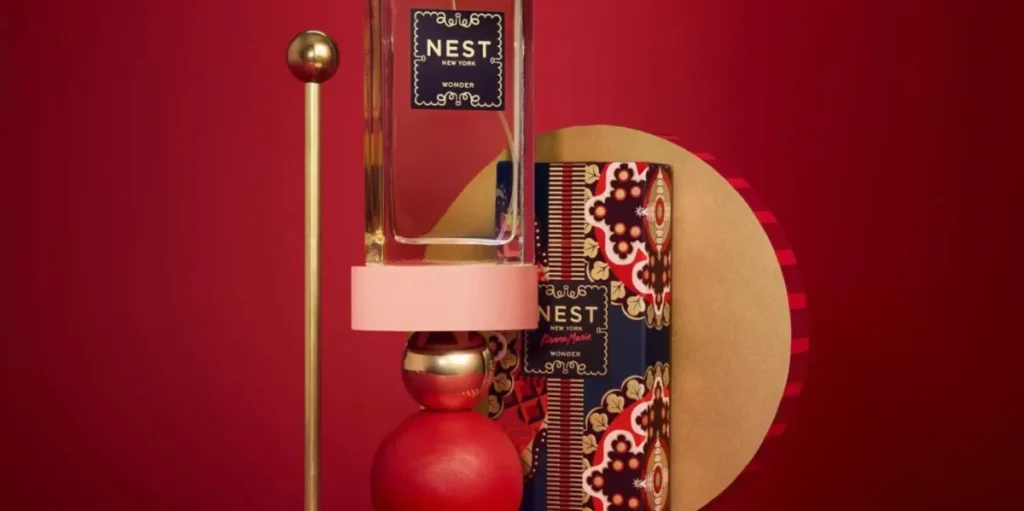
As the beauty industry experiences an unprecedented boom in fine fragrance sales—commanding premium price points and fiercely loyal consumer bases—Nest is executing a calculated pivot. The company is actively diversifying its product portfolio, transforming itself from a celebrated candle maker into a full-fledged lifestyle brand. The cornerstone of this strategy? Taking its most iconic seasonal asset, the beloved Holiday home fragrance collection, and bottling it into a personal eau de parfum named Wonder.
This strategic maneuvers highlights a broader retail trend: leveraging established brand equity in home goods to capture market share in the lucrative, youth-skewing fine fragrance sector. By marrying the comfort of ambient scenting with the personal intimacy of fine perfume, Nest is attempting to bridge two distinct consumer worlds without diluting the core identity that built its empire.
Executive Overview
The modern fragrance landscape is characterized by high demand, premium pricing, and a blurring of lines between personal grooming and home wellness. Amidst this backdrop, Nest New York’s recent strategic maneuvers mark a critical evolution for the brand. Founded in 2008 by the late interior design icon Laura Slatkin, Nest carved out a dominant space in the luxury home fragrance market, anchored by its exquisite candles, diffusers, and room sprays.
However, the stagnant boundaries of traditional home goods are shifting. Recognizing the explosive growth of personal scents—propelled by social media, a post-pandemic focus on self-care, and a surge in consumer willingness to invest in luxury cosmetics—Nest initiated a deliberate expansion into personal fragrance.
- The Core Pivot: Nest is aggressively scaling its fine fragrance division, shifting its product development focus significantly. Fine fragrance accounted for approximately 40% of the brand’s new product launches in 2025, a figure that skyrocketed to 75% by 2026.
- The Flagship Catalyst: The introduction of the Wonder eau de parfum translates the brand’s cult-favorite Holiday candle into a personal scent. Arriving just ahead of the peak holiday shopping season, Wonder serves as a bridge between Nest’s dominant seasonal home business and its burgeoning year-round fine fragrance portfolio.
- Demographic Expansion: While Nest’s home fragrance assortment traditionally thrives in legacy department stores with an older demographic, its fine fragrance lines—distributed through major beauty retailers like Sephora and Ulta—successfully capture a younger, more diverse consumer base.
- Omnichannel Marketing Strategy: To support this evolution, Nest is deploying a comprehensive marketing blitz. This includes high-impact digital and social campaigns, influencer seeding, sampling initiatives, and the return of its high-visibility Fifth Avenue street-scenting pop-up for the fourth consecutive year.
Detailed Chronology: The Evolution from Candles to Cosmetics
Nest’s journey into the personal fragrance market was neither accidental nor overnight. It represents a carefully timed execution of a multi-year lifestyle strategy designed to future-proof the brand against changing retail dynamics.
2008–2020: Establishing the Home Fragrance Empire
For over a decade, Nest New York focused almost exclusively on elevating the everyday sensory experience of the home. Through meticulous craftsmanship, sophisticated packaging, and complex scent profiles, the brand built an unshakeable reputation in luxury home fragrance. The brand’s seasonal releases—most notably its Holiday collection—became cultural touchstones for consumers, driving a massive surge in annual revenue during the final quarter of the year. Despite the seasonal line being available for only four months out of the year, it routinely accounts for the vast majority of Nest’s annual financial performance.
2021: The Turning Point and the Launch of Perfume Oils
The foundational groundwork for Nest’s fine fragrance ambitions was laid in 2021 with the introduction of concentrated perfume oils. Initially, company executives projected that this nascent category would take three years to double the size of Nest’s fine fragrance business. However, consumer demand proved so voracious that the target was achieved in a mere nine months. This unexpected velocity signaled to leadership that the brand’s loyalists were eager to wear Nest, not just burn it.
2024–2026: Accelerating the Fine Fragrance Pipeline
Buoyed by the rapid success of its perfume oils, Nest accelerated its developmental pipeline. Fine fragrance rapidly transformed from an experimental side category into the primary engine of the company’s product strategy. By 2025, fine fragrances made up 40% of all new product introductions. By 2026, that figure surged to 75%, cementing Nest’s transformation into a dual-threat beauty and home brand.
Holiday Season 2026: The Debut of Wonder
The culmination of this multi-year strategy arrives with the launch of Wonder. By translating its most iconic seasonal asset—the Holiday home fragrance—into an eau de parfum, Nest is capitalizing on instant brand recognition. Instead of spending millions of dollars and precious time building awareness for an entirely new scent profile from scratch, the brand is utilizing emotional resonance to drive trial and adoption in the personal fragrance aisle.
Supporting Context & Metrics: Navigating Demographics and Market Dynamics
To fully understand Nest’s strategic pivot, one must examine the shifting demographics of modern fragrance consumers and the operational metrics driving the brand’s decisions.
Bridging the Generational Divide
One of the most compelling insights shared by Nest leadership is the distinct behavioral split between the brand’s home fragrance shoppers and its fine fragrance consumers.
- The Home Fragrance Shopper: Historically skewing older and more traditional, this consumer segment engages with Nest primarily through legacy department stores and specialty home boutiques. Their purchasing habits are tied to interior styling, gifting, and seasonal nesting rituals.
- The Fine Fragrance Shopper: Skewing significantly younger and more diverse, this consumer interacts with Nest through prestige beauty giants like Sephora and Ulta. They view fragrance through the lens of identity, self-expression, and daily grooming rituals.
By expanding its fine fragrance footprint, Nest is effectively capturing a younger demographic without alienating its core base. The challenge lies in guiding consumers fluidly between these two worlds—translating a department-store home shopper into a Sephora fragrance buyer, and vice versa.
The Science of Translation: From Hearth to Skin
Creating a personal perfume out of a room fragrance is fraught with peril. As Toni Lakis, Nest’s chief creative and brand officer, points out, consumers rarely want to smell literally like their living rooms.
"Of course you don’t exactly want to wear what your house smells like, but we kept the essence of Holiday," Lakis explains.
Translating the Holiday candle—known for its comforting blend of pomegranate, mandarin orange, pine, cloves, and cinnamon—into the Wonder eau de parfum required sophisticated fine-tuning. The formulation was deliberately altered to be darker, sexier, and more wearable. By introducing base notes like patchouli, the perfumers transformed the bright, ambient room scent into a spicy, woody, citrus fine fragrance tailored for human chemistry.
Furthermore, Chief Marketing Officer Erwan Le Berrigaud notes that Wonder was strategically engineered to be genderless, tapping into the broader industry movement away from rigid gender binaries in modern perfumery.
Official Statements and Industry Insights
The leadership team at Nest New York views this evolution not merely as a product launch, but as a holistic repositioning of the brand’s identity within the global luxury market.
"The biggest opportunity is that we currently have very different consumers for home fragrance and fine fragrance," explains Toni Lakis, Chief Creative and Brand Officer. "People come to us year after year looking for this holiday scent, so we’ve been exploring ways of bringing it to life in many different ways."
Lakis emphasizes that the ultimate goal is to protect the legacy of the home business while aggressively scaling the personal category.
"We want to also protect the home business because it’s so important to the brand," Lakis notes. "We’re looking to bridge the gap a little bit more between fine fragrance and home fragrance."
From a promotional standpoint, CMO Erwan Le Berrigaud details an aggressive, multi-channel rollout designed to maximize consumer touchpoints during the critical holiday window.
"All of those touchpoints are designed to work together, building on the familiarity of Holiday while driving discovery of Wonder," says Erwan Le Berrigaud, Chief Marketing Officer. "And ultimately bringing consumers from the home fragrance aisle into the fine fragrance category with Nest."
To achieve this, the brand is deploying a 360-degree marketing campaign encompassing paid digital media, social media storytelling, strategic influencer seeding, targeted product sampling, and experiential marketing. Most notably, Nest is bringing back its high-profile Fifth Avenue Association street-scenting pop-up for the fourth consecutive year, immersing New York City commuters and holiday tourists in the brand’s signature olfactory universe.
Future Outlook: The Lifestyle Ecosystem
As Nest New York looks toward the horizon, the brand’s trajectory offers a masterclass in how heritage home brands can successfully pivot into adjacent beauty categories.
The success of Wonder will likely serve as a blueprint for future brand extensions. By proving that emotional equity built around a seasonal home scent can be successfully monetized in the personal fragrance market, Nest has unlocked a repeatable playbook for growth.
Looking ahead, the company’s vision extends beyond individual product categories. Leadership envisions a comprehensive lifestyle platform centered entirely on daily fragrance rituals. Whether a consumer engages with Nest through a morning spritz of Wonder, a midday swipe of perfume oil, or an evening burn of a classic candle, the brand is systematically embedding itself into every facet of the consumer’s sensory life.
In an increasingly crowded beauty market, where consumer loyalty is hard-won and easily lost, Nest New York is betting that the comfort of familiarity, combined with the allure of haute parfumerie, is a formula built to endure.