
Executive Overview
For decades, the cultural script dictating the female body has been meticulously edited, waxed, plucked, and shaved. From the omnipresent hairlessness ideals of the late 20th century to the hyper-manicured beauty standards of the early 2000s, female body hair was treated as an operational error—a natural biological occurrence that required constant, rigorous eradication to achieve true "femininity."
Today, however, that monolithic narrative is fracturing. A growing movement of women and gender-non-conforming individuals are actively choosing to let their body hair grow, transforming what was once a source of shame into a vibrant canvas of personal expression, political resistance, and radical self-acceptance.
This shift is not merely about opting out of a tedious grooming routine; it is a profound interrogation of gender norms, queer identity, and bodily autonomy. By keeping their underarms lush, their legs untouched, their brows thick, and their pubic hair natural, these individuals are rewriting the cultural lexicon of beauty. Yet, this liberation does not exist in a vacuum. Navigating a world steeped in sexist double standards means that choosing natural body hair remains a daily negotiation between internal empowerment and external judgment.
Through the candid perspectives of ten individuals who have consciously abandoned traditional hair removal, this investigative report explores the evolving relationship between modern society, female embodiment, and the hair we are told to hide.
Detailed Chronology: From 90s Hyper-Haardlessness to the Modern Body-Positive Era
To understand the weight of today’s hairy resistance, one must trace the historical pendulum of societal beauty standards, which has swung violently between concealment and exposure over the last century.
The Late 20th Century: The Peak of Artificial Haardlessness
The 1990s and early 2000s marked an unprecedented zenith for artificial hairlessness. This era was defined by an aggressive, high-maintenance beauty regimen. Eyebrows were plucked down to razor-thin, arched threads; legs and underarms were subjected to daily shaving; and the complete removal of pubic hair via Brazilian waxing graduated from a niche luxury to a rigid social standard.
During this period, hairless skin became synonymous with cleanliness, youth, and high-class femininity. Any deviation from this standard was routinely pathologized, categorized as unhygienic, or dismissed as unfeminine. Mainstream media, fashion magazines, and Hollywood blockbusters reinforced a singular aesthetic: the ideal woman was entirely devoid of terminal body hair.
The 2010s: The Seeds of Subversion
As the digital landscape expanded and feminist discourse found new momentum online, the cracks in the hairless monopoly began to show. Early digital communities allowed women to share alternative perspectives on beauty, challenging the multi-billion-dollar hair removal industry. Body hair slowly transitioned from an invisible obligation to an open topic of debate. Conversations surrounding intersectional feminism, bodily autonomy, and the arbitrary nature of gender performance began to bleed into the mainstream consciousness.
The Present Day: A Spectrum of Choice
Today, society finds itself in a transitional, albeit friction-filled, phase. While commercial pressures to remove body hair remain robust, a powerful counter-movement has emerged. Women are no longer just rejecting hair removal; they are curating their hair growth. From fully natural underarms to meticulously shaped "downstairs" aesthetics and bold, untamed eyebrows, individuals are reclaiming authority over their own flesh. The focus has shifted from compliance to choice, allowing body hair to become an intentional extension of personal identity rather than a casualty of patriarchal conditioning.
Supporting Context & Metrics: The Intersection of Gender, Identity, and Culture
Body hair is rarely just hair. Psychologically and sociologically, it functions as a complex intersection where gender presentation, sexual orientation, and cultural conditioning collide.
The Gender Binary and the Myth of "Feminine" Hair
Historically, dense body hair has been weaponized as a marker of masculinity. Women presenting with dark arm hair, robust facial hair, or thick eyebrows have frequently faced microaggressions or overt bullying, coded as "unfeminine" or "manly."
Conversely, many women who have abandoned the razor report an unexpected psychological pivot: rather than feeling less feminine, they feel more in tune with their womanhood. By stripping away the expectations of a male gaze, they redefine femininity on their own terms. As one contributor noted: "I realized that hairless underarms didn’t automatically make me look feminine. I actually felt more feminine with body hair, so I decided to let it grow."
The Queer Lens and Decolonizing Beauty Norms
For many queer, lesbian, and trans individuals, abandoning hair removal is deeply intertwined with exploring gender identity. Stepping outside of heteronormative frameworks often triggers a domino effect of critical thinking. When an individual interrogates why they feel compelled to be straight, they naturally begin to interrogate why they feel compelled to alter their natural anatomy.
"As a queer person, you realize once you truly unpack cultural myths that they are all just made up," shares one participant. "You’re fed the heteronormative narrative of how your life ‘should’ be. Once you question that and realize it’s nonsense, you start questioning the compulsion toward compulsory heterosexuality and your beauty routine. It totally opens your eyes."
Through this critical lens, the act of shaving is revealed not as a neutral hygiene choice, but as a compliance mechanism designed to appease patriarchal comfort.
Voices from the Movement: Ten Perspectives on Natural Hair
To capture the nuances of this cultural shift, we examine the personal journeys of ten women and non-conforming individuals who have stopped removing their body hair.
1. The Accidental Naturalist
"My hair is very light. Because of that, I always thought: ‘Oh wow, I actually don’t need to shave.’ So I let the hair keep growing and realized, when it finally was visible, that I simply didn’t care. I felt extremely comfortable with it."
For those with lighter pigmentation, the decision to stop shaving often begins as apathy before evolving into a conscious embrace of natural textures.
2. The Partner’s Perspective
"My partner encourages me to leave my body hair alone wherever I want. He wants me to do what makes me happy. It’s your body—and therefore your business how you present yourself."
Supportive partnerships play a vital role in dismantling internal shame, proving that autonomy can be respected and celebrated within intimate relationships.
3. Redefining Underarm Aesthetics
"I love body hair and see no reason not to have it if you like it. I stopped shaving my armpits because I realized hairless pits didn’t automatically make me look feminine. I felt super with it, and I’m all the happier to see more and more women ditching the razor. Yes, ladies!"
For many, the underarm has become the ultimate battlefield of visibility—a place where raising one’s arm in public is transformed from a moment of vulnerability into an act of quiet defiance.
4. The Underground Club of Unshaven Pits
"I’ve let my underarm hair grow for over two years now. I’ve always left my leg and pubic hair alone. I used to shave, but I find it deeply uncomfortable, so I quit. I love how my hair looks. It feels comforting, and when I see other women with unshaven pits—like on the subway holding onto the top bar—it feels like we belong to a secret club."
This shared visibility creates an instant sense of community and solidarity among strangers navigating public spaces together.
5. Embracing Bold Brows and Facial Hair
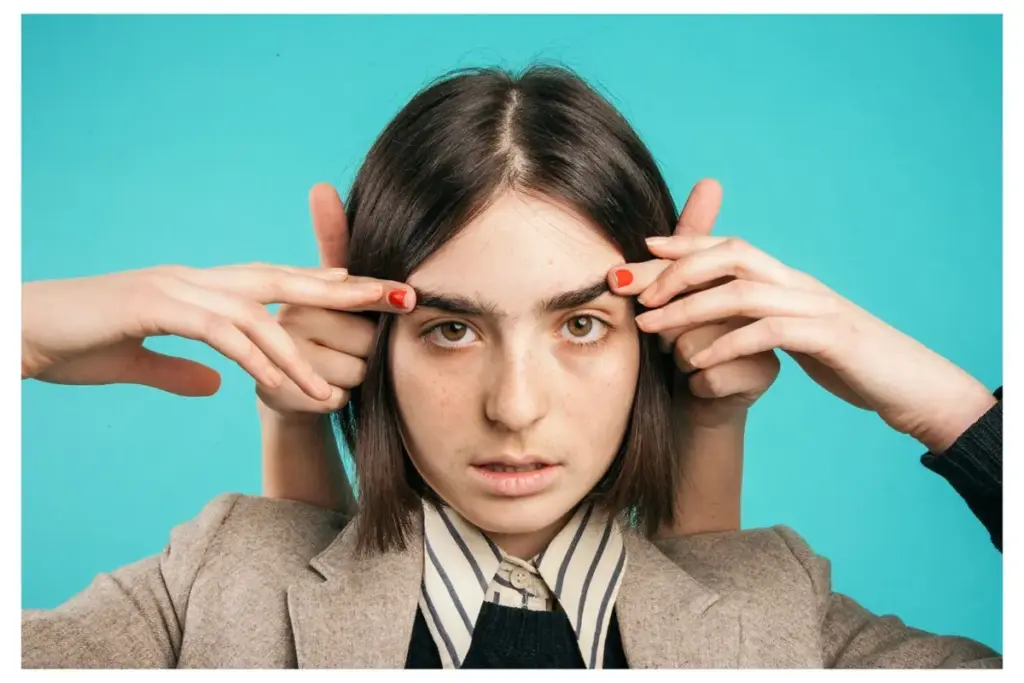
"My arms are quite hairy, and that used to make me very insecure. I have much more body hair than many others, plus quite thick eyebrows. But I get compliments on my brows now. That’s great!"
Another contributor reflects on childhood bullying regarding her thick eyebrows, noting the cultural pivot toward appreciation: "My brows make me look strong, and I feel strong. When people tell me I remind them of Frida Kahlo, it’s very flattering. She was an amazing painter and a strong woman. It’s cool to have that connection with other women who have thick brows."
6. The "Downton Abbey" Pubic Landscape
Pubic hair styling has also undergone a renaissance. While some prefer total natural growth ("a bush, kept nice and neat"), others have adopted playful metaphors for their grooming choices:
"I used to rock a proper 70s bush and just let it sprout. Today, I trim it more into shape. I call it ‘Downton Abbey’ because it looks as well-groomed as a British lawn."
Another adds simply: "With my bush, I feel mature and feminine."
7. Navigating Sensory Comfort and Skin Sensitivity
For many, the decision to stop shaving is practical rather than purely political. Skin irritation, razor burn, and ingrown hairs drive many to abandon the ritual.
"I don’t shave anywhere on my body. My skin doesn’t tolerate shaving well, and I think my body should look this way. In the summer, most people stare at my armpits, which I find strange. If you raise your arm and everyone is totally shocked… that’s just silly."
8. Artistic Enclaves vs. Mainstream Realities
Environment heavily dictates how body hair is perceived. Individuals coming from artistic or progressive backgrounds often report an effortless transition.
"In my hometown, nobody shaved. It was completely normal—especially for women at my art school—to simply have underarm and arm hair. When I moved to a new city, it was different. Suddenly it totally depended on who you hung out with. I have many queer friends, and in that circle, body hair is nothing unusual."
9. Indifference as the Ultimate Goal
Not everyone views their body hair through a heavily politicized lens. For some, the journey concludes in radical neutrality:
"I don’t actually think about my body hair very often. It’s just… there."
This apathy is, in its own way, a triumph: when body hair ceases to require emotional labor, justification, or maintenance, it finally achieves the status of ordinary biology.
Future Outlook: Where Do We Go From Here?
As we look toward the future of bodily autonomy, the trajectory of body hair points toward radical normalization and individualized choice. The multi-billion-dollar beauty industry is already scrambling to adapt, pivoting marketing strategies from mandates of absolute eradication to options of "grooming versatility," inclusive hair-care products, and skin-soothing formulations.
However, institutional friction remains. Schools, corporate offices, and conservative social circles still harbor unspoken expectations regarding female grooming. Breaking these barriers requires ongoing cultural dialogue, intersectional representation in media, and a collective unlearning of ingrained biases.
Ultimately, the modern body hair movement is not about declaring one choice superior to another. Whether an individual chooses a Brazilian wax, laser hair removal, complete natural growth, or a neatly trimmed garden, the victory lies in the autonomy behind the decision. As society slowly learns to detach body hair from moral value, cleanliness, and gender performance, we move closer to a future where every body is allowed to simply exist—hairs, roots, and all.