Executive Overview
Nearly three decades after audiences first stepped into the whimsical, midnight-oil-scented world of the Owen sisters, Hollywood is finally ready to return to the spellbinding universe of Practical Magic. Franchise mainstays Sandra Bullock and Nicole Kidman are officially reprising their iconic roles as Sally and Gillian Owens, bringing closure to a 28-year wait that has tested the patience of a fiercely loyal fan base.
However, as the cast and crew gather to celebrate the much-anticipated release of Practical Magic 2, the journey to this cinematic milestone is steeped in bittersweet reflection. While the original 1998 film directed by Griffin Dunne has since ascended to the pantheon of modern cult classics, its initial theatrical rollout was anything but magical. Plagued by studio confusion, critical panning, and a lukewarm commercial response, the film’s early failure left a lingering sting for the women at its center.
Today, the landscape of Hollywood has shifted dramatically, making room for complex, female-led narratives that blend dark comedy, sisterhood, and the supernatural—a tone that was deeply misunderstood in the late 1990s. Directed by Susanne Bier and adapted from Alice Hoffman’s bestselling novel The Book of Magic, the upcoming sequel represents not only a triumphant reunion for its original stars, but also a long-overdue vindication for a project that was ahead of its time. Bolstered by an exciting multi-generational supporting cast—including Joey King, Maisie Williams, Lee Pace, Xolo Maridueña, and Solly McLeod—Practical Magic 2 stands as a testament to the enduring power of patience, sisterly chemistry, and cultural resilience.
Detailed Chronology: The Journey from 1998 to the Present
1998: The Misunderstood Debut
When Practical Magic hit theaters in the fall of 1998, expectations were sky-high. Adapted from Alice Hoffman’s 1995 novel of the same name and directed by Griffin Dunne, the film paired two of Hollywood’s most magnetic rising stars—Sandra Bullock and Nicole Kidman—as magical sister witches bound by a family curse that dictates any man they fall in love with is doomed to an untimely death.
Supported by Hollywood legends Stockard Channing and Dianne Wiest as the eccentric Aunt Jet and Aunt Frances, the film boasted an enviable pedigree. Yet, upon its release, the picture met with a harsh reality. Critics were sharply divided, struggling to categorize a film that effortlessly pivoted from whimsical domesticity to gothic horror, romance, and dark comedy.
"We thought, ‘This is going to be such an amazing film. People are going to love it,’" Sandra Bullock recalled during a recent retrospective interview. "And then it got quiet. It got quiet. [They] were like, ‘How many women in a film do you need? How many tones do you need? What kind of film is this?’"
The box office returns mirrored the critical confusion, rendering the film a financial disappointment for Warner Bros. At a time when Hollywood was heavily reliant on easily digestible, single-genre formulas, Practical Magic defied simple categorization. Consequently, the film was shelved in the collective studio memory as a misfire, robbing its creators of immediate validation.
The Cult Renaissance: Finding an Audience in the Shadows
Despite its initial theatrical stumble, art has a way of finding its audience. In the years following its theatrical run, Practical Magic quietly built a passionate, hyper-engaged following through home video rentals, late-night cable broadcasts, and holiday viewings.
The film’s celebration of female autonomy, generational healing, sisterhood, and midnight margaritas resonated deeply with viewers who felt alienated by mainstream cinematic tropes. For marginalized communities, particularly the LGBTQ+ audience—whom both Bullock and Kidman affectionately describe as "our family"—the film offered a safe, enchanting haven of self-acceptance and outsider pride.
As decades passed, the cultural conversation surrounding women in cinema evolved. The very qualities that baffled 1998 critics—the tonal shifts, the centering of female desire and grief, and the refusal to pounce on a conventional male gaze—became the exact reasons modern audiences revered the film. What was once dismissed as an unfocused misfire was re-evaluated as a misunderstood masterpiece of magical realism.
The Serendipitous Greenlight
Talk of a sequel floated through internet rumor mills for years, but both Kidman and Bullock remained protective of the original property. For a long time, the pieces simply did not fit. However, the alignment of the right literary source material (The Book of Magic), executive momentum, and creative readiness finally broke the dam.
"It just happened," Nicole Kidman explained regarding the decision to finally pursue a sequel. "It was more like serendipity and it came and we were ready and everything fell into place. It’s like in life—you try to force things, it doesn’t work. You have to wait, be patient, and we both kind of [were] open to it."
With the project officially greenlit by Warner Bros., the production secured acclaimed Danish director Susanne Bier to helm the feature, ensuring a sophisticated, visually arresting aesthetic that honors the gothic romance of the original while expanding its magical lore for a modern audience.
Supporting Context & Metrics: Behind the Magic of the Sequel
To understand the monumental scale of Practical Magic 2, one must look at the shifting demographic and economic metrics of contemporary Hollywood franchises. Female-led legacy sequels have proven to be exceptionally lucrative and culturally impactful when handled with authenticity.
The Evolution of the Cast
While the return of original stars Bullock, Kidman, Channing, and Wiest anchors the legacy of the project, the addition of a fresh, younger ensemble bridges the generational divide. The inclusion of breakout stars such as Joey King, Maisie Williams, Lee Pace, Xolo Maridueña, and Solly McLeod signals a deliberate effort to expand the cinematic universe to appeal to younger Gen-Z and Millennial demographics who discovered the original film via streaming platforms.

For young actors like Joey King—who previously collaborated with Kidman on the 2024 Netflix romantic comedy A Family Affair—stepping onto the set of Practical Magic 2 was nothing short of a surreal milestone.
"When you have someone who has been through so much, who is open and loving with their knowledge, I couldn’t be more grateful," King shared during the film’s promotional press circuit. "I feel so lucky to be able to go to her."
Chemistry That Defies Explanation
The central pillar of the franchise has always been the palpable, effortless chemistry between Sandra Bullock and Nicole Kidman. Despite having distinctly different acting styles and public personas, their on-screen dynamic as the pragmatic Sally and the bohemian Gillian feels utterly lived-in.
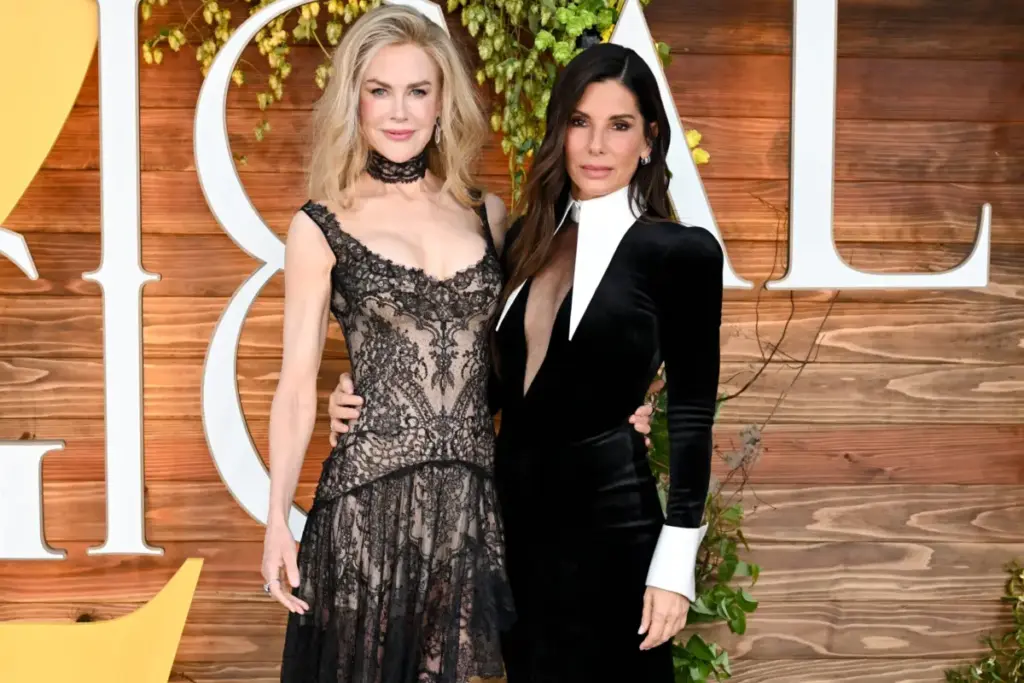
Reflecting on their unique bond during a red-carpet appearance, both actors noted that their chemistry is something they "can’t explain."
"It happened the first time, and it happened the second time," Bullock noted, emphasizing that the sisterly bond transcended the 28-year gap between productions.
Official Statements: Honoring the Architects of the Universe
Amid the excitement surrounding the sequel’s press tour, both Bullock and Kidman took significant time to redirect the spotlight toward the unsung heroes of the 1998 original—specifically, its director, Griffin Dunne.
Because the original film was initially labeled a box office disappointment, Dunne’s visionary contribution to establishing the unique visual grammar, tone, and emotional core of the Owen family was frequently overshadowed by the commercial narrative. Both leading women were vocal in ensuring that history does not repeat itself.
"And here’s the thing that I really wanna bring up and I bring it up ad nauseum, Griffin Dunne created this world with us," Bullock stated passionately during a press event.
Kidman echoed these sentiments, highlighting Dunne’s supportive and nurturing directorial style during a notoriously high-pressure studio production: "And he loved us and he let us shine."
Bullock elaborated further on the bittersweet nature of the current franchise resurgence, noting the tragedy that Dunne did not live to witness the full cultural vindication of his work. "It’s because of him, this film exists, and he never got to smell the flowers when we made it. So tonight, we’re honoring him."
These statements mark a profound emotional shift in how Hollywood legacy projects are discussed, moving away from corporate marketing talking points toward a transparent, artist-centric acknowledgment of creative labor, hardship, and ultimate vindication.
Future Outlook: What to Expect from ‘Practical Magic 2’
As Practical Magic 2 prepares to cast its spell on global box offices, the expectations are vastly different from those of its predecessor. Armed with a built-in multi-generational fan base, a respected prestige director in Susanne Bier, and an expanded cast of top-tier talent, the film is positioned to be one of the defining fantasy releases of the decade.
The narrative trajectory, drawing from Alice Hoffman’s The Book of Magic, promises to explore deeper generational trauma, the expansion of the Owens family lineage, and the ultimate shattering of the centuries-old curse that plagued the family matriarchs. Fans can expect a seamless blend of practical effects, gothic atmosphere, sharp wit, and emotional resonance.
Furthermore, the film’s production serves as a powerful reminder of the endurance of women’s stories in Hollywood. Projects that were once written off by studio executives as "too tonal" or "too female-centric" are now recognized as foundational cultural touchstones.
For Sally and Gillian Owens, the magic never truly faded—it merely waited for the right moment to bloom again. As Sandra Bullock, Nicole Kidman, and their new co-stars step back into the moonlight, Practical Magic 2 promises to deliver the ultimate cinematic potion: nostalgia, healing, and a healthy dose of sisterly rebellion.