By Barney Davis | Night News Editor
Published: August 20, 2026 | Updated: August 20, 2026
Executive Overview
Federal law enforcement agencies have successfully disrupted a chilling, advanced domestic terror plot targeting the heart of New York State’s government. Jessica Bowie, a 35-year-old resident of Albany, New York, made her initial appearance in federal court facing serious charges of attempting to provide material support to a designated foreign terrorist organization—specifically, the Islamic State of Iraq and al-Sham (ISIS).
According to federal prosecutors, Bowie orchestrated a detailed plan to construct and deploy an improvised explosive device (IED) inside the New York State Capitol during an active legislative session. Her stated objectives were twofold: to assassinate elected officials, including state senators, and to cause catastrophic structural damage to the historic building before fleeing the United States to join ISIS-controlled territories in Syria.
The plot was intercepted in its final stages on August 19, 2026, when Bowie was apprehended by federal agents immediately after taking possession of what she believed to be a fully functional explosive device. The operation underscores the relentless vigilance of the Federal Bureau of Investigation (FBI) and its National Security Division in identifying, tracking, and neutralizing homegrown extremist threats before operational execution.
Detailed Chronology: From Radicalization to Federal Apprehension
Radicalization and Digital Pledges of Allegiance
Investigators revealed that Bowie’s trajectory toward violent extremism unfolded over several years. During interviews with undercover law enforcement personnel, Bowie disclosed that she had converted to Islam approximately five years prior. Her online footprint and communications painted a portrait of a radicalized individual who had aggressively rejected her upbringing.
Court documents detail a dramatic ideological reversal: Bowie allegedly stated that she transformed from "a little girl waving an American flag after 9/11" into an extremist who openly celebrated the September 11 terrorist attacks. On encrypted and public social media platforms, Bowie posted extreme anti-American rhetoric. In one chilling post recovered by investigators, she wrote, "Praise be to Allah for September 11," adding, "When I can migrate, I will poison these infidels."
Furthermore, Bowie recorded and disseminated her Bayah—a formal, public oath of allegiance to ISIS—aligning herself ideologically and operationally with the transnational terrorist network’s goals of global jihad.
Surveillance and Target Reconnaissance
The FBI’s Albany Field Office initiated a comprehensive counterterrorism investigation after detecting Bowie’s online activities and outreach to suspected extremist networks. Over the course of the surveillance operation, federal agents documented multiple reconnaissance visits conducted by Bowie to the grounds of the New York State Capitol in downtown Albany.

During these visits, Bowie was captured on camera meticulously photographing the building’s architecture, analyzing security perimeters, and assessing high-traffic areas. Investigators say her intent was far beyond symbolic vandalism. In intercepted conversations with undercover operatives, Bowie laid bare her catastrophic ambitions:
"I want to destroy as much of the building as possible and kill the senators while they are meeting. I want them to lose a lot of important documents as well… I want it to have an effect on the American system and destroy some of the taghut [those opposing Allah]."
The Home Depot Operation and Arrest
As the plot matured, Bowie sought the means to execute the bombing. Unbeknownst to her, the individuals she was confiding in and relying upon for operational assistance were FBI undercover operatives.
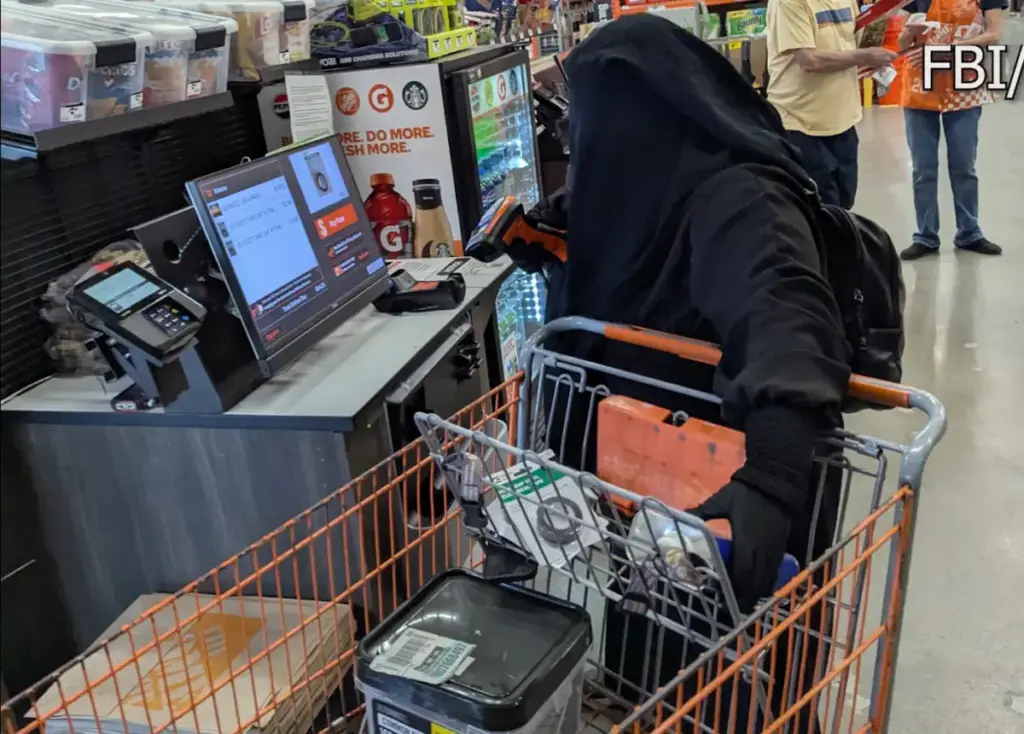
On the day of her apprehension, federal agents provided Bowie with $200 in cash to acquire components necessary for the construction of a nail bomb. Undercover personnel drove Bowie to a local Home Depot hardware store in the Albany area, where she navigated the aisles to purchase the lethal materials. Security cameras captured Bowie using a self-serve scanner to check out items designated for the explosive device.
Upon exiting the hardware store, Bowie exhibited a chilling preoccupation with the lethality of her planned weapon. Turning to the undercover agents, she asked:
"I hope the nails are big enough… because the nails work as shrapnel, right?"
Following the shopping trip, Bowie met with agents to take possession of the assembled device. Law enforcement officers closed in and apprehended her without incident on August 19, 2026, successfully neutralizing the threat to the Capital Region.
Official Statements and Law Enforcement Responses
The gravity of the disrupted plot prompted immediate, high-level statements from national security leaders, underscoring the collaborative nature of modern counterterrorism investigations.

Assistant Attorney General for National Security John A. Eisenberg emphasized the precision of the federal response:
"As alleged, Bowie plotted to deploy an explosive device at the New York State Capitol, intending to kill public officials and to destroy ‘as much of the building as possible’ before fleeing to ISIS-controlled territory in Syria. The National Security Division and our law-enforcement partners are committed to the painstaking work of preventing plots like this from succeeding and securing convictions against those who attempt such plots."
First Assistant U.S. Attorney John A. Sarcone III for the Northern District of New York highlighted the resilience of American democratic values in the face of extremism:
"The American people represent an undying spirit of life, liberty, and the pursuit of happiness — values fundamentally opposed by foreign terrorist organizations such as the one this defendant allegedly pledged her support to. I am incredibly proud to work side by side with the men and women of the FBI and our law enforcement partners who identified, investigated, and ultimately stopped this defendant before she was able to act on her plot to bring terror to the Capital Region and the United States. My office looks forward to aggressively prosecuting this case and delivering justice for the American people."
Matt Fodor, Operations Director of the FBI National Security Branch, pointed to the proactive nature of contemporary counterterrorism architecture:
"The FBI detected and stopped an alleged plot to attack the New York State Capitol and kill elected officials. According to the criminal complaint, the defendant in this case swore allegiance to ISIS and wanted to follow up with additional horrific acts of terrorism. This case is yet another example of how this FBI is built to not only identify threats of terrorism quickly, but to stop their alleged plots before they are able to harm the American people. I want to commend the FBI Albany Field Office, the Justice Department, and our law enforcement partners for their outstanding work in this case. Cooperation and partnership are essential to protecting the U.S. homeland."
Supporting Context & Evolving Security Metrics
The Homegrown Violent Extremism (HVE) Landscape
The arrest of Jessica Bowie shines a harsh light on the persistent threat of Homegrown Violent Extremists (HVEs)—individuals inspired by foreign terrorist groups like ISIS or al-Qaeda who radicalize primarily online and plan attacks independently within their home countries.
According to threat assessments published by federal security agencies, while core operational leadership of ISIS in the Middle East has suffered severe degradation over the past decade, its decentralized digital propaganda apparatus continues to resonate with vulnerable or disaffected individuals in Western nations. These actors often require little to no direct financial or logistical backing from overseas networks; instead, their radicalization is fueled by virtual echo chambers, encrypted chat rooms, and readily available extremist manifestos.

Securing State Capitols
State capitals across the United States have historically balanced the imperative of public access with security necessities. Unlike heavily fortified federal installations in Washington, D.C., state legislative buildings are designed to be accessible to constituents, lobbyists, and tourists.
Security analysts note that while physical security measures—such as metal detectors, bag checks, and visible law enforcement presence—have increased incrementally over recent years, protecting sprawling historic structures against dedicated insider or lone-wolf actors remains an extraordinarily complex challenge. The Bowie case is expected to trigger comprehensive reviews of security protocols at the New York State Capitol and prompt similar evaluations across state legislatures nationwide.
Future Outlook and Judicial Proceedings
Legal Ramifications
Jessica Bowie faces severe federal charges, carrying decades-long prison sentences if convicted. Providing material support to a designated foreign terrorist organization is a federal crime that carries a statutory maximum penalty of up to 20 years in prison, in addition to potential charges related to attempted mass murder, conspiracy, and the use of weapons of mass destruction.
Federal prosecutors have indicated they will present a robust evidence file, including digital communications, surveillance footage, audio recordings of Bowie’s meetings with undercover agents, and her explicit admissions regarding her intent to inflict mass casualties.
Broader Policy Implications
As the judicial process unfolds, the case will likely reverberate through policy circles in Washington and Albany. Lawmakers are anticipated to scrutinize how online radicalization pipelines are monitored and whether intelligence-sharing mechanisms between state-level security and federal counterterrorism task forces can be further optimized.
For the residents of Albany and the wider New York community, the averted tragedy serves as a sobering reminder of the invisible frontlines of domestic security—where the swift intervention of intelligence operatives and law enforcement officers continues to stand between violent extremism and public safety.