The shifting dynamics of the global beauty economy have reached a critical inflection point, highlighted by one of the industry’s most closely watched retail maneuvers: Byredo’s strategic expansion into Sephora U.S. stores. Long heralded as a pioneer of contemporary niche perfumery, the Swedish brand—now operating under the corporate umbrella of Spanish luxury conglomerate Puig—is officially pivoting away from exclusive boutique isolation and stepping directly into the high-traffic, highly accessible aisles of mass-prestige retail.
This move raises a profound question that echoes across boardrooms and independent perfume laboratories alike: Can a brand retain its "niche" cachet and artistic credibility while aggressively scaling its footprint?
Byredo’s impending September launch across 24 select U.S. Sephora doors—spanning high-profile locations like Miami’s Aventura Mall, Newport Beach’s South Coast Plaza, and New York City’s Soho flagship—signals a broader structural shift. It demonstrates that major beauty conglomerates are capitalizing on an unprecedented consumer appetite for elevated, story-driven fragrances. At the same time, it exposes the inherent tension between maintaining an aura of white-glove luxury and catering to the chaotic, fast-paced environment of modern omni-channel retail. As parent company Puig reports double-digit growth driven by its niche portfolio, industry stakeholders are forced to re-evaluate the very definition of modern luxury and how up-and-coming indie perfumers will fill the artistic void left by scaling giants.
Detailed Chronology: From Minimalist Upstart to Global Powerhouse
To understand the weight of Byredo’s arrival at Sephora, it is essential to trace the brand’s trajectory from an independent Swedish disruptor to an institutional beauty titan.
2006–2015: The Rise of Minimalist Modernism
When founder Ben Gorham launched Byredo in Stockholm in 2006, the niche fragrance landscape looked vastly different. It was heavily dominated by traditional, ornate French houses like Serge Lutens and Frederic Malle, which leaned heavily on classic formulations, dense historical narratives, and ornate glassware.
Gorham introduced an entirely fresh aesthetic. Championing stark, minimalist black-and-white labeling and sleek, uniform glass bottles, Byredo bypassed conventional design tropes in favor of a clean, contemporary look tailor-made for an increasingly digital world. Paired with evocative, wanderlust-inducing names like Gypsy Water and Bal d’Afrique, the brand offered an accessible yet sophisticated brand of modern escapism. Perfume writer and historian Jessica Murphy notes that the brand’s visual identity was truly pioneering. It avoided the stuffiness of older heritage houses, making it instantly recognizable while remaining visually neutral enough to seamlessly blend into any modern interior.
2016–2021: Lifestyle Diversification and Acquisition Targets
Over the next decade, Byredo successfully transcended its identity as a pure-play perfume specialist. The company systematically evolved into a multifaceted lifestyle brand, expanding its product architecture to encompass artisanal leather goods, high-end jewelry, makeup, and home fragrance.
While this aggressive diversification broadened the brand’s cultural relevance and revenue streams, it also began to alienate purists. The sheer volume of new fragrance drops made it difficult for long-time consumers to keep pace, leading some early adherents to argue that the juice was beginning to homogenize. Nevertheless, this mass-market appeal made Byredo an undeniable prize for luxury conglomerates looking to capture the exploding high-end fragrance market.
2022–2025: The Puig Era and Stepping Stones to Mass-Prestige
The inevitable culmination of this growth arrived in 2022, when Spanish beauty and fashion conglomerate Puig acquired a majority stake in Byredo in a landmark billion-dollar deal. Under Puig’s stewardship, the brand accelerated its commercial ambitions.
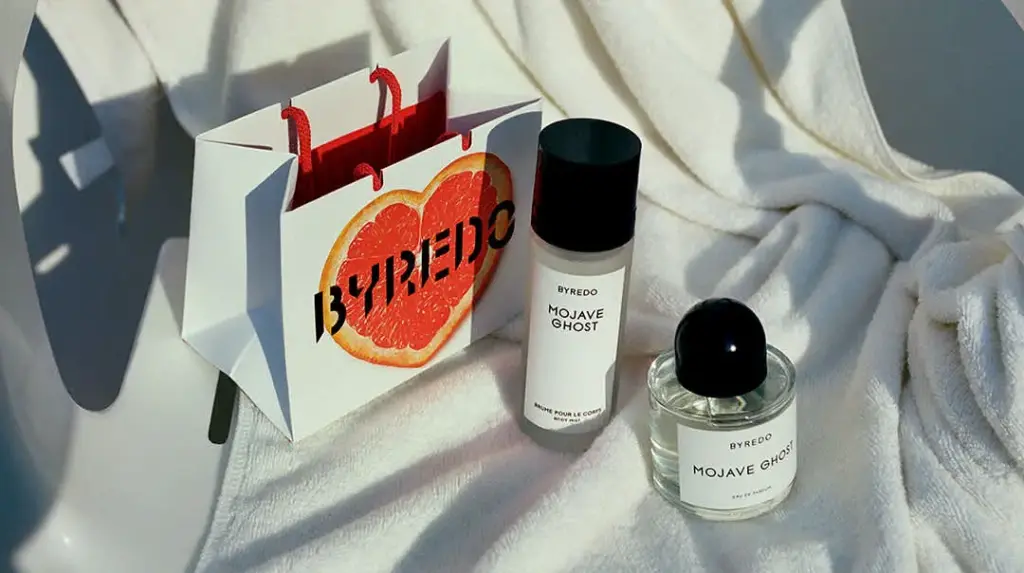
By November 2025, Byredo expanded its retail footprint to Sephora Canada—a clear test run for the massive U.S. rollout to follow. Concurrently, founder Ben Gorham fully stepped down from day-to-day operations in June 2025, clearing the path for corporate leadership to steer the brand toward traditional prestige distribution models. The introduction of accessible body mist formats for cult-favorite scents like Mojave Ghost and Rose of No Man’s Land in 2026 further solidified the brand’s trajectory toward broader consumer acquisition.
Supporting Context & Metrics: The Mechanics of Niche Scalability
The financial incentives for scaling niche brands are clear, backed by hard data from corporate balance sheets and shifting consumer behavior metrics.
Financial Performance and Corporate Synergy
According to Puig’s first-half 2026 earnings report published in July, Byredo has acted as a primary engine for the conglomerate’s niche fragrance portfolio, successfully powering it into "double-digit growth."
Industry experts point out that bringing Byredo into Sephora aligns the brand with Puig’s core operational DNA. Ariel Ohana, managing partner of investment bank Ohana & Co., notes that Puig is fundamentally a wholesale house rather than a boutique retail operator. Brands like Rabanne, Carolina Herrera, and Jean Paul Gaultier were built on the backs of Sephora, Ulta, and Macy’s, while Charlotte Tilbury found massive scale through Sephora and Nordstrom. Byredo had long been the structural outlier, with direct-to-consumer (DTC) channels accounting for nearly half of its sales. Integrating the brand into Sephora simply brings it into alignment with the rest of Puig’s high-performing portfolio.
The Evolving Retail Landscape
Sephora, owned by luxury giant LVMH, has made no secret of its ambitions to capture the surging demand for prestige and niche house fragrances. Having already integrated Puig-owned powerhouses like Carolina Herrera and Jean Paul Gaultier, the retailer has systematically expanded its niche assortment over recent months, onboarding boundary-pushing lines such as Fugazzi and Seoul-born Borntostandout.
However, translating a luxury experience to a high-volume, self-service retail floor presents operational hurdles. In traditional Sephora doors, security measures often require perfume testers to be tethered to displays behind physical walls to deter theft. Fragrance purists argue that this mechanical friction strips away the unhurried, intimate discovery process that defines true luxury retail.
Official Statements and Industry Perspectives
The convergence of corporate strategy, retail expansion, and consumer sentiment has sparked a vigorous debate across the beauty industry.
-
Carye Campbell, SVP of Fragrance Merchandising at Sephora:
"Byredo brings a distinctive luxury point of view to Sephora’s evolving fragrance assortment, combining exceptional craftsmanship, unexpected scent storytelling and a strong cultural following. Clients will also have the opportunity to discover and experience the fragrances during multiple in-store launch events throughout the country."
-
Queenie Lu, President of Spatial at FutureBrand:
"On one side, Byredo has spent the past year behaving like a brand outgrowing its niche. The brand has been showing up disruptively in travel retail for the past year, and distribution appears to be widening very deliberately across specialty, brand-owned, department store, travel retail and now mass-prestige beauty retail. On Sephora’s side, this also fits a broader pattern of them tapping into the high demand of the perfume house, as well as other more prestige and niche houses."
-
Jessica Murphy, Perfume Writer and Historian:
"They’re tethering all the testers and keeping everything behind walls, which is unfortunate because you’re not getting a luxurious experience. I know there are shoppers like me for whom luxury is a personal touch and an experience. And, unfortunately, I don’t know how much Sephora can deliver on that."
-
Ariel Ohana, Managing Partner at Ohana & Co.:
"Puig is a wholesale house, not a retail operator. Rabanne, Carolina Herrera and Jean Paul Gaultier are built on Sephora, Ulta and Macy’s; Charlotte Tilbury on Sephora and Nordstrom. Within that group, Byredo has been the outlier, with direct-to-consumer close to half of its sales. Bringing it into Sephora simply brings it in line with how Puig runs everything else."
Future Outlook: The Next Wave of Niche and the Indie Counter-Movement
As Byredo cements its place in mass-prestige retail, the American niche fragrance market is experiencing an unprecedented surge in competition. Major luxury groups are heavily investing in heritage-driven and artisanal houses to capture discerning consumers. Omani luxury house Amouage, backed by L’Oréal, is aggressively expanding its U.S. boutique footprint, while French house Matiere Premiere—bolstered by a 2024 investment from Kering—is scaling up its own stateside operations.
The Indie Replacements
This institutional consolidation leaves a distinct vacuum for original, uncompromising indie perfume makers. As mainstream brands lean into mass appeal, original connoisseurs are pivoting toward micro-artisanal houses.
Industry watchers are keeping a close eye on London-based Perfumer H, founded by master nose Lynn Harris. Known for avant-garde, minimalist formulations like Steam and Ink, the brand has deliberately limited its distribution to specialty perfume boutiques. Yet, even independent houses are catching the eye of private equity: Perfumer H recently secured £3.4 million ($4.5 million) in backing from Elixir 1 Investment in March, signaling that the pressure to scale remains a constant temptation across the market.
Looking Beyond Sephora
For the next generation of emerging perfume giants, retail strategies may extend far beyond the traditional Sephora ecosystem. Investment analysts point to Ulta Beauty as a fast-catching contender in the prestige fragrance space, successfully nurturing brands like Snif, Orebella, and The Nue Co.
Ultimately, Byredo’s transition into Sephora represents a classic business model operating precisely as intended under corporate ownership. Whether the next generation of indie darlings follows that well-trodden path to mass distribution or fiercely guards its independent status will define the next chapter of the global fragrance economy. As brand differentiation becomes increasingly difficult in a crowded market, the ultimate battleground will be fought at the intersection of commercial scale and authentic artistic identity.