In an era defined by multi-day destination galas, exorbitant price tags, and exhaustive itinerary curation, a quiet cultural rebellion is unfolding across the landscape of modern matrimony. The traditional wedding has morphed into an elaborate, high-stakes hosting gig—complete with welcome dinners, color-coded dress codes, engagement retreats, and farewell brunches—often prioritizing performance and public perception over the actual union.
Enter the city hall wedding: the anti-extravaganza that has rapidly evolved into the ultimate symbol of pop-culture cool.
This shift is anchored by high-profile cultural arbiters. When Dua Lipa and Callum Turner descended the steps of Old Marylebone Town Hall in bespoke Schiaparelli couture, or when Charli xcx married The 1975’s George Daniel at Hackney Town Hall in Vivienne Westwood, they did more than exchange legal vows. They validated a growing cultural fatigue with traditional matrimonial pageantry. Blending old-school cinematic romance with a decidedly modern, low-stress ethos, these pop icons have catalyzed a broader generational movement.
As Gen Z and younger millennials inherit a matrimonial market saddled with rising costs and post-pandemic exhaustion, the city hall wedding offers a compelling alternative. It is an intentional stripping away of excess, proving that a legally binding lifelong commitment requires little more than a government official, a striking outfit, and the person you intend to spend your life with—even if a hedonistic, sun-drenched Mediterranean after-party happens to follow.
Detailed Chronology: From Marilyn to Modern Pop Royalty
Civil ceremonies are hardly a contemporary invention. The lineage of the celebrity courthouse wedding traces back through decades of countercultural and classic Hollywood history, mapping a tradition of couples who chose understated legality over theatrical production.
- 1954: Marilyn Monroe and Joe DiMaggio
The blueprint for the high-profile civil ceremony was cast when Hollywood icon Marilyn Monroe married baseball legend Joe DiMaggio at San Francisco City Hall. Eschewing a traditional white gown, Monroe wore a sharp, dark brown wool suit with a white mink collar—a masterclass in understated elegance that immediately separated public expectation from private reality. - 1969: Mick and Bianca Jagger
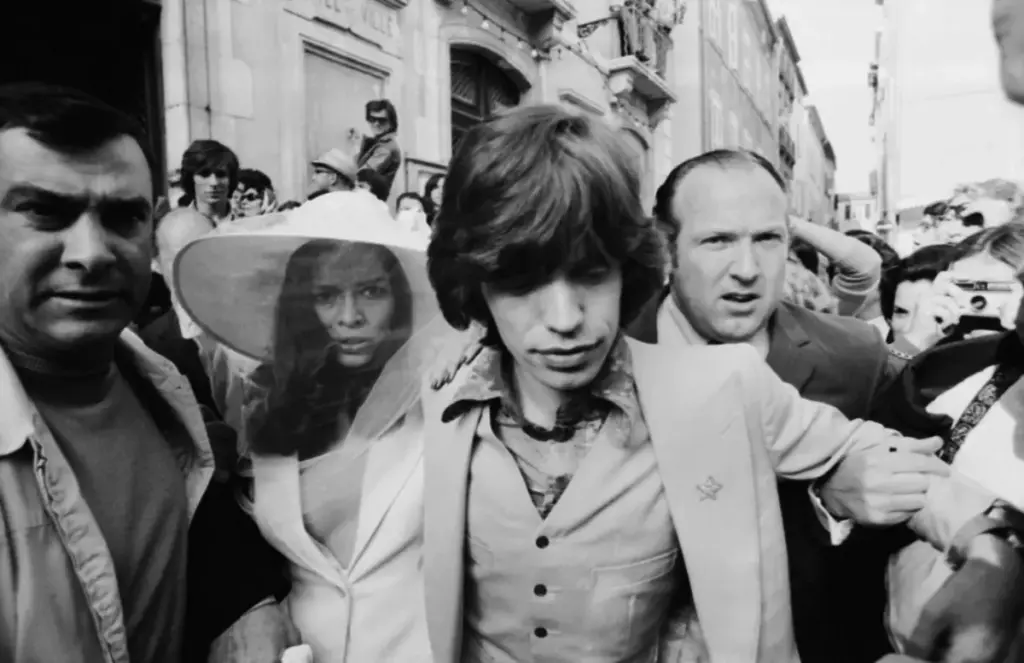
Decades later, rock royalty leaned heavily into civil tailoring. Mick and Bianca Jagger wed at St. Tropez Town Hall, with Bianca cementing sartorial history in a Yves Saint Laurent Le Smoking white tuxedo jacket paired with a wide-brimmed hat, effectively laying the groundwork for the modern bridal skirt-suit. - 1969: George Harrison and Pattie Boyd
In the UK, Beatle George Harrison and model Pattie Boyd opted for a quiet civil union at the Epsom register office in Surrey, arriving in unpretentious, fashion-forward sixties streetwear that bypassed the media circuses typically surrounding Britain’s most famous musicians. - Summer 2024: Charli xcx and George Daniel
Fast-forward to the post-pandemic landscape, and the city hall wedding underwent a punk-pop renaissance. Charli xcx married George Daniel at London’s Hackney Town Hall. Donning Vivienne Westwood and her signature wraparound sunglasses, the bride kept the civil ceremony sharp and local before transitioning to an effortlessly casual neighborhood hangout, setting a new blueprint for the internet age. - May 2025: Dua Lipa and Callum Turner
Most recently, Dua Lipa and Callum Turner woke up the pop culture ecosystem with a civil ceremony at Old Marylebone Town Hall. Lipa channeled Bianca Jagger in a custom Schiaparelli couture pencil skirt, blazer, and a dramatic, wide-brimmed hat. Following the London paperwork, Lipa executed a seamless pivot to a sun-kissed, cigarette-buffet-heavy reception in Palermo, Sicily, proving that the modern city hall route does not preclude celebration; it simply reorders the priorities.
Supporting Context & Metrics: The Economics of Matrimonial Fatigue
The pivot toward municipal ceremonies is not merely a celebrity aesthetic choice; it is deeply rooted in shifting economic realities and generational burnout.
According to data from The Knot’s real weddings studies, over 2 million couples married in the United States alone, with average wedding costs hovering around $34,000. Globally, the wedding services market has ballooned into a multi-billion-dollar juggernaut exceeding $1 trillion. Simultaneously, Generation Z now accounts for roughly 40 percent of the US wedding market—a demographic footprint that will only expand in the coming decade.
However, entering the matrimonial market today means confronting staggering financial inflation and logistical overhead. Being a guest, let alone a bridesmaid or a bride, can easily set an individual back anywhere from $1,500 to $5,000 once travel, lodging, gifts, and mandatory wardrobe changes are factored in. The cumulative stress of managing hundreds of guests, catering logistics, vendor contracts, and seating charts has transformed what should be a milestone celebration into a high-pressure project management assignment.
This friction has fueled a surge in search engine traffic. Global Google search trends for "city hall wedding," "courthouse wedding," and "town hall wedding" have reached historic highs. The internet is now thoroughly saturated with localized guides, Reddit threads debating the architectural merits of Manhattan versus Brooklyn civil ceremonies, and TikTok tutorials. Creators like Halley Kate and Austin-based influencer Hannah Chody have openly rejected the traditional multi-day production in favor of elopements and municipal vows.
As Kate noted in a viral video that resonated with millions: "You are just as legally married if you spend zero dollars on a courthouse wedding or $1 million on a 500-person wedding. I just feel like we’ve kind of lost the plot of what a wedding is." The comment sections beneath such declarations tell a consistent story: young couples eager to allocate funds toward homeownership, debt reduction, or experiential travel rather than a single afternoon of theatrical entertainment.
Official Statements & Cultural Commentary
While municipal governments and tourism boards have quietly celebrated the influx of stylish couples utilizing their chambers, cultural analysts have been quick to dissect the sociological underpinnings of the trend.
Civil clerks in major metropolitan areas have reported an uptick in couples requesting expedited morning slots, specifically inquiring about architectural backdrops that photograph well for digital documentation. In New York City, where a civil ceremony at the City Clerk’s office costs a mere $25, administrative departments have observed a steady shift toward elevated, high-fashion styling among everyday applicants. Vintage and archive fashion retailers have even begun curating specialized "courthouse-specific" collections to cater to the demand for tailored suits, retro midi dresses, and statement millinery.
Commentators on platforms like TikTok and Instagram have framed the movement as a rejection of performance-driven culture. Sociologists note that as younger generations navigate an increasingly digital existence—where every personal milestone is broadcast, scrutinized, and commodified—the act of retreating to a quiet government office acts as a protective boundary.
By keeping the core legal commitment private, buttoned-up, and unassuming, couples reclaim the sanctity of the ritual. The performance, when it does happen (such as Dua Lipa’s Sicilian after-party or Charli xcx’s post-ceremony gatherings), is decentralized, intimate, and designed for the participants rather than an audience of distant relatives and acquaintances.
Future Outlook: The Death of the Cookie-Cutter Celebration
As we look toward the future of the wedding industry, the rise of the city hall renaissance signals a permanent diversification of how couples mark lifelong commitments.
The era of the mandatory, cookie-cutter ballroom or barn wedding is slowly giving way to a philosophy of radical personalization. Couples are no longer asking What is expected of us?, but rather What actually matters to us?. Whether that translates to a $25 paperwork exchange followed by a neighborhood pizza slice, or a tailored Schiaparelli suit matched with an international coastal getaway, the parameters of celebration have expanded infinitely.
Ultimately, the city hall trend strips away the industrial complex of modern matrimony to reveal its core truth: a wedding does not require a production budget to be valid, romantic, or profoundly stylish. By taking a fine-tooth comb to an overburdened institution, contemporary cultural figures and everyday couples alike are proving that true luxury isn’t found in how much you spend, but in the freedom to design a milestone entirely on your own terms.