Executive Overview
In the upper echelons of the global fashion industry, the pedigree of a garment has traditionally been tied to the exclusivity of its origin. Mulberry silk, vicuña wool, baby cashmere, and archival leathers command astronomical price points and reverence not merely for their hand-feel, but for the rare mythologies embedded within their supply chains. These are materials steeped in centuries of heritage, geographic specificity, and painstaking craftsmanship. But what occurs when fashion strips away these pre-packaged narratives? What happens when creators are forced to look at the discarded, the utilitarian, and the utterly ordinary, extracting high-fashion luxury from the refuse of modern life?
Enter project. extraordinary, an ambitious, multidisciplinary photography initiative curated by New York-based art director Shibo Chen. Designed as a direct challenge to the conventional luxury paradigm, the project explores the alchemy of transformation—the intentional act of "reseeing" the familiar. For its inaugural chapter, Chen united thirteen distinct creative teams from around the globe, issuing a deliberately open-ended brief: take a conventional, non-fashion object and reshape it into something unexpectedly expressive, avant-garde, and wearable.
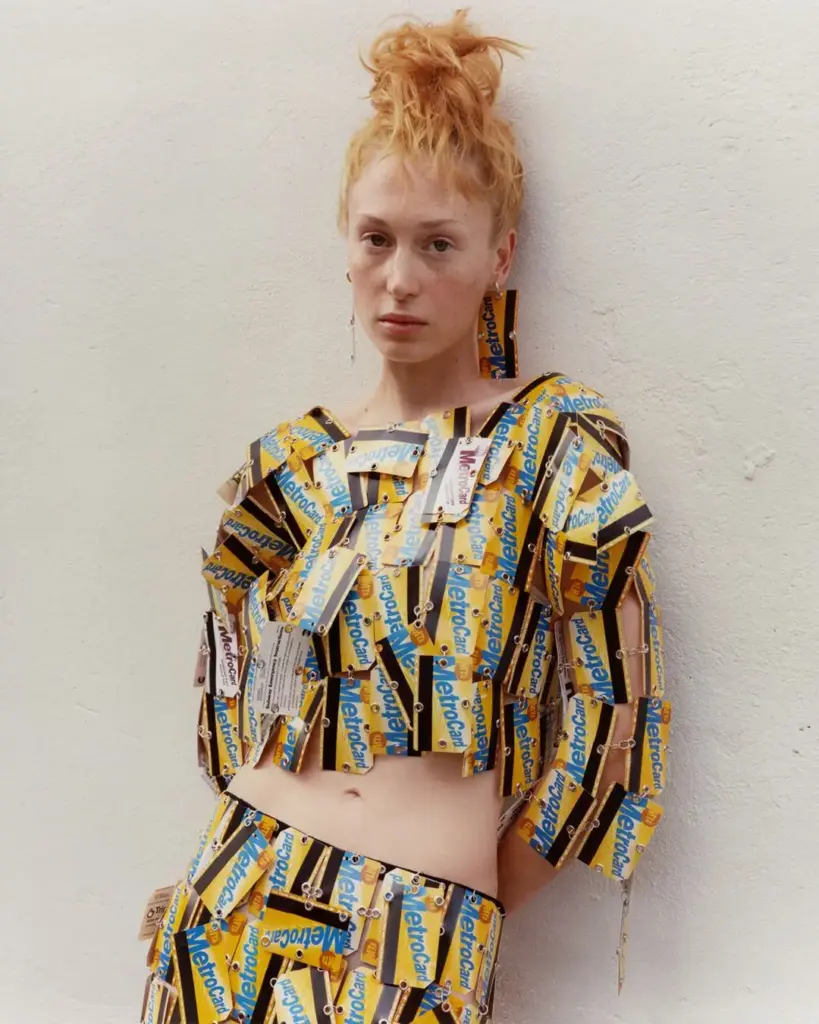
The results read as a subversive manifesto against consumerist excess. Discarded New York City MetroCards are meticulously reconstructed into a sleek two-piece ensemble complete with a matching clutch and earrings. Domestic candles are melted, molded, and sculpted into a wearable crown, structural bra, and floor-sweeping skirt. Industrial paper is aggressively wrapped and pleated into a dramatic, floor-length frock.
Featuring contributions from some of the industry’s most daring young tastemakers, photographers, and stylists—including Richie Talboy, Nico Daniels, Ryan Wohlgemut, Lulu Mcardle, Claudio Robles, Javier Castán, and Ricardo Arenas—project. extraordinary transcends novelty. It serves as a vital aesthetic inquiry into the future of luxury, arriving at a critical cultural juncture where sustainability, resourcefulness, and radical imagination are rapidly replacing traditional markers of status.
Detailed Chronology: The Genesis and Execution of Chapter One
The conceptual framework of project. extraordinary was born out of Shibo Chen’s exhaustion with cyclical, uninspired trends dominating the commercial fashion landscape. Operating through his proof of concept platform—an incubator dedicated to championing fresh voices in visual storytelling—Chen sought to dismantle the barrier between high art and everyday debris.
The Call to Global Creatives
In the early planning stages, Chen reached out to a curated cohort of thirteen international creative teams. Rather than assigning a rigid theme or material palette, he offered absolute freedom, constrained only by a singular philosophical mandate: uncover the latent aesthetic value in objects devoid of traditional fashion cachet. The project relied heavily on the distinct visual languages of its participants, allowing photographers and stylists to draw from personal obsessions, localized urban environments, and deep-seated psychological landscapes.
Blurring the Line: Nico Daniels and the Surrealist Mannequin
For lensman Nico Daniels, the bridge between the ordinary and the uncanny was found in the retail environment. Accustomed to working with human models, Daniels turned his attention to mannequins—objects that exist in a liminal space between static display tools and surrealist human facsimiles.
Working with lighting and deep, dramatic shadows, Daniels constructed a fashion narrative that deliberately obfuscates the boundary between the living and the inanimate. The breakthrough moment for the artist occurred on set, staring into a studio mirror.
"Looking in the reflection of the mirror and seeing the mannequins and models interacting with each other in silhouette was the point in which they started to come alive for me," Daniels recalls.
By utilizing staging techniques that mimic human emotion through rigid plastic forms, Daniels challenged viewers to reconsider the commodities that silently orchestrate our retail experiences.
Conquering Phobia through Flame: Ryan Wohlgemut and Lulu Mcardle
While some artists looked to retail spaces, stylist Ryan Wohlgemut and photographer Lulu Mcardle chose an intensely intimate, visceral medium: fire and wax. Utilizing household candles, industrial lights, and metallic ribbons, the duo sought to explore the thematic bounds of illumination. For Wohlgemut, however, the conceptual exploration quickly morphed into a profound psychological trial.
At the age of eleven, Wohlgemut survived a devastating fire in his childhood home, leaving him with a lifelong, debilitating phobia of open flames. Accepting the project. extraordinary brief meant confronting this trauma head-on.
"Working directly with fire to mold and shape the crown, bra, and skirt pushed me far beyond my comfort zone," Wohlgemut shares.
The physical act of handling dripping wax and harnessing heat to sculpt wearable art became an exercise in catharsis. Fire was transformed from an agent of destruction into a precise tool of haute couture craftsmanship, permanently altering the stylist’s relationship with his past.
An Ode to New York: Claudio Robles and the MetroCard Dress
Perhaps no piece in the collection captures the gritty, resource-driven ethos of New York City quite like the MetroCard dress, captured by photographer Claudio Robles and styled by Ricardo Arenas. Conceptualized and executed in September 2025—just weeks before the iconic canary-yellow magnetic stripe transit card was officially retired by the Metropolitan Transportation Authority (MTA)—the project was a race against urban history.
The hunt for raw materials proved arduous. Robles and Arenas scoured subway station discard slots across Manhattan with little success, finding them largely emptied by transit authorities or commuters. Their breakthrough came at the 34th Street station, where they discovered a massive cache of roughly 500 discarded subway passes jammed and forgotten behind one of the final operating vending machines, with some cards dating as far back as 2003.
Transporting the haul back to Robles’s apartment, the team washed the grimy, well-traveled cards in the kitchen sink. Over the span of just forty-eight hours, they engineered a structured, reflective dress that memorialized the end of an era in New York public transit.
"The whole thing felt like the ultimate New York story: snatching something the city was literally about to throw away forever and turning it into something beautiful you can actually wear," notes Robles.
Supporting Context & Metrics: The Paradigm Shift in Modern Fashion
To contextualize the resonance of project. extraordinary, one must examine the broader economic and ecological shifts currently destabilizing the global luxury market. For decades, the industry operated on a linear consumption model: extraction of virgin raw materials, manufacture of luxury goods, consumption, and disposal.
However, recent economic and environmental pressures have catalyzed a massive recalibration:
- The Rise of Deadstock: According to industry sustainability trackers, global fashion houses are increasingly relying on deadstock—surplus fabrics left over from overproduction—to meet both eco-friendly consumer demands and tightening international environmental regulations.
- The Valuation of Upcycling: Once viewed as a fringe aesthetic associated with punk or amateur craft, upcycling has transitioned into a multi-billion-dollar luxury sub-sector. Major fashion weeks globally now regularly feature collections constructed entirely from reclaimed industrial waste, household plastics, and architectural salvage.
- The Psychological Shift in Luxury Consumers: Younger demographics—specifically Gen Z and Millennial luxury buyers—exhibit a distinct skepticism toward traditional markers of wealth. Rarity derived from animal exploitation or mass manufacturing is rapidly losing cultural equity to rarity derived from ingenuity, narrative depth, and ecological stewardship.
project. extraordinary sits precisely at the intersection of these metrics. By proving that high-fashion aesthetics can be extracted from items with a zero-dollar baseline value (such as a used MetroCard or a burnt-down candle), the project calls into question the arbitrary pricing structures of legacy luxury brands.
Official Statements and Curatorial Vision
At the core of this multidisciplinary movement is Shibo Chen, whose curatorial vision challenges the entrenched hierarchies of traditional fashion institutions. Chen’s philosophy rejects the notion that exceptional design requires exceptional capital investment.
"I believe we can find beauty in everything," Chen states emphatically. "project. extraordinary centers on transformation, on the act of reseeing."
This philosophy extends directly into Chen’s broader developmental ecosystem, anchored by his proof of concept platform. In an industry notoriously difficult for emerging creatives to penetrate due to nepotism, capital barriers, and institutional gatekeeping, Chen’s initiatives function as a democratization engine.
"I constantly ask myself, ‘Who is going to be the next person to shape the industry?’ Every legend had a starting point," Chen reflects.
By giving early-career photographers, stylists, and conceptual artists an international stage to showcase radical, uncommercialized experiments, proof of concept and project. extraordinary act as vital counterweights to the risk-averse corporate conglomerates currently dominating global fashion weeks.
Future Outlook: The Next Iterations of extraordinary
With the triumphant rollout of Chapter One, Shibo Chen has made it clear that project. extraordinary is not a singular artistic exercise, but the foundation of an ongoing, expansive curatorial platform. The momentum generated by the debut has already paved the way for several highly anticipated follow-up series currently in development:
- project. extraterrestrial: A conceptually daring series drawing inspiration from a leaked classified document concerning covert government alien research. This chapter promises to explore speculative futures, non-human aesthetics, and avant-garde silhouette construction rooted in sci-fi mythos.
- project. yellow: A globally focused body of work dedicated exclusively to highlighting the nuanced perspectives, visual languages, and cultural narratives of Asian creatives operating across the international diaspora.
- Expansion of the proof of concept Incubator: Plans are underway to expand physical and digital exhibition spaces for the platform, offering mentorship grants, cross-disciplinary workshops, and production backing for boundary-pushing artists worldwide.
The Verdict on Fashion’s Material Future
The success of project. extraordinary signals a profound cultural maturation within the fashion zeitgeist. As the industry grapples with its ecological footprint and the exhaustion of traditional luxury tropes, projects like Chen’s point toward a liberating truth: true luxury has never been about the cost of the raw material. It is, and has always been, about the depth of the vision applied to it.
By teaching us how to look twice at the discarded, the forgotten, and the ordinary, project. extraordinary ensures that the future of fashion will be written not by those with the deepest pockets, but by those with the most daring imaginations.