Executive Overview
In the fast-paced ecosystem of contemporary pop culture and high fashion, few modern performers command stylistic attention quite like the Spanish singer-songwriter Rosalía. Known globally for her fearless approach to sartorial expression—ranging from smoke-gray latex slips and ethereal tutus to dramatic, pearly blue Dior pannier gowns—Rosalía’s wardrobe is an extension of her avant-garde artistic output.
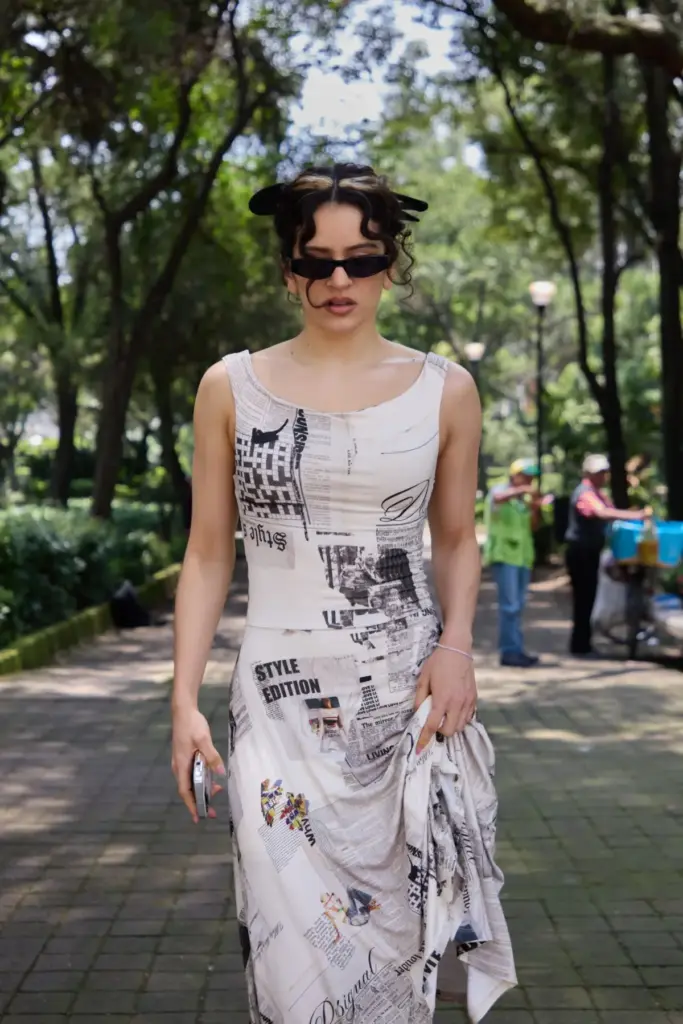
Recently, the global superstar paid a subtle yet unmistakable homage to television history during an outing in Mexico City. Spotted stepping out in a sleeveless, flared-skirt midi dress featuring an all-over newspaper print, Rosalía instantly channeled one of the most recognizable and enduring pop culture moments of the early 2000s: Sarah Jessica Parker’s portrayal of Carrie Bradshaw donning John Galliano’s iconic Dior newspaper dress in Sex and the City.
Crafted by the renowned Barcelona-based brand Desigual—which has steadily cemented its relevance through clever Y2K revivals and collaborations with artists like Zara Larsson—the garment highlights Rosalía’s ongoing fascination with offbeat, highly stylized, and feminine design codes. Styled with angular black sunglasses, ruched black ballet flats, and an elegant wavy bun showcasing her signature blonde halo highlights, the look bridges the gap between nostalgic television archives and modern street style.
This moment arrives at a pivotal juncture in Rosalía’s career. As she commands global stages for the next leg of her LUX tour in custom designs by Jonathan Anderson for Dior and youthful underground labels, her off-duty wardrobe continues to showcase a deep appreciation for vintage aesthetics, conceptual fashion, and historical design references. This article provides an in-depth examination of Rosalía’s latest fashion statement, the history of the newspaper print trend, her current stylistic trajectory, and what this convergence of eras signals for the future of pop culture fashion.
Detailed Chronology: From Carrie Bradshaw’s Streets to Rosalía’s Mexico City Stroll
To understand the weight of Rosalía’s recent fashion choice, it is necessary to trace the lineage of the newspaper print trend through the archives of modern fashion history.

The Genesis of the Newspaper Print in High Fashion
While text and typography have long been utilized in avant-garde fashion—dating back to Elsa Schiaparelli’s 1930s newspaper-print scarves—the motif reached iconic status in the late 20th century. Most famously, John Galliano sent his Spring/Summer 2000 Haute Couture collection for Dior down the runway, featuring garments plastered with mock newspaper headlines bearing headlines like "Galliano Gazett."
The look was permanently etched into fashion folklore when costume designer Patricia Field sourced a bias-cut version of the silk-chiffon newspaper dress for Sarah Jessica Parker’s character, Carrie Bradshaw, in Season 3 of Sex and the City (and later reprised it in the second film adaptation). The image of Bradshaw sprinting through the streets of New York City in the chaotic, text-heavy dress became a defining sartorial emblem of the millennium turn.
Rosalía’s Modern Interpretation in Mexico City
Fast forward to the present day: Rosalía was captured by paparazzi and onlookers in Mexico City embodying this exact energy. Opting for a contemporary interpretation of the classic print, the Spanish pop icon wore a structured, sleeveless midi dress with a flared skirt designed by Barcelona’s Desigual.
Rather than a direct vintage archive piece, the Desigual creation offered a modern spin on the typographic trend, marrying local Spanish design roots with a global pop-cultural touchstone. The singer paired the dress with deliberate accessories that balanced romanticism with sharp modernity:
- Footwear: Ruched black ballet flats, anchoring her ongoing affection for the "balletcore" aesthetic.
- Eyewear: Angular black sunglasses that added an air of cinematic anonymity.
- Hair & Beauty: A textured, wavy bun pulled up to reveal her now-signature blonde halo crown highlights, a striking visual signature of her current era.
This off-duty appearance was not merely a random outfit choice; it served as a calculated nod to the intersections of television history, Spanish craftsmanship, and personal branding.

Supporting Context & Metrics: The LUX Era and the Anatomy of Rosalía’s Wardrobe
Rosalía’s fashion choices rarely exist in a vacuum. Her style evolution has been meticulously curated across distinct eras, moving from the street-ready Motomami aesthetic into the ethereal, high-concept world of her current global LUX tour and promotional cycle.
Onstage Spectacle: Jonathan Anderson’s Dior and Beyond
When performing for tens of thousands of fans worldwide, Rosalía relies on narrative-driven costumery. For the latest leg of the LUX tour, the musician partnered with Jonathan Anderson, who crafted several bespoke, museum-worthy pieces. Among the most notable creations are:
- A dramatic, leaf-adorned tutu skirt that pushes the boundaries of performance balletcore.
- A structured, pearly blue Dior pannier gown reminiscent of 18th-century court dress reimagined through a futuristic lens.
- Tailored accessories, including Galliano-esque tricorne hats that pay direct homage to historical tailoring traditions.
Off-Duty Eclecticism: Championing Emerging Labels
While her stage presence leans toward grand theatricality, her day-to-day wardrobe champions a democratic mix of vintage treasures and boundary-pushing independent designers. Rosalía has consistently used her immense platform to spotlight up-and-coming talent, frequently stepping out in pieces by:
- Monique Fei: Known for sculptural silhouettes and experimental textiles.
- Yasmin: Celebrated for youthful, rebellious streetwear sensibilities.
- Colleen Allen: Renowned for sleek, precise tailoring and innovative drapery.
Furthermore, heritage brands undergoing modern revivals—such as Desigual, whose recent collaborations with Y2K icons like Zara Larsson have recaptured public fascination—find a natural ambassador in Rosalía. Her ability to seamlessly blend high-end luxury, archival nods, and underground design reflects a sophisticated understanding of contemporary visual culture.
Official Statements and Industry Perspectives
Fashion critics, cultural historians, and brand representatives have increasingly recognized Rosalía not merely as a musical force, but as a premier tastemaker whose aesthetic decisions sway global retail trends.
.jpg)
Industry analysts note that the resurgence of Y2K tropes—including polka dots, hibiscus prints, and newspaper typography—points to a collective cultural nostalgia for the turn-of-the-century optimism embodied by shows like Sex and the City.
"Rosalía possesses a rare stylistic alchemy," notes one prominent fashion commentator. "She does not simply wear clothes; she inhabits eras. By pairing a modern Desigual newspaper print dress with ballet flats and her signature blonde halo highlights, she bridges the gap between Carrie Bradshaw’s 2000s Manhattan and today’s borderless, digital-native street style."
Representatives for Desigual have expressed enthusiasm over the alignment, noting that the brand’s Barcelona origins shared a creative synergy with the Catalan singer’s artistic ethos. The intersection of local Spanish manufacturing and global pop culture resonance underscores a broader movement within the industry: regional brands leveraging global icons to redefine their historical identities for a new generation.
Future Outlook: The Enduring Power of Print in a Digital Age
As the fashion calendar progresses, the durability of text-based prints like the newspaper dress offers fascinating insights into how consumer behavior and digital aesthetics collide. In an era dominated by high-definition video content, TikTok micro-trends, and rapid-fire aesthetic cycles, garments bearing literal text provide an immediate visual narrative. They demand to be read, photographed, and analyzed.
What Lies Ahead for Rosalía’s Wardrobe?
- Deeper Archival Exploration: As Rosalía continues to explore different chapters of her career, industry insiders anticipate further nods to late-90s and early-2000s runway milestones, potentially translating iconic historical silhouettes into modern performance art.
- Amplifying Independent Designers: Her ongoing patronage of brands like Monique Fei and Yasmin is expected to drive significant commercial interest toward emerging talent, cementing her status as a vital incubator for independent fashion design.
- The Evolution of "Tour Fashion": The success of her collaborations with designers like Jonathan Anderson signals a permanent shift in how pop artists approach tour costumery—treating every city stop as a runway exhibition.
Ultimately, Rosalía’s Mexico City stroll in her Desigual newspaper dress is more than a simple paparazzi moment. It is a testament to the cyclical nature of style, proving that brilliant design—much like a well-written headline—never truly goes out of print.