Executive Overview
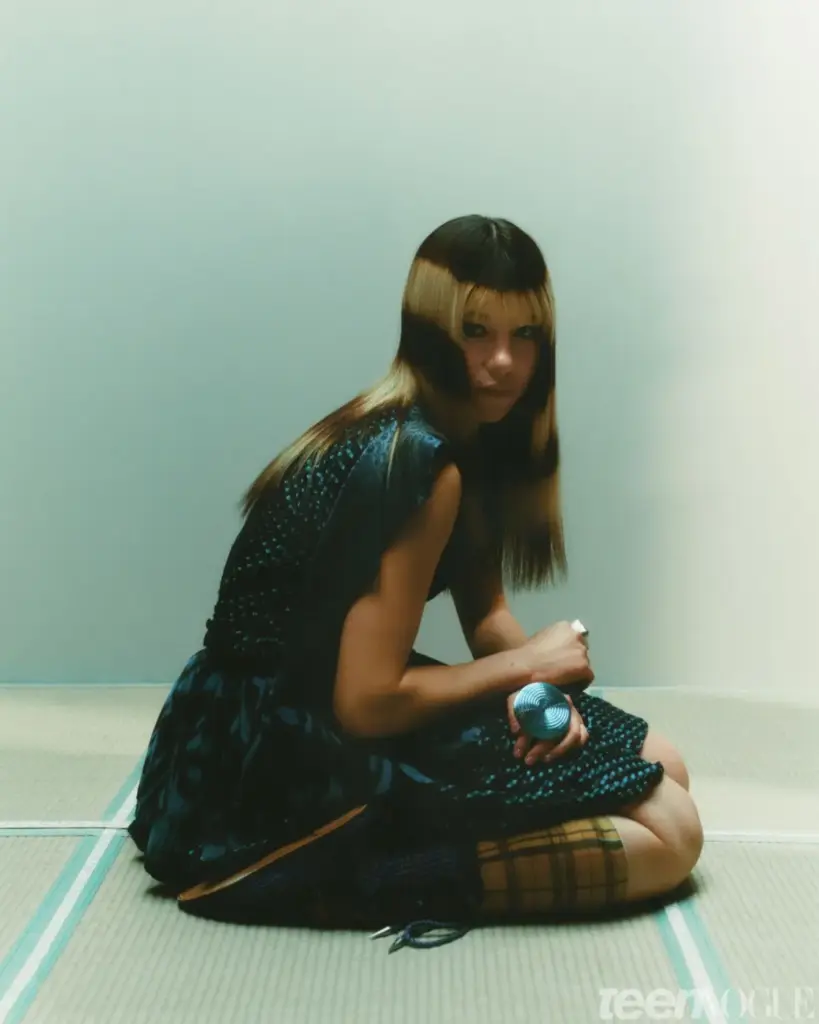
Weeks after capturing the hearts of millions and securing the gold medal in the free skate at the 2026 Winter Olympics, American figure skater Alysa Liu remains a dominant cultural fixture. Gracing the cover of Teen Vogue, Liu is celebrated not merely for her breathtaking technical prowess and effortless grace on the ice, but for an uncompromising personal aesthetic that challenges the traditional, buttoned-up expectations of competitive figure skating. Central to her "alt-girl" identity is her signature "halo hair"—a meticulously engineered, high-contrast dye placement that frames her head like a celestial ring.
Originally executed as a do-it-yourself experiment before later being perfected by St. Louis-based colorist Kelsey Miller, Liu’s milk-tea-toned halo has transcended the world of sports. It has ignited a massive resurgence in the beauty industry, prompting industry heavyweights, celebrity colorists, and trend forecasters to declare the halo technique the defining hair trend of the post-Olympic landscape.
This journalistic deep dive explores the mechanics of halo hair, tracing its historical roots from 2000s counterculture and Y2K pop stars to contemporary trendsetters like Rosalía and Billie Eilish. Furthermore, this report examines the technical execution required for precision placement, professional maintenance protocols, and the cultural implications of an elite athlete using personal style to redefine the boundaries of modern sports stardom.
Detailed Chronology: From DIY Experiment to Olympic Gold
To understand the cultural phenomenon of Alysa Liu’s hair, one must trace its evolution from a spontaneous bathroom experiment to a globally recognized trademark. Liu, who was raised in California and famously stepped away from competitive skating before mounting a triumphant return, has always utilized fashion and beauty as a medium for authentic self-expression.
The Evolution of the Ring
In the early stages of her experimentation, Liu toyed with the idea of classic "raccoon stripes"—a staple of mid-2000s emo and indie sleaze subcultures. However, deterred by the notoriously high maintenance and continuous root touch-ups required for horizontal striping, she pivoted toward a more circular, crown-focused approach. She bleached a single ring around her head, liked the dimensional contrast, and decided to incorporate the process into her annual routine.

"I could just do it once every year," Liu explained in her Teen Vogue cover interview, highlighting the practicality of a look that grows out gracefully without demanding constant maintenance. "You don’t have to upkeep it. You don’t have to re-bleach your roots because it’s not on the roots."
Perfecting the Shade for the Global Stage
As her return to competitive skating gained momentum ahead of the 2026 Winter Games, Liu enlisted the expertise of St. Louis-based colorist Kelsey Miller. Transitioning away from a brassier, unrefined blonde, Liu and Miller spent approximately five hours in the chair refining the color pattern into a sophisticated, cool-toned "milk tea" shade.
This meticulous color transformation proved to be more than just an aesthetic choice; it became part of Liu’s psychological armor on the ice. When she stepped onto the Olympic rink in her matching gold dress, complemented by her halo hair, she projected a rare fusion of elite athleticism and avant-garde subculture. The look immediately captured the attention of global media outlets, cementing her status as both an athletic icon and a style vanguard.
Supporting Context & Metrics: The Mechanics and History of Halo Hair
While Liu’s Olympic victory thrust halo hair back into the spotlight, the technique itself boasts a rich, cyclical history within the hair-styling community.
Defining the Technique
What precisely constitutes halo hair? According to Renée Valerie Radoiu, Vice President of R+COLOR Education and a R+COLOR Collective member, the technique relies on strategic geometry.

"A halo result is created by strategically placing lightener to build brightness in defined areas throughout the head," explains Radoiu.
Unlike traditional highlights, balayage, or global bleaching, a halo involves isolating a specific circular section through the top of the head—almost like drawing a soft crown—while leaving the underlying layers darker and more dimensional. This creates a striking halo effect of light when the hair falls naturally or moves during athletic performance.
A Retrospective of the Trend
The halo aesthetic has evolved significantly over the decades. In the early 2000s, pop culture icons like Miley Cyrus experimented with high-contrast color blocking, featuring platinum blonde layers on top paired with dark, natural layers underneath. Later, artists like Billie Eilish revolutionized root-focused contrast, introducing neon green and fiery red roots that peeked through otherwise dark tresses.
More recently, artists such as Rosalía and musician Caroline Polachek have adopted variations of the crown-lighting technique. However, industry insiders note that Liu’s iteration bridges the gap between these edgy, niche applications and mainstream consumer appeal.
Industry Metrics and the Personalization Boom
Haircare executives note that Liu’s timing could not be more aligned with current consumer demands. Chase Kusero, cofounder of IGK Haircare, emphasizes that the modern beauty consumer is shifting away from uniform color.

"We’re in a moment where personalization is everything," says Kusero. "Clients don’t just want highlights—they want intentional placement that feels expressive. It taps into the Y2K revival energy, it gives that editorial edge without committing to a full-head transformation."
Salons across North America report a noticeable spike in consultations featuring reference photos of Liu, with Gen Z and millennial clients requesting custom halo placements in shades ranging from milk tea blonde to vivid fantasy colors.
Official Statements and Expert Analysis
Industry leaders have been vocal about the cultural significance of Liu’s look, praising both its visual impact and the message it sends to young athletes and fans worldwide.
Redefining Athletic Identity
For decades, female figure skaters have faced immense pressure to conform to strict, traditional standards of appearance—often characterized by conservative updogs, heavily lacquered curls, and understated makeup designed to blend into the background. Liu’s refusal to sacrifice her alt-girl aesthetic has been hailed as a watershed moment for the sport.
"Alysa Liu’s hair suits her so well because it feels completely unapologetic and true to who she is," notes Radoiu. "In figure skating, it’s rare to see such individuality expressed through personal style, which is likely why so many people are drawn to her. It feels refreshing. As someone who grew up figure skating, I know I would have loved having a role model like her to look up to."

The Art of Precision Execution
Achieving a seamless halo requires advanced technical skill, cautioning against the risks of unsupervised DIY attempts. Radoiu points out that clean sectioning is paramount. Many professional colorists utilize specialized tools, such as barrier tapes or precision foils, to isolate the circular crown zone without bleeding lightener into adjacent sections.
Kusero breaks down his professional approach: "I typically isolate a circular section through the top of the head, almost like drawing a soft crown, and focus brightness strategically through that zone, while keeping the underneath more dimensional."
Future Outlook: Maintenance, Evolution, and Longevity
As the initial excitement of the 2026 Winter Olympics settles into the collective memory, beauty experts are looking ahead at how clients can maintain and evolve their halo hair over time.
Growing Out Gracefully
One of the primary selling points of the halo trend—and a major reason for its recent surge in popularity—is its low-maintenance growth cycle. Because the lightener is concentrated away from the immediate root area, wearers do not face the grueling, monthly root touch-up schedule required by global blondes or traditional highlights.
Liu herself has adopted a philosophy of organic evolution, viewing her maintenance schedule as adding "an extra ring each year." As the bleached section grows out, wearers can either choose to re-lighten the original ring, allow it to cascade down the hair shaft for a dimensional, lived-in effect, or stack new rings on top for a multi-tonal, multi-ring halo.

Professional Maintenance and At-Home Care
Maintaining the integrity and vibrancy of pre-lightened halo hair requires a dedicated regimen focusing on moisture, structural repair, and tonal preservation. Because pre-lightened hair is susceptible to environmental dullness and brassy oxidation, experts recommend targeted products:
- Cleansing & Conditioning: Chase Kusero recommends the IGK More Life Color Extending Gloss Shampoo and Conditioner. According to Kusero, this system "doubles the shine of your hair" while locking in color vibrancy and shielding the delicate strands from fading.
- Tonal Refreshing (In-Salon): To keep cool tones crisp, Radoiu recommends professional glossing treatments such as the R+COLOR HYPERMATIC 10-Minute Demi-Permanent Liquid, administered exclusively in salons.
- Tonal Refreshing (At-Home): For clients seeking at-home maintenance, glossing treatments like the Kristin Ess Hair Gloss in Crystal Quartz or the IGK Expensive Clear Gloss Top Coat offer exceptional shine and tone refinement. "This helps keep the color refined and prevents the brassiness that naturally occurs with pre-lightened hair," notes Radoiu.
Conclusion: A Lasting Legacy
Alysa Liu’s 2026 Olympic gold medal will forever be etched in sports history, but her cultural imprint extends far beyond the medal podium. By fearlessly bringing her authentic self to the global stage, she has democratized an editorial hair technique and turned it into a symbol of modern individuality. Whether you are lacing up figure skates for the first time or simply looking to inject an edge into your everyday style, the halo trend proves that personal expression—much like a gold-medal performance—is timeless.