Executive Overview
The commercial landscape where clinical healthcare intersects with personal care is undergoing a profound transformation. Major beauty retailers are no longer satisfied with merely stocking traditional cosmetics, skincare, and hair care products; they are aggressively positioning themselves as holistic wellness destinations. This strategic shift is epitomized by Ulta Beauty’s latest retail maneuver: a partnership with women’s telehealth platform Midi Health.
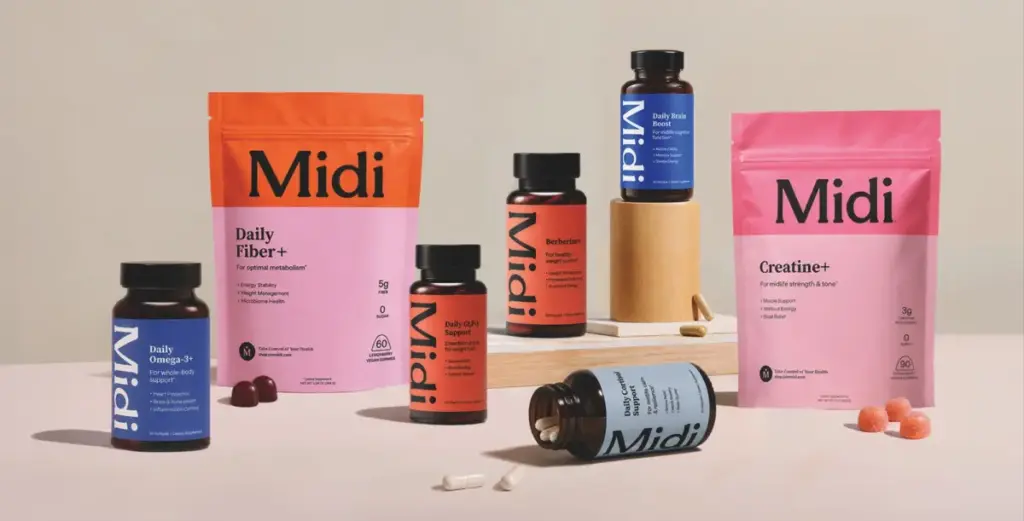
Beginning this weekend, Ulta Beauty’s digital storefront welcomed an initial curated selection of seven specialized health and wellness supplements from Midi Health. This digital rollout is merely the prelude to a physical expansion. Throughout September, five of these targeted products will make their way onto the shelves of more than 300 Ulta Beauty retail doors nationwide.
This collaboration represents a significant milestone for both companies. For Ulta Beauty, it marks the first time the retail giant has partnered with a dedicated women’s healthcare platform, underscoring a sophisticated, life-stage-specific approach to wellness. For Midi Health—a telemedicine provider founded in 2021 that recently achieved unicorn status with a $1 billion valuation—the partnership provides a massive, mainstream brick-and-mortar footprint. It allows the clinician-backed brand to transition from digital-first telehealth services into the everyday retail shopping habits of millions of consumers.
As the lines between clinical care, preventative health, and beauty continue to blur, this alliance points toward a future where retail associates are as fluent in the science of metabolic support and hormonal balance as they are in foundation shades and anti-aging serums.
Detailed Chronology of the Partnership and Strategic Expansion
The integration of Midi Health into Ulta Beauty’s ecosystem did not happen in a vacuum; it is the latest chapter in a multi-year strategy by the beauty conglomerate to institutionalize wellness as a foundational merchandising category.
The Genesis of Midi Health
Midi Health was established in 2021 during a period of rapid market recognition for the glaring gaps in midlife, perimenopause, and menopause care. Initially designed as a digital-first virtual clinic, the platform connected women with board-certified nurse practitioners and certified nurse midwives, pairing telehealth consultations with insurance coverage options from major providers like Aetna and Cigna.
However, leadership at Midi recognized that clinical interventions inside a virtual room could be powerfully complemented by accessible, over-the-counter products. The company began formulating a line of clinical-grade supplements designed to match the rigorous pharmaceutical standards upheld by its medical staff.
The Ulta Launch Timeline
- Sunday: Midi Health officially launches its product ecosystem on Ulta Beauty’s e-commerce platform, introducing an initial array of seven specialized wellness supplements.
- Throughout September: A localized rollout commences, bringing five core products to physical shelves across more than 300 Ulta Beauty retail locations nationwide.
- Future Integration: Both companies anticipate ongoing expansion as consumer response is evaluated, with retail associate training rolling out concurrently to ensure in-store staff can competently guide shoppers through the new wellness aisles.
This retail partnership coincides with a broader brand evolution for Midi. Having raised a staggering $100 million in Series D funding earlier this year—propelling the company to a $1 billion valuation—Midi has actively worked to broaden its scope beyond midlife care. In August, the company unveiled a comprehensive rebranding initiative and expanded its clinical treatment scope to address chronic conditions that impact women across their entire lifespans, including polyendocrine metabolic ovarian syndrome (formerly known as PCOS).
Consequently, the product lineup arriving at Ulta is remarkably diverse. It features a specialized supplement designed specifically for GLP-1 (glucagon-like peptide-1) weight-loss medication users, creatine gummies to support muscle mass and cellular energy, targeted cortisol support formulations for stress management, and berberine supplements aimed at metabolic and weight management support.
Supporting Context & Metrics: The Boom of Health-Meet-Beauty Retail
The partnership between Ulta Beauty and Midi Health arrives against a backdrop of surging economic momentum for both companies and a broader retail trend that analysts are calling the "wellnessification" of beauty.
Financial Health and Market Valuations
Ulta Beauty’s recent financial disclosures reflect robust consumer demand for expanded product categories. In its most recent earnings report, the beauty titan announced an 8.9% increase in net sales, pushing quarterly revenue to an impressive $3 billion. This financial strength provides the runway necessary to test and scale complex, service-adjacent categories like wellness and telehealth-backed products.
Midi Health, meanwhile, sits comfortably in the upper echelon of femtech and digital health startups. Its February Series D funding round of $100 million validated its business model, securing a $1 billion valuation that signals deep investor confidence in the commercial viability of specialized women’s healthcare.
The Rise of Wellness at Retail
Ulta Beauty is far from alone in recognizing that modern consumers view health and beauty as two sides of the same coin. The retail landscape is witnessing an unprecedented convergence of clinical wellness and traditional cosmetics:
- Celebrity-Backed Wellness: Ulta has systematically built out its "Wellness by Ulta Beauty" portfolio by onboarding high-profile, mission-driven brands. These include Kourtney Kardashian Barker’s supplement line, Lemme, Naomi Watts’ menopause-focused skincare brand Stripes, and direct-to-consumer nutritional staple Ritual.
- Cross-Industry Collaborations: Strategic partnerships are increasingly fluid. For instance, telehealth platform Wisp began distributing Stripes’ skincare products, proving that healthcare companies and beauty brands are eager to cross-pollinate their customer bases.
- Storefront Evolution: Traditional mass-market retailers are also adapting. Target’s newly minted Beauty Studio format integrates hair, skin, and nail supplements from brands like Clearstem right alongside traditional cosmetics like mascara and blush.
This market movement is driven by a fundamental shift in consumer psychology. Wellness is no longer viewed as an isolated medical chore, but as an integral component of personal expression, self-care, and aesthetic vitality.
Official Statements and Industry Perspectives
Leadership from both Ulta Beauty and Midi Health have emphasized the philosophical alignment driving this partnership. The collaboration is designed not merely to sell SKUs, but to empower consumers navigating complex physiological changes.
"Our vision for Wellness by Ulta Beauty is to deliver an empowering, approachable and holistic assortment that meets guests’ evolving needs and enables them to seamlessly integrate them into their everyday lives," said Laura Beres, Vice President of Wellness at Ulta Beauty, in a statement shared with Glossy.
Beres elaborated on the strategic weight of the integration, highlighting its demographic value: "As we continue to grow, we are expanding the way wellness shows up at Ulta Beauty, especially curating solutions for our guests’ life stages. Midi is an exciting next step in that evolution. As our first partnership with a dedicated women’s healthcare platform, it allows us to address an important area of women’s wellness in a more intentional way while continuing to broaden what guests can discover with us."
Joanna Strober, co-founder and CEO of Midi Health, echoed these sentiments, pointing to the emotional and physical interconnectedness of health and beauty.
"Health is a way to feel beautiful, feel good, feel great about yourself," Strober remarked. "There is an intersection between beauty and health that we feel strongly about. And so we’re excited that Ulta also sees that."
Strober also addressed the generational breadth of Ulta’s shopper base, noting that the retail environment acts as a shared space for diverse cohorts of women. "It could be younger women shopping at Ulta, but I also think there are a lot of moms who go there with their daughters," she noted.
Dr. Kathleen Jordan, MD, Chief Medical Officer of Midi Health, emphasized that the brand’s retail expansion does not dilute its clinical rigor.
"What I want women to know is that Midi puts the same scientific rigor behind their supplements that we do to the care we give and the pharmaceuticals we prescribe," Dr. Jordan stated.
While Midi’s products are formulated for midlife transitions, Dr. Jordan noted their broader applicability: "They were initially designed for things that women commonly face in midlife, but they’re relevant for many more people."
Future Outlook: Navigating Challenges and Setting New Standards
As Ulta Beauty and Midi Health forge ahead with this nationwide rollout, they must navigate distinct challenges unique to the intersection of retail sales and clinical wellness.
Educating the Retail Workforce
Selling specialized supplements—particularly those targeting complex biological functions like metabolic regulation, GLP-1 support, and hormonal shifts—requires a vastly different sales approach than helping a customer match a foundation or select a highlighter. Recognizing this hurdle, Midi and Ulta have prioritized comprehensive training for store associates.
"You have to educate the associates," explained Strober. "You have to explain the science behind the different face creams that are available at Ulta in the same way you may have to explain the science behind the supplements."
By treating supplement education with the same rigor traditionally reserved for active-ingredient skincare, Ulta aims to maintain a high level of consumer trust and brand integrity.
Addressing Supplement Skepticism
Unlike prescription pharmaceuticals, dietary supplements are not subject to the strict pre-market approval processes mandated by the U.S. Food and Drug Administration (FDA). This regulatory reality has historically fueled consumer skepticism regarding the efficacy and safety of over-the-counter wellness products.
To combat this skepticism, Midi Health leans heavily on its medical credibility, pairing clinician-backed formulations with transparent education. However, leadership remains proactive about consumer safety. Dr. Jordan strongly advises shoppers to maintain an open dialogue with their primary care physicians or gynecologists regarding any new supplement regimens.
"I always encourage women and anyone to talk about the supplements they take with their care provider, because there are some interactions and things people should know about," Dr. Jordan advised.
The Horizon of Femtech and Retail
The partnership between Ulta Beauty and Midi Health serves as a bellwether for the future of retail. As consumers increasingly demand products that address internal health alongside external appearance, traditional retail boundaries will continue to dissolve.
By bringing clinical-grade, life-stage-specific wellness solutions out of the telehealth portal and onto the brightly lit shelves of a nationwide beauty retailer, Midi and Ulta are democratizing access to specialized care. If successful, this model will likely inspire a new wave of healthcare-retail hybrids, transforming the neighborhood beauty aisle into a comprehensive hub for lifelong health, wellness, and self-care.