Executive Overview
In an industry perpetually obsessed with reinvention, true cultural evolution is rare. Far too often, modern fashion attempts at inclusion, diversity, and representation manifest as superficial corporate checklists—performative gestures designed to capture fleeting algorithmic approval rather than effect lasting change. Yet, every so often, a creative force emerges that bypasses the superficial entirely, anchoring its identity in authentic community-building, fierce autonomy, and uncompromising cultural pride.
Enter RIO, the newly evolved namesake label from visionary designer Rio Uribe.
Unveiled on June 15 in New York City, RIO’s premier campaign since its formal transformation from the groundbreaking cult-favorite label Gypsy Sport in 2025 marks a watershed moment in contemporary design. Photographed by Harry Eelman and styled by a fiercely dedicated, Latino-led creative team—including the brand’s Fashion Director—the campaign brilliantly bridges the gap between raw, punk-infused rebellion and refined, elevated maturity. It is a visual manifesto that speaks volumes about the current state of style: fashion is fundamentally cyclical, but the heartbeat driving its future is decidedly Latino.
This comprehensive feature explores the trajectory of Rio Uribe, tracing the historical milestones of Gypsy Sport, analyzing the strategic shift toward RIO, examining the broader socio-cultural forces shaping today’s Latine creative renaissance, and looking ahead to the brand’s highly anticipated runway presentation this September.
Detailed Chronology: From Gypsy Sport to the Birth of RIO
To understand the cultural weight of RIO’s new era, one must first retrace the subterranean movements that built its foundation. Long before the rebrand solidified his status as a master craftsman of contemporary luxury and streetwear, Rio Uribe was a disruptor operating on the fringes of the traditional fashion establishment.
The Gypsy Sport Era: A Blueprint for Inclusivity
When Gypsy Sport burst onto the American fashion scene a decade ago, it did not ask for permission to take up space; it demanded it. The early presentations were not mere runway shows—they were sprawling, electric celebrations of creativity, individuality, and fierce belonging. At a time when traditional runways remained stubbornly homogeneous, Uribe cast models of every gender identity, size, and racial background, setting a new standard for what representation could and should look like.
Uribe’s instinct for cultural prophecy was sharp. Long before global corporate entities realized the massive commercial and cultural power of emerging hip-hop and urban icons, Gypsy Sport was already incorporating them into the fabric of its shows.
- The Cardi B Milestone: Uribe famously brought a then-rising Cardi B to the Gypsy Sport runway long before she conquered the global charts and became a household name.
- The Rico Nasty Finale: The brand later enlisted rapper Rico Nasty to close its Fall/Winter 2019 show, delivering an adrenaline-soaked, high-energy punctuation mark that only Uribe’s eccentric, inclusive universe could attract.
These moments were never cynical celebrity cameos designed for cheap press; they were intentional cultural statements. They signaled that Gypsy Sport was a living, breathing ecosystem connected directly to the pulse of what comes next.
The 2025 Rebrand and the Genesis of RIO
As the cultural landscape matured, so too did the designer. The transition from Gypsy Sport to RIO in 2025 represented a strategic and artistic maturation. While the foundational ethos of community, fearlessness, and boundary-pushing design remained untouched, the label adopted a cleaner, more refined architectural approach.
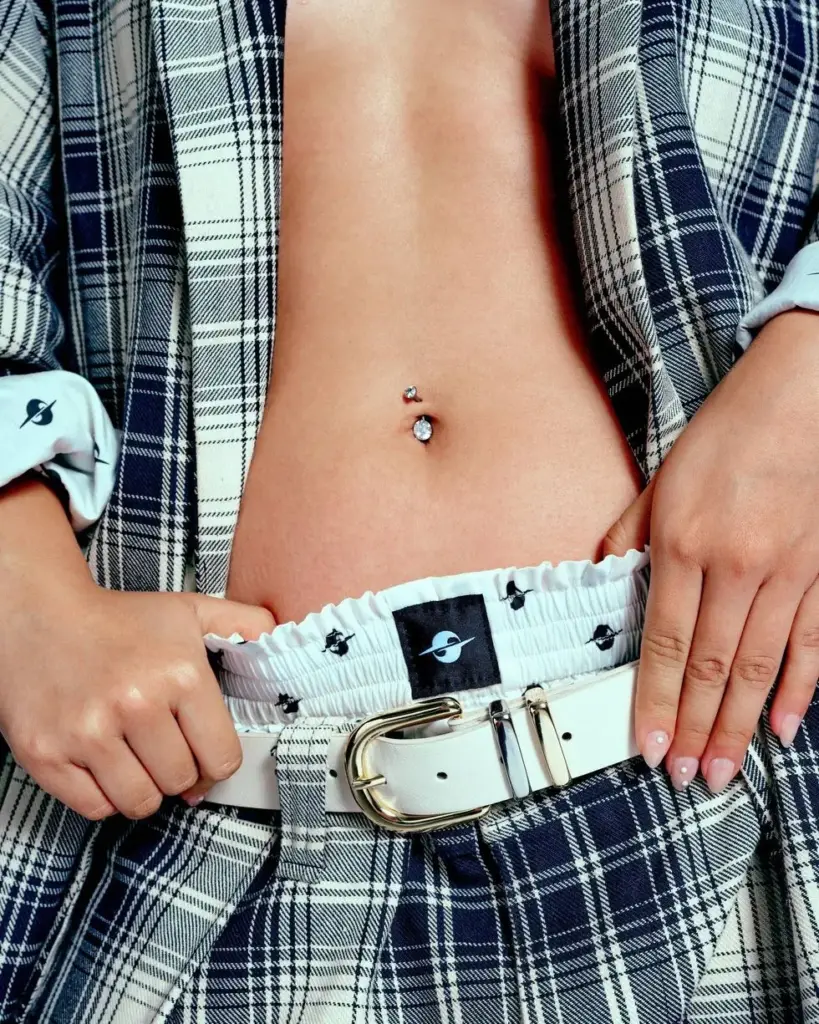
The June 15 unveiling in New York City served as the official coming-out party for this new iteration. Photographed through the lens of Harry Eelman, the campaign imagery strips away unnecessary noise to focus on the interplay between stark, architectural garments and deeply human emotion. The hair and makeup—executed by elite industry talents Oribe, Kien Hoang, and David Velasquez—elevate the styling from street-level cool to high-art sophistication. It is a visual language that respects the brand’s rebellious past while stepping boldly into a contemporary luxury conversation.
Supporting Context & Metrics: The Rise of Latine Creative Dominance
RIO’s evolution does not occur in a vacuum. It is part of a much larger, undeniable shift in the global creative economy: Latino culture is no longer just influencing pop culture; it is anchoring it.
Shifting Cultural Paradigms
From music and film to fine art and high fashion, Latine creators are steering the global aesthetic. A prime cultural touchstone occurred when model Kandrex—a key face within RIO’s orbit—took center stage during Bad Bunny’s historic Super Bowl halftime performance. Moments like these underscore a broader reality: being Latine today is multi-dimensional, global, and profoundly influential.
RIO offers a refreshingly nuanced perspective within this landscape. Rather than leaning into tired tropes or monolithic stereotypes, the brand’s imagery acts as a breath of fresh air. It draws subtle, knowing winks to iconic cultural memories shared by a generation—ranging from the nostalgic visual language of early 2000s pop culture touchstones like Jenny From the Block to the hyper-modern aesthetics of today’s digital natives.
The Eco-Conscious, Politically Engaged RIO Generation
Ten years after the inception of Gypsy Sport, a completely new generation of consumers has found its way to RIO. This modern demographic is markedly different from the audiences of the early 2010s:
- Political Engagement: They demand transparency and active socio-political stances from the brands they support.
- Environmental Consciousness: Sustainability is not an afterthought; it is a baseline requirement.
- Identity and Community: They view personal style not as an isolated aesthetic pursuit, but as an extension of their communal values.
In the universe crafted by Rio Uribe, these values do not exist in contradiction. The RIO consumer understands a vital truth: you can fiercely advocate for systemic change, challenge outmoded industry structures, and still look impeccably stylish while doing it. The brand successfully marries activism with aspirational luxury, proving that ethical consumption and high-fashion allure can co-exist harmoniously.
Official Perspectives and Creative Insights
The success of RIO’s transformation relies heavily on a collaborative, Latino-led ecosystem that prioritizes shared vision over top-down corporate dictation. Working within a collective that consistently pushes the boundaries of fashion has fostered an environment of fearless experimentation.
As noted from the creative trenches of the brand’s headquarters, the most exhilarating part of the design process is the dialogue surrounding future collections. It involves a delicate, highly intentional dance: engaging thoughtfully with current global trends while simultaneously refusing to be constrained by them, thereby developing an entirely original visual language.
Masterclass in Collaboration: Hair, Makeup, and Photography
The execution of the 2025 campaign required a convergence of masters across disciplines.
- Harry Eelman’s Lens: Eelman captures subjects with a rare intimacy, balancing raw vulnerability with an aspirational sheen. The photographs feel grounded in real human emotion yet stretch toward something monumental.
- The Oribe Partnership: High-end hair care titan Oribe provided critical support for the campaign, lending structural integrity and polished finish to the styling.
- Kien Hoang & David Velasquez: The masterful execution of hair and makeup by Hoang and Velasquez ensured that every look communicated volume, texture, and attitude, proving that every member of the creative team understood the assignment explicitly.
This collaborative synergy reflects a broader industry truth: when diverse teams are empowered to tell their own stories without editorial interference, the resulting work resonates with undeniable authenticity.
Future Outlook: Expanding the RIO Universe
With the successful rollout of its foundational campaign, RIO has firmly established the scaffolding for its long-term future. But the June unveiling is merely the opening act.
The Road to the September Runway
All eyes are now fixed on the horizon as the brand builds massive creative momentum toward its highly anticipated September runway show. Industry insiders and critics alike are speculating on how Uribe will translate the intimate, photographic framing of the recent campaign back into the high-octane, theatrical format of a live runway presentation.
If history is any indication, the upcoming show will not only showcase garments—it will serve as a cultural town square, bringing together artists, activists, musicians, and fashion purists under one roof.
Fashion is Cyclical, But Evolution is Eternal
Fashion’s obsession with the past is well-documented. Trends return on predictable twenty-year cycles; vintage silhouettes are endlessly resurrected, re-contextualized, and resold. However, what makes RIO’s current era so vital is that it refuses to anchor itself in mere nostalgia.
Nostalgia looks backward to find comfort; RIO looks backward to build a launchpad.
The brand’s ongoing metamorphosis proves an essential thesis for the modern era: a label can scale, mature, and enter the echelons of contemporary luxury without ever severing its roots. It demonstrates that meaningful representation is not a fleeting marketing trend, but an enduring artistic standard. As RIO expands its design universe and prepares for its next major theatrical statement in September, one thing remains crystal clear: fashion’s trends may be cyclical, but the future belongs unmistakably to Latino innovation.