At 76 years of age, British acting luminary Bill Nighy occupies a rare, singular tier within contemporary cinematic culture. Universally recognizable by his signature languid cadence, impeccable tailoring, and a distinctive brand of whimsical self-deprecation, Nighy has spent decades cementing his legacy across both independent masterworks and major studio franchises. Yet, far from resting on his considerable laurels—which include an Academy Award nomination and universal acclaim spanning theater, television, and film—the actor continues to subvert expectations.
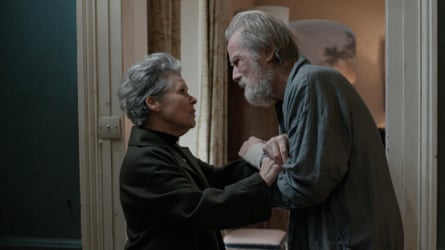
His latest project, the darkly eccentric cinematic drama & Sons, places him squarely in the shoes of AN Dyer, a reclusive, misanthropic literary titan whose fictional persona bridges the generational standoff of J.D. Salinger and the wild-haired aesthetic of Catweazle. The film, which introduces a subtle and startling sci-fi twist to the time-tested dramatic trope of a dying patriarch summoning his estranged family, offers Nighy a rare opportunity to explore abrasiveness, rage, and emotional distance on screen.
Away from the camera, Nighy’s cultural footprint continues to expand in unexpected directions. His critically lauded, off-the-cuff advice podcast, Ill-Advised—where he serves as a soothing, meandering agony uncle without ever previewing listener questions beforehand—recently captured the prestigious Podcast of the Year title from the Broadcasting Press Guild, boasting over 300,000 monthly listeners.
In a wide-ranging, candid conversation, Nighy reflects on his sprawling career, his aversion to modern corporate communication methods like Zoom, his lifelong literary ambitions that began in a Surrey grammar school, and why his enduring philosophy of performance relies not on pyrotechnics or awards-grabs, but on what he calls "reckless restraint."
Detailed Chronology: From Caterham to the Trocadéro and Beyond
Early Influences and Literary Ambitions
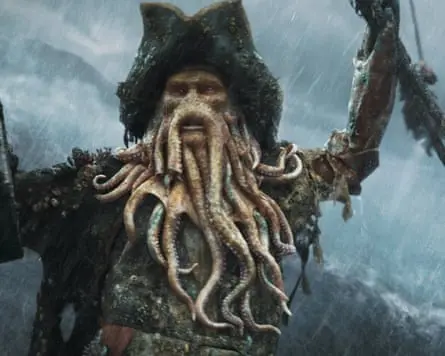
Long before he trod the boards or donned the digital, writhing tentacles of Davy Jones in the Pirates of the Caribbean franchise, Nighy’s early world was shaped by words. Growing up in the small town of Caterham, Surrey, his youthful idolatry was directed firmly toward literary giants such as Ernest Hemingway and F. Scott Fitzgerald.
The trajectory of his life shifted pivotally at age 14, courtesy of an English teacher named Mr. Weir at his Catholic grammar school. Upon hearing a casual encouragement to try his hand at writing a novel, Nighy experienced what he describes as "a bomb going off in my head." Though it was not the dawn of an acknowledged prodigy, the seed of authorship was permanently planted.
At 15, he secured employment at the esteemed hunting and fishing magazine The Field. Far from handling editorial masterpieces, his early responsibilities were decidedly more mundane. Among them was managing the roller towel in the ladies’ typing pool room—a notoriously tricky mechanical fixture that regularly provoked amusement among the female staff when the young Nighy tangled the fabric. His tenure at the magazine also brought an early lesson in corporate decorum: after spotting a Rolls-Royce or Bentley on the London streets, his enthusiastic jumping and waving caught the attention of the CEO, who promptly reprimanded the teenager for behavior unbecoming of a corporate representative.
The Parisian Interlude and the Pivot to Acting
Echoing the classic mid-century artistic pilgrimage, a young Nighy packed up and moved to Paris, channeling his literary aspirations into the romanticized vision of a struggling writer.
"I am a walking, talking cliché," Nighy admits. "I ran away to be a writer. Like a million others, I went straight to Shakespeare & Company and hung about thinking I’d write killer sentences and find a girlfriend. Neither of which happened. I ended up begging on the Trocadéro."
When literary glory failed to materialize immediately, his ambitions did not shatter so much as gently dissolve. Prompted by an acquaintance to consider drama school, Nighy transitioned into the theatrical sphere, convincing himself that he would return to prose writing eventually. Decades later, that ambition remains in a state of perpetual, comfortable procrastination.
Breakthroughs, Scandals, and Cinematic Icons
Nighy’s professional journey through British television and film eventually yielded defining cultural milestones. In 1991, he achieved early, incendiary success in the BBC’s raunchy drama series The Men’s Room. His explicit portrayals of a libidinous academic generated considerable public discourse, even drawing official censure from the Broadcasting Standards Council—a testament to his early willingness to lean into provocative, unvarnished material.
Subsequent decades brought an eclectic mix of towering performances. He delighted global audiences as the endearingly unhinged, self-aware veteran rocker Billy Mack in Richard Curtis’s holiday classic Love Actually, a role that cemented his status as a master of deadpan comedic delivery. Simultaneously, he displayed fierce dramatic range, earning universal praise from peers such as Cate Blanchett—who famously noted that any thinking Western woman would yearn to embrace him following their work in Notes on a Scandal—and ultimately securing a historic Academy Award nomination for his heartbreaking, buttoned-up turn as a terminally ill bureaucrat in Oliver Hermanus’s Living (2022).
Supporting Context & Metrics
The multifaceted career of Bill Nighy is defined by a unique juxtaposition of populist blockbusters, high-art cinema, and modern audio media. The following metrics and contextual highlights illustrate his ongoing cultural resonance:
Age & Career Longevity: Born in December 1949, Nighy maintains an active, relentless work ethic at age 76, consistently balancing complex lead film roles with media ventures.
Podcast Phenomenon (Ill-Advised):
Monthly Listenership: Exceeds 300,000 active listeners.
Accolades: Named 2026 Podcast of the Year by the Broadcasting Press Guild.
Format: Unscripted, un-prepped agony-uncle style advice addressing fashion, etiquette, and life dilemmas.
Critical Milestones:
Academy Award Nomination: Best Actor nomination for Living (2022).
Television Censure:The Men’s Room (1991) sparked formal review by the Broadcasting Standards Council for its explicit content.
Notable Collaborations & Franchise Work: Major studio appearances include Pirates Of The Caribbean: Dead Man’s Chest and At World’s End (transforming into Davy Jones via motion capture), alongside beloved British indies such as Sometimes Always Never and Lawless Heart.
Official Statements & Personal Philosophy
Speaking candidly from north-west London—where he spent the morning browsing bookshops—Nighy addressed everything from modern workplace communication tools to his stringent personal boundaries regarding professional life.
On the corporate shift toward remote video conferencing, Nighy is delightfully resolute:
"It got to the point where every time I had a Zoom call, it made me unhappy. I’m old enough to be able to say, ‘Can I retire from Zoom?’"
His boundary-setting extends firmly into the realm of professional dining and socializing:
"Food where you talk about work. That’s one. Particularly lunch. You have to sit there for so long and it just confuses the issue. Working lunches are absolutely out of the question now."
When discussing his aversion to specific casting calls, his answer is instantaneous:
"Togas."
In & Sons, Nighy plays AN Dyer, an emotionally distant novelist who attempts to justify his cruelty and parental absence under the banner of artistic genius. Nighy has zero tolerance for this defense mechanism, drawing a sharp parallel to modern sports culture:
"It’s like when footballers behave badly on the pitch and people say, ‘Temperament is part of his genius.’ Give me a break. That’s anathema to me. I don’t believe it in the least."
Reflecting on his own parenting style regarding his daughter, actor-director Mary Nighy, and his two grandchildren, he notes the pragmatic reality of family life:
"Blimey… You make it up as you go along. You make mistakes, then correct them, and hopefully you arrive at something that works. My parents were not oppressive or unkind, and I didn’t want to be either."
Discussing his acting idols—particularly the minimalist mastery of Steve McQueen—Nighy summarizes his own approach to performance with characteristic humility:
"You need a lot of confidence to do what he did. No fireworks, no reaching for prizes. It’s a kind of reckless restraint."
Future Outlook
As & Sons prepares to introduce audiences to Nighy’s terrifyingly brilliant, misanthropic patriarch alongside co-stars Imelda Staunton, Johnny Flynn, George MacKay, and Noah Jupe, the actor’s professional horizon remains remarkably vibrant.
Far from winding down his output, Nighy’s ongoing evolution demonstrates that genuine artistic longevity stems from adaptability coupled with steadfast personal boundaries. Whether he is unspooling spontaneous, sartorial advice on his award-winning podcast Ill-Advised, fielding inquiries about lounge suits and shirt collars, or choosing film projects with the discerning eye of a veteran craftsman who categorically refuses to wear togas or participate in working lunches, Bill Nighy continues to set his own terms.
He may humorously lament that he will never truly match the effortless coolness of Steve McQueen, yet the sentiment he uses to describe his cinematic heroes applies equally to his own legendary status: no fireworks, no desperate reaching for prizes, but rather the enduring power of reckless restraint.