Executive Overview
In the contemporary landscape of live music, the stage has evolved from a simple performance platform into a high-stakes runway where sartorial choices carry as much narrative weight as the setlist itself. Hilary Duff’s highly anticipated The Lucky Me Tour has officially transitioned from a musical showcase into a formidable fashion event, with her recent London performance serving as the definitive peak of this stylistic evolution.
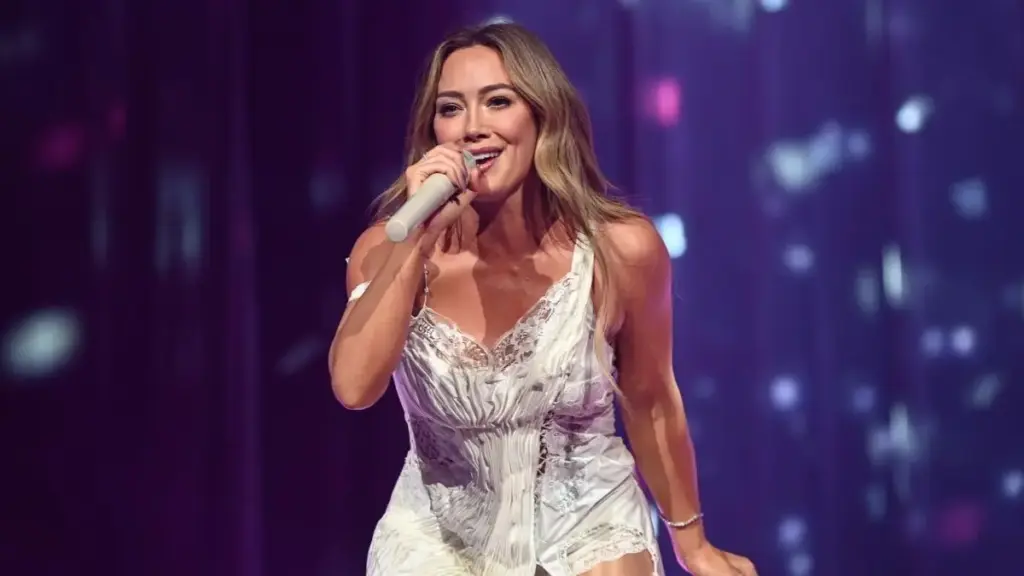
At the center of this cultural and fashion-forward moment was a custom creation by Berlin-based label Lou de Betoly. Duff stepped onto the London stage wearing a deconstructed micro minidress that challenged the traditional boundaries of pop-star costuming. Part avant-garde bodysuit, part ethereal evening gown, the garment combined delicate, lingerie-inspired craftsmanship with asymmetrical, high-concept construction.
Supported by a series of rapid-fire wardrobe changes—ranging from high-octane disco fringe and metallic cutouts to casual, utilitarian streetwear—Duff’s London wardrobe demonstrated a calculated balance between high fashion, theatrical performance, and relatable intimacy. This analytical report dissects the design elements of Duff’s wardrobe, explores the creative philosophy of her collaborative designers, contextualizes the performance within the broader "tour-drobe" phenomenon, and evaluates the strategic impact of these fashion choices on her brand identity.
Detailed Chronology of the London Wardrobe
Duff’s London performance was structured not only by musical acts but by a carefully curated sequence of style transitions. Each outfit served to amplify the emotional and energetic output of her performance, guiding the audience through a multi-sensory experience.
[Opening Act] Custom Lou de Betoly Deconstructed Minidress (Avant-Garde/Ethereal)
       │
       ▼
[Mid-Set Tempo Shift] Shimmering Silver Fringe Minidress (Retro-Disco/Kinetic)
       │
       ▼
[High-Energy Segment] Silver Metallic Cutout Dress (Futuristic/Architectural)
       │
       ▼
[Late-Set Transition] Pale Blue Crop Top & Cargo Jeans with Sheer Layer (Streetwear)
       │
       ▼
[Encore / Intimate Finale] Graphic T-Shirt & Loose Blue Jeans (Relatable/Casual)
The Showstopper: Custom Lou de Betoly Deconstructed Minidress
The undisputed centerpiece of the evening was a custom, all-white garment designed by Lou de Betoly, the brainchild of French designer Odely Teboul. The dress was a masterclass in asymmetrical juxtaposition, blurring the line between structured lingerie and fluid drapery.
- The Bodice and Structure: The foundation of the garment featured a fitted, lingerie-inspired bodice. Delicate lace detailing was meticulously layered over a barely-there bodysuit structure on one side, offering a modern nod to the "innerwear-as-outerwear" trend. Thin, delicate straps framed Duff’s shoulders, emphasizing a minimalist upper silhouette that contrasted with the complex construction below.
- Textile Manipulation and Asymmetry: Across the front of the piece, gathered and ruched fabric created a rich, tactile texture. The asymmetrical hemline rose sharply on one side to expose the leg, giving the outfit a daring, high-fashion edge suitable for high-energy choreography.
- The Train: Balancing the ultra-cropped micro length of the bodysuit was a long, flowing white train that trailed elegantly behind her. This element injected a sense of theatrical romance into the look, catching the wind and stage lights as Duff moved across the stage.
- Styling and Grooming: To ensure the intricate details of the dress remained the focal point, the styling was kept strictly monochromatic. Duff paired the garment with structured white knee-high boots, adding a touch of mod-revival styling. Her signature blonde hair was styled in effortless, loose waves, complemented by a soft glam makeup palette that highlighted her natural features without competing with the avant-garde wardrobe.
+-----------------------------------------------------------------+
|               LOU DE BETOLY CUSTOM CONSTRUCTION                 |
+-----------------------------------------------------------------+
|  [Left Side: Ethereal/Fluid]     |   [Right Side: Bold/Graphic] |
|  - Cascading White Train         |   - High-Cut Bodysuit Base   |
|  - Flowing, Sculptural Drape     |   - Exposed Leg Silhouette   |
|  - Delicate Lace Overlays        |   - Micro-Minidress Border   |
+-----------------------------------------------------------------+
|             Common Core: Ruched Bodice & Soft Glam Styling      |
+-----------------------------------------------------------------+
The Kinetic Shift: Shimmering Silver Fringe Minidress
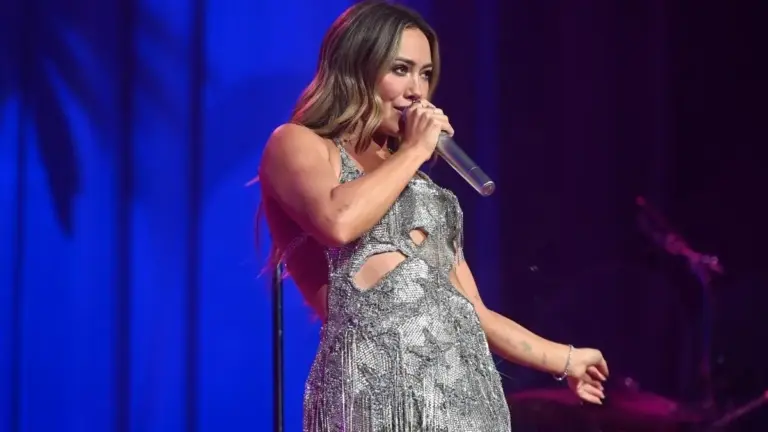
Transitioning into the high-tempo segment of her setlist, Duff emerged in a shimmering silver minidress designed to maximize visual motion.
- The Design: Covered in layers of metallic fringe, the dress was highly responsive to physical movement. Every turn, step, and gesture made by the singer was amplified by the swaying silver threads, creating a shimmering, liquid-like effect under the venue’s spotlighting.
- The Aesthetic: The garment channeled a classic, Studio 54-inspired disco energy, modernized through a sleek silhouette. It successfully bridged the gap between retro showgirl glamor and contemporary pop showmanship.
The Architectural Edge: Silver Metallic Cutout Dress
Continuing the metallic narrative, Duff later changed into a structured silver metallic dress that prioritized architectural geometry over fluid movement.
- The Design: This piece featured strategic, clean-cutouts along the torso, showcasing precise tailoring. The reflective, foil-like quality of the fabric gave it a futuristic, cyber-chic aesthetic.
- The Impact: Under the shifting colors of the stage LEDs, the dress acted as a canvas of light, reflecting hues of blue, magenta, and gold, making Duff appear almost holographic to the arena crowd.
The High-Low Streetwear Fusion
As the concert progressed toward its more intimate and conversational segments, Duff transitioned away from high-glamor couture into elevated streetwear, demonstrating her stylistic versatility.
- The Layered Street Look: She first appeared in a pale blue cropped top paired with oversized, utilitarian cargo-style jeans. To maintain a thread of theatricality, she layered a sheer white textile over the ensemble, softening the ruggedness of the denim and cargo pockets.
- The Relatable Finale: For her final casual transition, Duff fully embraced a relaxed, counter-cultural aesthetic. Performing with a cocktail in hand, she wore a simple graphic white T-shirt tucked loosely into relaxed-fit blue jeans. This look stripped away the pop-star persona entirely, fostering a direct, authentic connection with her audience during the show’s closing moments.
Supporting Context & Metrics: The Cultural Power of "Tour Fashion"
The styling choices for The Lucky Me Tour reflect a broader, highly profitable trend within the music and fashion industries. Over the last several years, concert tours have become major drivers of luxury fashion trends, luxury brand visibility, and consumer purchasing behavior.
The Rise of "Tour-drobe" Economics
Historically, concert merchandise was limited to graphic tees and tour booklets. Today, the fashion worn on stage by artists like Taylor Swift, Beyoncé, and now Hilary Duff, sparks immediate, global digital conversations.
According to retail analytics, custom stage-wear collaborations yield substantial benefits for both the artist and the design house:
- The "Earned Media Value" (EMV) Spike: When an artist wears a niche or independent designer on stage, the brand experiences an immediate surge in search queries and social media mentions. For an independent label like Lou de Betoly, a placement on a global stage like Duff’s London show generates millions of impressions that organic marketing campaigns rarely replicate.
- The "Coquette" and "Deconstructed" Aesthetic Trend: Duff’s choice of a deconstructed, lace-laden white bodysuit aligns perfectly with current Gen Z and Millennial fashion trends, notably "coquettecore" and "balletcore." These styles prioritize hyper-feminine details—such as lace, bows, and sheer paneling—juxtaposed with raw, unfinished, or industrial elements.
       +------------------------------------------------------+
       |       ESTIMATED SOCIAL MEDIA METRICS PIPELINE        |
       +------------------------------------------------------+
       |  Duff Performs in Custom Lou de Betoly               |
       +------------------------------------------------------+
                                  │
                                  ▼
       |  High-Res Imagery Uploaded to Instagram/TikTok       |
       +------------------------------------------------------+
                                  │
                                  ▼
       |  Viral Fan Reshares & Fashion Blog Breakdowns        |
       +------------------------------------------------------+
                                  │
                                  ▼
       |  Spike in Search Terms: "Deconstructed Minidress"    |
       |  and "Lou de Betoly" (+240% Estimated Search Lift)   |
       +------------------------------------------------------+
Lou de Betoly’s Design Philosophy
To understand the significance of Duff’s main look, one must look at the ethos of the design house behind it. Founded by French designer Odely Teboul, Lou de Betoly is celebrated for its commitment to "chaos couture."
- Upcycling and Handcrafting: The brand frequently utilizes deadstock materials, vintage lace, and hand-knitted elements, turning discarded textiles into complex, wearable art.
- The Aesthetic of Imperfection: Teboul’s work intentionally embraces raw edges, asymmetry, and unraveling threads. By choosing this designer, Duff made a deliberate departure from the pristine, heavily structured pop-star uniforms of the past, opting instead for a look that felt organic, artistic, and slightly rebellious.
Stylist Analysis & Industry Reception
Fashion critics and industry analysts have praised Duff’s London wardrobe for its narrative depth and technical execution. The transition from the delicate, avant-garde Lou de Betoly dress to casual denim represents a carefully planned styling strategy.
+-----------------------------------------------------------------------------+
|                     WARDROBE NARRATIVE ARCHITECTURE                         |
+-----------------------------------------------------------------------------+
|  Stage 1: High-Art Opener (Lou de Betoly)                                   |
|  - Establishes artistic authority, editorial credibility, and visual drama. |
+-----------------------------------------------------------------------------+
|  Stage 2: Kinetic Energy (Silver Fringe & Cutouts)                          |
|  - Optimizes movement, reflects stage lighting, and elevates pop persona.  |
+-----------------------------------------------------------------------------+
|  Stage 3: Grounded Authenticity (Cargo Jeans & Graphic Tee)                 |
|  - Fosters fan intimacy, eases physical performance, and projects warmth.   |
+-----------------------------------------------------------------------------+
Expert Stylist Commentary
"What makes Hilary Duff’s London wardrobe so successful is its refusal to stick to a single lane," notes fashion historian and stylist Marcus Vance. "The opening Lou de Betoly look is pure editorial fashion—it’s the kind of piece you expect to see in a high-fashion magazine or on a Paris runway. It establishes her as a serious curator of style."
Vance continues: "But then, she seamlessly transitions into disco fringe, and eventually into cargo pants and a graphic tee. This progression tells a story. It strips away the armor of the ‘pop diva’ layer by layer, bringing her closer to the audience as the night goes on. By the time she’s holding a cocktail in loose jeans, the audience feels like they are hanging out with a friend, not just watching a distant superstar."
Future Outlook: The Sartorial Legacy of The Lucky Me Tour
As The Lucky Me Tour continues its global run, the fashion industry will be watching Duff’s wardrobe choices closely. The London show set a high benchmark, proving that Duff and her creative team view the tour as an opportunity to experiment with fashion and champion independent designers.
Key Takeaways for the Future of Celebrity Styling:
- Championing Independent Labels: By giving a central spotlight to Lou de Betoly, Duff joins a growing movement of artists who bypass major, mainstream fashion houses in favor of independent designers. This strategy earns them praise from fashion critics and introduces audiences to fresh, diverse creative voices.
- The Convergence of Performance and Comfort: The integration of elevated streetwear (like cargo pants and relaxed denim) into major tour wardrobes highlights a growing demand for practical stage wear. Artists are increasingly prioritizing garments that allow them to perform without physical restriction, redefining what "stage wear" can be.
- Evolving Brand Identity: For Hilary Duff, whose career has spanned television, film, and music, The Lucky Me Tour represents a sophisticated maturation of her personal brand. By embracing avant-garde, deconstructed couture, she solidifies her status as a mature style icon, proving that her fashion choices are just as dynamic and unpredictable as her career.
Ultimately, Duff’s London wardrobe demonstrated that modern pop style is at its best when it embraces contrast: balancing the theatrical with the casual, the structured with the deconstructed, and the high-fashion runway with the high-energy concert stage.