Executive Overview
In an aging global society, falls among older adults represent a staggering public health crisis. Beyond the immediate physical trauma of fractures, head injuries, and soft-tissue damage, a fall often triggers a cascade of debilitating consequences: a loss of independence, prolonged hospitalization, psychological distress, and a profound fear of movement that diminishes overall quality of life. Traditional interventions—ranging from lower-limb strengthening exercises to balance boards—focus heavily on muscular capacity. However, a growing body of clinical evidence points toward an ancient, mindful movement art as one of the most effective countermeasures against unexpected tumbles: Tai Chi.
To unpack the mechanics of why this centuries-old practice is so profoundly protective, we spoke with Mark Peters, a leading authority on Tai Chi and qigong who has collaborated extensively with the United Kingdom’s National Health Service (NHS). Peters has spent decades integrating these martial arts into mainstream healthcare pathways, helping patients recover from cardiac events, manage chronic obstructive pulmonary disease (COPD), and—most notably—rebuild the kinetic reflexes necessary to prevent devastating falls.
At the heart of Peters’ rehabilitative philosophy is a radical reframing of how we interact with the physical world: the realization that human locomotion is, fundamentally, controlled falling. By harnessing this concept through a specific, imaginative exercise known as "ice stepping" or "walking on thin ice," practitioners can retrain their nervous systems, heighten spatial awareness, and cultivate a vital state of "controlled instability." This comprehensive report explores the physics of falling, the neurological mechanics of Tai Chi, the step-by-step execution of ice stepping, and the broader integration of mindful movement into modern medical rehabilitation.
Detailed Chronology: The Evolution of Tai Chi from Martial Art to Clinical Rehabilitation
To understand how Tai Chi evolved into a cornerstone of modern geriatric care, it is helpful to trace its journey from ancient philosophical roots to contemporary clinical practice.
[Ancient China]
       │  (Development of Tai Chi & Qigong as internal martial arts)
       ▼
[Late 20th Century]
       │  (Geriatric researchers begin studying balance and fall reduction)
       ▼
[2010]
       │  (Mark Peters authors REPs CPD standards for Tai Chi and Qigong)
       ▼
[2022]
       │  (CIMSPA develops national standards; NHS formalizes rehab integration)
       ▼
[Present Day]
       │  (Global adoption of "ice stepping" and mindful movement in healthcare)
Origins in Internal Harmony
Tai Chi (or T’ai Chi Ch’uan) originated in feudal China as a sophisticated internal martial art. Unlike external systems that relied purely on muscular force and linear speed, Tai Chi prioritized the cultivation of qi (vital energy), deep structural alignment, leverage, and dynamic relaxation (song). Practitioners learned to redirect an opponent’s force by remaining fluid, rooted, and acutely sensitive to shifts in weight and momentum. Over centuries, these martial applications were gradually distilled into slow, continuous movement sequences designed to promote longevity, mental clarity, and physical resilience.
The Scientific Awakening
For decades, Western medicine viewed Tai Chi largely through the lens of alternative therapy or cultural folklore. However, as the demographics of industrialized nations shifted toward aging populations, healthcare systems faced an epidemic of fall-related injuries. Researchers began combing through non-traditional modalities for solutions.
In the late 1990s and 2000s, landmark clinical trials published in peer-reviewed geriatric journals revealed a striking correlation: older adults who practiced Tai Chi experienced dramatic reductions in the incidence of falls compared to control groups receiving standard care. The slow-motion weight-shifting, ankle-strengthening stances, and cognitive engagement required by the form proved uniquely suited to countering the age-related decline of the vestibular, visual, and proprioceptive systems.
Institutional Integration in the UK
The translation of Tai Chi from community recreation centers into formal medical settings was catalyzed by dedicated practitioners and clinical innovators. Mark Peters played a pivotal role in this movement within the United Kingdom. Recognizing the need for standardized, evidence-based instruction in clinical environments, Peters authored the initial Continuous Professional Development (CPD) standards for Tai Chi and qigong for the Register of Exercise Professionals (REPs) in 2010.
Building upon this foundation, Peters subsequently led a multi-disciplinary team in 2022 to develop comprehensive national standards alongside the Chartered Institute for the Management of Sport and Physical Activity (CIMSPA). Today, through his work with the NHS, Tai Chi is utilized not only as a preventative measure against falls but as a formal rehabilitative tool within cardiac and pulmonary care pathways, proving that the ancient art possesses profound, measurable clinical utility.
Supporting Context & Metrics: The Physics of Falling and the Brain-Body Connection
To prevent a fall, one must first understand what a fall actually is. In conventional conversation, falling is viewed as a catastrophic failure of balance—an accidental descent to the floor. Mark Peters challenges this simplistic definition, urging us to examine the physical laws that govern everyday human locomotion.
Rethinking Locomotion: Controlled Falling
"The only way to move is to fall, because gravity pulls us down," Peters explains. "You fall and catch yourself."
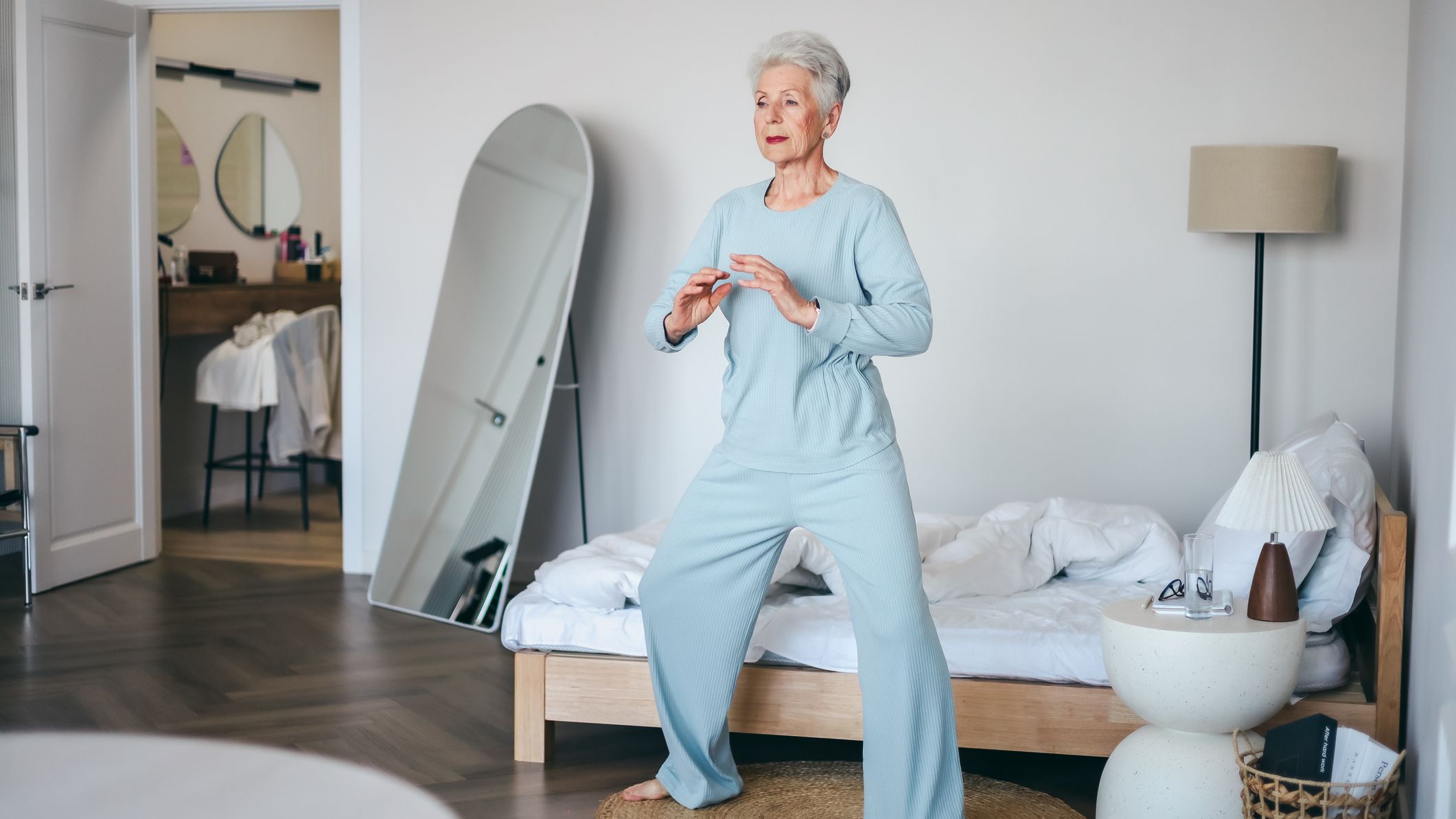
When walking forward, the human body intentionally displaces its center of mass beyond its base of support. This deliberate destabilization creates forward momentum. To prevent a face-plant, the nervous system commands a recovery limb to swing forward, planting the foot to establish a new base of support just in time. Walking, therefore, is an uninterrupted sequence of controlled falls and catches.
From this biomechanical perspective, missteps are categorized by the degree of recovery failure:
- A Trip: Occurs when the swinging foot is obstructed or fails to clear a barrier, causing the body to fall forward with insufficient time or space to execute a normal recovery catch.
- A Slip: Occurs when the foot is placed forward, but the contact surface lacks adequate friction. When the body attempts to push against the ground to arrest its momentum, the ground gives way beneath it, violating the body’s expectation of a solid foundation.
The Automatic Walk Deficit
Most adults walk on autopilot. Decades of habit mean that locomotion occurs subconsciously, requiring virtually zero cognitive oversight under normal circumstances. While this frees up mental bandwidth for other tasks, it creates a dangerous vulnerability. When walking automatically, individuals pay little to no attention to how they shift their weight across space, how their foot interacts with varying surface textures, or how their center of gravity fluctuates relative to their base of support.
When an unexpected perturbation occurs—an icy patch, an uneven paving stone, or a loose rug—the automatic walking system fails because it lacks real-time sensory feedback loops. The individual reacts with sudden muscle tension, stiffness, and panic, all of which exacerbate instability.
Tai Chi intervenes precisely at this neurological juncture. By demanding slow, deliberate, and fully conscious movement, the practice forces the brain out of automatic pilot, retraining the neural pathways that govern balance, spatial orientation, and reflex adaptation.
Official Statements and Expert Insights
Mark Peters’ clinical methodology centers on bridging the gap between imagination, neuroplasticity, and physical execution. Below are key insights gathered during our discussion regarding how Tai Chi rewires the body’s movement patterns.
The Power of "Controlled Instability"
According to Peters, traditional fitness often overemphasizes static stability—standing still on one leg or holding rigid planks. While core strength is valuable, life happens in motion. The true challenge of fall prevention lies in mastering controlled instability.
"Tai Chi helps you sense the ground before you move into it, and that’s a major difference from how people usually walk. We call it connecting to the ground. Instead of finding your balance once you have already taken a step, Tai Chi encourages you to find balance before you move. I use the term controlled instability, which means you place your foot there first, check the ground and if the ground is solid, then you move into it. If the ground isn’t solid, you move your foot somewhere else and then try again."
— Mark Peters, CIMSPA-Accredited Tai Chi and Qigong Trainer
This philosophy transforms the act of stepping from an impulsive motor command into an investigative, mindful dialogue between the foot and the earth.
Harnessing Neuroplasticity Through Simulated Environment
One of the most fascinating aspects of Peters’ rehabilitative protocol is the use of psychological visualization to stimulate genuine neurological adaptation. By practicing movements like "ice stepping," practitioners engage their brains in a simulated hazardous environment without the actual risk of injury.
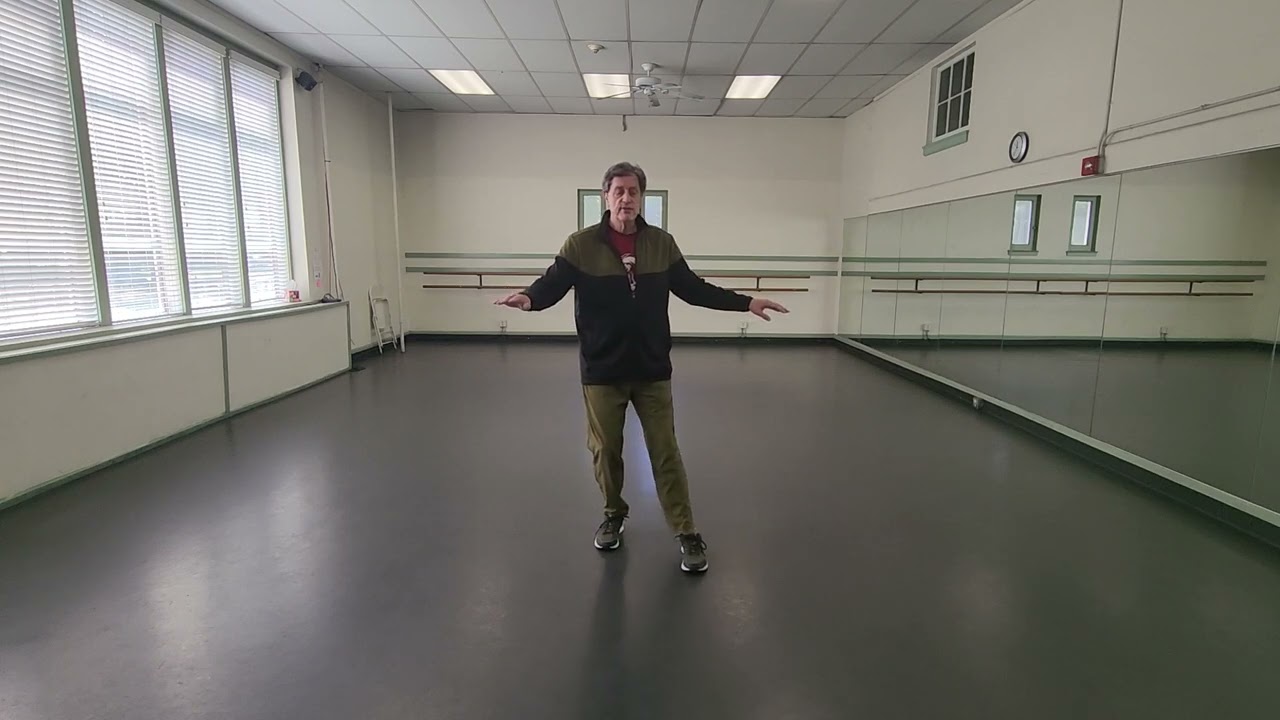
"Your body is upright and your brain is absorbed in that moment, rather than worrying about the next step. You are present and mindful because you are sensing the ground and adjusting to it based on your imagination. Your brain is retraining. You’re allowing your body to learn and adapt without judgment."
— Mark Peters
This non-judgmental, exploratory learning environment allows older adults or those recovering from injury to shed the psychological trauma of past falls. Fear of falling often leads to rigid, guarded movement patterns that paradoxically increase fall risk; Tai Chi replaces that fear with fluid curiosity.
Practical Application: How to Practice "Ice Stepping"
The cornerstone exercise recommended by Peters for improving dynamic stability is ice stepping (also referred to as walking on thin ice). This practice trains the nervous system to test surfaces before committing body weight, dramatically enhancing proprioception and mindfulness.
┌────────────────────────────────────────────────────────┐
│               ICE STEPPING: STEP-BY-STEP               │
├────────────────────────────────────────────────────────┤
│ 1. Posture Setup   │ Stand tall, knees soft, spine   │
│                    │ aligned. Imagine hanging from   │
│                    │ a string to maintain lightness. │
├────────────────────────────────────────────────────────┤
│ 2. The Hover Step  │ Shift weight to one leg. Hover    │
│                    │ the moving foot just above the  │
│                    │ floor as if testing thin ice.   │
├────────────────────────────────────────────────────────┤
│ 3. Surface Check   │ Lightly probe the imaginary     │
│                    │ fragile surface with the toe    │
│                    │ or ball of the foot.            │
├────────────────────────────────────────────────────────┤
│ 4. Weight Transfer │ Only when the "ice" is deemed   │
│                    │ secure, slowly roll the rest of │
│                    │ the foot down and shift weight. │
└────────────────────────────────────────────────────────┘
Step-by-Step Instructions
- Establish Your Baseline Stance: Stand with your feet hip-width apart, knees soft and unlocked, and your pelvis neutral. Let your arms hang loosely by your sides.
- Initiate Weight Shift: Slowly transfer 100% of your body weight into your right leg, leaving your left leg light and unburdened. Your torso remains upright, centered over your supporting leg.
- The Hover and Probe: Slowly lift your left foot and bring it forward, hovering it just above the floor. Imagine you are walking across a frozen pond covered in thin, fragile ice. Your goal is to gently touch the surface with your toe or the ball of your foot to test its integrity, without committing your body weight.
- Assessing Stability: With your foot resting lightly on the imaginary ice, mentally evaluate whether the ground feels solid. If you sense instability, you can easily retract or redirect your foot.
- Gradual Weight Transfer: If the surface feels secure, slowly roll your weight forward from the heel (or mid-foot, depending on the specific qigong variation) into the entire left foot, while simultaneously unloading the right leg.
- Repeat Continuously: Pause briefly in the new position, feel your connection to the ground, and then repeat the process with the opposite leg moving forward.
Essential Form Tips for Optimal Results
- Shed Tension: When walking on slippery surfaces—even imagined ones—the natural instinct is to tense up. Tensing your muscles increases rigidity, which sabotages balance. Keep your limbs loose, fluid, and relaxed.
- Visualize Suspension: Imagine you are a marionette suspended from strings attached to the crown of your head. This mental imagery encourages a sense of upward lightness and prevents you from collapsing your weight downward into the floor.
- Walk Lightly: Avoid heavy, stomping footsteps. Aim to glide across the floor as if your footsteps make no sound at all.
Why Ice Stepping Prevents Falls: The Mechanics Explained
The clinical efficacy of ice stepping rests on two distinct physiological and neurological pillars: the promotion of mindful movement and the enhancement of proprioceptive feedback.
1. Cultivating Mindful Movement and Neuro-Retraining
When practitioners engage in ice stepping, their cognitive focus is entirely anchored in the present moment. Unlike distracted walking—where the mind wanders to errands, conversations, or anxieties—Tai Chi demands total sensory absorption.
- Breaking Automatic Loops: By interrupting habitual walking patterns, the brain is forced to form new neural pathways.
- Adaptive Learning Without Trauma: Because the ice is imaginary, the practitioner operates in a zero-consequence environment. The body learns how to react to potential instability without the adrenaline spike and panic associated with an actual slip. Over time, these practiced neural reflexes become automatic, meaning that if a real slip occurs outdoors, the nervous system defaults to the calm, fluid recovery strategies rehearsed in practice.
2. Elevating Proprioceptive Awareness
Proprioception—often referred to as our "sixth sense"—is the body’s ability to perceive its own position, motion, and equilibrium in space.
- Tactile Feedback Loops: When you touch a wall with your hand, tactile receptors provide immediate feedback confirming contact. Traditional walking offers poor feedback to the feet because the brain assumes the ground is always there, flat and solid.
- Connecting to the Ground: Tai Chi changes this dynamic by demanding that you actively sense the ground before you load it. By utilizing "controlled instability," practitioners learn to continuously monitor the interface between their feet and the supporting surface. This sharpens the somatosensory cortex, ensuring that vestibular, visual, and muscular inputs work in seamless harmony to maintain balance under challenging conditions.
Future Outlook: The Integration of Mindful Movement in Healthcare
As healthcare systems worldwide grapple with the economic and human costs of an aging demographic, the integration of traditional movement arts into clinical pathways represents a paradigm shift. The work pioneered by experts like Mark Peters within the UK’s National Health Service signals a broader trend: the convergence of ancient somatic wisdom and modern evidence-based medicine.
Expanding Clinical Horizons
The future of fall prevention will likely see structured Tai Chi and qigong programs prescribed with the same regularity as physical therapy or pharmacological interventions. Beyond geriatrics, the principles of controlled instability and mindful locomotion hold immense promise for neurological rehabilitation (such as stroke recovery and Parkinson’s disease management), where balance and spatial orientation are severely compromised.
Furthermore, digital health platforms and virtual reality (VR) systems are beginning to incorporate concepts similar to ice stepping. By combining guided mindfulness with immersive visual simulations of uneven or slippery terrain, future patients may soon practice fall-prevention techniques in clinical or home-based settings with unprecedented precision.
A Lifelong Practice of Resilience
Ultimately, the lessons of Tai Chi extend far beyond the physical prevention of falls. They offer a philosophy of movement and living that honors the realities of gravity rather than fighting them blindly. By learning to embrace controlled instability, remaining loose in the face of uncertainty, and connecting mindfully with the ground beneath our feet, individuals of all ages can cultivate a profound, lifelong resilience—proving that sometimes, the best way to stay upright is to learn how to fall, gently and consciously, every single day.