Executive Overview
When the phrase "core workout" is mentioned, the collective fitness consciousness almost invariably drifts toward the standard playbook: endless floor crunches, exhausting bicycle kicks, and repetitive scissor lifts. For decades, these exercises have dominated gym culture, marketed as the definitive path to a chiseled midsection. However, contemporary fitness science and elite biomechanics specialists are pushing back against this narrow paradigm. True core strength extends far beyond the aesthetic appeal of a visible six-pack; it serves as the foundational architecture for total-body stability, robust spinal protection, and powerful, efficient movement.
Enter the kettlebell. Far superior to traditional dumbbells or bodyweight-only routines, the kettlebell offers a unique structural advantage: its center of mass is displaced entirely from its handle. This inherent asymmetry transforms every single repetition into a dynamic balancing act. According to Faith Ellis, a Level 3 certified kettlebell specialist and founder of the women’s kettlebell training app and community The KettleBelle, this unconventional design is precisely what makes the tool unrivaled.
"True core strength goes far beyond a visible six-pack; it is the foundation of total-body stability, spinal protection and powerful movement," Ellis notes. "I have been teaching kettlebell mechanics for more than four years, and they are hands down my favorite tool for building an ironclad, functional core."
By shifting away from repetitive flexion movements like crunches—which can place undue stress on the lumbar spine—and embracing the dynamic, multi-planar resistance of kettlebells, practitioners can forge a deeply resilient, functional core. This comprehensive guide explores the science of kettlebell core mechanics and outlines three essential movements designed to revolutionize your abdominal training.
Detailed Chronology: The Evolution of Core Training and the Kettlebell Revolution
To understand why kettlebells have surged to the forefront of modern functional training, it is helpful to look at how our understanding of the "core" has evolved over time.
The Era of Isolated Flexion (1980s–2000s)
For decades, fitness instruction was heavily dominated by bodybuilding philosophies. The midsection was viewed primarily as a superficial muscle group—the rectus abdominis—best targeted through isolated spinal flexion. Aerobics videos, infomercials, and physical education curricula heavily promoted hundreds of daily crunches and sit-ups. Little attention was paid to deep stabilizing musculature, rotational control, or anti-extension mechanics.
The Functional Fitness Paradigm Shift (2010s)
As sports science advanced, researchers and physical therapists began identifying the shortcomings of isolated spinal flexion. Chronic lower back pain became increasingly prevalent among gym-goers who possessed aesthetic abdominal development but lacked functional spinal stability. The fitness industry underwent a paradigm shift, popularized by strength coaches who emphasized multi-joint, multi-planar movements. The core was redefined as a sophisticated muscular cylinder—comprising the transverse abdominis, obliques, multifidus, diaphragm, and pelvic floor—designed primarily to resist unwanted movement rather than create it.
The Rise of Asymmetrical Loading (Present Day)
In recent years, tools that challenge the body’s center of gravity have taken center stage. While barbells and symmetrical dumbbells allow for balanced loading, implements like kettlebells introduce shifting, offset weights. This technological and mechanical shift has allowed trainers like Faith Ellis to pioneer specialized routines that target deep stabilizers in real-time, bridging the gap between brute strength and neurological control.
Supporting Context & Metrics: The Biomechanics of Asymmetrical Loading
To appreciate why a kettlebell outperforms a standard dumbbell or weight plate during core training, one must examine the physics of human biomechanics.
When you hold a traditional dumbbell, the weight is evenly distributed directly over your grip. Your body requires minimal neurological adjustments to keep the load balanced. However, a kettlebell features a heavy, bulbous bell hanging directly beneath the handle. This means the center of gravity is constantly floating outside your hand, creating an unpredictable lever arm.
Engaging the Deep Stabilizers
When an offset load is introduced, your nervous system immediately detects a threat to your equilibrium. To prevent you from tipping over, it rapidly recruits deep core stabilizers that are often dormant during traditional crunches:
- Transverse Abdominis (TVA): Acting as the body’s natural weightlifting belt, the TVA wraps horizontally around the abdomen, compressing the viscera and providing critical intra-abdominal pressure to protect the lumbar spine.
- Internal and External Obliques: These muscles run diagonally along the sides of the torso, acting as primary brakes against rotational forces and lateral flexion.
- Quadratus Lumborum (QL) and Erector Spinae: These posterior chain stabilizers work in tandem with the anterior core to lock the torso into a rigid, impenetrable cylinder.
According to exercise physiology metrics, anti-rotation and anti-lateral flexion exercises—movements where the core fights against an external force trying to twist or bend the spine—elicit significantly higher muscle fiber recruitment in the deep core than concentric flexion exercises like crunches.
Official Expert Workout Routine: Three Essential Kettlebell Core Movements
Rejecting the monotony of standard abdominal circuits, Faith Ellis recommends incorporating three specific, highly dynamic kettlebell exercises into your weekly regimen. These movements challenge your stability, test your coordination, and forge functional strength from head to toe.
+-----------------------------------------------------------------+
|               FAITH ELLIS’S KETTLEBELL CORE CIRCUIT             |
+---------------------+-------------------+-----------------------+
| Exercise            | Recommended Sets  | Recommended Reps      |
+---------------------+-------------------+-----------------------+
| Plank KB Drag       | 3 Sets            | 10–12 reps per side   |
| Kettlebell Halo     | 3 Sets            | 8–10 each direction   |
| Kettlebell Snatch   | 3–4 Sets          | 6–8 reps per side     |
+---------------------+-------------------+-----------------------+
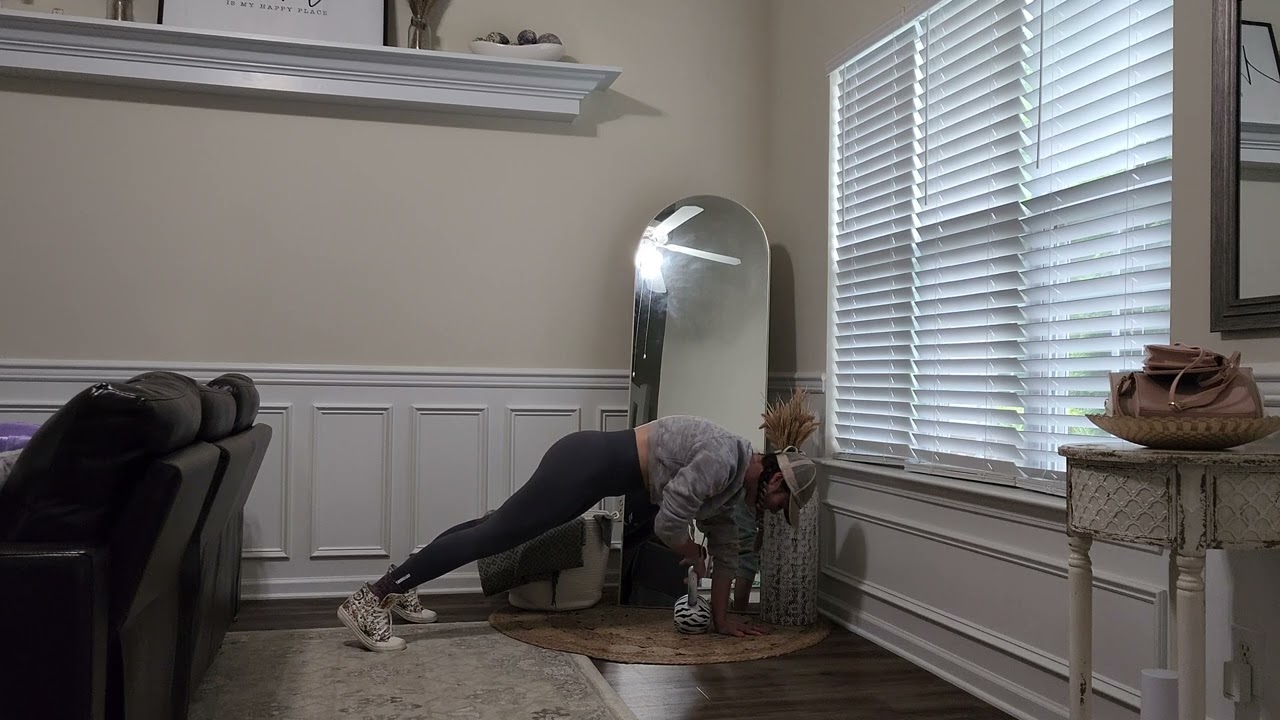
1. The Plank Kettlebell Drag
Sets: 3
Reps: 10–12 each side
How to Do It:
- Begin in a strong, stable high plank position with your wrists stacked directly beneath your shoulders, your feet slightly wider than hip-width apart for a stable base, and your core braced tightly.
- Place a single kettlebell on the floor just outside your right hand, resting on its side.
- Reach underneath your torso with your left hand, grab the handle of the kettlebell, and drag it horizontally across the floor to the left side, placing it outside your left hand.
- Reset your hand to the floor, then reach underneath with your right hand to drag the kettlebell back to its starting position on the right.
- Continue alternating sides while keeping your hips and shoulders as square to the floor as possible.
Expert Insights:
"This is the ultimate anti-rotation exercise," Ellis explains. "While it looks like an arm movement, your core is working overtime to prevent your hips from shifting. It forces deep core activation and teaches you true trunk stability."
2. The Kettlebell Halo
Sets: 3
Reps: 8–10 in each direction
How to Do It:
- Stand tall with your feet shoulder-width apart, holding a kettlebell by its horns (the sides of the handle) with the bottom of the bell pointing upward toward the ceiling.
- Engage your glutes and brace your abdomen to create a rigid, upright posture.
- Slowly circle the kettlebell around your head in a smooth, controlled motion, keeping the path of the bell as close to your head and ears as possible without hitting yourself.
- As the weight travels around to the front, complete one full rotation, then reverse the direction, circling the weight the other way.
- Ensure your torso does not sway, arch, or lean backward as the weight shifts position.
Form Tips:
- Keep your ribcage tucked down; do not allow your lower back to hyperextend when the kettlebell passes behind your neck.
- Choose a lighter kettlebell for this movement to prioritize smooth mechanics over brute force.
Expert Insights:
"The kettlebell halo is a phenomenal dynamic stability movement," says Ellis. "As the weight moves around your head, your center of gravity constantly shifts. Your core has to react in real time to keep your torso perfectly upright, which beautifully carves out the obliques."
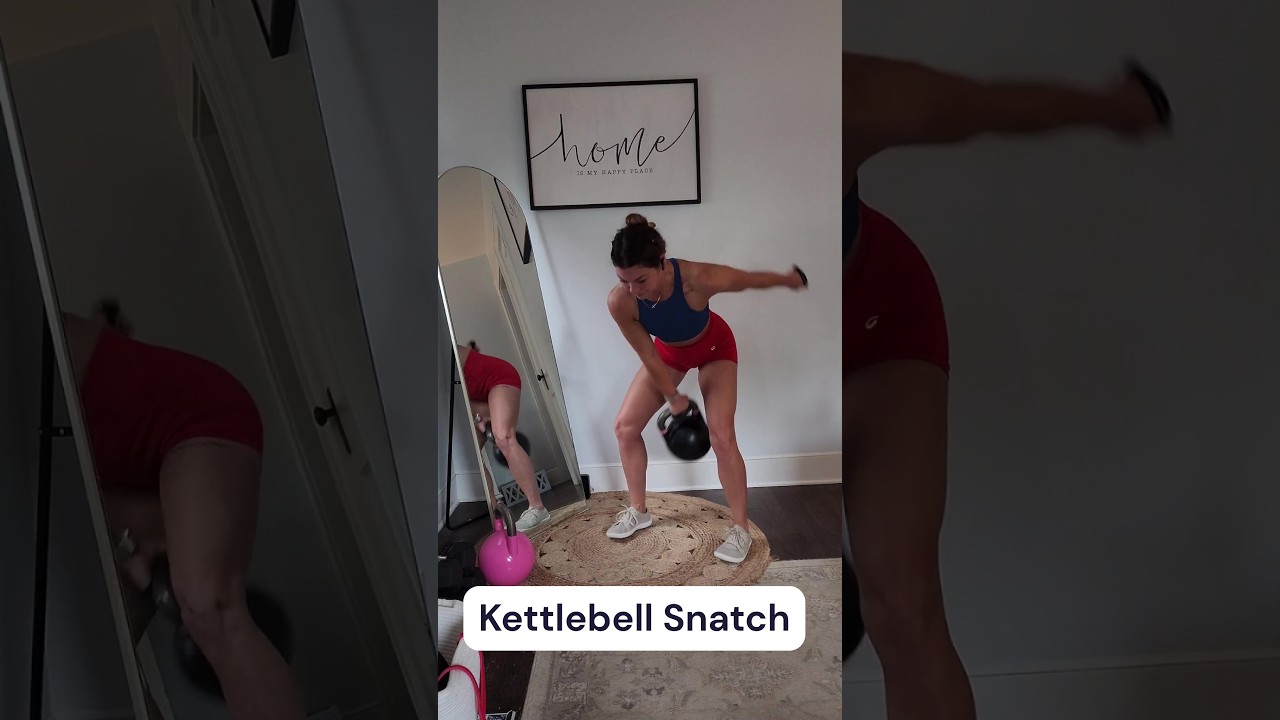
3. The Kettlebell Snatch
Sets: 3–4
Reps: 6–8 each side
How to Do It:
- Stand with a kettlebell on the floor a few feet in front of you. Hinge at your hips, keep a flat back, and grip the handle with one hand.
- Hike the kettlebell back between your legs like a football, then aggressively snap your hips forward, utilizing the power of your posterior chain to drive the bell upward.
- As the kettlebell floats upward, guide it close to your body, punching your hand upward through the handle so the bell smoothly rotates over your wrist rather than crashing down onto your forearm.
- Lock the arm out overhead in a stable, secure overhead position while your core braces hard to absorb the momentum.
- Safely guide the kettlebell back down into the hike position to begin the next repetition.
Form Tips:
- Master the foundational kettlebell swing and high pull before attempting the full snatch.
- Keep the wrist neutral at the top lockout to protect the joint.
Expert Insights:
"This is an advanced, explosive, full-body power movement," Ellis notes. "The kettlebell travels from the floor all the way overhead in one fluid motion, so it requires maximum deceleration at the top. I love it because it forces the entire abdominal cavity to stabilize to catch the weight safely overhead."
Future Outlook: The Next Wave in Functional Core Conditioning
As fitness culture continues to mature, the emphasis is shifting rapidly away from isolated, aesthetic-driven workouts and toward longevity, functional performance, and injury prevention. The popularity of kettlebell training is a direct reflection of this evolution.
Experts predict that future training programs will place even greater emphasis on multi-planar stability, loaded carries, and dynamic movement patterns. By ditching the outdated crunch and incorporating offset, asymmetrical tools like kettlebells into your weekly routine, you are not merely building a stronger midsection—you are investing in a bulletproof spine, superior athletic performance, and a resilient, capable physique designed to thrive for decades to come.
About Our Expert
Faith Ellis is a certified Level 3 kettlebell specialist and the founder of The KettleBelle, a premier fitness app and community designed to empower individuals—particularly women—through functional strength and kettlebell mechanics. Her coaching philosophy centers on biomechanics, deep core stability, and sustainable, real-world strength development.