Executive Overview
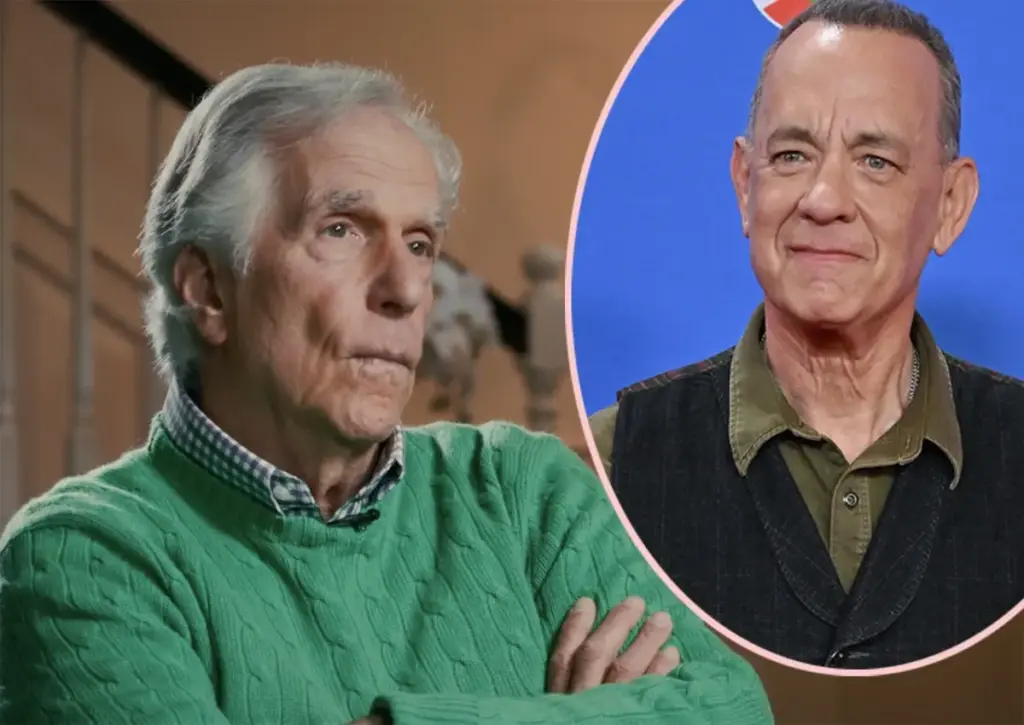
In the public imagination, Henry Winkler and Tom Hanks represent two of the most universally beloved figures in modern American entertainment. Winkler—immortalized as Arthur "Fonzie" Fonzarelli on Happy Days and later critically acclaimed for his Emmy-winning turn in HBO’s Barry—has long maintained a reputation as one of Hollywood’s most affable and generous industry veterans. Similarly, Tom Hanks has spent decades as "America’s Dad," recognized for his approachable persona and legendary screen career.
However, behind the polished veneer of Tinseltown camaraderie lies a decades-old industry conflict that briefly placed the two stars at direct odds. During the pre-production and early principal photography of the 1989 Touchstone Pictures comedy Turner & Hooch, Winkler was attached not as an actor, but as the project’s director. Just 13 days into filming, the partnership collapsed, resulting in Winkler’s abrupt termination from the production by studio chief Jeffrey Katzenberg.
In an candid interview on the syndicated series In Depth With Graham Bensinger, Winkler provided a granular breakdown of the circumstances leading to his dismissal, reflecting on the professional friction with Hanks, the creative misalignments on set, and the enduring personal lessons he extracted from one of the most painful setbacks of his career.
Detailed Chronology: From Barneys to Dismissal in 13 Days
[1988] Studio Pitch
   │  • Jeffrey Katzenberg contacts Henry Winkler at Barneys (NY)
   │  • Winkler prefers 'Stella'; Katzenberg insists on 'Turner & Hooch'
   ▼
[Early 1989] Pre-Production & Casting
   │  • Canine talent selection and chemistry auditions
   │  • Mare Winningham cast alongside Tom Hanks
   │  • Creative micro-management creates underlying tension
   ▼
[Day 1–13] Principal Photography
   │  • On-set friction over directorial style and pacing
   │  • Over-direction alienates lead cast and crew
   ▼
[Day 13] Executive Intervention
   │  • Katzenberg cites "It's not in the dailies"
   │  • Winkler officially terminated; Roger Spottiswoode hired as replacement
The Unheeded Warning Signs: The Barneys Phone Call
The origin of Winkler’s involvement with Turner & Hooch traces back to late 1988, when he received an unexpected phone call while shopping at the flagship Barneys department store in New York City. On the line was Jeffrey Katzenberg, then-chairman of The Walt Disney Studios (which oversaw the adult-oriented Touchstone Pictures banner). Katzenberg was eager to secure Winkler to helm the upcoming buddy-cop comedy about a neat-freak police detective paired with a slobbery French Mastiff.
Winkler initially expressed reservations about the project. He felt a stronger creative affinity for Stella, a melodramatic remake of Stella Dallas then in development at the studio. However, Katzenberg was resolute, urging Winkler to take the reins of Turner & Hooch.
Reflecting on that initial exchange decades later, Winkler framed the decision as a failure to honor his intuition:
"I thought, okay, here is a lesson. When your instinct says, ‘uh oh, danger, warning sign,’ you do not question your tummy. You can question your brain, but never your tummy. I went completely against my tummy, and it hit me in the face with a 2×4."
Pre-Production, Auditions, and Early Friction
Despite his initial misgivings, Winkler stepped into the director’s chair and initiated the pre-production phase. His responsibilities included supervising canine auditions to find the right Mastiff for the role of Hooch and orchestrating chemistry reads between Tom Hanks and potential female leads.
During these auditions, the creative team selected Mare Winningham to play the love interest, Dr. Emily Carson. While Hanks and Winningham established an immediate screen rapport, subtle cracks began to form in the working relationship between Hanks and Winkler. Winkler later acknowledged that his own professional insecurities at the time contributed to an overbearing managerial approach.
In an effort to assert directorial authority, Winkler over-explained scenes, frequently interrupted actor flow, and demanded repeated takes—a strategy that clashed directly with Hanks’ improvisational instincts and preferred working rhythm.
"I now meet the puppies, and I meet with Tom [Hanks] and we audition women together, and he settles on Mare Winningham… but he has a connection, an electricity with Mare. And I guess, at that time being insecure, I talked too much and I gave them direction—what I thought was my job—and I wanted to do it over again and apparently that pissed them off."
The 13-Day Production Run and Katzenberg’s Intervention
When principal photography commenced in early 1989, the underlying creative tension quickly materialized on set. Directorial choices failed to yield the comedic energy the studio anticipated in the raw footage sent back to the executive suites in Burbank.
On the thirteenth day of shooting, the situation reached a breaking point. Winkler was summoned to a meeting with Jeffrey Katzenberg, where the executive delivered a swift and definitive verdict:
"And in 13 days of filming, I’m called into Jeff Katzenberg’s office, and he said, ‘It’s not in the dailies.’ I then go to the set, I get my things, I drive home, I’m fired as a director. I don’t handle it well. I’m devastated."
Following Winkler’s exit, production was temporarily halted before British filmmaker Roger Spottiswoode (Under Fire, Tomorrow Never Dies) was brought in to assume directorial duties, re-shooting significant portions of the material.
Supporting Context & Industry Metrics
Touchstone Pictures and the Late-1980s Studio System
To understand the swift nature of Winkler’s dismissal, one must contextualize the operational framework of Touchstone Pictures during the late 1980s under the leadership of Jeffrey Katzenberg and Michael Eisner. The division was built on strict fiscal discipline, aggressive scheduling, and commercially reliable star vehicles.
┌─────────────────────────────────────────────────────────────────┐
│               1989 Touchstone Pictures Ecosystem                 │
├────────────────────────────────┬────────────────────────────────┤
│ Executive Leadership           │ Jeffrey Katzenberg             │
│ Target Production Budget       │ Mid-tier ($10M - $15M)         │
│ Strategic Focus                │ High-concept star comedies     │
│ Primary Lead Bankability       │ Tom Hanks (Fresh off 'Big')    │
└────────────────────────────────┴────────────────────────────────┘
At the time, Tom Hanks was transitioning from a television breakout star (Bosom Buddies) to a major box-office draw, following his Academy Award-nominated performance in Big (1988). Given Hanks’ rising marketability, studio executives were acutely sensitive to his creative satisfaction and visual presentation on screen. If a director’s methodology created friction with a top-tier star in a high-stakes studio environment, executive intervention was almost guaranteed to favor the headlining talent.
Commercial Performance and Post-Firing Legacy
Despite the behind-the-scenes turmoil, Turner & Hooch emerged as a major commercial success upon its release on July 28, 1989.
| Metric | Detail / Value |
|---|---|
| Production Budget | ~$13 Million |
| Domestic Box Office Gross | $71.1 Million |
| Worldwide Total | ~$75+ Million |
| Replacement Director | Roger Spottiswoode |
| Key Cast | Tom Hanks, Mare Winningham, Craig T. Nelson, Beasley the Dog |
The film grossed over $71 million domestically, solidifying Hanks’ position as a bankable lead actor and establishing the canine-cop trope as a lucrative sub-genre of late-80s action-comedy. For Winkler, however, the film’s success served as a lingering reminder of a high-profile professional setback.
Direct Accounts & Commentary: Winkler’s Reflection on Graham Bensinger
Winkler’s appearance on In Depth With Graham Bensinger offered an unvarnished look at the emotional toll of the firing, revealing a level of self-scrutiny rarely vocalized by major Hollywood stars.
                  WINKLER'S RETROSPECTIVE LESSONS
                                 │
         ┌───────────────────────┴───────────────────────┐
         ▼                                               ▼
   TRUST INTUITION                               ADMIT INSECURITY
 "Never question your                          "I talked too much and
 tummy. You can question                       gave them direction...
 your brain, but never                         and apparently that
 your tummy."                                  pissed them off."
Self-Scrutiny and Lessons on Intuition
Rather than placing the blame entirely on studio politics or star influence, Winkler candidly evaluated his own psychological state during the late 1980s. Transitioning from the iconic persona of "The Fonz" to a full-time director was a challenging shift, fraught with pressure to prove his legitimacy behind the camera.
During the interview, Winkler emphasized that his primary error was failing to manage his internal anxieties, which manifested as over-direction on set:
- The Over-Explaining Trait: Inexperienced or anxious directors often compensate for self-doubt by micromanaging actors, which can stifle natural comedic timing.
- Gut Instinct vs. Career Pressure: Winkler highlighted the danger of taking projects out of obligation or executive pressure rather than genuine artistic alignment.
The Question of Reconciliation
When host Graham Bensinger pressed Winkler on whether his relationship with Tom Hanks could ever be fully mended, Winkler maintained a gracious, forward-looking stance.
Asked if there was a possibility of repair or a public burying of the hatchet, Winkler replied simply and sincerely: "Sure!"
Industry observers have noted that while the two icons never collaborated again, time has softened the sharp edges of the 1989 rift. Both actors have operated in adjacent circles for decades—frequently linked by shared colleagues, including director Ron Howard, Winkler’s close friend and former Happy Days co-star, who went on to direct Hanks in major features such as Splash, Apollo 13, The Da Vinci Code, and Angels & Demons.
Future Outlook & Long-Term Career Trajectories
The Turner & Hooch incident ultimately functioned as a pivotal detour rather than a career-ending event for either party. The long-term trajectories of both figures underscore the resilience required to sustain multi-decade careers in entertainment:
[1989] The Rift ────────────────────────────────────────────────────────┐
                                                                        │
┌──────────────────────────────────────────────────────────┐            │
│ Henry Winkler                                            │            │
│ • Shifted focus to producing ('MacGyver')                │◄───────────┤
│ • Acclaimed character roles ('Arrested Development')     │            │
│ • Won Primetime Emmy for HBO's 'Barry' (2018)            │            │
└──────────────────────────────────────────────────────────┘            │
                                                                        │
┌──────────────────────────────────────────────────────────┐            │
│ Tom Hanks                                                │            │
│ • Back-to-back Oscars ('Philadelphia', 'Forrest Gump')   │◄───────────┘
│ • Acknowledged as a titan of modern cinema               │
│ • Re-visited 'Turner & Hooch' legacy via Disney+ reboot  │
└──────────────────────────────────────────────────────────┘-
Henry Winkler’s Creative Renaissance:
Following his termination, Winkler pivoted toward executive producing (including the hit television series MacGyver) and selective acting roles. His career underwent a major critical renaissance in the 2000s and 2010s, highlighted by memorable comedy turns in Arrested Development and Parks and Recreation, culminating in a Primetime Emmy Award win in 2018 for his role as acting teacher Gene Cousineau in HBO’s Barry. -
Tom Hanks’ Cinematic Stature:
Hanks proceeded to dominate 1990s cinema, winning consecutive Academy Awards for Best Actor in Philadelphia (1993) and Forrest Gump (1994). Decades later, Disney revived the Turner & Hooch IP as a 2021 television series for Disney+, cementing the original 1989 film’s place in pop-culture history.
Ultimately, Henry Winkler’s retrospective on his dismissal offers a masterclass in professional maturity. By choosing candid self-reflection over bitterness, Winkler transformed a painful studio firing into a lasting lesson on creative intuition, humility, and personal growth in the high-stakes arena of modern filmmaking.