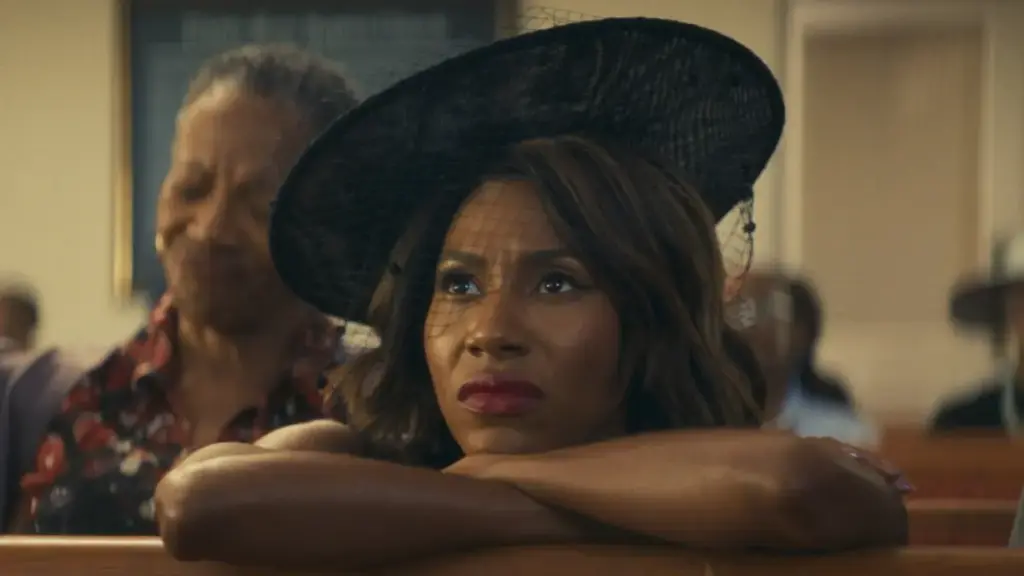
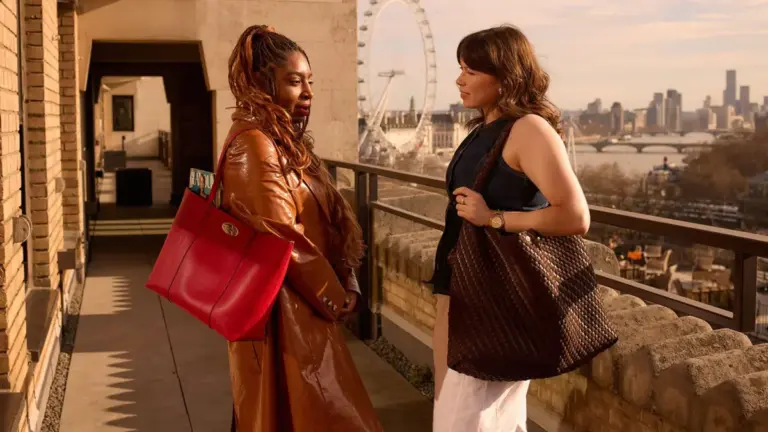
In the ever-changing and often precarious landscape of contemporary television, few series have faced—and surmounted—as many systemic hurdles as Paramount+’s critically acclaimed mystery-comedy-romance hybrid, Diarra From Detroit. Against a turbulent backdrop marked by sweeping media consolidation, corporate mergers (including the ongoing tremors surrounding the Paramount-Skydance transactions and former platform closures), and a tense socio-political climate persistently hostile toward diverse programming, Black-led series have increasingly found themselves on the chopping block. High-profile cancellations across various networks and streamers—such as Natasha Rothwell’s How to Die Alone, Issa Rae’s Rap Sht, and the NBC drama Found*—highlight an industry-wide contraction in greenlighting authentic Black narratives.
Yet, defying the odds, creator, star, and executive producer Diarra Kilpatrick has successfully steered Diarra From Detroit through a tumultuous production lifecycle. Following a celebrated 2024 debut on BET+, the series endured a grueling two-year hiatus before resurfacing for its scorching sophomore season on Paramount+, a migration necessitated by the corporate shuttering of BET+ and the subsequent absorption of its catalog.
As Season 2 comes to a dramatic close with its explosive finale, "A Cold Ass Wedding," Kilpatrick sat down for an extensive, candid interview to dissect the realities of creating high-caliber Black television under strict budget constraints, the intricate balancing act of threading romance into a neo-noir mystery, and the collective solidarity of Black Hollywood. This feature explores the journey behind the scenes of one of streaming’s last standing niche-genre puzzle boxes, examining the economic pressures, creative triumphs, and hopeful horizons for a potential Season 3.
Detailed Chronology: From Winter Chill to the Boiling Detroit Summer
The transition from Season 1 to Season 2 of Diarra From Detroit was as much a meteorological pivot as it was an operational challenge. The freshman run, which premiered to rave reviews on BET+, was deeply "winter-coded." The visual motif of biting snowstorms and freezing temperatures served as an externalization of its protagonist’s internal emotional wasteland following a painful divorce from her ex-husband, Swa (played by Morris Chestnut). Kilpatrick recalls how the weather organically imposed itself upon the narrative during the writing of the pilot: "The snow took over my body and wrote for me… Snow is punishing the city streets."
However, shifting the narrative climate to a classic, boiling-hot Detroit summer for Season 2 was a deliberate artistic choice driven by practical production realities. As Kilpatrick notes, the decision was also heavily influenced by budget adjustments:
"When I saw the special effects budget for adding snow all the damn time, we had a budget cut, so summer felt much cheaper. No coats, no VFXing in snow."
This aesthetic and logistical shift also redefined the tone of the series. Freed from the oppressive grey of winter, Season 2 threw Diarra headfirst into the chaotic launching of her official private investigation business. Without a summer school assignment to anchor her, Diarra’s life spirals into a high-stakes treasure hunt. Tasked initially with locating her romantic interest Chris’s (Shannon Wallace) heirloom—which comically turns out to be a heavy desk rather than an antique armoire—Diarra, Chris, and best friends Tea (Bryan Terell Clark) and Aja (Dominique Perry) are dragged deep into the criminal underbelly of Detroit.
Throughout this escapade, the characters must navigate relentless gangsters, historical rabbit holes ranging from Prohibition-era bootlegging to the Underground Railroad, and mounting personal chaos. The season ultimately culminates in a heartbreaking fracture of Diarra and Aja’s foundational friendship during the high-stakes finale, leaving viewers on edge regarding the future of their chosen family.
Supporting Context & Metrics: Corporate Shuffling and the "Last Standing" Status
The path to getting Diarra From Detroit back on screens was paved with corporate labyrinthine delays. Explaining the two-year gap between seasons, Kilpatrick details the delicate dance of network decision-making:
"It took them a very long time to pull the trigger on whether they were going to bring the show back. I imagine that had to do with whether they wanted to make the financial commitment. They decided that it would come back, but on a lower budget than Season 1."
These financial constraints triggered structural changes. Production relocated from Detroit proper to Atlanta, and the supporting cast saw strategic reductions. The delay was exacerbated by corporate restructuring, with the creative team forced into prolonged periods of limbo waiting for incoming executive regimes to greenlight the writers’ room and subsequent episode orders.
The platform migration from BET+ to Paramount+ following BET+’s shutdown in the spring of 2025 further complicated the show’s trajectory. While the move placed the series on a much larger, globally recognized conglomerate platform—frequently mentioned in the same breath as heavy-hitting blockbusters and prestige dramas—it also exposed the series to the fickle nature of mainstream streaming algorithms.
Kilpatrick reflects on this bittersweet transition:
"BET+ going away meant a lot of people lost their jobs, and you can imagine that was a lot of Black people… But as it relates to the show, I felt really excited about more people having access to this story. I really want to entertain a massive audience, and I want to bring them the nuance and specificity of me, Detroit, my sense of humor, my humanity and my heart."
Despite these hurdles, the series has managed to attract an astonishing roster of guest stars eager to lend their talents—often operating under independent-film constraints with rapid shooting schedules. From Colman Domingo (who has publicly expressed a willingness to work for scale) to Lil Rel Howery, Nicco Annan, Lovie Simone, Bokeem Woodbine, Amber Riley, Phylicia Rashad, and Morris Chestnut, Black Hollywood rallied around the production.
Official Statements & Creative Philosophy: Honoring the Audience and Black Womanhood
At the core of Kilpatrick’s artistic manifesto is a fierce dedication to respect, high craftsmanship, and refusing to flatten the multifaceted experiences of Black women into tired tropes. In her interview with Variety, Kilpatrick articulated her vision with uncompromising clarity:
"We love a gumbo; I love complexity. It pisses me off when work that has a Black woman at the center of it doesn’t respect the audience. We’re not talking about good or bad. That’s a judgment that I’m not interested in. But do you respect the audience? Did you like this woman? I don’t want Black female work to be synonymous with low craftsmanship or low budgets or bad lighting. I want us to be honored. In the medium, in the space."
This philosophy directly informs how she constructs her characters, blending gritty reality with wish-fulfillment fantasy. Season 2 leans heavily into the romantic quadrangle pulling Diarra between Chris, Royce (Clifford "Method Man" Smith), and Danger (John Chafin). Kilpatrick openly embraces the pure, undeniable star power and physical appeal of her leading men:
"We’re in a world now where it seems like nobody can agree on anything, but you know what we can agree on? Method Man is fine. John Chafin is fine. Morris Chestnut is still fine. So if we can’t come together over anything, let’s come together over that. Let’s give people a fantasy every week."
Furthermore, Kilpatrick addresses the inherent political nature of her storytelling simply by virtue of representation. Drawing inspiration from classic adventure capers like National Treasure and The Da Vinci Code, she weaves deep historical context—such as the Black church’s historical ties to quilts and the Underground Railroad—into the mystery genre.
"I’m the daughter of the teacher… One thing [my mom] did was really instill in me the joy of learning, history and facts. ‘Indiana Jones,’ ‘National Treasure’ — it’s like there are no Black women in these movies. At all. I really wanted us to write in the very center of that genre. I think the facts give it legitimacy."
Future Outlook: What Lies Ahead for Season 3?
As the dust settles on the turbulent events of the Season 2 finale, attention immediately pivots to the prospects of a third season. While Paramount+ has yet to officially announce a renewal order, Kilpatrick is already mapping out the future trajectory of her gumbo-style mystery series.
If given the green light, Season 3 will continue the show’s tradition of introducing an entirely fresh central mystery, forcing Diarra to confront the chaotic fallout of the messes she invariably leaves in her wake. However, Kilpatrick emphasizes that the most compelling narrative engine remains Diarra’s internal blind spots:
"The biggest mystery is her. She really struggles to investigate herself, even her own feelings. She loves distraction, like us all in this era of iPhones and whatever. It’s like the minute something uncomfortable happens, we’re all like, ‘Let me check my Instagram.’ I think a lot of people will relate to that, but I do have some thoughts about what her next big internal question would be; we’ll have to see if we let any of that live."
Additionally, the lingering cliffhanger—specifically how Diarra responds to Chris’s pivotal question in the closing moments of the finale—remains a prime narrative hook that fans on social media platforms like Threads are eagerly dissecting.
As Diarra From Detroit fights to maintain its footprint in a consolidating media landscape, Kilpatrick’s unwavering commitment to high-craftsmanship, culturally rich storytelling serves as a beacon. Whether the industry fully recognizes its value or not, Diarra From Detroit has firmly established itself as an essential, resilient voice standing tall at the crossroads of mystery, romance, and unadulterated Black joy.