Executive Overview
During his triumphant return to The Daily Show desk on Tuesday night, veteran satirist and host Jon Stewart set his sights firmly on the intersection of modern political sycophancy and psychological insularity. In a vintage, biting monologue, Stewart dismantled the cognitive insulation surrounding President Donald Trump, drawing sharp parallels between the commander-in-chief’s curated information ecosystem and the infamous delusions of disgraced Theranos founder Elizabeth Holmes.
At the center of Stewart’s satirical crosshairs was Donald Trump and his fiercely devoted aide, Natalie Harp—widely known across media circles as "the human printer." Harp, who has garnered massive public fascination for her relentless devotion to ensuring the former president is constantly fed positive press, became the focal point of a segment that exposed the lengths to which political loyalists will go to maintain an insulated bubble of validation.
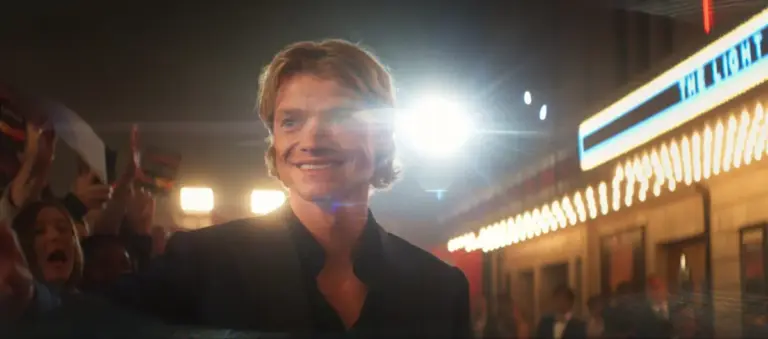
To lampoon this dynamic, Stewart utilized a brilliantly absurd piece of editing: he hijacked the trailer for Nathan Fielder’s secretive and critically acclaimed Elizabeth Holmes documentary, You Can See Everything, and superintended Donald Trump’s face directly over Fielder’s. The result was a masterclass in political parody that brilliantly synthesized themes of self-delusion, the distortion of reality, and the bizarre lengths of personal loyalty in contemporary American politics.
Detailed Chronology: The Anatomy of a Monologue
Setting the Stage: The Return to the Desk
Jon Stewart’s Tuesday night broadcast began with the familiar, high-energy atmosphere that has defined his decades-long tenure at Comedy Central. Stepping back into the spotlight, Stewart wasted no time addressing the overarching psychological state of modern political figures, zeroing in on what he diagnosed as a pervasive "reality distortion field."
Stewart launched his critique by attacking Donald Trump’s well-documented tendency to reject empirical evidence, objective journalism, and expert consensus whenever it contradicts his personal worldview. Rather than confronting difficult facts, Stewart joked, the political apparatus surrounding figures like Trump actively works to construct a fortified, friction-free environment where dissent is filtered out and praise is printed on demand—literally.
"Maybe it’s just better to be the guy in The Matrix, going, ‘Oh, this blue pill’s not so bad! That reality has steak!’" Stewart mused to a laughing studio audience. "But I know too much. How do I get there? Who would give me the blue pill?"
Introducing "The Human Printer"
To answer his own rhetorical question about who provides this comforting, albeit fabricated, version of reality, Stewart transitioned to a series of news clips highlighting the extraordinary measures taken by Trump staffer Natalie Harp.
Drawing from various media reports, Stewart introduced the audience to the woman earning the moniker "the human printer." According to the broadcasts featured in the segment, Harp accompanies the president virtually everywhere, hauling a portable laptop and printer setup to hand-deliver a constant stream of uplifting, favorable news stories and social media clippings directly to him.
The absurdity escalated as Stewart played additional sound bites. A CNN report noted that Harp’s dedication once manifested in her literally jumping into the trunk of an SUV just to ensure she could accompany the president to a high-profile court appearance. Meanwhile, a TMZ clip referenced by the show revealed that Harp’s written communications to Trump could charitably—or alarmingly—be described as passionate "love letters."
"Can we even trust her?" Stewart joked, leaning into the comedic timing that has made him a titan of late-night television. "Well, decide for yourselves. Because tonight, here on The Daily Show, we are premiering exclusive footage. We lived with Natalie Harp and the president for a month to determine what their relationship was really like. Let’s take a quick preview."
The You Can See Everything Parody
Following the setup, the studio monitors cut to what appeared to be the trailer for Nathan Fielder’s highly anticipated and deeply secretive documentary project, You Can See Everything. However, viewers quickly realized it was a custom satirical edit: Trump’s face had been digitally superimposed over Fielder’s in the footage.
The trailer features audio of Elizabeth Holmes—voiced and contextualized through the documentary’s framing—earnestly asking, "Why would I deceive you? There’s no—there’s no reason for me to do that." By pairing Holmes’ infamous corporate gaslighting with Trump’s political messaging and Harp’s unyielding informational curation, Stewart created a devastating parallel. Both scenarios depicted powerful figures cocooned in self-constructed alternate realities, insulated by loyalists willing to suspend disbelief to protect the illusion.
Supporting Context & Metrics: Nathan Fielder, Elizabeth Holmes, and the Telluride Secret
To fully appreciate the layers of Jon Stewart’s satire, one must examine the cultural touchstone he referenced: Nathan Fielder’s secretive Elizabeth Holmes documentary, You Can See Everything.
The Mystery of You Can See Everything
The documentary project made massive waves in the entertainment industry following its debut at the Telluride Film Festival during an unannounced, secret screening. Fielder, renowned for his distinct brand of deadpan, participatory, and often excruciatingly awkward documentary filmmaking (seen in Nathan for You and The Rehearsal), turned his lens toward one of the most infamous corporate fraudsters of the 21st century.
You Can See Everything follows Fielder and a profoundly reluctant camera crew as they embed themselves with Elizabeth Holmes in her private residence during the final weeks leading up to her federal prison reporting date. Holmes, the mastermind behind the multi-billion-dollar blood-testing startup Theranos, was convicted in 2022 on multiple counts of wire fraud and conspiracy for deceiving investors, patients, and doctors about the capabilities of her company’s proprietary technology. She was subsequently sentenced to more than 11 years in federal prison.
Fielder’s decision to capture Holmes in the twilight of her freedom—facing the imminent dissolution of her carefully constructed empire of lies—offered a profound meditation on human self-deception. It was this precise psychological portrait that Stewart leveraged to satirize the political ecosystem surrounding Donald Trump, where facts are routinely altered or ignored to sustain a preferred narrative.
The Phenomenon of Natalie Harp
Natalie Harp’s emergence as a central fixture in Trump’s inner circle offers its own fascinating study in contemporary political culture. Before joining the Trump campaign and administration apparatus, Harp gained national attention as a conservative media personality and cancer survivor who credited experimental treatments—and Trump’s passing of the Right to Try Act—with saving her life.
Transitioning from a grateful beneficiary of policy to an omnipresent digital attendant, Harp’s role as "the human printer" highlights a broader technological and psychological shift in modern politics. In an era where leaders can easily become trapped in algorithmic echo chambers, physical aides like Harp operationalize that digital isolation, ensuring that the analog world mirrors the most flattering metrics found online.
Official Statements & Industry Reaction
While neither Donald Trump’s presidential campaign office nor Natalie Harp immediately issued formal statements addressing Jon Stewart’s specific comedic framing, the broader political and media landscapes have frequently buzzed regarding the unique dynamics of Trump’s inner circle.
Media analysts and network commentators have long debated the impact of filtered information flows on executive decision-making. Critics of the former president argue that the constant curation of positive news—as exemplified by Harp’s mobile printing station—creates a dangerous blind spot, shielding leadership from valid criticisms, geopolitical realities, and unfavorable polling data.
Conversely, supporters of the former president view such fierce loyalty as a testament to the intense bonds forged within a movement constantly besieged by hostile media outlets and institutional opposition. From this perspective, aides like Harp are seen not as enablers of delusion, but as steadfast defenders against an inherently biased establishment narrative.
Meanwhile, representatives for A24 and the filmmakers behind You Can See Everything have maintained tight-lipped confidentiality regarding the distribution and commercial release plans for Nathan Fielder’s documentary following its buzzy Telluride premiere. Industry insiders speculate that the film will command significant awards-season attention, particularly given Fielder’s unique auteurist approach to examining the banality of modern deception.
Future Outlook
Jon Stewart’s sharp critique on The Daily Show underscores the enduring power of political satire to cut through the noise of modern media cycles. As the political landscape grows increasingly polarized—and as public figures across the ideological spectrum find new, inventive ways to insulate themselves within digital and personal echo chambers—the role of cultural commentary remains vital.
Looking ahead, the intersection of psychological denial, unorthodox political staffing, and avant-garde media will likely continue to provide rich material for late-night comedy. Whether it is Nathan Fielder probing the mind of a disgraced Silicon Valley titan on the eve of her imprisonment or Jon Stewart dissecting the mechanics of political devotion on basic cable, our cultural institutions remain fascinated by the lengths to which human beings will go to protect their own preferred versions of reality.
As The Daily Show continues its current run, Stewart’s return serves as a potent reminder that while the tools of deception and self-validation may evolve—ranging from algorithmic feeds to portable laser printers—the human comedy of avoiding hard truths remains eternally timeless.