Executive Overview
The mythology of Silicon Valley has long been built upon the gospel of disruption—the notion that a charismatic founder with a bold vision can bend reality to their will, revolutionize an archaic industry, and change the world. Few figures embodied this ethos more completely, or brought it to a more dramatic collapse, than Elizabeth Holmes. Founder and Chief Executive Officer of Theranos, Holmes promised to democratize healthcare through a proprietary blood-testing technology purportedly capable of running hundreds of complex medical assays from a single, painless drop of blood. Instead, the company became one of the most staggering corporate frauds in modern financial history.
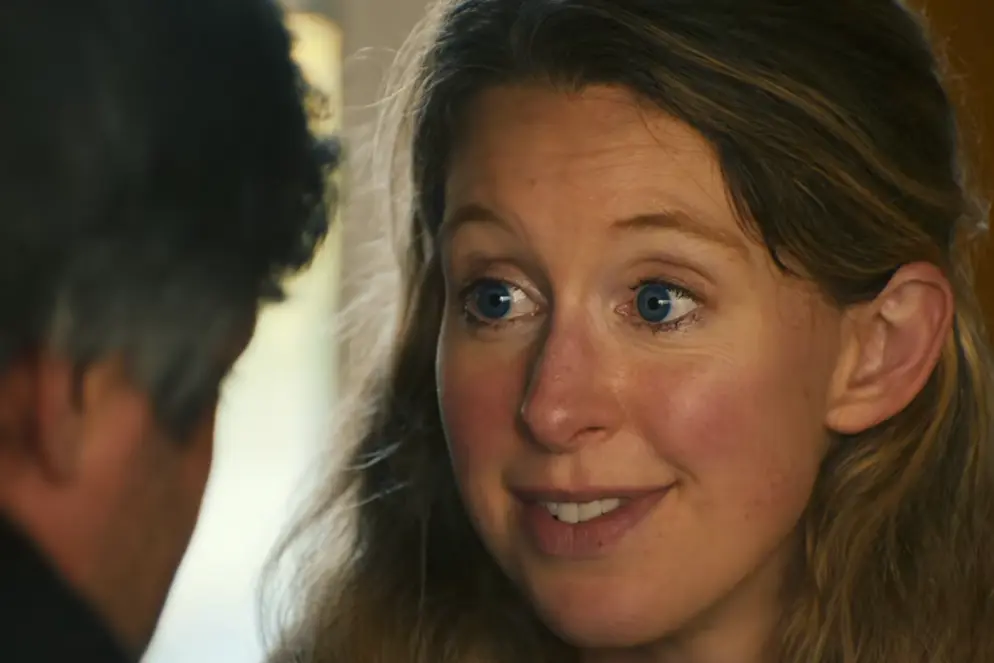
This weekend, the public’s enduring fascination with the Theranos saga was violently reawakened with the surprise premiere of a new documentary at the Telluride Film Festival. Entitled You Can See Everything and helmed by acclaimed filmmakers Nathan Fielder and Lance Oppenheim, the project offers an unprecedented, deeply intimate look at Holmes. Unlike previous dramatized series, investigative books, or traditional journalistic documentaries, this project features direct participation from Holmes herself. Spanning a three-year production window—including the harrowing 34-day countdown before she reported to federal prison—the documentary shifts from a straightforward retelling of financial crimes to an unsettling, character-driven portrait of a fallen titan.
As viewers once again plunge into the dizzying rabbit hole of the Theranos scandal, it is critical to look beyond the boardroom drama and venture capital metrics. At the heart of Holmes’s conviction and corporate downfall lies a human cost: real patients who trusted a revolutionary promise, only to receive terrifying, medically inaccurate diagnoses that upended their lives. This comprehensive report examines the genesis of the Theranos empire, the devastating impact of its faulty technology on everyday consumers, the legal reckonings that followed, and what this startling new cinematic window into Holmes’s psyche reveals about the architecture of corporate hubris.
Detailed Chronology: From Stanford Dropout to Federal Inmate
To understand the weight of the new documentary, one must trace the dizzying trajectory of Elizabeth Holmes’s career—a timeline defined by relentless ambition, unchecked secrecy, and a meticulously crafted corporate facade.
2003–2010: The Genesis of a Disruptive Dream
At just 19 years old, Elizabeth Holmes made the fateful decision to drop out of her chemical engineering program at Stanford University. Channeling her tuition money and an overwhelming self-assurance, she founded Real-Time Cures, later rebranded as Theranos (a portmanteau of "therapy" and "diagnosis"). Her pitch was intoxicatingly simple: traditional blood testing was expensive, invasive, sluggish, and dependent on large vials of venous blood drawn by skilled phlebotomists. Holmes envisioned a world where miniature, automated blood-testing devices—dubbed the "Edison"—could process comprehensive panels swiftly, quietly, and cheaply using only a few drops of blood acquired via a simple finger-prick.
During these formative years, Holmes cultivated an aesthetic heavily inspired by Apple co-founder Steve Jobs. She adopted the signature black turtleneck, lowered her speaking voice to an unnatural baritone, and surrounded herself with powerful political figures, elite venture capitalists, and board members boasting formidable resumes in military and government leadership—including former Secretaries of State George Shultz and Henry Kissinger. This formidable board provided an aura of absolute legitimacy that insulated Theranos from early, penetrating scientific scrutiny.
2011–2015: The Peak of the Myth and Strategic Deception
At its zenith, Theranos was valued at an astronomical $9 billion, making Holmes a multi-billionaire on paper and media darling heralded as the next great visionary of healthcare. The company secured lucrative retail partnerships, most notably a high-profile rollout inside Walgreens pharmacies across Arizona and California.
Behind the sleek marketing campaigns and breathless profiles in major business publications, however, the technology was failing. The Edison devices routinely produced erratic, unreliable, and wildly inconsistent results. Rather than admitting technical failure, Theranos leadership allegedly engaged in a systematic campaign of deception. The company routinely utilized traditional, commercially available third-party blood analyzers—manufactured by companies like Siemens—to run patient samples, while falsely claiming that the proprietary Edison machines were performing the work. When internal whistleblowers raised red flags about quality control and skewed data, they were met with aggressive legal threats, intimidation, and swift termination.
2015–2018: The Unraveling and Investigative Exposé
The house of cards began to tremble in October 2015, courtesy of investigative journalist John Carreyrou in The Wall Street Journal. Carreyrou’s explosive reporting dismantled the Theranos myth brick by brick, exposing the fact that the company’s blood-testing technology did not work as advertised and that it was secretly relying on conventional machines.
The fallout was swift and catastrophic. Regulatory agencies, including the Centers for Medicare & Medicaid Services (CMS), descended upon Theranos laboratories, uncovering severe deficiencies that posed immediate risks to patient health. Walgreens severed its partnership and filed a lawsuit. Lawsuits from disgruntled investors and aggrieved partners mounted, and the United States Securities and Exchange Commission (SEC) launched a full-scale fraud investigation. By September 2018, Theranos officially dissolved, leaving behind a trail of disillusioned investors, broken partnerships, and immense legal liability.
2021–Present: Trial, Sentencing, and the Cinematic Post-Mortem
In 2021, the federal government brought down the hammer on Holmes and her former romantic partner and Theranos Chief Operating Officer, Ramesh "Sunny" Balwani. Over a grueling months-long trial in San Jose, California, prosecutors presented a mountain of evidence detailing a deliberate, multi-year conspiracy to defraud investors, doctors, and patients.
In January 2022, a federal jury found Holmes guilty on three counts of wire fraud and one count of conspiracy to commit wire fraud. Following legal appeals and delays—during which time she gave birth to two children—Holmes was sentenced to 11 years and three months in federal prison. She surrendered to authorities at FPC Bryan in Texas in May 2023.
Now, with the debut of You Can See Everything at Telluride, the narrative enters a surreal new phase. By granting filmmakers Nathan Fielder and Lance Oppenheim unprecedented access during her final 34 days of freedom, Holmes has invited the public back into her orbit—not as a triumphant tech titan, but as a convicted felon navigating the surreal twilight before her incarceration.
Supporting Context & Metrics: The Human Cost and Financial Scale
While financial analysts frequently reduce the Theranos scandal to a staggering $9 billion valuation collapse and tens of millions in lost venture capital, the true measure of the fraud is found in its human toll. The corporate pursuit of market dominance directly compromised the physical health and psychological well-being of unsuspecting patients.
During the landmark 2021 federal trial, the prosecution introduced testimony from individuals whose lives were upended by faulty Theranos blood tests. These accounts dismantled any argument that the fraud was merely a victimless white-collar crime involving wealthy investors.
Case Studies in Diagnostic Failure
- The False Miscarriage Diagnosis: One female witness testified that she underwent Theranos blood testing that indicated she was experiencing a miscarriage. Understandably devastated, she subsequently underwent two separate blood tests through an independent, conventional laboratory. Both subsequent tests confirmed that her pregnancy was completely healthy and developing normally. The emotional trauma of mourning a healthy child due to a faulty laboratory read-out highlights the profound dangers of unverified medical technology.
- The False HIV Positive: Another female patient recounted the terrifying experience of receiving a Theranos test result suggesting she carried HIV antibodies. Grappling with a life-altering diagnosis, she pursued follow-up testing at two different medical facilities. Both alternative labs returned negative results for HIV. The psychological weight of navigating a false positive for a heavily stigmatized and chronic disease underscores the critical need for diagnostic accuracy.
- The Altered Medication Regimen: A male patient testified regarding a 2015 blood test processed through Theranos that reported his blood was failing to clot normally. Frightened by the prospect of internal bleeding or cardiovascular complications, the patient took the dangerous step of altering his healthcare regimen, actively stopping his prescribed blood thinners based entirely on an erroneous diagnostic metric.
Compounding these terrifying errors was the absolute opacity of the company’s customer service infrastructure. When patients attempted to contact Theranos to question alarming or unexpected results, they routinely hit a brick wall. As one testifying patient noted after reaching a customer service representative, she was informed that staff "couldn’t transfer me and that was about it"—leaving vulnerable citizens entirely unsupported by medical professionals or qualified scientists at moments of acute health crisis.
Financial and Corporate Metrics at a Glance
- Peak Valuation: $9 billion (at its height in 2014–2015).
- Total Venture Capital Raised: Over $700 million from high-profile investors, including media mogul Rupert Murdoch, the Walton family, and Betsy DeVos.
- Criminal Charges: Convicted on 4 counts (3 counts of wire fraud, 1 count of conspiracy to commit wire fraud); acquitted on 4 counts related to patient fraud.
- Prison Sentence: 135 months (11 years and 3 months) in federal prison, currently being served at FPC Bryan in Texas.
- Documentary Production Window: 3 years of intimate access, culminating in the 34 days leading up to her imprisonment.
Official Statements and Legal Posture
Throughout the arc of the investigation, trial, and subsequent sentencing, the legal teams and public representatives for Elizabeth Holmes maintained a complex posture. During the trial, Holmes took the daring step of taking the stand in her own defense, portraying herself as an ambitious entrepreneur who genuinely believed in the viability of the technology she was building. She argued that while mistakes were made and the company ultimately failed, she never intentionally set out to defraud anyone or knowingly put patients at risk.
Her defense successfully created enough reasonable doubt regarding direct intent to deceive patients specifically, leading to her acquittal on the four patient-related fraud counts. However, the jury remained utterly convinced that she systematically misled institutional investors and financial backers regarding the commercial readiness, operational capabilities, and revenue streams of Theranos, securing capital under false pretenses.
Neither Holmes’s legal representatives nor the creators of You Can See Everything have released exhaustive statements regarding the artistic framing of the new documentary. However, industry insiders and early festival attendees report that the project avoids taking an explicitly moralizing stance. Instead, Fielder and Oppenheim reportedly deploy their signature observational techniques to allow Holmes’s reality—and the surreal nature of her final weeks as a free woman—to unfold naturally on screen, leaving audiences to grapple with the uncomfortable juxtaposition of corporate ambition and personal accountability.
Future Outlook: The Enduring Legacy of the Theranos Era
As You Can See Everything makes its way through the festival circuit and prepares for wider distribution, the cultural reverberations of the Elizabeth Holmes saga continue to shape contemporary discourse surrounding technology, regulation, and accountability.
The "Move Fast and Break Things" Reckoning
Theranos served as an explosive watershed moment for Silicon Valley’s prevailing counter-cultural philosophy. For decades, the tech industry operated under the implicit assumption that software-style agility could be seamlessly imported into highly regulated, high-stakes sectors like biology, pharmaceuticals, and medicine. The catastrophic failure of Theranos forced a profound industry-wide reckoning. Venture capitalists and institutional investors are now significantly more rigorous in their due diligence, demanding independent scientific validation and third-party peer review before pouring hundreds of millions of dollars into bio-tech startups.
The True Crime and Cinematic Obsession
Holmes’s enduring grip on the public imagination—fueled by bestselling books, award-winning television dramatizations, and now an avant-garde documentary featuring her own direct cooperation—suggests that society’s appetite for this narrative is far from satiated. We remain endlessly transfixed by the archetype of the fallen prodigy. Fielder and Oppenheim’s documentary promises to challenge viewers by stripping away the caricature of the "evil corporate villain" and replacing it with a nuanced, unsettling study of human self-deception. It forces audiences to confront a chilling question: how easily can an individual convince not just the world, but themselves, of a comforting fiction?
The Path Forward for Medical Innovation
Despite the dark shadow cast by Theranos, the fundamental demand for less invasive, more accessible diagnostic testing remains urgent. Legitimate scientists, engineers, and medical researchers continue to pursue the holy grail of micro-sample testing—this time anchored in transparent peer review, rigorous regulatory compliance, and an unwavering commitment to patient safety.
Ultimately, the legacy of Elizabeth Holmes and Theranos stands as a permanent cautionary monument in the annals of modern commerce. It serves as a stark reminder that while technology may evolve at exponential speeds, the fundamental ethics of human health, scientific integrity, and corporate accountability remain non-negotiable. As Holmes serves out her sentence in Texas and her story is re-examined through yet another cinematic lens, the medical community and the tech sector alike remain charged with ensuring that the promise of innovation never again supersedes the sacred duty to do no harm.