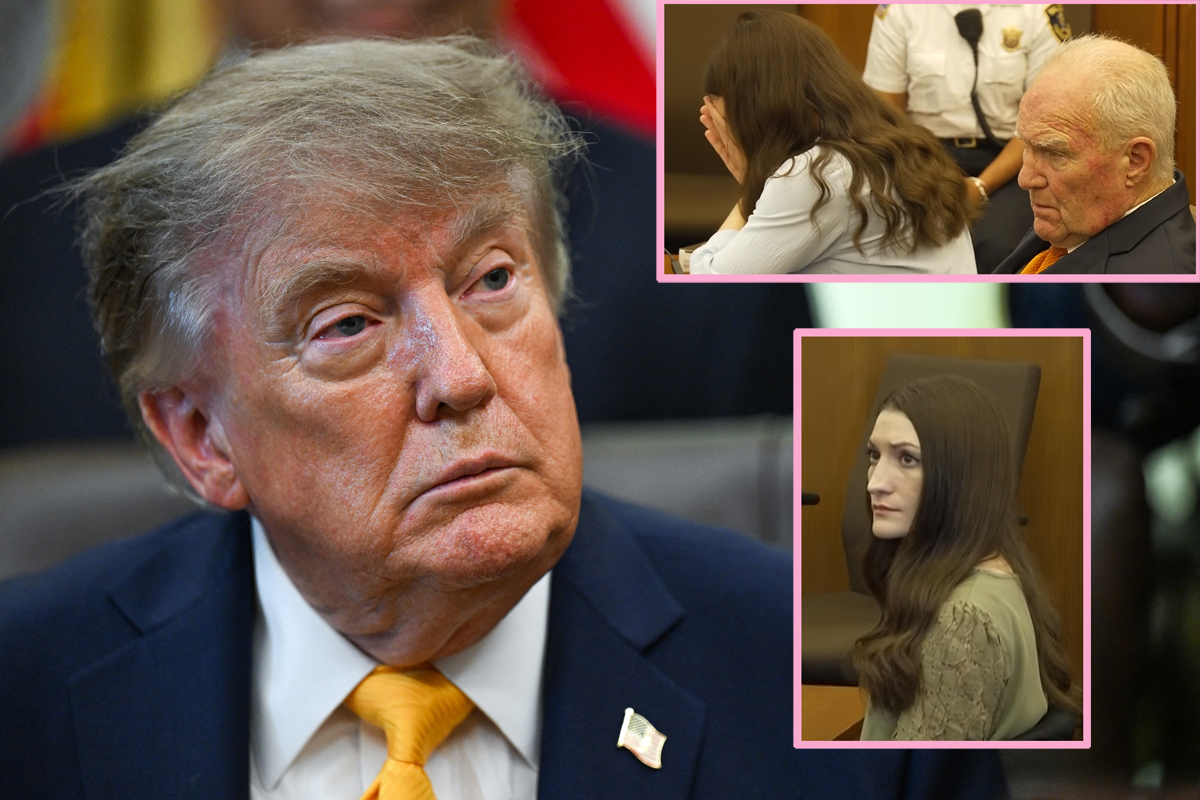
In an extraordinary convergence of criminal jurisprudence, presidential politics, and maternal mental health advocacy, the defense counsel for Lindsay Clancy—a Massachusetts mother charged with the January 2023 strangulation deaths of her three young children—has publicly requested a pardon from President Donald Trump following a mistrial declaration.
The defense appeal, delivered by veteran attorney Kevin Reddington during a national television broadcast, followed a judicial order declaring a mistrial after a Plymouth County jury reported a deadlocked verdict. The case, which has drawn international scrutiny, sits at the center of an intense national debate surrounding postpartum psychosis, criminal responsibility, and the legal thresholds for the insanity defense.
Reddington’s public gambit—asking a sitting United States President to intervene in a state-level murder trial—has ignited sharp constitutional debate among legal scholars. Under the United States Constitution, executive clemency via a presidential pardon applies strictly to federal offenses, whereas Clancy faces state murder charges under Massachusetts law. Nevertheless, the defense’s strategy underscores the heightened politicization of the proceedings and highlights how high-profile trials increasingly leverage broad public platforms to influence judicial outcomes and executive perspectives.
Detailed Chronology: From Tragic Event to Judicial Deadlock
+-----------------------------------------------------------------------------------+
| CHRONOLOGY OF EVENTS                                                              |
+-----------------------------------------------------------------------------------+
| Jan 24, 2023 | Tragic incident occurs in Duxbury, MA; three children attacked.    |
| Feb 2023     | Initial court arraignments; Defense cites severe overmedication.  |
| Sept 2026    | Trial commences in Plymouth County District Court.                 |
| Sept 4, 2026 | Jury deliberations halt; mistrial declared due to deadlock.       |
| Sept 4, 2026 | President Trump comments publicly on the trial's outcome.         |
| Sept 8, 2026 | Attorney Kevin Reddington appeals for presidential pardon on GMA. |
+-----------------------------------------------------------------------------------+
The January 2023 Incident in Duxbury
The tragic case originated on the evening of January 24, 2023, at the Clancy family residence in Duxbury, Massachusetts. According to law enforcement records and evidentiary submissions presented at trial, Patrick Clancy returned home from a brief errand to discover his wife, Lindsay Clancy, a 32-year-old labor and delivery nurse, severely injured after jumping from a second-story window in an apparent suicide attempt.
Upon entering the residence, first responders uncovered a horrifying scene: the couple’s three children—Cora, age 5; Dawson, age 3; and Callan, age 8 months—were found unconscious with exercise bands wrapped around their necks. Cora and Dawson were pronounced dead shortly after arrival at the hospital, while eight-month-old Callan succumbed to his injuries several days later at Boston Children’s Hospital. Lindsay Clancy survived her suicide attempt but sustained permanent spinal injuries that left her paralyzed from the waist down.
Prosecutorial Theory vs. Defense Narrative
The subsequent legal proceedings in Plymouth Superior Court presented two diametrically opposed narratives to the jury:
The Prosecution’s Case: Prosecutors argued that Lindsay Clancy acted with deliberate premeditated malice. The District Attorney’s office pointed to internet search histories on her personal devices regarding methods of incapacitation, mapping the time required for her husband to pick up a takeout dinner order, and an alleged lack of overt, visible psychotic symptoms in the hours immediately preceding the homicides. Prosecutors contended that despite mental health struggles, Clancy retained the cognitive capacity to appreciate the wrongfulness of her actions.
The Defense’s Case: Defense attorney Kevin Reddington presented a defense focused on involuntary intoxication and lack of criminal responsibility resulting from severe postpartum depression, postpartum psychosis (PPP), and psychiatric overmedication. The defense submitted evidence indicating that in the months leading up to the tragedy, Clancy had been prescribed a rapid succession of powerful psychiatric medications—including mood stabilizers, antidepressants, and anti-anxiety agents—which defense medical experts argued triggered an acute, drug-induced psychotic episode that stripped her of rational volition and reality testing.
Deliberations and the Declaration of Mistrial
Following weeks of testimony featuring conflicting expert witnesses, psychiatric evaluators, and emotional family testimonies, the case was handed to the jury. After multi-day deliberations, the panel formally notified the presiding judge that they had reached an irreconcilable impasse and were unable to arrive at a unanimous verdict on any of the core charges.
Recognizing the deadlocked status of the jury, the judge officially declared a mistrial. The ruling automatically returned the case to pre-trial status, leaving the District Attorney with the option to re-indict and retry Clancy on the original charges.
Legal and Psychiatric Context Analysis
Jurisdictional Realities: The Limits of Article II Pardons
The public plea made by defense counsel to the Executive Branch introduces a critical constitutional question regarding the limits of presidential power. Under Article II, Section 2, Clause 1 of the United States Constitution, the President is granted the "Power to grant Reprieves and Pardons for Offences against the United States, except in Cases of Impeachment."
Executive Level
Authority / Jurisdiction
Applicability to Clancy Case
Federal (President)
Federal Crimes / U.S. Territories / Military Courts
No Jurisdiction: Charges brought under state statute.
Because Lindsay Clancy was indicted under the statutory laws of the Commonwealth of Massachusetts, federal pardon authority does not apply. Legally, the authority to grant executive clemency, a pardon, or a commutation of sentence in this matter rests entirely with the Governor of Massachusetts, subject to advisory procedures established by state law.
Legal analysts note that Reddington’s public appeal to President Trump may serve strategic purposes outside formal constitutional procedure:
Shaping the Potential Jury Pool: Raising high-level public attention can influence public perception ahead of a retrial.
Public Relations Pressure: Highlighting the severity of mental health conditions through national media can build broad public sympathy.
Leveraging Executive Rhetoric: Drawing state officials’ attention to comments made by national figures can alter the political context surrounding the prosecution.
+--------------------------------------------------------------------------+
|                      CLEMENCY JURISDICTION MATRIX                        |
+--------------------------------------------------------------------------+
|  OFFENSE TYPE              APPROPRIATE AUTHORITY    CONSTITUTIONAL BASIS |
+--------------------------------------------------------------------------+
|  Federal Offense    ---->  U.S. President          ----> Article II, Sec. 2 |
|  State Offense      ---->  State Governor         ----> State Constitution |
+--------------------------------------------------------------------------+
|  *Clancy Case Status: Charged under Massachusetts State Law               |
|  *Legal Result: Federal Presidential Pardon is Legally Inapplicable      |
+--------------------------------------------------------------------------+
Postpartum Psychosis and the "McHoul" Legal Standard
The case has drawn significant attention to how the criminal justice system handles severe psychiatric emergencies tied to childbirth.
Postpartum Psychosis (PPP) is a severe, acute psychiatric disorder estimated by medical literature to occur in approximately 1 to 2 per 1,000 deliveries. Characterized by severe mania, delusion, hallucinations, and rapid mood swings, the onset is typically sudden and can completely distort a patient’s perception of reality.
Postpartum Mental Health Spectrum
|
├── Postpartum Blues (Common, mild, transient)
├── Postpartum Depression (10-15% of births; persistent mood disruption)
└── Postpartum Psychosis (0.1-0.2% of births; MEDICAL EMERGENCY, delusions/hallucinations)
In Massachusetts criminal courts, the standard for an insanity defense—known legally as lack of criminal responsibility—is governed by the landmark precedent set in Commonwealth v. McHoul (1967). Under the McHoul standard:
A defendant is not criminally responsible for commission of a crime if, at the time of the conduct, as a result of mental disease or defect, they lacked substantial capacity either to:
Appreciate the criminality or wrongfulness of their conduct; or
Conform their conduct to the requirements of the law.
The trial highlighted the difficult evidentiary standard required under McHoul. While the defense presented medical records detailing Clancy’s documented history of severe anxiety, suicidal ideation, and repeated visits to psychiatric facilities, the prosecution argued that her actions demonstrated calculated steps, challenging the claim that she lacked substantial capacity to appreciate the wrongfulness of her conduct.
Official Statements and Key Transcripts
Defense Counsel’s Media Appeal
Speaking on ABC’s Good Morning America following the mistrial, defense attorney Kevin Reddington directly addressed President Trump, calling for executive intervention:
"I’d like to say that perhaps Donald Trump, who felt compelled to speak out about this case, may very well… Mr. President, I would hope that you would consider this young lady and the person she is, what she’s been through, and consider a pardon."
— Kevin Reddington, Lead Defense Counsel for Lindsay Clancy
Reddington’s appeal emphasized Clancy’s prior background as a healthcare professional, her lack of any prior criminal history, and the tragic role played by postpartum mental illness.
Executive Branch Commentary
President Trump addressed reporters regarding the high-profile trial shortly after news broke that jury deliberations had stalled:
"She did a horrible, horrible thing, can’t be worse, but you’ll find out what the price to pay is. There’ll be a price. It’s going to be mental institution or jail or something, but I guess they’re going to go through another trial. It’s too bad."
— Donald Trump, President of the United States
Trump’s observations capture the core dilemma that paralyzed the jury: determining whether the appropriate response to the tragedy lies within the penal system or the psychiatric healthcare infrastructure.
                          PUBLIC & LEGAL PERSPECTIVES
                                       │
            ┌──────────────────────────┴──────────────────────────┐
            ▼                                                     ▼
   RETRIBUTIVE JUSTICE                                   RESTORATIVE / MEDICAL
  - Focus on outcomes and harm.                         - Focus on mental illness context.
  - Advocates for criminal accountability.              - Advocates for psychiatric treatment.
  - Sees actions as deliberate/premeditated.            - Sees actions as product of psychosis.
Future Outlook: Retrial Proceedings and Systemic Implications
Preparation for a Retrial
Following the mistrial, the Plymouth County District Attorney’s office faces a strategic decision. The prosecution must decide whether to move forward with a second trial, negotiate a plea agreement, or accept a disposition that involves long-term civil commitment to a high-security state psychiatric facility, such as Bridgewater State Hospital.
If the Commonwealth elects to retry Clancy, both legal teams face significant logistical and strategic challenges:
Jury Selection: Finding an impartial jury will be increasingly difficult given the extensive national media coverage, political commentary, and defense media appearances.
Evidentiary Adjustments: Both sides will likely refine their expert medical testimony, drawing on insights gained from the first trial to address the specific issues that deadlocked the original jury.
Resource Allocation: Retrying a complex capital-level murder case requires substantial financial and institutional resources from both state prosecutors and the defense.
State-Level Clemency and Political Realities
Should Clancy eventually be convicted in a retrial, any formal request for executive clemency would need to be directed to the Governor of Massachusetts.
The clemency process in Massachusetts requires a formal petition to the Advisory Board of Pardons. The board conducts an evaluation before submitting a recommendation to the Governor. Historically, pardons or commutations for convictions involving multiple homicides are extremely rare in the Commonwealth, presenting a significant hurdle for any future defense petitions.
Systemic Impact on Maternal Healthcare and the Law
Beyond its immediate legal outcomes, the Lindsay Clancy case continues to spur debate across healthcare and legal sectors:
Maternal Health Policy: Medical associations and maternal health advocates are pushing for standardized postpartum mental health screenings, clearer protocols for tapering psychiatric medications, and increased funding for specialized inpatient mother-baby psychiatric units.
Legal Reform: Legal scholars are examining whether current state insanity defense standards, such as the McHoul rule, adequately account for acute psychiatric conditions like postpartum psychosis, where cognitive awareness and involuntary behavior can conflict in complex ways.
As Plymouth County officials prepare their next legal steps, the case remains a complex and tragic intersection of violent crime, severe mental illness, public optics, and constitutional law. The debate it has sparked continues to resonate across courtroom proceedings, legislative chambers, and medical institutions nationwide.