Executive Overview
Knee pain is a ubiquitous complaint, particularly among adults over the age of 65. Whether stemming from chronic conditions like osteoarthritis, the cumulative wear-and-tear of overuse, or lingering historical athletic injuries, joint discomfort can profoundly limit a person’s independence, mobility, and overall quality of life. As a personal trainer working extensively with older adults, I witness firsthand how debilitating knee issues can become, often trapping individuals in a cycle of physical inactivity that ironically exacerbates joint deterioration.
To break this cycle and restore functional independence, a proactive approach is required—one that looks beyond the knee joint itself and focuses on the intricate muscular network that supports it. By strengthening the lower body’s primary stabilizing muscles, individuals can dramatically reduce mechanical strain on the knee joints during everyday movements, from climbing stairs to rising from a chair.
This comprehensive guide outlines four foundational resistance band exercises that serve as the cornerstone of my training programs for clients of all ages. Requiring only an exercise mat and a moderately heavy looped resistance band, these accessible yet highly effective movements are designed to fortify the hips, glutes, and thighs. Beyond safeguarding knee health, mastering these exercises yields significant improvements in full-body stability, core integration, and balance, offering a scientifically sound pathway to pain-free longevity.
Detailed Chronology: Understanding the Evolution of Knee Rehabilitation and Stability Training
To appreciate the efficacy of banded lower-body training, it is valuable to examine how physical rehabilitation and preventative conditioning have evolved over the past several decades.
The Shift from Rest to Functional Loading
Historically, medical orthodoxy dictated that individuals suffering from knee pain or degenerative joint disease should rest the affected limb and strictly avoid activities that provoked discomfort. While immobilization is occasionally necessary in acute trauma or immediately post-surgery, prolonged rest often triggers accelerated muscle atrophy, particularly in the quadriceps and gluteal complexes.
By the late 20th and early 21st centuries, sports science and physical therapy shifted toward an active rehabilitation model. Clinical studies increasingly demonstrated that targeted, low-impact loading stimulates cartilage health, enhances synovial fluid circulation, and builds robust muscular armor around vulnerable joints.
The Integration of Elastic Resistance
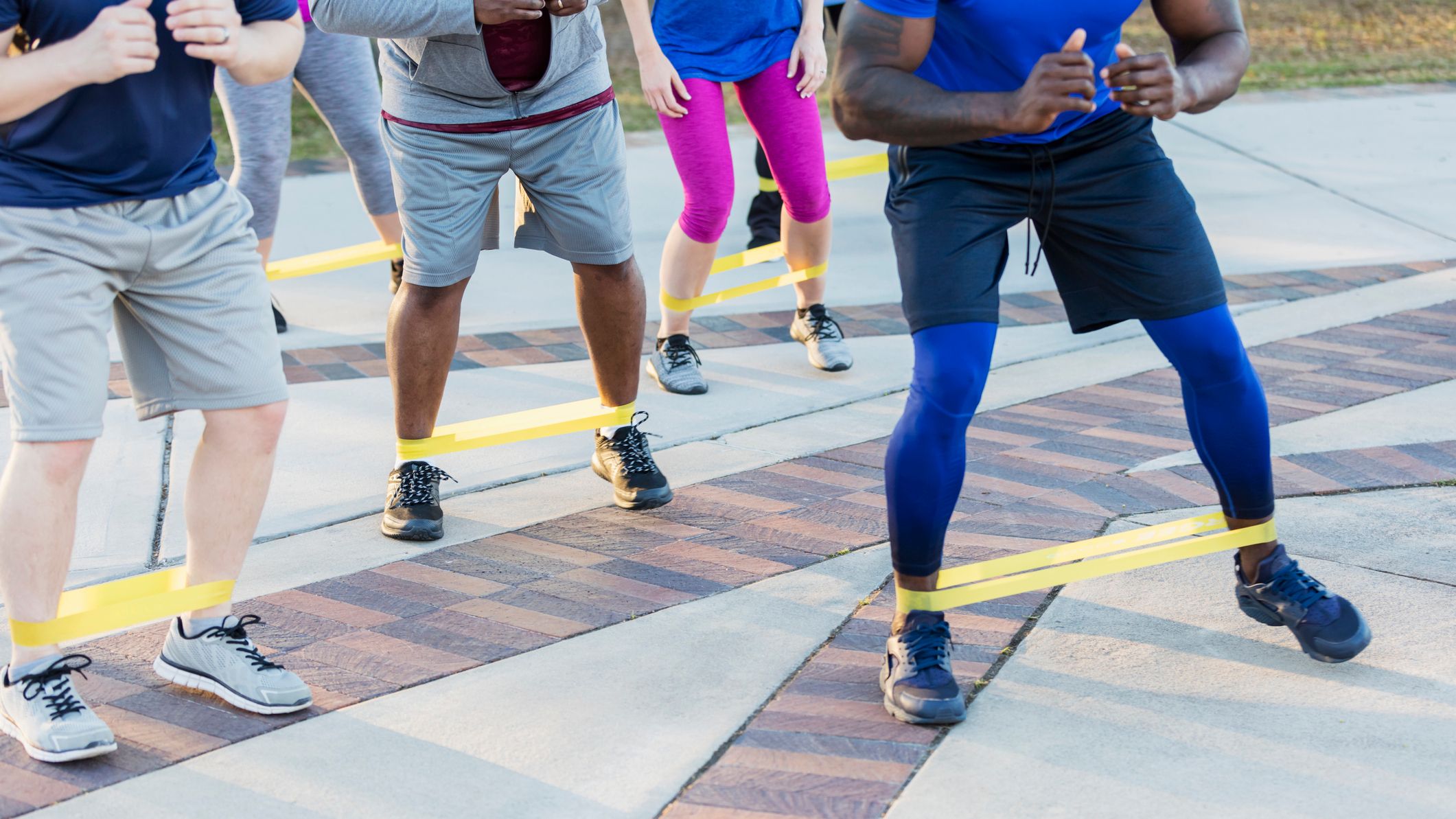
The introduction of variable resistance tools—specifically looped elastic bands—revolutionized home-based and clinical conditioning. Unlike traditional iron weights, which exert a uniform gravitational pull, elastic bands provide progressive tension: the resistance increases as the band is stretched. This unique property matches the natural strength curve of human joints, engaging stabilizing muscles through a full range of motion without imposing undue shear stress on the knee.
Today, trainers and physical therapists routinely incorporate banded routines into early-stage functional conditioning. The four exercises detailed below represent the refined culmination of this rehabilitative evolution, offering a bridge between clinical therapy and independent fitness.
Supporting Context & Metrics: The Anatomy of Knee Protection and Exercise Protocols
Knee pain is rarely an isolated problem originating strictly within the patellofemoral or tibiofemoral joints. More often, it is the downstream consequence of kinetic chain dysfunctions—specifically, weakness or neural inhibition in the hips and glutes.
The Kinetic Chain and Lower-Body Mechanics
The human body operates as an interconnected kinetic chain, where the ankle, knee, hip, and lumbar spine continuously influence one another. When the gluteus medius, gluteus maximus, and deep external rotators of the hip are weak, the femur tends to internally rotate and adduct (collapse inward) during weight-bearing activities. This dynamic malalignment places excessive lateral and torsional stress on the knee joint, contributing to conditions such as patellofemoral pain syndrome, IT band friction syndrome, and accelerated meniscal wear.
By employing looped resistance bands, exercisers provide immediate tactile feedback that encourages outward rotation of the femur and active engagement of the posterior chain. This corrects alignment at the source, shielding the knee from harmful biomechanical forces.
Equipment and Progression Metrics
Implementing this routine requires minimal financial investment and space.
- Equipment Needed: A comfortable exercise mat and a moderately heavy looped resistance band (often available in multi-resistance sets online or at sporting goods stores). Users should select a resistance level that challenges the target muscles without compromising form.
- Volume and Progression Timeline:
- Phase 1 (Weeks 1–2): Perform 1 to 2 sets of 10 repetitions per exercise, 3 to 4 times per week.
- Phase 2 (Weeks 3–4): Increase volume to 2 or 3 sets of 12 to 15 repetitions.
- Phase 3 (Maintenance): Aim for 3 sets of 15 repetitions with brief, structured rests between sets, ensuring every repetition is executed with pristine form.
- Flexibility in Execution: For individuals with mobility limitations who find floor-based exercises challenging, the banded clamshell and glute bridge can be performed comfortably on a supportive bed or firm couch.
Step-by-Step Guide: The Four Essential Exercises for Healthy Knees
1. Banded Clamshell
- Prescription: 2 sets of 10 repetitions per side (progressing to 3 sets of 15).
- Target Muscles: Gluteus medius, tensor fasciae latae, and external hip rotators.
- Execution:
- Place the looped resistance band around both legs, positioning it just above your knees.
- Lie on your side on an exercise mat, stacking your hips and knees directly on top of one another. Bend your knees at roughly a 90-degree angle and keep your feet aligned with your spine.
- Keeping your feet firmly pressed together, engage your outer hip and slowly raise your top knee as high as possible without shifting your pelvis or torso.
- Pause briefly at the top of the movement, then slowly lower your knee back to the starting position. Complete all repetitions on one side before switching.
- Trainer Tips: A common mistake is allowing the top hip to roll backward, which recruits the lower back instead of the hip abductors. To prevent this, lean your chest forward slightly to lock your hips into a stable, aligned position. Squeeze the outside of your hip deliberately as you lift.
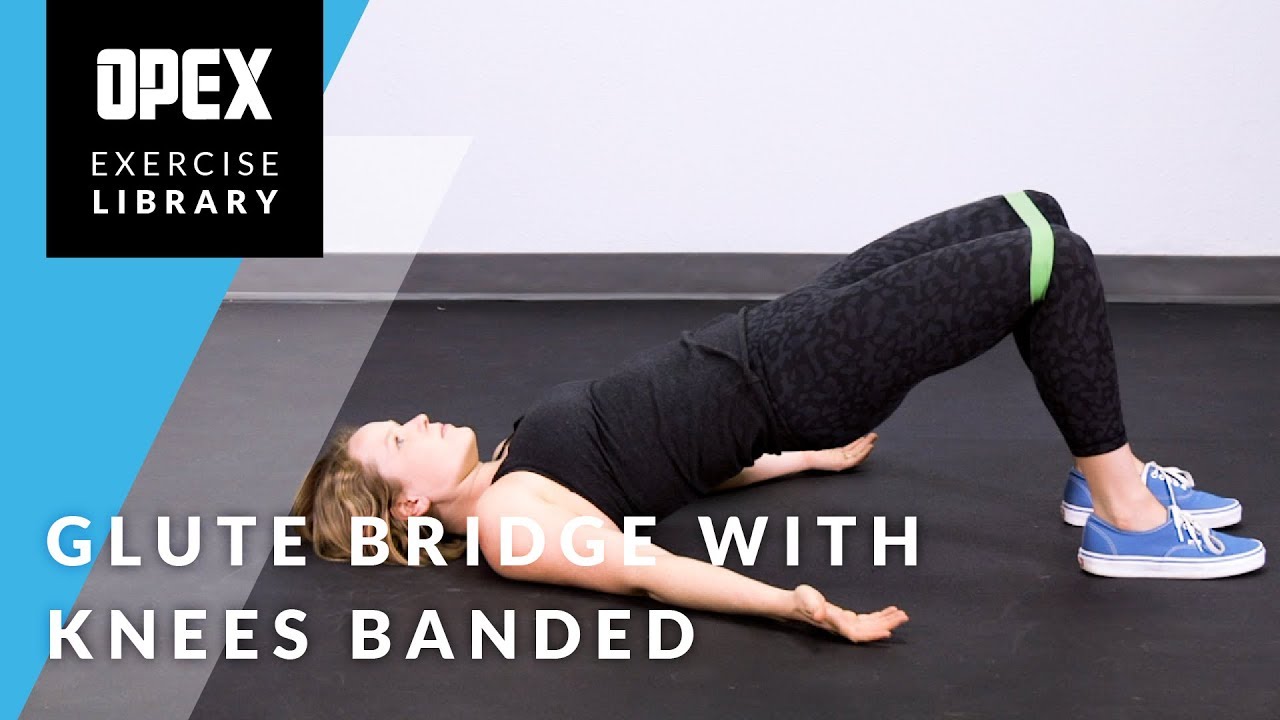
2. Banded Glute Bridge
- Prescription: 2 sets of 10 repetitions (progressing to 3 sets of 15).
- Target Muscles: Gluteus maximus, hamstrings, and core stabilizers.
- Execution:
- Loop the resistance band around your legs just above your knees.
- Lie flat on your back on the mat with your knees bent and your feet flat on the floor, spaced hip-width apart.
- Press your knees slightly outward against the band to maintain tension throughout the movement.
- Drive through your heels, squeezing your glutes to lift your hips toward the ceiling until your body forms a straight line from your shoulders to your knees.
- Hold the top position for one second, then lower your hips back to the mat with control.
- Trainer Tips: Ensure that you do not arch your lower back excessively at the peak of the bridge; the lifting motion should be driven entirely by gluteal contraction. Maintain continuous outward pressure against the band so your knees do not collapse inward.
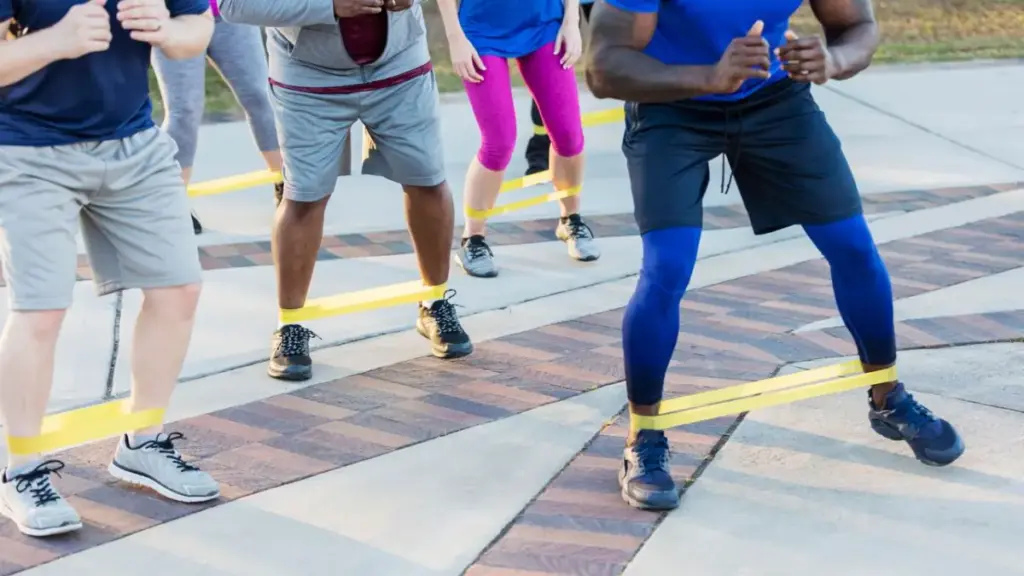
3. Banded Monster Walk
- Prescription: 2 sets of 10 steps per side (progressing to 3 sets of 15).
- Target Muscles: Gluteus medius, abductors, and dynamic stabilizers of the lower limbs.
- Execution:
- Position the looped resistance band around your ankles (or around your feet for an increased challenge).
- Stand with your feet hip-width apart, knees slightly bent in an athletic half-squat stance, and your toes pointed straight ahead.
- Take a wide step to the right with your right foot, maintaining tension on the band.
- Follow with your left foot, keeping your stance wide and your hips level.
- Complete the desired number of steps in one direction before reversing and stepping back to the starting position.
- Trainer Tips: Keep your posture tall and avoid swaying your torso from side to side. The movement should originate entirely from the lower body, with the band kept taut at all times to ensure constant muscular engagement.
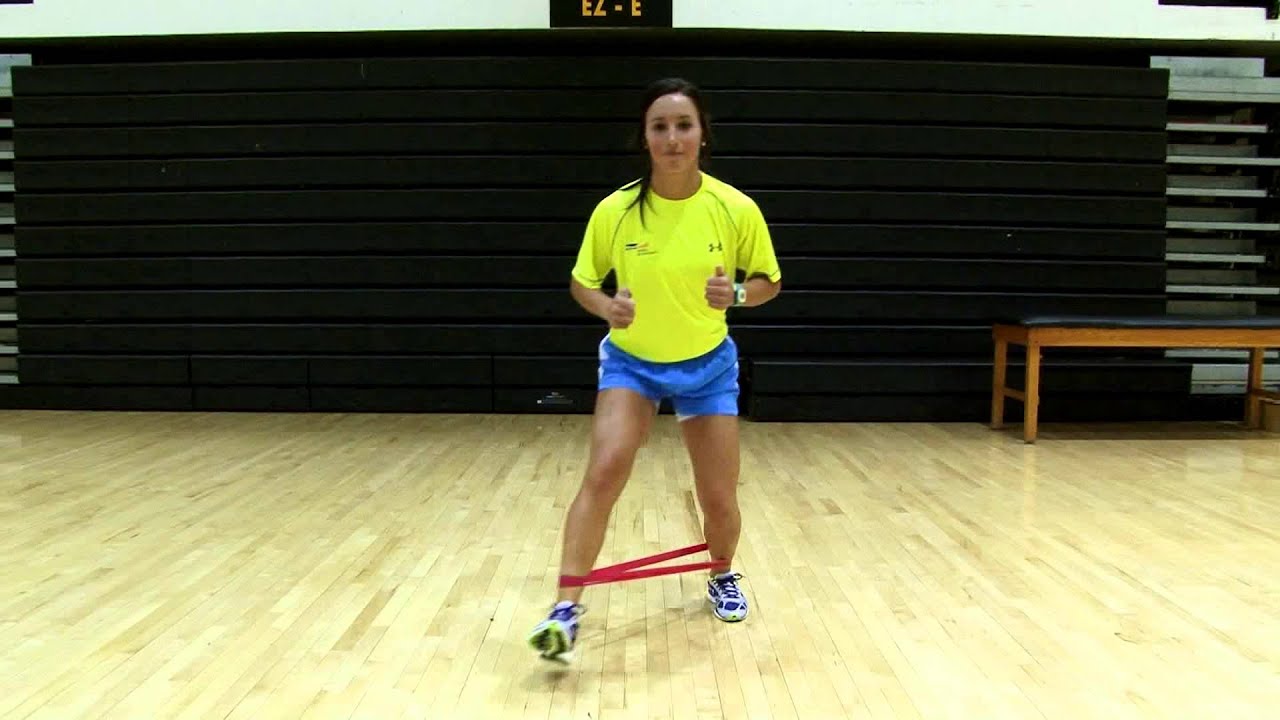
4. Banded Kickback
- Prescription: 2 sets of 10 repetitions per side (progressing to 3 sets of 15).
- Target Muscles: Gluteus maximus and hamstrings.
- Execution:
- Place the resistance band around your ankles.
- Stand tall, engaging your core. If balance is a concern, position yourself near a sturdy wall, chair, or countertop for light fingertip support.
- Keeping your working leg straight (or with a very soft bend in the knee), slowly press your heel backward against the resistance of the band.
- Raise your leg behind you only as far as you can without arching your lower back or tilting your torso forward.
- Return your foot to the starting position with control. Complete all repetitions on one leg before switching.
- Trainer Tips: Avoid externally rotating (turning out) your working leg as you lift your heel; keep your toes pointing straight down toward the floor to ensure the gluteus maximus bears the brunt of the workload.
Official Statements and Expert Guidance
To ensure safety and maximize the therapeutic benefits of any new conditioning routine, medical and fitness authorities advocate for a measured, consultative approach.
Medical Disclaimer & Professional Consultation:
"Always consult a qualified healthcare professional or physician before starting any new exercise or workout program. While these movements are designed to be appropriate for all fitness levels—including beginners—individual health histories vary widely. Your medical team may recommend specific clinical modifications or advise you to avoid certain movements based on prior surgeries, advanced osteoarthritis, or acute joint instability. Consider scheduling a session with a certified personal trainer or licensed physical therapist to receive personalized guidance, structural modifications, and appropriate progressions."
According to orthopedic rehabilitation specialists, preventative strengthening of the lower kinetic chain remains one of the most effective, non-invasive strategies for managing chronic knee degeneration. Clinical guidelines emphasize that consistency and form take absolute precedence over resistance magnitude; mastering neuromuscular control with a lighter band yields vastly superior long-term joint protection than struggling through heavy repetitions with compromised biomechanics.
Future Outlook: Sustaining Joint Health and Mobility for Decades to Come
As global populations age, the preservation of musculoskeletal health is paramount to maintaining personal autonomy and reducing the societal burden of age-related mobility decline. The narrative surrounding knee pain is shifting away from passive management and toward active, empowering self-care.
By integrating structured, low-impact resistance training into weekly routines—just three to four times a week—individuals can proactively fortify their joints against future injury and degeneration. Whether utilized as a standalone movement session or as a targeted warm-up prior to walking, swimming, or strength training, these four banded exercises lay a resilient physiological foundation.
Looking forward, the integration of accessible home fitness tools like resistance bands empowers aging adults to take direct control of their physical well-being. By strengthening the kinetic chain today, individuals invest in a future characterized by fluid movement, reduced pain, and enduring vitality.