Executive Overview
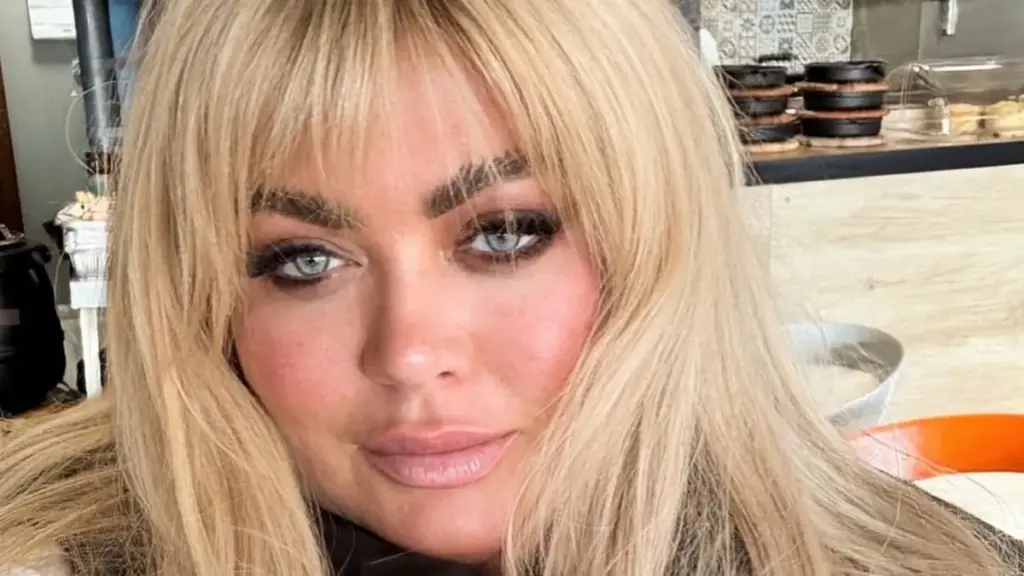
For over a decade, Gemma Collins has commanded the British television landscape under her indomitable alter ego, "The GC." Defined by outsized personalities, high glamour, dramatic flair, and endless meme-worthy moments, she built a fortress of entertainment out of self-assured comedy. Yet, beneath the layers of heavy makeup, voluminous hair, and scripted reality television bravado lay a starkly different reality—one that the cameras of a documentary crew inadvertently captured as it unraveled in real-time.
In her upcoming eight-part Sky documentary series, Gemma Collins: Everything. All At Once (launching September 15 on Sky and NOW), viewers will bear witness to a profound departure from the television persona fans have long recognized. Originally conceived under the optimistic working title Four Weddings and a Baby, the project was designed to chronicle Collins walking down the aisle with her fiancé, Rami Hawash, while embarking on a joyful journey to start a family.
Instead, life intervened with devastating force. What followed was, by Collins’s own admission, the worst year of her existence. Marked by compounding grief, fertility struggles, and a partner grappling with mental health and alcohol abuse, the production evolved from a celebratory wedding chronicle into a deeply intimate exploration of vulnerability, resilience, and survival.
This in-depth investigative feature explores the making of Collins’s most defining television project to date, examining the collision between high-profile celebrity and raw, unvarnished human tragedy, and what it signals for the future of reality television in an era craving authenticity.
Detailed Chronology: How a Celebration Became a Crucible
To understand the emotional gravity of Gemma Collins: Everything. All At Once, one must trace the timeline of production, which coincided with an unprecedented convergence of personal crises for the 45-year-old star.
The Genesis: High Hopes and Wedding Bells
When production on the series first commenced, the trajectory seemed clear and celebratory. Collins and her partner, Rami Hawash, were planning their nuptials. The former The Only Way Is Essex (TOWIE) star had openly spoken about her desire to embrace motherhood, balancing a demanding career with long-held domestic ambitions. The documentary was slated to follow these monumental life milestones, capturing the glamorous preparations typical of a celebrity-led reality venture.
However, the cracks in the foundation began to show almost immediately. As Collins notes, the working title Four Weddings and a Baby quickly became a misnomer as "things didn’t go to plan."
The Escalation of Private Struggles
Behind closed doors, the pressure cooker of filming magnified preexisting strains. Hawash, navigating intense personal stress, struggled significantly with his mental health and turned to alcohol as a coping mechanism. For Collins, supporting her partner while maintaining her professional commitments proved to be an exhausting balancing act.
Concurrently, the couple faced deeply emotional hurdles on their fertility journey. Seeking specialized medical guidance at London’s prestigious Portland Hospital, Collins confronted the painful realities of biological clocks, fertility complications, and the agonizing question of whether she had prioritized her burgeoning career to the detriment of starting a family.
The Ultimate Blow: The Loss of Matriarch Joan Collins
The darkest chapter of the filming period unfolded in July, when Collins’s beloved mother, Joan, passed away following a protracted 16-year battle with failing health. While Joan’s chronic illnesses had long been managed in the background of Collins’s busy life, her condition deteriorated sharply while the documentary cameras were rolling.
The passing of her mother shattered the remaining vestiges of Collins’s emotional armor. Forced to process her grief in front of a documentary crew, the star faced a profound existential crisis. As she candidly described the experience, navigating simultaneous relationship strain, fertility heartache, and terminal grief felt quite literally "like drowning."
Supporting Context & Metrics: The Shifting Landscape of Reality Television
The release of Gemma Collins: Everything. All At Once arrives at a pivotal juncture in the television industry. For years, audiences have consumed highly polished, heavily curated reality television formats where artifice is celebrated and personal pain is glossed over for entertainment value. However, industry analysts and media commentators have noted a definitive cultural shift.
The Death of the "Bluff"
Contemporary television audiences have grown increasingly weary of contrived drama and calculated public relations maneuvers. There is a palpable appetite for authentic human experiences, even—and perhaps especially—when those experiences are messy, painful, and deeply unglamorous.
Collins herself acknowledges this cultural pivot:
"Being The GC was escapism. I could put the make-up on, get the hair big, and forget what was going on in the real world. But there’s been a real turn in media where people want to see the real me again. They’re sick of the bluff. I’m not afraid and I know I don’t need to deal with all this on my own."
This intentional dismantling of the "GC" persona represents a high-stakes gamble for a performer whose entire commercial viability has historically rested on larger-than-life escapism. By inviting viewers into her grief, Collins is trading the safety of caricature for the profound resonance of genuine vulnerability.
The Demographics of Modern Grief and Healing in Media
Documenting grief within the reality television sphere is fraught with ethical complexities. Networks frequently run the risk of exploiting trauma for ratings. However, when managed with the consent and active narrative control of the subject, such projects can serve as powerful cultural touchstones for audiences dealing with similar losses.
By addressing taboo subjects such as adult children caring for chronically ill parents, the invisible weight of partner mental health struggles, and the quiet grief of unresolved fertility paths, Collins’s series expands the traditional boundaries of celebrity docuseries. It aligns with a broader sociological shift toward destigmatizing conversations surrounding mental health, bereavement, and the non-linear nature of modern womanhood.
Official Statements and Personal Reflections
Throughout the promotional rollout for the eight-part series, Collins has spoken with unprecedented candor about the psychological toll of the project and the therapeutic nature of sharing her story.
On Confronting the Cameras Amid Tragedy
Reflecting on the most difficult days of production, Collins admitted to moments of acute self-doubt, questioning the wisdom of exposing her most vulnerable hours to the public eye:
"The camera crews are at your house and you’re thinking, *’This is my life, it’s so s*t. How can I let people see it?’ But unless you go through hard times, I don’t think you grow as a person. This was the hardest thing I’ve ever done, but it’s also the thing I’m most proud of."
On Motherhood, Family, and Spiritual Signs
Though her biological journey toward motherhood did not culminate in the way she originally hoped, Collins has found peace through a redefinition of family roles and a deep-seated spiritual connection to her late mother.
Discussing her relationship with her young relatives, Collins embraced a new chapter of domestic leadership:
"I still have Tristan, and my nephews. I’ve known Tristan since he was three: I did his nappies, I gave him his bottles. I love that boy. With my mum gone, I’m going to be the mum of the family now, the matriarch, and I’m really happy and excited for that. If it’s meant to happen, my mum will send it to me, and a miracle will happen. If it doesn’t, I’m at peace with that."
Furthermore, Collins shared deeply personal accounts of how her mother’s presence continues to provide solace through surreal, comforting signs:
"My mum passed away peacefully, and we were all in the room. She’s come back to me in so many ways already, which gives me great comfort. She comes back to me in spiritual ways and sends me signs. There was this butterfly in the house towards the last few days of my mum living, and it wouldn’t go away. When she passed, Tristan went to me, ‘There’s Nanny’. He went, ‘Nanny, if that’s you, flap your wings ten times,’ and it did."
Future Outlook: A New Era for Gemma Collins
As Gemma Collins: Everything. All At Once prepares to land on Sky and NOW on September 15, the cultural conversation surrounding its star has fundamentally shifted. No longer viewed strictly through the lens of tabloid sensationalism or reality television satire, Collins emerges from this crucible as a mature television personality capable of profound emotional depth.
Professional Reinvention
The documentary serves as a critical pivot point for Collins’s career. By proving she can carry a narrative defined not by comedic exaggeration, but by genuine emotional stakes, she opens doors to more substantive documentary-making, presenting projects that bridge the gap between popular entertainment and serious human interest storytelling.
Personal Resilience
While the events documented in the series represent the most challenging period of her life, Collins’s public reflections suggest a woman who has emerged with renewed clarity. Having shed the protective armor of "The GC" when it mattered most, she steps into her new role as family matriarch with a hard-earned sense of equilibrium.
For an audience that has watched her evolve from a controversial television breakout star into a household name, this upcoming series promises to be an unforgettable viewing experience—a testament to the fact that beneath the sequins and the television spotlights, authentic human endurance remains the most compelling narrative of all.