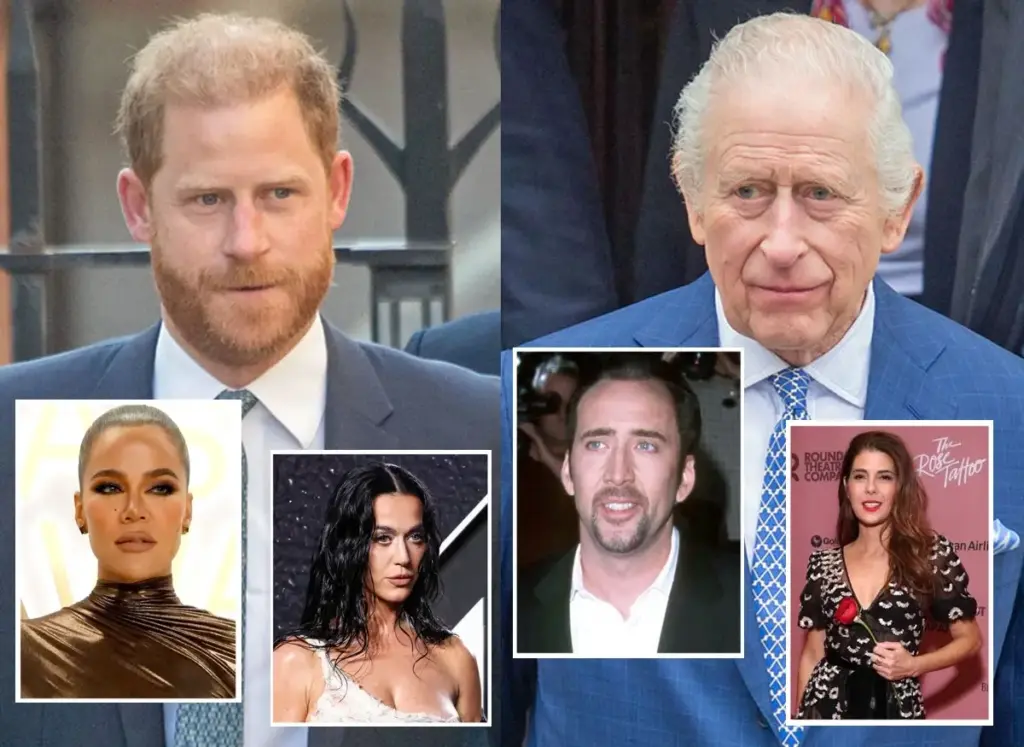
Executive Overview
In contemporary media ecosystems, celebrity conspiracy theories occupy a unique intersection of public fascination, psychological projection, and digital connectivity. While rumors regarding public figures are as old as celebrity culture itself, the internet age has dramatically accelerated their distribution, transforming localized urban legends into global viral narratives. Far from being harmless eccentricities, these persistent myths illuminate broader societal dynamics, including institutional distrust, cognitive pattern-seeking, and the mechanics of algorithmic amplification.
This investigative analysis examines eight of the most enduring celebrity conspiracy theories. By contrasting viral speculation with empirical timelines, forensic documentation, and institutional protocols, this report delineates how falsified narratives gain traction, why they resist conventional debunking, and what their persistence reveals about modern information consumption.
Detailed Chronology and Case Analyses
+-----------------------------------------------------------------------------------+
|                     CHRONOLOGY OF POPULAR CELEBRITY MYTHS                         |
+-----------------------------------------------------------------------------------+
| 1962: Marilyn Monroe's death sparks institutional cover-up theories.             |
| 1966: "Paul is Dead" myth emerges following Paul McCartney's alleged car crash.   |
| 1969: Apollo 11 moon landing occurs; later alleged to be directed by S. Kubrick.   |
| 1993: Marisa Tomei wins Oscar; mistaken announcement rumors originate.            |
| 1994: Prince Harry paternity rumors emerge regarding James Hewitt.                 |
| 1997: Animated evolution of Pikachu triggers "character replacement" lore.        |
| 2011: Antique photo sale sparks Nicolas Cage "vampire immortality" narrative.     |
| 2014: Viral internet posts claim Katy Perry is a rebranded JonBenét Ramsey.       |
+-----------------------------------------------------------------------------------+
1. The "Paul is Dead" Phenomenon (1966–Present)
The template for modern celebrity conspiracies emerged in late 1969 when American college newspapers began reporting that Paul McCartney, bassist for The Beatles, had died in an autumn 1966 automobile accident and been replaced by a lookalike named William Shears Campbell.
- The Myth Mechanics: Proponents systematically analyzed Beatles iconography, claiming hidden clues were embedded throughout the band’s creative output. Examples cited included the Abbey Road album cover (where McCartney walks barefoot and out of step with his bandmates, interpreted as funeral imagery) and reversed audio tracks on songs such as "Strawberry Fields Forever."
- The Empirical Reality: McCartney was vacationing in Scotland and France during the alleged period of his death. He responded to the rumors in a November 1969 Life magazine cover story, humorously noting that "rumors of my death have been greatly exaggerated." Over five decades later, McCartney continues to perform, record, and maintain an active public life, rendering the substitution premise biologically and logistically impossible.
2. Marilyn Monroe’s Fatal Conspiracy (1962–Present)
Following the death of screen icon Marilyn Monroe on August 4, 1962, at age 36, the Los Angeles County Coroner’s Office conducted a thorough forensic investigation, ultimately attributing her demise to acute barbiturate poisoning and ruling it a "probable suicide."
- The Myth Mechanics: Dissatisfaction with official findings led to speculative narratives asserting that Monroe was assassinated by government intelligence agencies—specifically the CIA—or political operatives to conceal alleged relationships with President John F. Kennedy and Attorney General Robert F. Kennedy.
- The Empirical Reality: Re-examinations of the case, including a comprehensive review by the Los Angeles County District Attorney’s Office in 1982, concluded that no credible evidence supported allegations of foul play or a state-sponsored cover-up. Toxicological findings and contemporary witness testimony consistently corroborated the original ruling of self-ingestion.
3. The Marisa Tomei Oscar Controversy (1993–Present)
At the 65th Academy Awards in 1993, Marisa Tomei was awarded the Oscar for Best Supporting Actress for her performance in My Cousin Vinny, prevailing over a competitive field that included veteran actresses Joan Plowright, Miranda Richardson, Joan Rivers, and Judy Davis.
                  ACADEMY AWARD ERROR CORRECTION PROTOCOL

   +-----------------------+     Incorrect Name     +------------------------+
   | Presenter Reads Name  | ---------------------> | PwC Official Steps On  |
   |   On Stage Envelope   |                        | Stage Immediately to   |
   +-----------------------+                        | Correct Record         |
               |                                    +------------------------+
               | Correct Name                                   ^
               v                                                |
   +-----------------------+                         (Demonstrated in 2017    |
   | Award Confirmed and   |                         "La La Land" /          |
   | Documented in Archive |                         "Moonlight" Incident)   |
+-----------------------+-------------------------------------------------+- The Myth Mechanics: Shortly after the broadcast, rumors circulated that 74-year-old presenter Jack Palance had inadvertently read the wrong name from the teleprompter due to confusion or impairment, and that Academy officials were too embarrassed to intervene on live television.
- The Empirical Reality: The Academy of Motion Picture Arts and Sciences relies on the independent accounting firm PriceWaterhouseCoopers (PwC) to manage vote counting and stage security. PwC officials operate under explicit instructions to immediately interrupt the broadcast if an incorrect winner is announced—a protocol publicly demonstrated during the 2017 La La Land / Moonlight Best Picture misstatement. PwC confirmed that Tomei legitimately received the highest number of votes.
4. The JonBenét Ramsey / Katy Perry Identity Swap (2014–Present)
In 2014, a conspiracy video uploaded to YouTube claimed that JonBenét Ramsey, the six-year-old beauty pageant contestant tragically murdered in Boulder, Colorado, in December 1996, did not die but was secretly transformed into pop superstar Katy Perry.
- The Myth Mechanics: Theorists cited superficial photographic overlays, facial structural comparisons, and vague behavioral claims as evidence of a high-level concealment operation by the entertainment industry.
- The Empirical Reality: The narrative disregards elementary chronological and biographical facts. Katy Perry (born Katheryn Elizabeth Hudson) was born on October 25, 1984, in Santa Barbara, California—six years prior to JonBenét Ramsey’s birth in August 1990. Perry’s childhood, early musical career as a gospel singer, and family history in California are extensively documented by public records, news archives, and contemporaneous testimony.
5. Nicolas Cage and Photographed Immortality (2011–Present)
In 2011, an antique original photograph from the Civil War era depicting an unidentified man from Bristol, Tennessee, was listed on eBay with a starting bid of $1 million. The seller claimed the photo proved actor Nicolas Cage was an immortal vampire who regenerates his identity across centuries.
       +-------------------------------------------------------+
       |             ANATOMY OF A VIRAL DOPPELGÄNGER           |
       +-------------------------------------------------------+
       | Historical Photograph (c. 1870, Bristol, TN)          |
       |                      ↓                                |
       | Structural Facial Similarity (Anthropometric Coincidence)|
       |                      ↓                                |
       | High-Engagement E-Commerce Listing ("Immortal Vampire")|
       |                      ↓                                |
       | Algorithmic Distribution & Late-Night Media Cycle     |
+-------------------------------------------------------+- The Myth Mechanics: The structural facial similarity between Cage and the 19th-century subject sparked widespread online fascination, with sensationalist blogs framing the photographic coincidence as evidence of supernatural phenomena.
- The Empirical Reality: Anthropometric studies confirm that facial similarities among non-related human beings across different eras are common due to finite variations in human genetic architecture. Cage addressed the viral image during an appearance on David Letterman, noting that while facial similarities exist, he does not drink blood and is subject to standard biological aging.
6. Royal Lineage and Prince Harry (1990s–Present)
Following the public breakdown of the marriage between King Charles III (then Prince of Wales) and Princess Diana, tabloid media began circulating claims that Prince Harry’s biological father was not Charles, but James Hewitt, a former British Army officer and Diana’s equestrian instructor.
- The Myth Mechanics: Believers pointed primarily to shared physical characteristics—specifically red hair and light skin tone—between Harry and Hewitt as primary evidence of non-paternity.
- The Empirical Reality: The timeline of events disproves the premise. Prince Harry was born on September 15, 1984. Both Diana and Hewitt formally stated that their romantic relationship did not commence until 1986—two years after Harry’s birth. Furthermore, red hair is a prominent genetic trait in the Spencer family, shared by Princess Diana’s siblings, Lady Sarah McCorquodale, Lady Fellowes, and Earl Spencer.
7. Stanley Kubrick and the Moon Landing Hoax (2000s–Present)
A prominent strain of space-denialism posits that the United States government faked the 1969 Apollo 11 moon landing and hired auteur filmmaker Stanley Kubrick to direct the staged footage, utilizing technical expertise developed during the production of his 1968 masterpiece 2001: A Space Odyssey.
- The Myth Mechanics: The theory gained traction through misinterpretations of set design in Kubrick’s films (such as Danny Torrance wearing an Apollo 11 sweater in The Shining) and was further amplified in 2015 by a viral video featuring an actor falsely claiming to be Kubrick giving a deathbed confession.
- The Empirical Reality: The 2015 video was proven to be a hoax; the interview subject was an actor named Tom May, and the footage was recorded long after Kubrick’s actual death in March 1999. Furthermore, experts at the visual effects industry level have repeatedly demonstrated that the cinematic technology of 1969 was incapable of simulating the low-gravity physical dynamics, parallel sunlight illumination, and vacuum conditions captured in Apollo footage.
8. The Pikachu Replacement and Animated Mandela Effects (2010s–Present)
Within pop-culture communities, a recurring theory posits that the flagship Pokémon mascot, Pikachu, died early in the animated series run and was quietly replaced by animators with an identical lookalike.
- The Myth Mechanics: Online sleuths analyze minor shifts in character design—such as changes in body proportion ("Fat Pikachu" vs. streamlined modern designs), variations in tail markings, and subtle shifts in voice acting pitch—as clues pointing toward an in-universe cover-up.
- The Empirical Reality: These claims represent a fundamental misunderstanding of animation production and visual branding. Over a franchise’s decades-long lifespan, characters undergo intentional stylistic evolutions to modernize art direction, improve animation efficiency, and align with new display technologies.
Supporting Context & Sociological Metrics
To understand why these myths persist despite conclusive refutations, researchers analyze cognitive biases, social dynamics, and media architecture.
       +-------------------------------------------------------+
       |          THE TRIAD OF CONSPIRACY PERSISTENCE          |
       +-------------------------------------------------------+
       | 1. Apophenia: Seeking meaningful patterns in randomness|
       | 2. Parasocial Bond: Perceived intimacy with celebrities|
       | 3. Algorithmic Echo: Feeds prioritizing engagement     |
       +-------------------------------------------------------+
Cognitive Biases and Psychological Drivers
Human cognition relies heavily on heuristics. Three primary psychological phenomena sustain celebrity conspiracy theories:
- Apophenia: The human brain’s natural tendency to perceive meaningful connections or patterns between unrelated objects, dates, or events.
- Proportionality Bias: The tendency to assume that major, impactful events (such as the sudden death of a global icon) must have equally major, complex causes, leading individuals to reject mundane explanations like accident or illness.
- Parasocial Interaction: Modern consumers often form intense one-sided emotional bonds with public figures. When media narratives disrupt a fan’s mental model of a celebrity, alternative conspiracies allow them to resolve cognitive dissonance.
The Role of Digital Amplification
Digital platforms rely on engagement-driven metrics. According to computational social science studies, content that evokes high emotional arousal—such as shock, suspicion, or righteous indignation—achieves significantly higher viral velocity than corrective facts or neutral debunking.
| Metric / Dimension | Authentic Nuance & Debunking | Viral Conspiracy Content |
|---|---|---|
| Primary Emotional Trigger | Analytical, Reflective, Neutral | Shock, Suspicion, Curiosity |
| Algorithmic Favorability | Low to Moderate | Exceptionally High |
| Information Structure | Complex, Context-Dependent | Simplified, Good vs. Evil Narrative |
| Speed of Proliferation | Linear / Slow | Exponential / Rapid |
Official Statements & Institutional Debunking
Institutions and public figures affected by these myths have adopted various communication strategies, ranging from legal disclaimers to direct media refutations.
- The Royal Household: Buckingham Palace historically maintains a protocol of strict non-comment on personal rumors. However, Prince Harry addressed the James Hewitt narrative directly in his 2023 memoir Spare, explicitly calling out the tabloid media for weaponizing the timeline discrepancy for commercial gain and public thrill.
- Academy of Motion Picture Arts and Sciences: The Academy has maintained an unwavering stance on the integrity of its balloting process, frequently highlighting PwC’s rigorous security procedures to dispel the Marisa Tomei urban legend.
- Celebrity Responses: Actors like Nicolas Cage and public figures like Paul McCartney have opted to diffuse high-profile myths using lighthearted public disarmaments, acknowledging the bizarre nature of the theories without validating their premises.
Future Outlook: The Deepfake Era and Synthetic Misinformation
As communication technologies evolve from text-based forums to generative artificial intelligence, the nature of celebrity conspiracy theories is shifting from passive urban legends to active digital synthetic hoaxes.
+-----------------------------------------------------------------------------------+
|                          THE EVOLUTION OF MISINFORMATION                          |
+-----------------------------------------------------------------------------------+
| Phase 1: Textual Rumor & Print Tabloids (Word of mouth, localized gossip)          |
| Phase 2: Digital Photo Manipulation & Online Forums (Resurfaced/edited images)    |
| Phase 3: Generative AI & Deepfakes (Synthesized video, audio cloning, deepfakes)  |
+-----------------------------------------------------------------------------------+
Strategic Challenges Posed by Emerging Technologies
- Photorealistic Deepfakes: Historical photograph hoaxes like the Nicolas Cage vampire myth are being superseded by photorealistic deepfake videos that can simulate current celebrities admitting to wild conspiracies or performing fabricated actions in real-time.
- Audio Cloning: Voice synthesis models allow bad actors to generate convincingly altered audio tracks, breathing new life into older audio-based conspiracies (such as backwards masking or secret studio confessions).
- Algorithmic Personalization: Advanced AI recommendation engines risk creating hyper-personalized filter bubbles where users who demonstrate a mild interest in pop culture urban legends are systematically served increasingly radicalized conspiracy narratives.
Addressing these emerging challenges requires a multi-pronged strategy: robust digital media literacy programs, clear algorithmic transparency standards for social platforms, and rigorous investigative reporting grounded in empirical verification. While pop-culture myths offer a window into society’s collective imagination, protecting public discourse requires distinguishing entertaining speculation from verified factual reality.