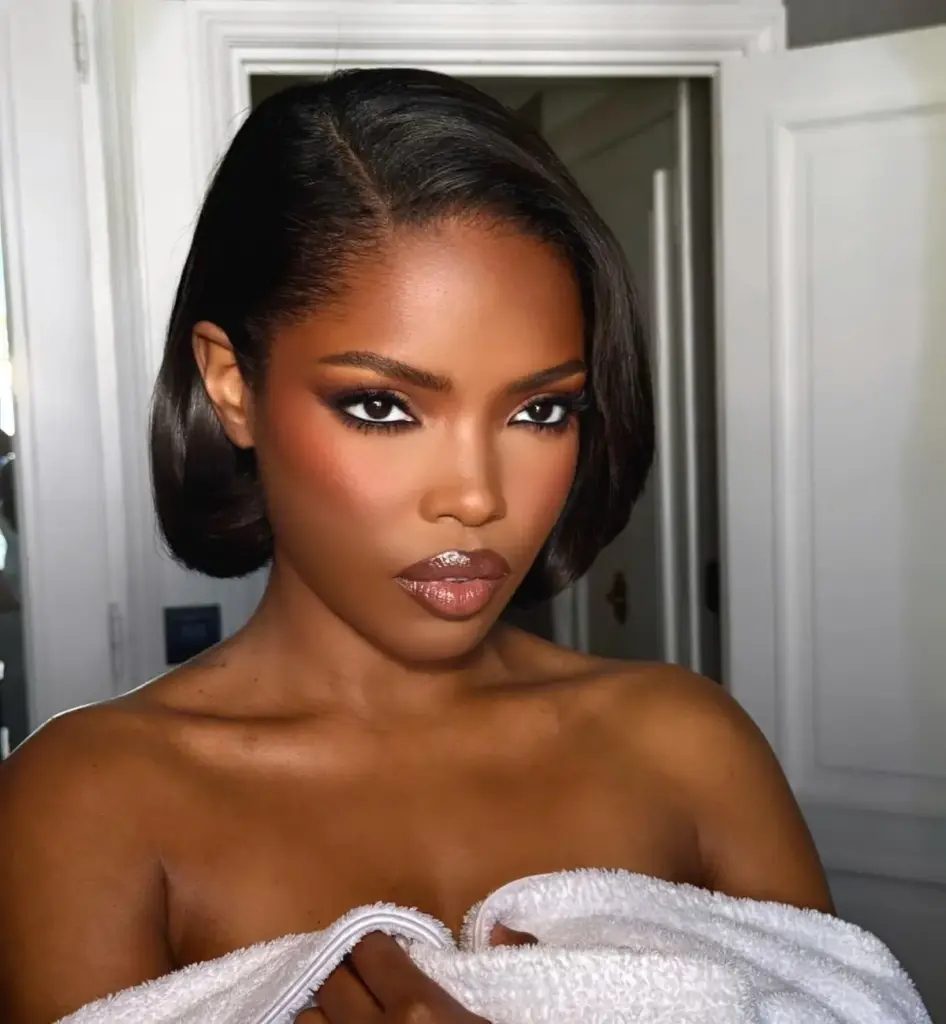
Industry legends Bobbi Brown and Estée Lauder UK’s Bernicia Boateng settle the timeless beauty dilemma, revealing why the "one-shade-lighter" rule is both a lifesaver and a major makeup trap.
Executive Overview
For generations of beauty enthusiasts, the morning makeup routine features a familiar, sacred ritual: applying a swipe of concealer under the eyes, invariably opting for a shade noticeably lighter than the rest of the face. The rationale has long been deeply embedded in popular culture—a lighter hue is presumed to instantly banish the specter of late nights, lift tired features, and impart an awake, luminous glow.
However, as the beauty industry evolves toward hyper-realistic, skin-first finishes, top-tier professional makeup artists are challenging this blanket approach. The definitive answer to whether concealer should be lighter than foundation is, quite simply: it depends entirely on your objective.
According to legendary makeup artist and Jones Road founder Bobbi Brown, alongside Bernicia Boateng, makeup artistry partner for Estée Lauder UK, treating concealer as a monolithic, one-size-fits-all product is one of the most common mistakes in modern cosmetics. While a lighter formula works wonders for strategic under-eye brightening, deploying that same shade onto blemishes, active breakouts, or deep-set hyperpigmentation can achieve the exact opposite of your desired effect. Instead of disappearing, a too-light concealer acts like a neon sign, highlighting the very flaws you are trying to camouflage.
This comprehensive guide unpacks the science of skin dimensions, explores the philosophy of tone and undertone, and outlines expert-approved strategies for selecting, matching, and applying your complexion products. Along the way, we examine top industry formulations—including offerings from Tower 28, Haus Labs, Saie, and Hourglass—that redefine how modern consumers approach coverage.
Detailed Chronology: The Evolution of Complexion Coverage
To understand modern concealer practices, it helps to look at how complexion routines have transformed over the decades.
The Heavy-Handed Era of Full Coverage
In the early days of televised media and photographic glamour, heavy, matte foundations reigned supreme. Concealers during this period were thick, opaque pastes designed to mask imperfections entirely under intense studio lighting. The standard technique favored a lighter under-eye triangle to maximize photographic contrast, carving out the face into stark planes of light and shadow. While effective under studio lights, this approach often translated to heavy, cakey, or mask-like finishes in natural daylight.
The Instagram and Baking Revolution
The mid-2010s ushered in the age of social media beauty tutorials, defined by high-definition cameras and ring lights. Techniques like "baking"—where translucent powder is packed over a significantly lighter liquid concealer—became mainstream. This era prioritized extreme sculpting, sharp contouring, and flawless, poreless perfection. However, as everyday wearers attempted to replicate these heavy techniques for daily life, the limits of the ultra-light concealer became apparent, frequently resulting in an ashy, grey cast—particularly on deeper skin tones—or emphasizing skin texture and fine lines.
The Modern "Skin-First" Movement
Today, the pendulum has swung firmly toward a hyper-natural aesthetic. Driven by consumer demand for breathable, skincare-infused formulas, the modern beauty landscape prizes skin that looks like skin. Heavy opaque masks have been replaced by serum-infused hydrators, buildable tints, and multi-dimensional coverage routines. In this contemporary framework, the debate over whether concealer should be lighter than foundation takes on new nuance: achieving effortless radiance requires a sophisticated, targeted approach rather than a single, sweeping shade choice.
Supporting Context & Metrics: Decoding Shade, Undertone, and Dimension
Mastering your concealer shade requires looking beyond simple lightness or darkness to analyze the complex interplay of color theory, undertones, and facial architecture.
The Blemish Rule: Match, Don’t Mask
When dealing with localized redness, blemishes, dark spots, or post-inflammatory hyperpigmentation, experts universally agree that your concealer must match your foundation and natural skin tone as closely as possible.
Bernicia Boateng emphasizes this principle:
"If you’re concealing blemishes, pigmentation, or areas of discoloration, I’d always recommend staying as close to your foundation and natural skin tone as possible."
The core objective when covering a blemish is seamless camouflage. If you apply a product that is even slightly lighter than your surrounding skin over a raised spot, the reflective pigments will catch the light, drawing immediate attention to the texture and elevation of the blemish. Bobbi Brown echoes this sentiment, noting:
"You never want to use undereye concealer [on blemishes]. Since undereye concealer is one shade lighter than your skin tone, it will only highlight what you want to hide."
The Brightening Rule: The Power of One Shade Lighter
Conversely, when your goal is to infuse life into a fatigued under-eye area or impart structural dimension to the center of the face, a slightly lighter shade is entirely appropriate.
Both Brown and Boateng recommend sticking to a limit of around one shade lighter than your foundation. Boateng describes natural-looking makeup as a delicate play of light and shadow:
"Glowing, natural-looking makeup is all just a play on light and dark… You can go a little brighter for a more glamorous, sculpted finish, but there’s a difference between brightening and simply looking too light."
When you cross the line into "too light," the consequences become visible. On deeper complexions in particular, a concealer that is overly bright or misses the correct undertone will read as grey, chalky, or ashy, disconnecting completely from the rest of the facial topography.
Understanding Undertones and Color Correction
Finding the right concealer isn’t just about depth (light, medium, deep); it requires matching your skin’s underlying temperature—warm, golden, cool, neutral, or red.
When shopping online, Boateng advises cross-referencing shades by examining swatches on models who share your exact skin depth and undertone, rather than trusting digital shade descriptions or how the product looks inside its clear packaging.
Furthermore, stubborn under-eye darkness often demands a two-step approach rather than relying on a bright concealer alone:
- Color Correction: Neutralizing deep blue, purple, or brown shadow using peach, pink, or orange-toned color correctors.
- Brightening: Layering a concealer that is roughly one shade lighter over the neutralized area to restore natural radiance.
Official Statements & Expert Insights
To help navigate the crowded market of complexion products, industry leaders have curated standout formulations designed for specific purposes—ranging from ultra-hydrating serums to lightweight, airbrushed coverage.
Curated Expert Picks & Market Solutions
- Tower 28 Swipe Serum Hydrating Concealer ($24)
- Best For: Lightweight, skincare-infused everyday coverage that melts seamlessly into dry or sensitive skin without clinging to texture.
- Haus Labs Triclone Skin Tech Hydrating + De-Puffing Concealer ($32)
- Best For: Infused with fermented arnica, this high-performance formula targets puffiness while offering medium, skin-like coverage that bridges the gap between spot-concealing and under-eye brightening.
- Saie Hydrabeam Brightening + Hydrating Under Eye Concealer ($24)
- Best For: A dewy, fluid texture designed specifically to mimic natural skin moisture, making it ideal for a fresh-faced, no-makeup makeup look.
- Hourglass Vanish Airbrush Concealer ($39)
- Best For: Waterproof, full-coverage perfection that offers a smooth, airbrushed finish without feeling heavy or masking natural skin dimension.
Future Outlook: The Death of the One-Shade-All-Over Routine
As the beauty industry continues to pioneer personalized cosmetics, the future of base makeup points decisively away from rigid rules and toward intuitive, multi-shade routines.
The outdated practice of owning a single concealer tube to tackle every minor flaw, dark circle, and uneven patch is fading. Modern makeup artistry champions a multi-dimensional toolkit: a spot-concealer that matches your exact foundation depth for blemishes, a color corrector to neutralize stubborn discoloration, and a luminous, slightly lighter formula reserved exclusively for targeted under-eye and center-of-the-face brightening.
Ultimately, as Bernicia Brown and Bobbi Brown remind us, great makeup should celebrate individual skin architecture rather than flattening it under a uniform mask. By understanding the physics of light, mastering your true undertone, and tailoring your shades to specific facial zones, you achieve the ultimate cosmetic goal: a finish so seamless that observers notice your radiant skin long before they notice your makeup.