Executive Overview
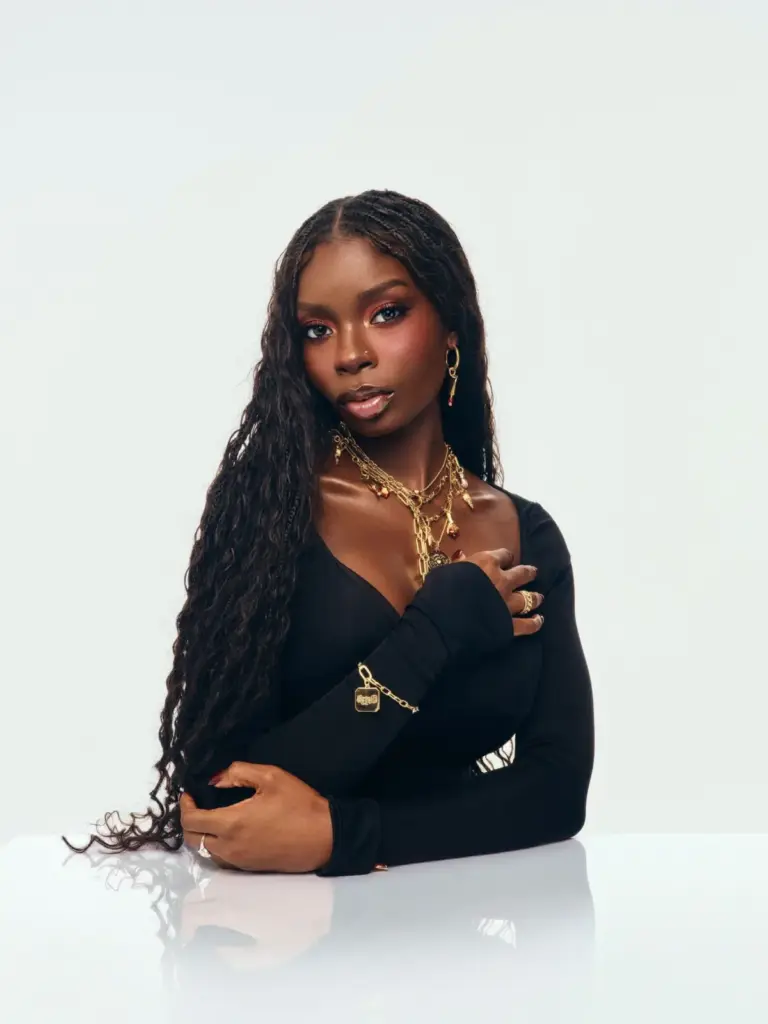
In the contemporary electronic music landscape, few artists manage to bridge the gap between underground authenticity and high-energy festival spectacle quite like AQUTIE. Fresh off the rollout of her groundbreaking cultural platform and record label, PELE PELE, the Harlem-bred DJ, producer, and visionary took over an entire stage at the We Belong Here Festival in New York City on Juneteenth. It was not merely a setlist execution; it was a profound cultural reclamation.
Against a backdrop of golden-hour illumination and raw urban energy, AQUTIE orchestrated a multi-sensory masterclass in electronic dance music that underscored her ongoing mission: reminding the global dance community that house music is, at its foundational core, a Black art form. Utilizing the historical significance of Juneteenth—a day commemorating the emancipation of enslaved African Americans—AQUTIE transformed the festival grounds into a pulsing sanctuary of liberation, movement, and community.
Featuring a meticulously curated lineup including ZAINAB, Kevin Aviance, and Dennis Free, alongside high-octane choreography courtesy of dancers from the legendary House of Chanel, AQUTIE’s takeover served as a milestone moment. This deep-dive report chronicles the chronology of that historic day, explores the broader cultural implications of PELE PELE, examines the historical lineage of house music, and outlines what the future holds for this trailblazing maestro.
Detailed Chronology: A Day in the Life of a Festival Takeover
To understand the magnitude of AQUTIE’s Juneteenth showcase, one must look behind the scenes at the meticulous preparation, high-stakes coordination, and unfiltered joy that defined the day. Through a visual and narrative diary captured by photographer Issie Carey, we trace the timeline of a transformative festival experience.
1. Arrival and The Art of Transformation
The day commenced the moment AQUTIE arrived on festival grounds. True to her background in high fashion and underground nightlife curation, the first order of business was visual storytelling. Styled entirely from head to toe by avant-garde designer BONES, AQUTIE stepped out of her dressing quarters fully glammed and radiant.
"Just arriving on site. First thing’s first, getting dressed. BONES designed me from head to toe," AQUTIE shared, showcasing an ensemble that fused futuristic club-kid aesthetics with traditional haute couture sensibilities. Following a quick touch-up by makeup artist Sol to ensure her look could withstand hours of stage lights and sweat, the physical transformation was complete, signaling to everyone backstage that business was about to commence.
2. Operational Reconnaissance and Rehearsals
Before taking control of the decks, AQUTIE maintained the meticulous operational standards of a label head. Alongside collaborator Tay, she conducted a thorough walk-through of the festival grounds to assess sound bleed, stage layout, and crowd flow.
Simultaneously, the performance apparatus was warming up. The dancers—Moody, Shonte, Josh, and Noa, core representatives of the iconic House of Chanel—were stretching, drilling counts, and locking in their choreography. The inclusion of the ballroom scene’s elite was not an aesthetic afterthought; it was a deliberate nod to the symbiotic relationship between house music and ballroom culture. Both genres were forged in the crucible of marginalized Black and brown queer spaces, making their convergence on Juneteenth deeply resonant.
3. The Unfolding Showcase: Sound, Movement, and Synergy
As the afternoon bled into evening, the PELE PELE stage ignited. The programming reflected AQUTIE’s commitment to platforming visionary artists. ZAINAB took to the decks early in the evening, driving the crowd into a frenzy. "When Zainab is playing it’s hard not to dance. She knows how to make ’em shake!" AQUTIE noted, capturing the infectious momentum that rippled through the audience.
The energy reached a fever pitch when dance music royalty Kevin Aviance took the stage. Aviance, a legendary figure in New York’s club and ballroom ecosystems, brought an unmatched, earth-shattering intensity to the PELE PELE takeover, electrifying a crowd that was already fully invested in the musical journey.
Interspersed throughout the backstage area were moments of genuine artistic kinship. A brief "fam link-up" with Andy and Dorothy of Shermanology provided a grounding, soul-warming pause amidst the whirlwind of the festival.
4. Golden Hour and the Climax
As dusk approached, natural elements aligned with the sonic atmosphere. "The way the sunset hit during my set was beautiful," AQUTIE reflected. Bathed in the amber glow of the New York sunset, her set synthesized hypnotic basslines, ancestral percussion, and driving four-on-the-floor rhythms.
Down in the photo pit and deep within the crowd, dancers like Shonte were "eating it up," embodying the cathartic release that house music was originally designed to facilitate. As the final tracks rang out, AQUTIE gathered her creative ecosystem on stage. An end-of-night portrait captured AQUTIE alongside Moody, Shonte, Josh, and Noa—the architects of the evening’s physical expression.
The night concluded with celebratory excess: a playful debate between tequila and champagne, an explosive cork mishap that narrowly missed a forehead, and a heartfelt toast among friends, family, and collaborators to mark the triumph of the PELE PELE stage.
Supporting Context & Metrics: The Cultural Economy of PELE PELE and House Music
The Ideological Architecture of PELE PELE
AQUTIE’s Juneteenth takeover is the physical manifestation of her broader entrepreneurial and artistic venture: PELE PELE. Positioned simultaneously as a cultural platform and an independent record label, PELE PELE was engineered to reclaim space for Black creators within an electronic music industry that has historically sanitized, gentrified, and whitewashed dance music’s origins.
In previous interviews—most notably during her appearance at Aluna’s Noir Fever Writing Camp in San Francisco in the waning days of the summer of 2024—AQUTIE articulated this philosophy with crystal clarity:
"Knowing that house music is Black, it’s important to always bring that narrative back, to remind people this is our stuff."
This sentiment addresses a systemic erasure within the global electronic dance music (EDM) market. While European and American commercial markets routinely generate billions of dollars annually—with the global electronic music market valued at upwards of $11 billion—the foundational architects of the genre (Black and Latino queer communities in Chicago, Detroit, and New York during the late 1970s and 1980s) have frequently been sidelined from financial equity and historical acknowledgment. PELE PELE acts as a corrective mechanism, ensuring that ownership, aesthetic direction, and economic benefits remain tethered to the communities that birthed the culture.
The Ballroom Nexus: House and Vogue
The integration of the House of Chanel dancers into AQUTIE’s We Belong Here festival set highlights an essential musicological truth: house music and ballroom culture are inseparable twins.
- Sonic Roots: House music emerged from the ashes of disco, pioneered by Black DJs like Frankie Knuckles at Chicago’s The Warehouse. It relied on soulful vocals, heavy synthesized basslines, and relentless percussion designed to induce trance-like states of liberation on the dancefloor.
- Physical Expression: Concurrently, Harlem’s ballroom scene developed voguing and house dance as physical manifestations of survival, self-expression, and competition for marginalized youth.
By placing dancers from the House of Chanel front and center on Juneteenth, AQUTIE bridged historical eras, proving that contemporary festival culture can honor its underground ancestors while pushing sonic boundaries forward.
Official Statements & Industry Perspectives
The success of the PELE PELE stage at We Belong Here has reverberated across the underground and mainstream dance circuits alike, drawing praise from artists, curators, and cultural critics.
- On Artistic Intent and Heritage: Industry insiders have noted that AQUTIE’s curatorial approach represents a paradigm shift for festival lineups. Rather than tokenizing diversity, her curation centers intersectional Black artistry as the default standard of excellence.
- Collaborator Testimonials: Reflecting on the energy of the day, dancer Moody shared via backstage notes compiled by the production crew: "We didn’t just perform a routine; we channeled the spirit of everyone who paved the way for us to be on a festival stage in New York City on Juneteenth. The synergy between AQUTIE’s selections and our movement was completely seamless."
- The Festival Organizers: Representatives from the We Belong Here Festival praised the partnership, emphasizing that providing platforms for culturally grounded curators like AQUTIE elevates the overall artistic integrity of modern music festivals.
Future Outlook: What’s Next for AQUTIE and PELE PELE?
As the dust settles on her triumphant Juneteenth showcase, AQUTIE shows no signs of slowing down. The launch of PELE PELE has opened floodgates for upcoming releases, immersive live experiences, and cross-disciplinary collaborations that merge fashion, social justice, and cutting-edge club music.
Strategic Roadmap for PELE PELE:
- Record Label Expansion: Look for upcoming EPs and singles from underground producers championed by AQUTIE, with a specific focus on global Black electronic traditions ranging from Afro-house and gqom to UK garage and Jersey club.
- Pop-Up Curations: Building on the success of her takeovers in San Francisco and New York, AQUTIE is slated to bring the PELE PELE experiential stage model to international markets, ensuring that the dialogue surrounding house music’s origins travels globally.
- Fashion and Sound Integration: Given her close ties to avant-garde designers like BONES and high-profile styling teams, future activations will increasingly blur the lines between runway presentations and all-night warehouse raves.
Conclusion
AQUTIE’s Juneteenth takeover at the We Belong Here Festival was more than a career milestone; it was a masterclass in cultural preservation disguised as a dance party. By marrying the radical joy of Juneteenth with the rebellious spirit of house music, she didn’t just command a stage—she staked a claim on the future of electronic music. As PELE PELE continues to scale new heights, one thing remains indisputably clear: house music is Black, it is alive, and under AQUTIE’s stewardship, its future has never looked brighter.