Executive Overview
The intersection of modern jewelry and wearable technology has entered a new era of refinement, driven by miniaturization, battery efficiency, and changing consumer expectations. For years, smart rings occupied a peculiar niche in the consumer tech landscape. They promised unobtrusive health and fitness tracking without the visual bulk or sleep-disrupting glow of a traditional smartwatch screen, yet they frequently fell short of their promises. Early generations were plagued by bulky form factors that felt cumbersome alongside wedding bands, disappointing battery longevity that required all-too-frequent recharging, and a reliance on passive tracking that often left users detached from their daily health data.
Enter the Oura Ring 5. Released amidst a rapidly crowding smart ring market—where competitors from established fitness brands and tech startups alike are vying for finger space—the fifth-generation device arrives with lofty claims of substantial physical reduction and deep software integration.
To evaluate these claims in real-world conditions, this review follows a user who integrated the Oura Ring 5 into a significant life transition: getting engaged and married. By wearing the device alongside a newly added traditional wedding band, the testing process moves beyond standard lab metrics to examine how a smart ring fits into daily life, active gym routines, sleep schedules, and long-term health tracking.
While the device marks a monumental step forward in hardware design and battery endurance, it also rekindles the ongoing debate between passive trend-tracking and real-time active feedback. For consumers weighing whether to invest in a smart ring—and commit to Oura’s ongoing subscription model—the Ring 5 presents a compelling, albeit nuanced, value proposition.

Detailed Chronology: From First-Gen Frustrations to the Ring 5 Experience
The Setup: Dealing with Dual Hardware
The narrative of testing the Oura Ring 5 begins with a personal milestone: getting married. This life event introduces a new piece of hardware to the ring finger: a traditional wedding band. For someone already accustomed to wearing a third-generation Oura Ring in silver on their index finger, the addition of a wedding band immediately highlighted the limitations of older smart ring iterations.
The previous-generation model suddenly felt bulky, unwieldy, and visually heavy. Compounding the physical discomfort was battery degradation; the third-generation ring’s battery seemed to deplete quicker after every charge cycle, transforming what should have been a seamless health tracker into a high-maintenance piece of electronics requiring constant attention.
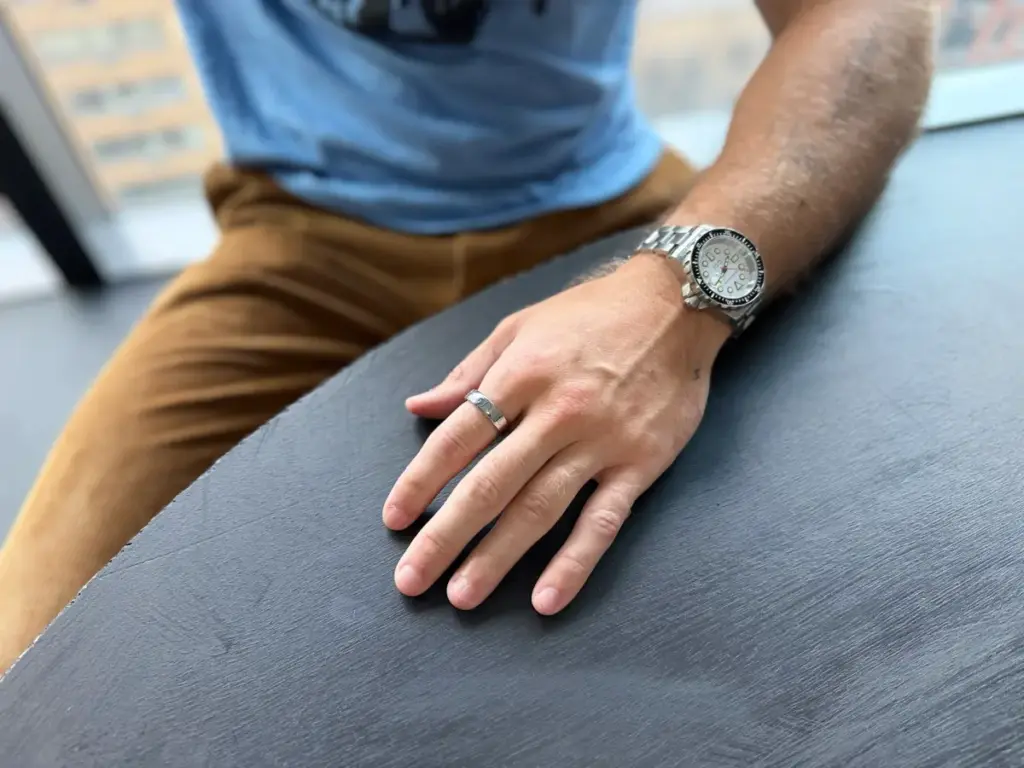
When the opportunity arose to test the Oura Ring 5 right after tying the knot, it served as a practical test case. The reviewer had deliberately chosen a silver wedding band rather than traditional gold to maintain aesthetic symmetry with their ornamental tech. However, a fundamental question remained: Did anyone truly want to keep wearing jewelry on multiple fingers just for extra data, especially when alternative wrist-worn devices offered superior battery reliability?
Weeks One to Three: Living with the Ring 5
After several weeks of continuous daily wear, the initial doubts began to dissipate. The Oura Ring 5 proved to be an upgrade over its predecessor in virtually every measurable category.

The most immediate improvement was physical. The Ring 5 is significantly smaller and lighter than previous bands. Oura’s engineering team managed to reduce the physical footprint of the device substantially compared to the fourth generation, translating to a noticeable difference on the hand. Rather than standing out like an intrusive chunk of industrial metal next to a wedding band, the Ring 5 complements traditional jewelry harmoniously.
This physical makeover directly impacts utility during physical activity. While previous generations were frequently discarded during exercises that involved gripping heavy objects—such as biceps curls or farmer’s carries—the Ring 5 remained comfortable throughout most gym routines. It was only during maximal-effort barbell deadlifts, where hand pressure on knurled steel can cause discomfort with any ring, that the reviewer felt compelled to slip it off.
The Software and Charging Experience
Beyond the hardware, the user experience of any wearable is heavily dictated by its companion software and power management.
On the power front, the Ring 5 delivered a transformative improvement. While older models required charging every two to three days—leading to forgotten charges and abandoned tracking habits—the Ring 5 consistently achieved eight to nine days between charges during the testing period. For a passive wearable meant to be forgotten until insights are needed, this extended battery life is a game-changer.

Concurrently, the Oura companion app continues to stand out in a crowded market of utilitarian, data-heavy fitness dashboards. Oura’s interface utilizes welcoming cool colors and large typography to highlight critical metrics like sleep stages and recovery scores. During high-stress periods leading up to endurance races, this layout encouraged more frequent check-ins, transforming raw data into actionable rest strategies.
However, the transition was not entirely friction-free. The redesigned charging base—originally introduced with the fourth generation—features a square footprint that takes up more space on a nightstand than the older, compact circular charger. While minor, frequent travelers may miss the effortless packability of the legacy design, though the extended battery life mitigates the need to pack the charger at all for shorter trips.
Supporting Context & Metrics: Passive Tracking vs. Active Feedback
To fully understand where the Oura Ring 5 fits in the modern fitness ecosystem, it is necessary to examine the underlying philosophy of health tracking: the divide between passive data collection and active feedback.
The Metrics That Matter
Smart rings are fundamentally designed to capture physiological data without user intervention. Key metrics tracked by the Oura Ring 5 include:

- Heart Rate Variability (HRV): A critical indicator of autonomic nervous system balance and recovery.
- Skin Temperature Variations: Useful for early detection of oncoming illness or tracking menstrual cycles.
- Sleep Architecture: Detailed breakdowns of REM, deep sleep, light sleep, and latency.
- Daily Readiness Scores: Synthesized metrics that advise users on whether to push hard in training or prioritize rest.
Passive vs. Active Tracking
Despite these robust metrics, the Oura Ring 5 highlights a philosophical split in wearable technology. Devices like smartwatches provide immediate, real-time feedback on a wrist display, allowing users to glance down during a run or interval session to check their pace, heart rate zone, or split times.
In contrast, the Oura Ring relies primarily on passive background tracking. While Oura has continuously updated its software to include enhanced active workout tracking, initiating these sessions requires a multi-step process involving the smartphone app. For users who prefer seamless, frictionless workout logging without pulling out their phones, this setup can feel clunky.
Consequently, the Oura Ring 5 excels at macro-level health trends—such as sleep quality over weeks and chronic recovery patterns—rather than micro-level, second-by-second workout execution. For users forced to choose a single device, this distinction dictates whether a smart ring acts as a primary fitness companion or a complementary health monitor.
Official Statements and Industry Perspective
As smart rings transition from a tech novelty into mainstream consumer electronics, industry leaders and health experts have weighed in on their growing adoption.

"The future of wearable technology lies in invisibility. Consumers no longer want bulky screens strapped to their wrists 24/7; they want seamless health integration that respects their personal style while delivering clinical-grade insights."
— Consumer Tech Industry Analyst
Oura’s design philosophy for the Ring 5 underscores this sentiment. By reducing the physical volume of the ring by a significant margin compared to past iterations, the company aimed to solve the primary barrier to 24/7 wearability: physical fatigue and aesthetic resistance.
Furthermore, industry discussions frequently center around the financial model of smart rings. Unlike traditional fitness trackers that rely solely upfront hardware costs, Oura employs a subscription model (priced at $5.99 monthly or $69.99 annually) to unlock the full suite of health analytics within its app. While some consumers express friction regarding ongoing subscription fees for hardware they already purchased, manufacturers argue that continuous software updates, advanced algorithm improvements, and deep biometric insights justify the recurring investment.
Future Outlook: Where Smart Rings Go From Here
The launch of the Oura Ring 5 points toward several clear trajectories for the future of wearable health tech:

- Further Miniaturization and Material Science: As component miniaturization advances, future generations of smart rings will likely integrate even more advanced sensors—such as non-invasive glucose monitoring or blood pressure tracking—without increasing ring thickness.
- Ecosystem Integration: The line between smart rings and smartwatches is blurring. Rather than viewing them as competing categories, future users are increasingly adopting hybrid ecosystems, wearing a smart ring overnight and during recovery for discrete sleep tracking, while pairing it with sports watches during intense training blocks.
- Mainstream Normalization: With traditional jewelry brands and major tech giants exploring smart ring patents, the stigma of wearing "tech on your fingers" is rapidly disappearing. Devices like the Oura Ring 5 prove that health tracking can coexist seamlessly with traditional wedding bands and fine jewelry.
Final Verdict
For users seeking an unobtrusive, aesthetically refined wearable that tracks long-term health trends—particularly sleep and daily readiness—the Oura Ring 5 stands out as a market leader. Its dramatic reduction in size makes 24/7 wear effortless, and the massive leap in battery life solves one of the most frustrating pain points of earlier smart rings.
While it may not replace a dedicated sports watch for users who demand real-time, wrist-based workout metrics, and while the monthly subscription fee requires ongoing consideration, the Oura Ring 5 successfully redefines what a health tracker can be: comfortable, intelligent, and virtually invisible.