Executive Overview
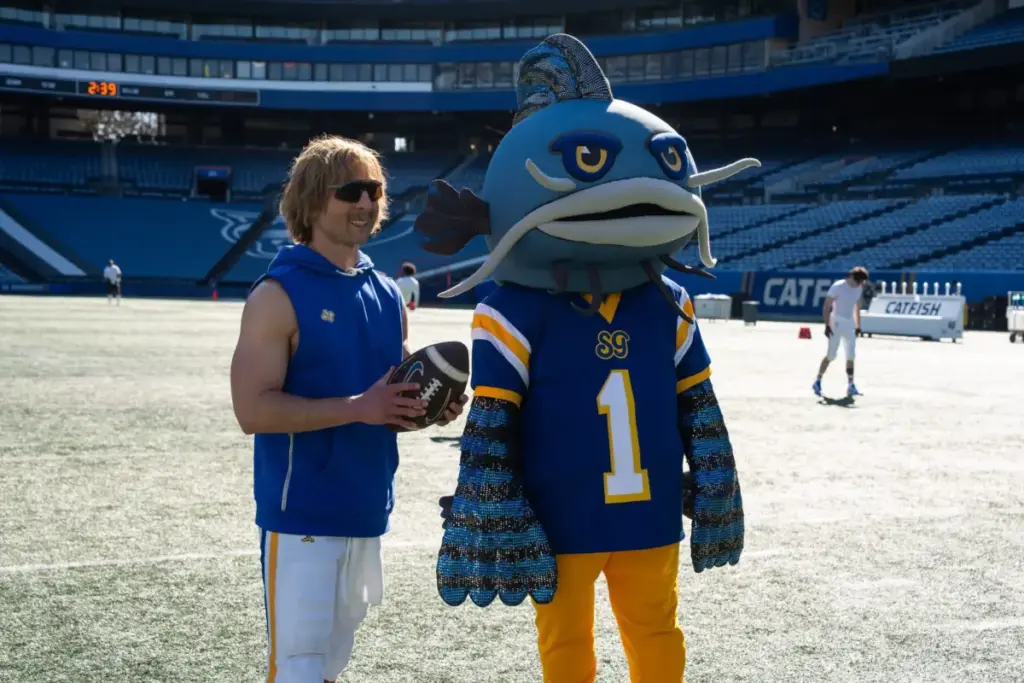
For two seasons, television audiences on Disney+ and Hulu have watched as one of football’s most disgraced and defamed players has successfully executed one of the boldest identity frauds in sports-comedy history. Chad Powers, the hit series starring Glen Powell as the fallen quarterback Russ Holliday, has captured the cultural zeitgeist. By donning a wig, an absurd alter ego, and a relentless southern charm, Holliday managed to infiltrate a struggling collegiate football program to rehabilitate his tarnished reputation, toss touchdowns, and evade the inescapable ghosts of his past.
Yet, as the dust settles on an eventful sophomore outing, a pressing question hangs heavily over the locker room: How much longer can Russ Holliday live the lie?
As fans digest the dramatic developments of Season 2—where the inner circle expanded, romantic tensions reached a boiling point, and the secret reached unprecedented levels of vulnerability—speculation surrounding Chad Powers Season 3 has reached a fever pitch. Despite the show’s immense popularity, swift production turnarounds, and a passionate fanbase reminiscent of sports-comedy predecessors like Ted Lasso, the future of the series remains officially unconfirmed. Disney and Hulu have yet to issue a definitive renewal status, leaving viewers and industry insiders alike to dissect production patterns, narrative trajectories, and the star power of its leading man to forecast what lies ahead.
This comprehensive report explores the current state of Chad Powers, examining its origins, narrative evolution, renewal prospects, and what a potential third season could mean for Glen Powell’s fictional gridiron alter ego.
Detailed Chronology: From Viral Sketch to Streaming Phenomenon
To understand the unique trajectory of Chad Powers, one must look back at its unorthodox origins. The concept originated not in a writers’ room, but as a viral digital sketch. Created and originally portrayed by former NFL star quarterback Eli Manning—who went undercover as a fictional, enthusiastic walk-on named Chad Powers at Penn State—the character became an instant internet sensation. The comedic potential of a legendary athlete adopting a goofy, fictional persona to infiltrate a college football tryout proved to be a goldmine.
Recognizing the rich narrative veins of sports redemption stories, Hollywood seized the concept. Developed into a full-fledged scripted series for Hulu and Disney+, the television adaptation mirrors the structural path forged by Apple TV+’s massive hit Ted Lasso. Both series take single-joke commercial or sketch characters and flesh them out into nuanced multi-season narratives about redemption, teamwork, and personal growth.
However, Chad Powers inverted the formula in a crucial way. While Jason Sudeikis played both the original commercials and the series lead as Ted Lasso, the television version of Chad Powers handed the helmet and playbook over to Hollywood heavyweight Glen Powell.
Season 1: The Birth of a Legend
In the series’ inaugural season, viewers were introduced to Russ Holliday (Powell), a once-celebrated college quarterback whose career went up in flames following a catastrophic scandal. Defamed, ostracized, and desperate for a second chance at gridiron glory, Holliday makes a drastic decision. With the help of a crude disguise and a fabricated backstory, he reinvents himself as "Chad Powers," a quirky, hyper-enthusiastic prodigy walk-on looking to make a name for himself at a struggling college football program.
Season 1 focused heavily on the high-wire act of Holliday’s double life. The comedy derived from the sheer absurdity of his disguise juxtaposed against his elite athletic capabilities, while the drama stemmed from the constant, nail-biting threat of discovery.
Season 2: Expanding the Inner Circle
If Season 1 was about establishing the deception, Season 2 was about the inevitable complications of scale. As Holliday worked tirelessly to make good with his teammates and actually win meaningful games, the structural integrity of his secret began to fray at the edges.
Crucially, the "circle of trust" expanded. No longer a solo operation managed entirely in the shadows, Season 2 forced Russ to bring more individuals into the fold. Relationships shifted, stakes were raised, and the emotional toll of maintaining the Chad Powers facade weighed heavier on Holliday’s conscience. By the end of the sophomore run, the narrative architecture of the series had fundamentally shifted, setting the stage for an explosive potential third act.
Supporting Context & Metrics: Cast, Crew, and Cultural Impact
The success of Chad Powers cannot be attributed to Glen Powell alone. The series boasts a deeply talented ensemble cast that brings the fictional collegiate football ecosystem to life. Alongside Powell, the series stars:
- Steve Zahn as the grizzled, weathered coach trying to steer his program out of the doldrums.
- Frankie Rodriguez bringing comedic timing and emotional resonance to the locker room dynamics.
- Wynn Everett navigating the complex administrative and social pressures of the athletic department.
- Perry Mattfield adding sharp wit and grounded perspective to the chaotic environment.
- Colton Ryan rounding out a dynamic supporting roster of players and campus figures.
Together, these actors play the players, staff, and wary supporters of a college football program that serves as both a pressure cooker and a sanctuary for Russ Holliday’s rehabilitation.
The Streaming Landscape and Production Speed
In the modern era of subscription video-on-demand (SVOD), series runtimes and production schedules have notoriously lengthened, often leaving fans waiting two to three years between seasons. Chad Powers, however, has defied this trend.
Season 2 debuted roughly one year after the premiere of Season 1—a standard release cadence by traditional broadcast standards, but an absolute anomaly for high-end streaming television today. This efficiency is doubly impressive given the star power of its lead. Glen Powell has emerged as one of Hollywood’s most sought-after blockbuster movie stars, balancing massive theatrical commitments with his television responsibilities. The fact that Powell routinely finds the time to strap on the helmet, apply the prosthetics, and hit the field speaks volumes about his commitment to the project and the streamlined production apparatus built by Hulu and Disney+.
Official Statements and Renewal Status
As of the conclusion of the Season 2 premiere, Disney and Hulu have not officially announced a renewal for Chad Powers Season 3.
While anxious fans might view the lack of an immediate greenlight as a cause for concern, industry analysts urge patience. Following the release pattern of the series’ first two cycles, executive decision-makers at Disney/Hulu typically take stock of viewing metrics, completion rates, and critical reception over a multi-month window before making a formal announcement. For instance, following the show’s debut season, renewal confirmation did not arrive until December—months after its initial September launch.
Neither Glen Powell nor the show’s primary creative architects have dropped definitive hints regarding a third season pickup, maintaining a disciplined public stance while awaiting the official word from network executives. Behind the scenes, however, writers and producers have undoubtedly mapped out conceptual roadmaps, given the open-ended nature of Season 2’s finale.
Future Outlook: What Would Chad Powers Season 3 Be About?
If Disney and Hulu grant the series a third season, the narrative landscape is ripe with compelling—and inherently risky—dramatic questions.
The Collapsing Walls of Deception
The primary engine of Chad Powers has always been the secret. But as Season 2 demonstrated, secrets of this magnitude have a half-life. The circle of trust is no longer a circle; it’s a crowd.
With characters like Ricky and Russ no longer able to deny their undeniable romantic and professional chemistry, and with Tricia now in possession of the big secret—swearing to do whatever it takes to keep it from leaking—the operational security of the Chad Powers persona is thinner than ever.
This sets up a fascinating existential dilemma for Season 3. How much further can the deception stretch before it collapses under its own weight? Does Russ reach a point where the lessons he has learned as Chad fundamentally transform his identity, leading to comedic or dramatic explorations such as legally changing his name to Chad Powers?
The Identity Crisis: Who is Russ Without Chad?
The most profound thematic question facing a potential third season is one of self-actualization. If the world discovers that Chad Powers is actually the defamed Russ Holliday, what happens to the player, the team, and the man?
More importantly, will audiences still care about Chad Powers when he is no longer forced to play the character? The charm of the series rests on the dual performance: the arrogant, fallen star forced to humble himself through a cartoonish southern alter ego. If the mask comes off permanently, the show risks losing its foundational gimmick. Yet, therein lies the dramatic opportunity: transitioning from a high-concept sports comedy into a genuine character-driven drama about reinvention, forgiveness, and finding authenticity behind a facade.
Projected Timeline
Assuming a renewal is secured in the coming months, and given the production crew’s proven ability to turn around seasons on a swift, reliable timeline, industry watchers project an ideal release window for September 2027. This schedule would allow Glen Powell time to weave the production into his notoriously packed cinematic calendar while maintaining the annual autumn football-season alignment that has served the show so well.
Until the official greenlight flashes across the news ticker, the fate of Russ Holliday remains suspended in the balance—waiting in the locker room, helmet in hand, ready for the next play.