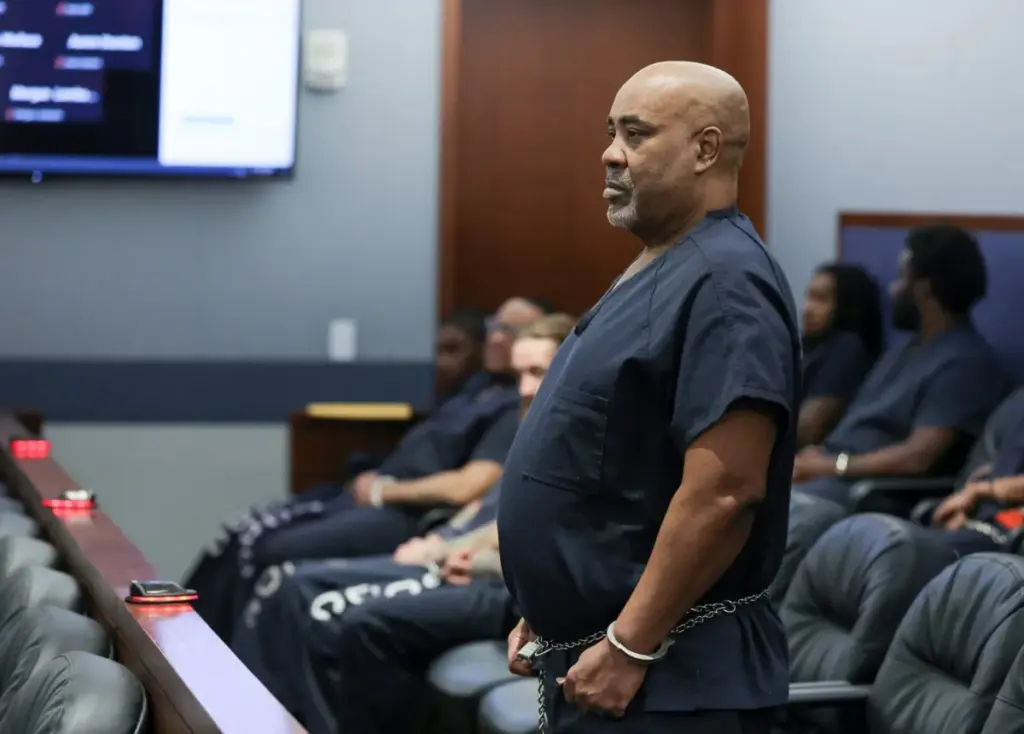
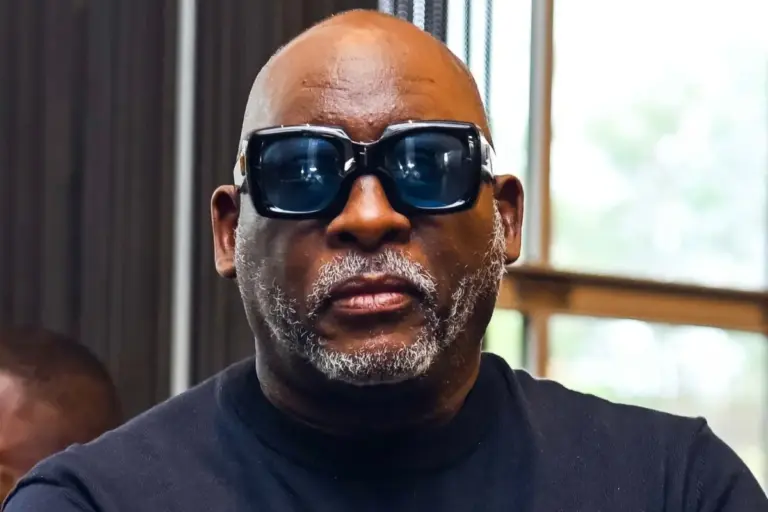
Nearly three decades after the lights went out on one of hip-hop’s most transcendent and influential figures, the legal system has finally delivered a verdict. In a landmark legal development that reverberated across the global music industry, a Las Vegas jury found 63-year-old Duane “Keffe D” Davis guilty of first-degree murder in connection with the September 1996 drive-by shooting of Tupac Shakur. The verdict, handed down on Monday, September 1, concluded a swift three-hour deliberation following a high-stakes trial that brought closure to a decades-old mystery that had long been shrouded in conspiracy theories, street lore, and institutional frustration.
Yet, even as the legal gavel fell and members of Shakur’s grieving family expressed profound relief, the story took a characteristically defiant turn. Speaking exclusively from the high-security confines of the Clark County Detention Center in Nevada, Davis broke his silence. Maintaining his absolute innocence, the Compton native expressed utter nonchalance regarding his conviction, pointing instead to a pre-filed appeal and asserting that his civil rights had been flagrantly violated throughout the proceedings.
This comprehensive report examines the fallout from the historic verdict, dissects the controversial evidence that sealed the prosecution’s case—including Davis’s own autobiographical writings—and analyzes the broader cultural and legal implications of bringing a decades-old hip-hop cold case to a definitive, if contested, conclusion.
Detailed Chronology: From Las Vegas Boulevard to the Courtroom
To understand the weight of the September 1 verdict, one must retrace a harrowing timeline that spans nearly thirty years, shifting from the neon-lit avenues of the Las Vegas Strip to the clinical environment of a Nevada courtroom.
The Fatal Night: September 7, 1996
On the night of September 7, 1996, Tupac Shakur was in Las Vegas to attend the Mike Tyson vs. Bruce Seldon boxing match at the MGM Grand. Following the event, a physical altercation broke out in the casino lobby involving Shakur’s entourage and Orlando Anderson, a reputed member of the South Side Crips and Duane Davis’s nephew. Witnesses reported that Anderson had previously attempted to rob a member of Shakur’s inner circle, prompting the violent retaliation in the casino.
Later that evening, Shakur and Death Row Records CEO Suge Knight were traveling in a BMW when a white Cadillac pulled up alongside them at a red light on East Flamingo Road. Gunfire erupted from the vehicle, striking Shakur multiple times. The iconic rapper succumbed to his injuries six days later on September 13, 1996, at the age of 25. For decades, the case languished as an open wound in the hip-hop community, plagued by uncooperative witnesses, institutional inertia, and circulating urban legends.
The Investigation Gains Momentum
For years, the investigation stalled, despite Davis practically inviting scrutiny through media interviews and documentary appearances in which he placed himself in the passenger seat of the white Cadillac. The turning point arrived when law enforcement renewed their focus on the aging case, culminating in a dramatic police raid on a home in Henderson, Nevada, linked to Davis in July 2023.
By September 2023, a Clark County grand jury indicted Davis on a charge of murder with the use of a deadly weapon with a gang enhancement. Prosecutors argued that Davis, as the alleged shot-caller and uncle of Orlando Anderson, orchestrated the assassination in direct retaliation for the MGM Grand altercation earlier that night.
The Trial and Verdict
The trial brought forth a mosaic of testimony from former law enforcement officers, forensic experts, and associates of the victims and perpetrators. Central to the prosecution’s strategy was Davis’s own 2019 memoir, Compton Street Legend, alongside previous statements he made to police detailing his involvement in securing the murder weapon.
After deliberating for a mere three hours following closing arguments, the Las Vegas jury returned a verdict of guilty on first-degree murder. The swiftness of the decision stunned many legal analysts, signaling that the jury found the documentary and textual evidence overwhelmingly persuasive.
Supporting Context & Metrics: Evidence, Memoirs, and Legal Strategy
The conviction of Duane Davis hinged on a unique convergence of modern forensic evidence, historical police interviews, and self-incriminating biographical literature—elements that defense attorneys argued were twisted out of context, but which prosecutors leveraged to build an airtight narrative.
The Memoir as a Smoking Gun
Perhaps the most contentious piece of evidence presented during the trial was Davis’s 2019 autobiography, Compton Street Legend, co-authored with journalist Ali Shabazz. In the book, Davis explicitly discussed the events surrounding Shakur’s death, providing details that investigators had spent decades trying to corroborate.
However, in his post-conviction interview with The Hollywood Reporter, Davis vehemently distanced himself from the text, claiming the contents were fabricated or sensationalized for commercial appeal.
"I never wrote that book," Davis insisted from jail. "The author told me to tell them 10 stories about what happened in your life and get them some pictures. I never read that book or went over that book or nothing. They didn’t even spell my name right on the cover."
Legal experts noted that while ghostwritten memoirs or sensationalized autobiographies often face credibility hurdles in court, admissions made within them—once authenticated—can be devastatingly effective tools for prosecutors, particularly when the author has repeatedly boasted about their criminal exploits in public forums.
Disputing the Witness Testimony
Davis also lashed out at the array of law enforcement officials and FBI agents who testified for the prosecution, accusing them of fabricating narratives to secure a high-profile conviction.
"Man, they lied about me so much. I don’t even know where to begin. All those cops in there was lying like a motherf—er," Davis stated. "The prosecutors were lying about me."
Furthermore, Davis addressed persistent rumors and allegations regarding music mogul Sean "Diddy" Combs, specifically denying claims that a bounty had been placed on Shakur’s life. "I’m a good man, man. I’m a good person. I’m not no f—ing killer. Puff never offered me no f—ing million dollars for them."
The Defense Strategy and the Appeal
Michael Sanft, Davis’s defense attorney, confirmed immediately following the verdict that an appeal had been prepared and would be aggressively pursued. Davis himself claimed that the legal groundwork for his exoneration was laid long before the trial even commenced.
"S—t, I ain’t worried. I’m getting out on an appeal," Davis asserted. "We already filed it before the trial even started. They violated my civil rights!"
Davis also explained his decision not to take the stand in his own defense, noting that his legal counsel advised against it. "My lawyer told me it would mess up my chances of appeal."
Official Statements and Reactions
The conclusion of the trial elicited deeply polarized responses from the legal community, the public, and, most importantly, the family of the slain artist.
The Shakur Family’s Response
For nearly thirty years, Afeni Shakur, Tupac’s late mother, and the broader Shakur family fought tirelessly for accountability. Following the September 1 verdict, representatives for the family expressed a profound sense of relief, viewing the conviction as a long-overdue step toward justice.
When asked about his message to the victim’s family, Davis remained combative and detached:
"I ain’t got nothing to say to them," he remarked. "I didn’t like the way they was looking at me—like they was ready to beat me up. And I didn’t like the way the prosecutors kept bringing them in the back room where the jury was. That felt biased to me."
Legal and Institutional Perspectives
Prosecutors praised the dedication of the Las Vegas Metropolitan Police Department and the grand jury for having the courage to pursue a cold case of this magnitude decades after the fact. The conviction serves as a milestone for law enforcement agencies nationwide, demonstrating that chronological distance does not inherently preclude accountability in high-profile homicides.
However, civil liberties advocates and defense attorneys continue to monitor the case closely, noting that the heavy reliance on historical confessions, podcast appearances, and third-party literature establishes a complex legal precedent regarding the admissibility and reliability of public braggadocio in modern prosecutions.
Future Outlook: What Lies Ahead for Duane Davis
As Duane Davis serves out his time at the Clark County Detention Center awaiting the next phase of his legal battle, the shadow of Tupac Shakur continues to loom large over American culture and the judicial system.
The Road to Appeal
The primary battleground will now shift to the appellate courts. Davis’s defense team faces the formidable task of convincing a higher court that constitutional violations occurred during the trial, particularly regarding the use of his memoir and the admissibility of historical police statements.
Despite his incarceration, Davis remains remarkably sanguine, pinning his long-term hopes not just on legal technicalities, but on familial support and outside resources:
"I’m innocent, man. They got an innocent man sitting in jail," Davis maintained. "I’ve got two grandsons that are going to the pros in football. They All-Americans—one of them is in high school. He has 25 scholarship offers, and the other one is in college. And when they get their millions, they’re coming to get me out of here."
The Enduring Legacy of Tupac Shakur
While the legal chapter surrounding the physical perpetrators of the 1996 shooting draws toward a close, the cultural impact of Tupac Shakur remains as vibrant and uncompromising as ever. Decades after his untimely death at age 25, Shakur’s music, poetry, and philosophy continue to inspire generations of artists, activists, and fans worldwide.
The verdict in the Duane Davis trial may provide a sense of historical closure to a tragedy that defined an era of hip-hop history, but the legend of Tupac Amaru Shakur—and the complex socio-political landscape that birthed both him and his adversaries—will endure indefinitely.