Executive Overview
For decades, the running community focused its conditioning efforts almost exclusively on the lower body. Mileage targets, cadence tracking, shoe technology, and VO2 max intervals dominated training logs. Yet, seasoned coaches and sports medicine specialists have long recognized a critical missing link in the pursuit of personal records and injury-free mileage: the mid-section.
A strong, stable core is far more than an aesthetic bonus or a means to flat abdominals; it is a runner’s ultimate secret weapon. It serves as the physical anchor that helps the body absorb the repetitive, high-impact forces of every single stride. It maintains an efficient, upright posture when fatigue sets in at mile 18, maximizes biomechanical efficiency, and transforms what could be a grueling slog into a fluid, enjoyable running experience.
Recognizing this physiological demand, personal trainer, accomplished ultramarathon runner, and Realbuzz ambassador Sam Tomlinson makes core training a non-negotiable pillar for every athlete he coaches. Rather than prescribing a generic routine of crunches, Tomlinson advocates for a comprehensive, functional approach to trunk stability. By integrating a specialized, five-move core circuit into a runner’s weekly program, athletes can dramatically improve pelvic stability, optimize power transfer from the ground up, and mitigate the risk of overuse injuries that sideline so many runners.
Detailed Chronology: The Evolution of Runner-Centric Core Training
The traditional view of abdominal training—often characterized by floor crunches designed to isolate the rectus abdominis—has undergone a massive paradigm shift within endurance sports coaching over the past decade.
The Shift from Flexion to Stability
In the early days of structured running science, core work was largely an afterthought. When runners did engage in conditioning, it typically mirrored bodybuilding routines focused on visible muscle definition rather than functional output. However, biomechanical analyses of running gaits revealed a glaring flaw in this approach: running does not require spinal flexion (the motion of a crunch). Instead, it demands anti-rotation, anti-flexion, and multi-planar stability.
As elite endurance coaches began working alongside physical therapists and biomechanists, the definition of the "core" expanded. It was no longer confined to the stomach muscles; it encompassed a 360-degree cylinder of muscle groups including the glutes, deep hip stabilizers, lower back extensors, obliques, and transverse abdominis.
Sam Tomlinson’s Methodology
Enter practitioners like Sam Tomlinson, a UK-based Level 3 qualified personal trainer and co-founder of PRIME Personal Training in Rawtenstall, England. Drawing from his extensive background as a multi-marathoner and ultramarathon competitor—most notably completing the grueling 100km course with 6,500 meters of elevation at Ultra-Trail Snowdonia by UTMB in 26 hours—Tomlinson refined a streamlined, highly effective strength protocol.
Rather than overwhelming athletes with complex gym equipment or excessively long workouts, Tomlinson formulated a targeted, five-move bodyweight circuit. Designed to be executed once or twice a week immediately following an easy run, this protocol bridges the gap between high-mileage endurance training and functional strength. It represents the culmination of modern exercise science translated into actionable, scalable advice for everyday runners.
Supporting Context & Metrics: The Biomechanics of Running Under Fatigue
To understand why Tomlinson’s five-move circuit is so effective, one must first examine the biomechanical realities of running.
The Single-Leg Landing Reality
As Tomlinson explains to Fit&Well, running is fundamentally different from walking or cycling. "Running is essentially a series of repeated single-leg landings," he notes. With every step, a runner absorbs an impact force equivalent to approximately 2.5 to 3 times their body weight.
At a cadence of 170 steps per minute, a runner’s body processes thousands of these high-impact strikes per run. If the trunk, hips, and pelvis lack the structural stability to manage these forces, structural compensation occurs down the kinetic chain.
The Cost of Pelvic Drop
When the muscles surrounding the side of the trunk and hips—specifically the gluteus medius, obliques, and deep lateral stabilizers—are fatigued or weak, they fail to maintain a level pelvis. This phenomenon, known medically as a contralateral pelvic drop (or Trendelenburg gait), forces the opposite hip to sag upon impact.
This minor rotational flaw compounds over miles, leading to excessive internal rotation of the femur, tibial torsion, and increased stress on the knees, IT bands, and lower back. By strengthening the core muscles that prevent the pelvis from dropping or rotating, runners protect their joints, maintain a longer stride length, and drastically improve energy return.
Official Training Protocol: The Five-Move Core Circuit for Runners
Tomlinson recommends performing this targeted circuit one to two times per week, ideally following an easy aerobic run when the central nervous system is warmed up but not entirely depleted from high-intensity intervals or speedwork.
The circuit follows a precise structural order. Athletes should rest approximately 10 seconds between individual exercises to maintain metabolic stress and one full minute between complete rounds. The goal is to complete three full rounds, utilizing Tomlinson’s regression and progression modifications to match current strength levels.
+---------------------------------------------------------------------------------+
|                        TOMLINSON'S RUNNER CORE CIRCUIT                          |
+-----------------------------------+--------------------+------------------------+
| Exercise                          | Duration / Reps    | Rest                   |
+-----------------------------------+--------------------+------------------------+
| 1. Hollow Hold                    | 20–40 seconds      | 10 seconds             |
| 2. Side Plank                     | 20–30s per side    | 10 seconds             |
| 3. Plank Hip Roll                 | 10 reps per side   | 10 seconds             |
| 4. Bear Plank Shoulder Tap        | 8 reps per side    | 10 seconds             |
| 5. Single-Leg Glute Bridge        | 10 reps per side   | 1 minute (after round) |
+-----------------------------------+--------------------+------------------------+
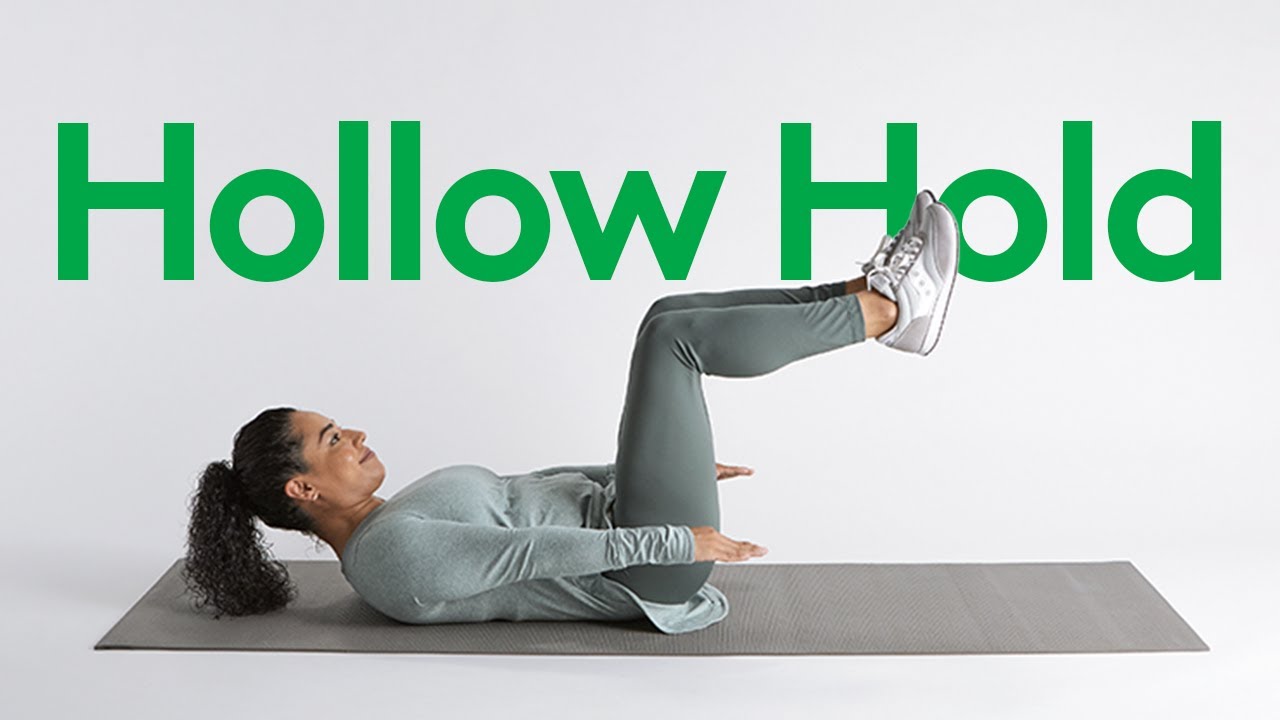
1. Hollow Hold
- Target: Deep transverse abdominis, rectus abdominis, and hip flexors.
- Execution: Lie flat on your back with your arms extended overhead and legs straight. Press your lower back firmly into the floor by tilting your pelvis posteriorly. Lift your shoulder blades and straight legs a few inches off the ground, creating a rigid, banana-like "hollow" shape with your body.
- Time: 20–40 seconds | Rest: 10 seconds
- Regression (Make it easier): Bend your knees toward your chest while keeping your lower back pinned to the floor to reduce the leverage and pressure on your lumbar spine.
- Progression (Make it harder): Extend your arms fully overhead and lower your legs closer to the floor, increasing the moment arm and challenge to your core stability.
2. Side Plank
- Target: Obliques, quadratus lumborum, and gluteus medius (lateral hip stability).
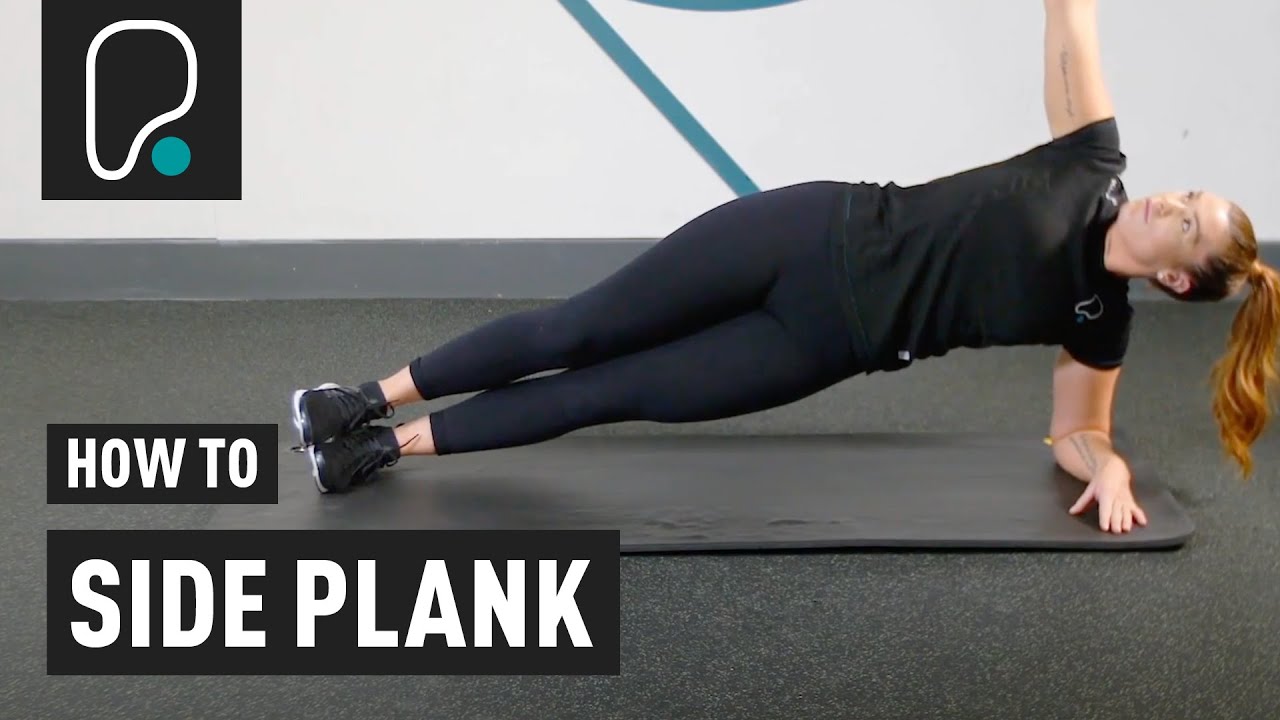
- Execution: Lie on your side with your forearm directly beneath your shoulder and your legs stacked. Lift your hips off the floor until your body forms a straight line from your head to your feet. Engage your core and glutes to prevent your hips from sagging toward the floor.
- Time: 20–30 seconds per side | Rest: 10 seconds
- Regression (Make it easier): Keep your bottom knee bent at a 90-degree angle on the floor to reduce the torque and strain on your core and shoulder.
- Progression (Make it harder): Lift and hold your top leg away from your bottom leg, creating an open-scissor position that forces the lateral stabilizers to work overtime.
3. Plank Hip Roll
- Target: Obliques, deep rotators, and total core integration.
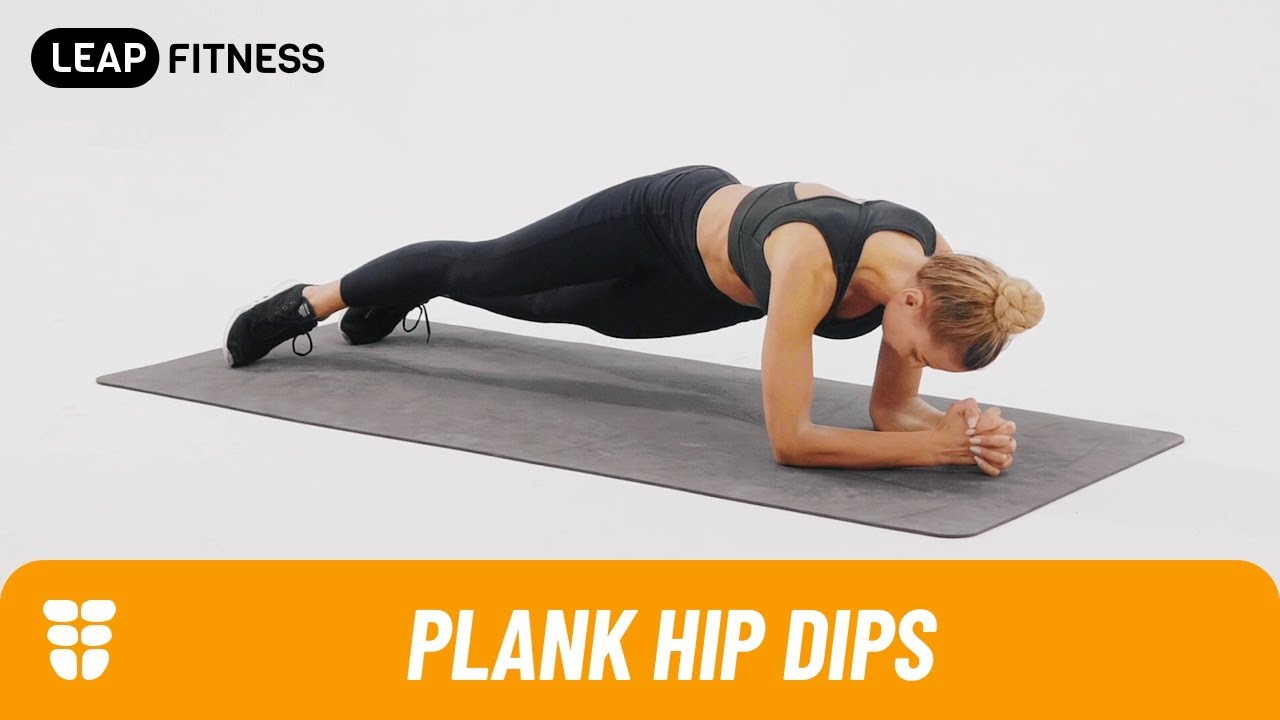
- Execution: Assume a standard forearm plank position with your elbows aligned under your shoulders and your core braced. Keeping your upper body stable, slowly roll your hips to the right, dipping them until they hover just above the floor. Return to the center, then smoothly roll your hips to the left.
- Reps: 10 each side | Rest: 10 seconds
- Regression (Make it easier): Lower your knees to the floor from a modified plank position while practicing the controlled rotation of the hips.
- Progression (Make it harder): Slow the movement down significantly, incorporating a 2-second pause just above the floor on each side to eliminate momentum.
4. Bear Plank Shoulder Tap
- Target: Anti-rotation stability, shoulders, and deep abdominal wall.
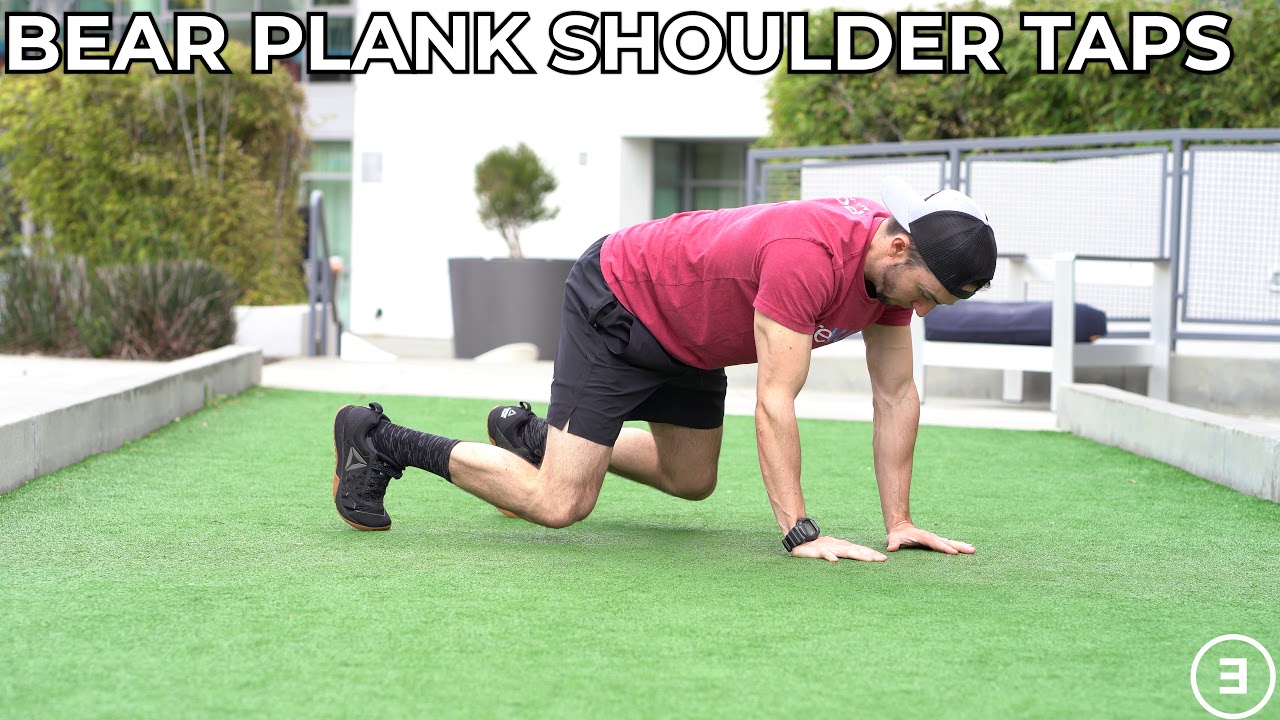
- Execution: Start on your hands and knees in a tabletop position. Tuck your toes, lift your knees just one inch off the floor, and keep your back flat. Without letting your hips rotate or tilt, lift your right hand and tap your left shoulder. Return it to the floor and repeat on the opposite side.
- Reps: 8 each side | Rest: 10 seconds
- Regression (Make it easier): Perform the shoulder taps with your knees resting fully on the floor, focusing on pressing firmly through your palms to engage your upper back and shoulder blades.
- Progression (Make it harder): Move your feet closer together to decrease your base of support, exponentially increasing the demand for anti-rotational core control.
5. Single-Leg Glute Bridge
- Target: Gluteus maximus, hamstrings, and lower back extensors.
- Execution: Lie on your back with your knees bent and feet flat on the floor, hip-width apart. Extend one leg straight out or pull it gently toward your chest. Drive through the heel of the planted foot, squeeze your glutes, and lift your hips toward the ceiling until your body forms a straight line from your knee to your shoulders. Lower with control.
- Reps: 10 each side | Rest: 1 minute (at the end of the round)
- Regression (Make it easier): Perform the movement with both feet firmly planted on the floor (standard double-leg glute bridge).
- Progression (Make it harder): Pause for 2 to 3 seconds at the top of each repetition while maintaining a level pelvis, or place a dumbbell across your hips for added resistance.
Future Outlook: Integrating Strength Into Endurance Paradigms
As sports science continues to evolve, the artificial divide between "cardio training" and "strength training" is rapidly dissolving. Forward-thinking endurance athletes no longer view gym work as a chore that detracts from running mileage, but rather as an essential investment in longevity, biomechanical resilience, and running economy.
Implementing Tomlinson’s routine requires minimal time commitment—roughly 10 to 15 minutes per session—yet yields profound dividends. By prioritizing multi-planar core stability, runners can safeguard their joints against the relentless pounding of the pavement, maintain efficient form deep into long runs, and unlock new levels of running performance. As ultramarathon veterans and everyday joggers alike embrace functional core conditioning, the mid-section will rightfully remain recognized not just as a training accessory, but as the engine room of every successful runner.