There is a timeworn adage in the psychological community that "every therapist needs a therapist." Long before modern mental healthcare systems expanded into the mainstream, Sigmund Freud insisted that all psychoanalysts "submit" to being analyzed themselves, acknowledging the inescapable loop of human vulnerability. For decades, however, popular culture preferred to keep this truth at arm’s length. In classic cinema and television—from Good Will Hunting (1997) to The Sopranos—therapists were largely relegated to the margins. They existed as wise, preternaturally patient sages, all-knowing sounding boards designed exclusively to guide the troubled protagonist toward epiphanies while hiding their own internal chaos behind a professionally neutral facade.
Today, that cinematic trope is undergoing a radical, often terrifying inversion. A new wave of films is dragging the mental health professional out from behind the clipboard and placing them squarely in the hot seat. From Mary Bronstein’s hallucinatory drama If I Had Legs I’d Kick You to Kane Parsons’ eerie Backrooms and Rebecca Zlotowski’s tense French thriller A Private Life, contemporary cinema is captivated by therapists who are just as broken, desperate, and traumatized as the clients lying on their couches.
This cultural pivot arrives at a fascinating intersection of shifting social attitudes. Therapy has shed much of its historical stigma to become not just accessible, but almost hyper-visible. Yet, as mental healthcare saturates public discourse—fueled by social media platforms like "TherapyTok," reality television, and an explosion of self-help podcasts—filmmakers are asking a chilling question: If the healers are cracking under the weight of modern existence, who is left to heal the rest of us?
Detailed Chronology: From the Wise Mentor to the Unraveling Protagonist
To understand how cinema arrived at this era of psychological collapse, it is helpful to trace the evolution of the therapist archetype on screen.
1. The Era of the Omniscient Sage (Late 20th Century)
For decades, Hollywood relied on the archetype of the self-sacrificing, unflappable mental health professional. In Gus Van Sant’s Good Will Hunting, Robin Williams’ character, Dr. Sean Maguire, absorbs the violent defensiveness and profound trauma of Matt Damon’s mathematical genius with saintly patience. In these narratives, therapists were presented as islands of emotional stability. Their personal lives were either entirely nonexistent or neatly compartmentalized, serving merely as a stable backdrop for the character arc of the troubled patient. Even when television series like The Sopranos (featuring Dr. Jennifer Melfi) began to complicate this dynamic by showing a therapist experiencing secondary trauma and ethical dilemmas, Melfi remained an authoritative figure of reason relative to Tony Soprano’s mafia-driven madness.
2. The Turn Toward Villainy (2010s–Early 2020s)
As public trust in institutional authority waned, Hollywood began to weaponize the therapeutic setting. Instead of being infallible guides, therapists morphed into shadowy manipulators.
Shutter Island (2010): Martin Scorsese’s psychological thriller presented an asylum where the staff’s clinical methods blurred menacingly into a conspiracy, weaponizing psychiatric treatment against a vulnerable detective.
Nightmare Alley (2021): Guillermo del Toro introduced Dr. Lilith Ritter (Cate Blanchett), a psychiatric professional who exploited her affluent clientele’s deepest secrets, recording sessions to build an extortion empire.
Beau Is Afraid (2023): Ari Aster took the trope to surreal extremes, revealing that a fragile man-child’s seemingly safe therapeutic space was merely part of an elaborate web orchestrated by his personal nemeses.
During this period, therapists on screen were rarely seen as struggling humans; rather, they were predatory figures who used the intimate mechanics of psychoanalysis to control and destroy.
3. The Modern Age of Humanized Collapse (2025–2026)
In contemporary cinema, the villainous or saintly therapist has been replaced by something far more unsettling: the deeply flawed, collapsing individual. Rather than plotting against their patients, these professionals are succumbing to their own internal fractures.
If I Had Legs I’d Kick You: Mary Bronstein’s hallucinatory film features Rose Byrne as Linda, a therapist and mother caught in an agonizing downward spiral. Burdened by the care of her chronically ill daughter, Linda finds herself completely incapable of managing her own life, let alone maintaining professional boundaries. When she visits her own analyst—played by a tense, visibly overwhelmed Conan O’Brien—she discovers an infinite chain of frustrated, equally defective healers.
Backrooms: Directed by Kane Parsons, this psychological horror sees Renate Reinsve portray a calm, self-assured psychiatrist and self-help author who slowly unravels into a nervous wreck, trapped within the literal and metaphorical corridors of her own fracturing mind.
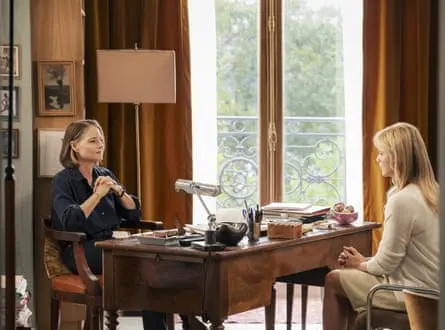
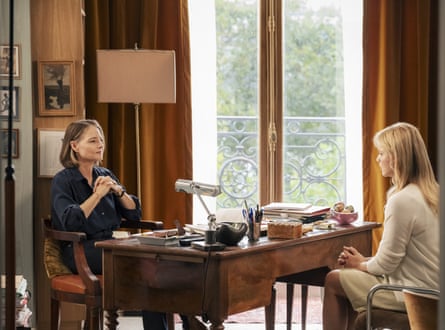
A Private Life: Rebecca Zlotowski’s feature casts a Francophone Jodie Foster as a psychotherapist who transitions into an amateur sleuth, investigating the death of a former client. Beneath the investigative zeal lies an unacknowledged psychological defense mechanism—an attempt to make up for her catastrophic shortcomings as a spouse and parent.
Supporting Context & Metrics: The Cultural Shift Toward "Therapy-Speak"
The trigger behind this cinematic obsession with ailing therapists is rooted in a profound cultural shift: more people are engaging with mental health services than at any point in human history.
According to a landmark 2026 public perceptions survey by the British Association for Counselling and Psychotherapy (BACP), 37% of adults in the UK actively sought out therapeutic services, marking a steady 2% increase from the previous year. What was once whispered about behind closed doors or treated as a source of deep shame has been rebranded, commercialized, and popularized.
Several cultural phenomena have driven this mainstream integration:
The Rise of "TherapyTok" and Social Media: Mental health content creators have commodified clinical jargon, bleeding terms like gaslighting, trauma bonding, boundaries, and co-dependency out of the consulting room and into everyday parlance. Film critic Billie Walker notes how modern cinema frequently leans on this lingo—such as Nicolas Cage’s character in Renfield (2023) diagnosing his toxic dynamic with Dracula using modern psychological frameworks.
The Podcasting Phenomenon: Audio landscapes have been utterly transformed by conversational psychology. Pop-psychotherapists like Esther Perel (Where Should We Begin?) and true-crime narrative hybrids like The Shrink Next Door have normalized listening in on the raw, messy mechanics of human vulnerability and ethical boundary violations.
Reality Television’s Intrusion: Shows like Showtime’s Couples Therapy have peeled back the confidentiality curtain, allowing audiences to watch real-time breakdowns of professional interventions, further cementing the therapist’s office as the ultimate crucible of modern drama.
Official Statements and Critical Perspectives
The democratization of psychological language and the ubiquity of mental health care have fundamentally altered how storytellers view the profession. Filmmakers and critics alike argue that the old tropes of the omniscient shrink no longer resonate with modern audiences who live in an era of collective burnout.
Discussing her work on If I Had Legs I’d Kick You, director Mary Bronstein has emphasized the impossibility of modern perfectionism, noting that therapists are not "impossibly self-sacrificing individuals" designed to carry the world’s pain without breaking. Instead, they are human beings trying to navigate an increasingly overwhelming societal landscape.
Film theorists point out that placing therapists at the center of horror and psychological thrillers taps into a distinct contemporary anxiety. As critic Billie Walker observes:
"Beyond gimmicky character diagnoses, the cinematic reputation of therapists themselves has been steadily deteriorating for years… What this new league of erring onscreen therapists have in common is that they exist in the realm of horror. The supernatural worlds these filmmakers create are designed to mirror the spiralling negative thought patterns of their main characters."
When a figure trained to master the human mind completely loses their cool, the psychological impact on the viewer is profound. It dismantles the comforting illusion that professional expertise can insulate an individual from chaos.
Future Outlook: What the "Ailing Shrink" Trend Signifies for Storytelling
As cinema moves further into an era defined by economic instability, ecological anxiety, and pervasive burnout, the trope of the broken therapist is unlikely to fade. Rather, it is expected to evolve as a vital cultural barometer.
The shift away from both the saintly mentor and the mustache-twirling villain points toward a more mature cinematic engagement with mental health. By treating therapists as fallible protagonists caught in the same systemic pressures as their clients, filmmakers are abandoning tidy resolutions in favor of complex, systemic portraits of human distress.
Ultimately, these narratives expose a deeper, more pervasive cultural fear: If everyone is carrying an unbearable load, and the people whose entire profession is built on unpacking that load are buckling under the weight, how can any of us hope to heal?
It is a deeply unsettling question, but one that modern audiences—increasingly familiar with their own limitations—find strangely comforting to see reflected on the silver screen. In an age of collective anxiety, cinematic perfection is out; the shared, chaotic unraveling of the consulting room is very much in.