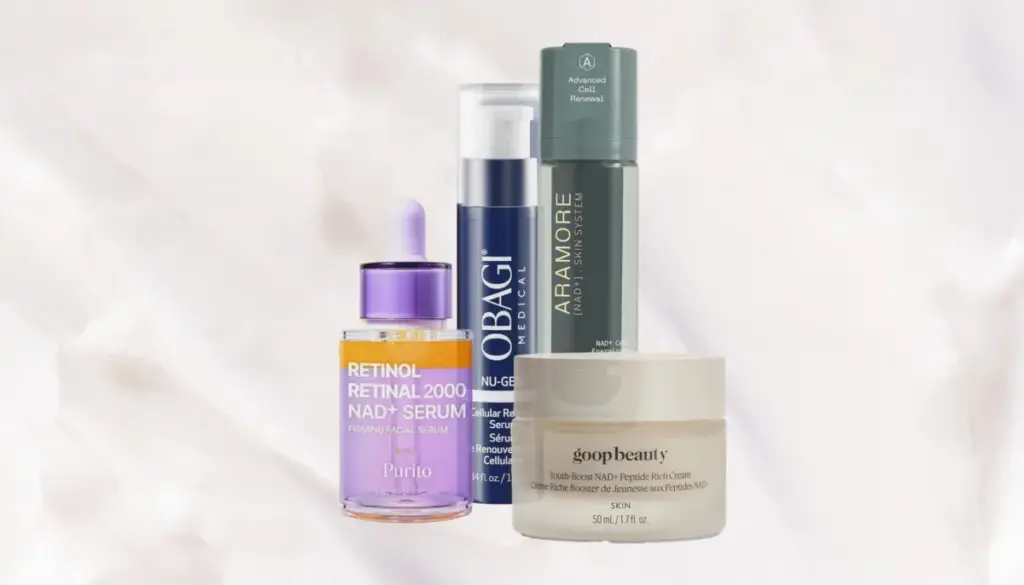
Executive Overview
For decades, the pursuit of youthful, resilient skin has been dominated by a familiar pantheon of topical ingredients: retinoids for cell turnover, vitamin C for brightening, hyaluronic acid for moisture retention, and broad-spectrum sunscreens for photo-protection. However, as the scientific intersection between longevity research and dermatology deepens, a new cellular player has seized the spotlight: NAD+ (nicotinamide adenine dinucleotide).
Long celebrated in metabolic and longevity science for its role in cellular energy and DNA repair, NAD+ has officially transitioned from the laboratory bench to the vanity counter. Touted as a revolutionary approach to skin aging, skincare formulations featuring NAD+ and its precursors are flooding the market, promising to optimize skin function from the inside out.
Yet, beneath the glossy marketing campaigns and high-end price tags lies a complex biochemical reality. Dermatologists, cellular biologists, and cosmetic chemists are urging consumers to temper high-tech optimism with scientific pragmatism. While the underlying biology of NAD+ is profoundly compelling, formulating a topical product that successfully leverages this delicate molecule remains a monumental scientific hurdle.
This comprehensive report explores the science of NAD+, evaluating its mechanisms, the hurdles of topical delivery, expert insights from leading board-certified dermatologists, and what rigorous testing reveals about the efficacy of NAD+-infused skincare.
Detailed Chronology: From Cellular Longevity to Topical Innovation
To understand how NAD+ arrived in the skincare aisle, one must trace its journey through the annals of cellular biology and aging research.
Phase I: The Discovery and Biological Foundation of NAD+
Discovered in 1906 by British biochemists Arthur Harden and William John Young, NAD+ was initially recognized as a coenzyme that enhances the rate of alcoholic fermentation in yeast. Over the subsequent decades, the scientific community realized its much broader, indispensable role in all living cells.
NAD+ is naturally found in every single cell of the human body. It acts as an essential coenzyme for redox reactions, meaning it shuttles electrons from one molecule to another. Without adequate levels of NAD+, cells cannot efficiently produce adenosine triphosphate (ATP), the primary energy currency required for cellular survival, repair, and regeneration.
Phase II: The Longevity Revolution
In the late 20th and early 21st centuries, aging research shifted focus from mere symptom management to targeting the fundamental hallmarks of aging. Researchers discovered that NAD+ is not just an energy shuttle; it is a vital substrate for longevity-associated proteins, most notably sirtuins (often referred to as the body’s "guardian genes") and PARPs (poly [ADP-ribose] polymerases), which are responsible for DNA repair.
As humans age, systemic and cellular levels of NAD+ naturally decline. This depletion compromises mitochondrial function, impairs the skin’s ability to repair daily environmental damage from UV radiation and oxidative stress, and accelerates the visible signs of aging, such as loss of elasticity, dullness, and fine lines.
Phase III: The Topical Skincare Pivot
As anti-aging research increasingly pivoted toward cellular health, cosmetic chemists began asking a pivotal question: If restoring NAD+ levels systemically can promote longevity in animal models, can localized topical application rejuvenate aging skin cells?
This inquiry sparked a wave of product development. However, early formulators faced a major biochemical roadblock: NAD+ is a large, highly unstable molecule. Direct topical application presented significant hurdles regarding skin penetration and chemical degradation when exposed to air and light. Consequently, the industry evolved toward utilizing NAD+ precursors and stabilizing delivery systems—such as nicotinamide mononucleotide (NMN) and nicotinamide riboside (NR)—allowing skin cells to synthesize NAD+ endogenously. Today, NAD+ skincare represents one of the fastest-growing sectors in advanced dermocosmetics.
Supporting Context & Metrics: The Science of Cellular Function and Skin Aging
To appreciate why NAD+ has become a cornerstone of modern skin science, it is necessary to examine the exact mechanisms governing cellular degradation and renewal.
How NAD+ Operates at the Cellular Level
1. Mitochondrial Optimization
Mitochondria are universally known as the powerhouses of the cell. In skin cells (keratinocytes and fibroblasts), mitochondria generate the energy required for cellular proliferation, collagen synthesis, and lipid barrier repair. NAD+ acts as a critical fuel source for mitochondrial respiration. When NAD+ levels drop, mitochondrial efficiency plummets, resulting in reduced energy output, sluggish cell turnover, and a dull, fatigued complexion.
2. DNA Repair and Guardian Enzymes
Skin cells are subjected to relentless assault from ultraviolet (UV) radiation, pollution, and internal metabolic stress, all of which cause DNA damage. PARP enzymes are mobilized to repair this damaged DNA, but they consume massive amounts of NAD+ in the process. When NAD+ is depleted, DNA repair mechanisms falter, leading to mutations, cellular senescence (the accumulation of "zombie cells" that secrete inflammatory signals), and accelerated structural breakdown of the dermis.
3. Sirtuin Activation
Sirtuins regulate cellular health, inflammation, and resistance to oxidative stress. However, sirtuins are strictly dependent on NAD+ to function. Without sufficient NAD+, these longevity proteins remain dormant, rendering the skin less capable of defending itself against environmental aggressors.
The Delivery Dilemma: Molecule Size vs. Skin Barrier
The human stratum corneum—the outermost layer of the epidermis—is a formidable shield designed to keep pathogens out and moisture in. This creates a significant challenge for topical formulations:
- The Size Barrier: Pure NAD+ is a relatively large molecule. Dermatological science questions whether it can naturally slip through the intercellular spaces of the stratum corneum without advanced delivery systems.
- The Precursor Solution: To bypass this limitation, many advanced formulations utilize precursors like Nicotinamide Mononucleotide (NMN) or smaller-molecule derivatives. These precursors possess molecular weights and chemical structures that are more readily accepted by skin cells, which then convert them into functional NAD+ internally.
- Synergistic Formulations: High-end NAD+ serums are rarely formulated in isolation. Testing data indicates that pairing NAD+ or its precursors with complementary ingredients—such as peptides, niacinamide (Vitamin B3), hyaluronic acid, and antioxidants—creates a multi-pronged approach that targets hydration, barrier function, and collagen synthesis simultaneously.
Official Expert Statements & Dermatological Perspectives
To separate marketing hyperbole from clinical reality, prominent dermatologists offer nuanced insights into the current landscape of NAD+ skincare.
Dr. Gohara on Biological Potential vs. Topical Reality
Dr. Gohara, a renowned board-certified dermatologist, acknowledges the profound science underpinning NAD+ biology while urging consumer caution regarding topical efficacy:
"The science behind NAD+ biology is incredibly compelling, but topical skin care is still catching up. The jury is still out on how effectively topical NAD+ can be absorbed by the skin. NAD+ is a very large molecule that may not penetrate through the outer skin layer."
Dr. Gohara emphasizes that while healthy NAD+ levels help skin function more efficiently—a primary reason for its popularity in longevity research—it should not be viewed as a silver bullet:
"Early laboratory studies and small clinical studies are encouraging, but we still need larger, long-term human studies before we can say topical NAD+ products are game changers. It’s a promising category, but not one I’d call a miracle ingredient just yet."
Dr. Zeichner on Cellular Repair and Optimal Timing
Dr. Zeichner, another leading authority in clinical dermatology, highlights the specific ways NAD+ supports skin architecture, particularly through mitochondrial enhancement and inflammation reduction:
"NAD+ works by repairing damaged DNA, reducing inflammation, and enhancing the activity of mitochondria, which are your cells’ batteries. While NAD+ won’t magically erase wrinkles overnight, healthy NAD+ levels help your skin function more efficiently."
Regarding application protocols, Dr. Zeichner advises aligning the use of NAD+ products with the skin’s natural circadian rhythms:
"The majority of skin cell turnover occurs in the evening, so I would recommend NAD+ products before bed to enhance the naturally occurring cellular activities. That said, always follow the directions for your specific product, since formulas can vary and some NAD+ products are designed for daytime use."
Incorporating NAD+ into Established Routines
Both experts agree that NAD+ skincare should be viewed as an exciting addition to—rather than a replacement for—gold-standard dermatological ingredients.
If consumers are looking to address deeply entrenched signs of aging, ingredients with decades of robust clinical data, such as retinoids, broad-spectrum sunscreens, and vitamin C, remain foundational pillars of a well-rounded skincare regimen. NAD+ products serve as an advanced supportive layer, optimizing the cellular environment in which these other actives operate.
Future Outlook: Where is NAD+ Research Headed?
As the wellness and dermatology sectors converge, the trajectory of NAD+ research points toward several key developments:
1. Advanced Delivery Technologies
The immediate future of NAD+ cosmetics hinges on pharmaceutical-grade delivery systems. Innovations such as liposomal encapsulation, nano-emulsions, and microneedle patch technologies are currently being explored to transport intact NAD+ molecules and heavy-weight precursors past the stratum corneum and directly into the viable epidermis and dermis.
2. Rigorous Long-Term Human Clinical Trials
While in-vitro (laboratory) and small-scale ex-vivo studies have demonstrated encouraging results regarding mitochondrial stimulation and barrier repair, the industry eagerly anticipates large-scale, double-blind, placebo-controlled human clinical trials. These studies will establish definitive benchmarks for wrinkle reduction, firmness enhancement, and dermal density improvement over multi-month usage periods.
3. Precision Longevity Skincare
As personalized medicine gains momentum, future skincare regimens may incorporate biomarker testing to measure individual cutaneous NAD+ levels. This data-driven approach will allow dermatologists to prescribe targeted precursor dosages and custom-tailored antioxidant formulas designed to match a patient’s exact metabolic and chronological skin age.
Conclusion
NAD+ represents a fascinating bridge between the frontiers of longevity science and everyday dermatology. By focusing on cellular energy production, mitochondrial health, and DNA damage mitigation, NAD+ addresses skin aging at its most fundamental level.
While topical formulations are still evolving—and must be approached with a balanced perspective regarding absorption and clinical validation—the scientific rationale is undeniable. When integrated thoughtfully into a comprehensive regimen alongside proven staples like retinoids and daily sun protection, NAD+ serums and creams offer an exciting, high-tech mechanism to support healthier, more resilient, and radiant skin for years to come.