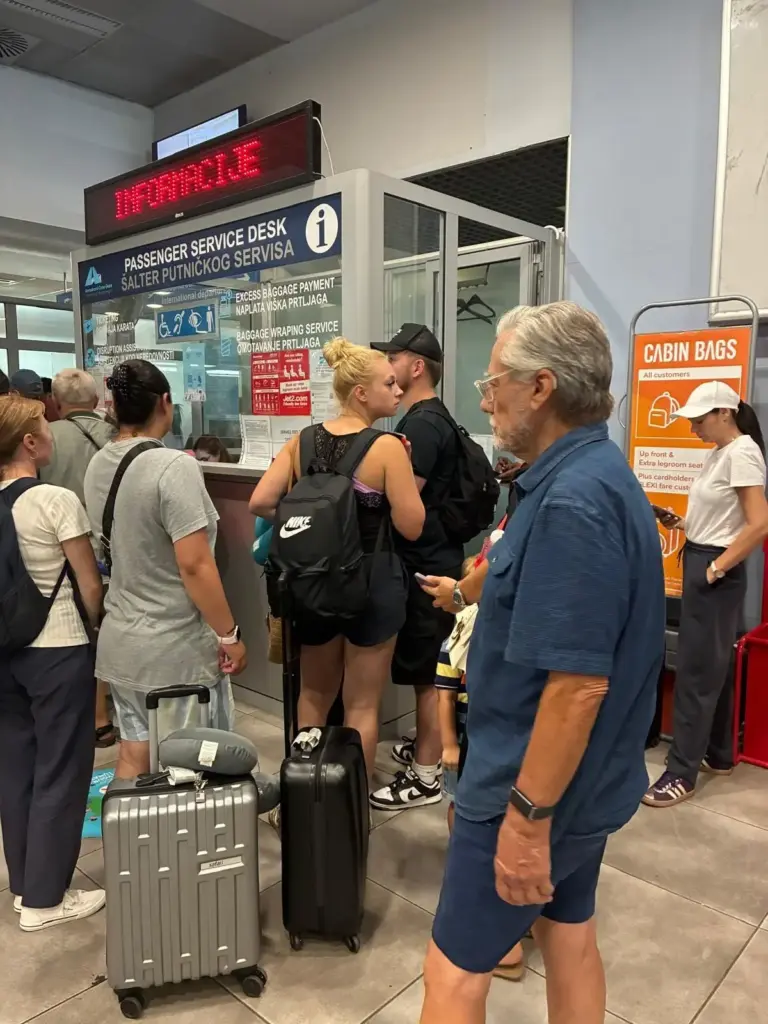
What should have been the joyous culmination of a lifetime of shared memories dissolved into a harrowing ordeal of bureaucratic indifference, logistical failure, and profound distress. Eileen Snow, 72, and her husband Stephen, 74, from Emsworth, Hampshire, anticipated a seamless return to the United Kingdom after a idyllic two-week family holiday spanning Croatia and Montenegro. Instead, their celebration of 50 years of marriage concluded with them being abruptly blocked at the departure gate, abandoned by airline representatives in a foreign airport, and forced to navigate a stressful, self-funded rescue mission back home.
The couple’s predicament highlights a growing concern within modern commercial aviation: the friction between mandatory safety regulations, such as aircraft weight and balance limits, and the duty of care owed to consumers when operational decisions displace them. For the Snows, this corporate disconnect manifested as denied boarding on easyJet flight EZY8814 from Tivat Airport to London Gatwick. Compounding the physical and logistical nightmare were acute personal tolls, including a perilous shortage of critical daily medication and a missed, deeply sentimental pilgrimage to the grave of Eileen’s late father on his birthday.
While easyJet has subsequently issued apologies, reimbursed alternative travel expenses, and processed statutory compensation, the incident raises searching questions regarding ground-handling standards, crisis communication, and the vulnerability of elderly passengers when automated systems and overwhelmed personnel fail them at foreign hubs.
Detailed Chronology: From Dream Holiday to Airport Impasse
The Celebration and the Return Journey
The itinerary, running from August 16 to August 29, 2026, was meticulously planned to commemorate the couple’s golden wedding anniversary. Surrounded by family members, the Snows spent the first week exploring the cultural and coastal landscapes of Croatia before transitioning to Montenegro for the second week of the holiday. By all accounts, the trip was an unmitigated success—a harmonious tribute to five decades of marriage.
On Saturday, August 29, the family arrived at Tivat Airport in Montenegro, in high spirits and with ample time before their scheduled 4:50 PM easyJet flight to London Gatwick. Having reserved their seats well in advance, the Snows possessed no inkling of the disruption awaiting them at the gate.
The Gate Interruption and Weight Restrictions
Upon reaching the departure gate, the Snows discovered that flight EZY8814 was already experiencing delays. However, the situation quickly escalated from a routine schedule setback to an exclusionary crisis. According to the couple, airline personnel abruptly halted their boarding process alongside three other couples, declaring that the flight had reached maximum capacity. In total, approximately ten passengers were prevented from boarding.
Eileen Snow recalled the confusion at the gate:
"They let many people board after us. We were told the flight was full. Ten of us could not go."
EasyJet later explained that the aircraft had exceeded its maximum allowable weight limit—a safety-critical parameter dictated by fuel loads, weather conditions, and passenger cargo—and was consequently required to reduce its passenger manifest. With no passengers volunteering to give up their seats, the airline enforced an administrative protocol, selecting those to be offloaded based on the chronological order of their check-in. The Snows vehemently disputed the airline’s assertion that the process was handled transparently, insisting they never volunteered and noting the frustrating lack of clear communication during the cull.
Abandonment at Tivat Airport
With passengers left stranded airside, the situation deteriorated rapidly. Eileen recounted that an initial representative attempted to manage the fallout, explicitly promising to arrange and fund essential provisions, including taxis, local hotel accommodation, food, and vouchers. Trusting these assurances, the passengers waited, only for the representative to depart to "seek help" and never return.
Left entirely to their own devices, the elderly couple sought out assistance from remaining airport staff and attempted to connect with easyJet via its WhatsApp customer service channel, encountering a digital barrier that offered little immediate, practical relief.
As operations wound down and the terminal prepared to close for the evening, tension mounted. Eileen described an intimidating encounter as security personnel approached the remaining stranded travelers:
"Some of them had belts with what looked like a gun. We were intimidated."
The crisis was partially alleviated not by corporate intervention, but by the compassion of an individual airport worker who loaded the couple’s luggage into his personal vehicle and drove them to a local hotel—accommodation that the Snows were forced to pay for out of pocket.
The Self-Funded Rescue Mission
Realizing that easyJet’s proposed direct re-routing options were unsuitable for their immediate health and schedule needs, the couple took matters into their own hands. They engineered a complex, expensive alternative route: securing British Airways flights out of Croatia, paying £190 for an emergency taxi across the international border back to Dubrovnik, and subsequently absorbing an additional £177 fare for transit from Gatwick back to their home in Hampshire.
By the time they crossed their threshold, the magic of their golden anniversary had been thoroughly overshadowed by the logistical exhaustion of their return.
Supporting Context & Metrics: The Human Cost of Airline Displacements
Medical Vulnerabilities
Beyond the administrative frustrations of denied boarding, the incident posed a direct threat to passenger health. Stephen Snow, 74, relies on a strict regimen of daily medication to manage his health. Because the couple packed anticipating a direct, multi-hour flight back to the United Kingdom, Stephen was left with only enough medication to last through the evening of their scheduled departure.
The abrupt disruption meant the couple faced an agonizing countdown in a foreign country, scrambling to secure medical advice and emergency supplies while stranded without airline support. Health advocates and travel associations have long warned that abandoning elderly or vulnerable passengers without immediate access to luggage containing vital medicines, or failing to provide immediate emergency lodging and welfare support, constitutes a severe breach of a carrier’s duty of care.
Sentimental Disappointment
The timing of the delay inflicted a deep emotional wound upon Eileen Snow. The stranded flight fell on what would have been the birthday of Eileen’s late father. Having served as her father’s primary caregiver and support system during his final years, Eileen had planned to mark the anniversary of his birth with a quiet moment of remembrance upon her return to the UK.
Missing this personal milestone due to a corporate capacity miscalculation added psychological distress to physical exhaustion, turning what should have been a seamless transition back to normal life into an unforgettable trauma.
Financial Toll of Disruption
While statutory compensation and subsequent reimbursements eventually covered baseline costs, the immediate financial outlay required by the Snows underscores the cash-flow burden placed upon consumers during airline disruptions:
International Taxi Transit (Montenegro to Dubrovnik): £190
Alternative Airfare (British Airways via Croatia): Variable premium booking rates
Gatwick-to-Home Transit: £177
Unscheduled Hotel & Subsistence: Out-of-pocket expenditure during the initial night in Tivat
These figures do not account for the administrative labor demanded of passengers who must navigate automated claim portals, wait on digital support queues, and gather receipts to claw back funds for expenses that airlines are legally mandated to facilitate in real time.
Official Statements and Corporate Accountability
EasyJet’s Response
In the wake of media inquiries and formal complaints lodged by the Snows, easyJet issued a structured corporate response detailing the technical realities that precipitated the incident. An airline spokesperson stated:
"We are very sorry that Mr and Mrs Snow were unable to travel on their flight from Tivat to London Gatwick due to the aircraft exceeding weight limits. Weight restrictions are in place for all airlines for safety reasons and in the event that a flight exceeds this limit, we are required to carry fewer passengers.
“We did everything possible to minimise disruption for our customers including offering the next direct flight, however as this wasn’t suitable, they booked with an alternative carrier and will be reimbursed.
“We have since spoken to Mr and Mrs Snow, apologised for their experience and provided the compensation due. The safety and welfare of our passengers and crew is always easyJet’s highest priority."
While the carrier emphasized that safety remains its primary directive—pointing to aircraft weight and balance limits that can shift due to atmospheric conditions, fuel burns, and cargo calculations—the admission does little to excuse the systemic breakdown in customer service at Tivat Airport.
Consumer Rights and Regulatory Frameworks
Under consumer protection regulations governing flight disruptions, airlines operating flights originating from or arriving into regulated jurisdictions have strict obligations when denying passengers boarding against their will:
Right to Care: Carriers must immediately provide meals, refreshments, hotel accommodation, and transport between the airport and the hotel, regardless of the extraordinary nature of the disruption.
Re-routing or Refund: Passengers must be offered a choice between a full refund of the ticket price, re-routing at the earliest opportunity under comparable conditions, or re-routing at a later date of the passenger’s convenience.
Compensation: Denied boarding resulting from overbooking, weight restrictions, or operational shuffling (unless strictly attributable to extraordinary circumstances beyond the airline’s control, such as severe air traffic control restrictions) routinely triggers mandatory statutory compensation payouts.
The fact that the Snows were left to source their own hotel, pay for international taxis, and manage their own re-booking highlights a glaring compliance failure by easyJet’s ground handling agents on the ground in Montenegro.
Future Outlook: Industry Implications and Recommendations
The ordeal endured by Eileen and Stephen Snow serves as a cautionary tale for the commercial aviation sector, particularly as low-cost carriers push aircraft utilization to maximum efficiency limits. When weight margins are trimmed too closely to optimize fuel burn and payload capacity, the margin for operational error shrinks, placing passengers directly in the crosshairs of last-minute offloading.
Key Takeaways for Travelers
Medication Management: Travel experts strongly advise that passengers requiring critical daily medications should always pack a minimum of 48 to 72 hours’ extra supply in their carry-on luggage, ensuring they are insulated against sudden disruptions or missing checked baggage.
Documentation of Expenses: In scenarios where ground agents abandon passengers, travelers must meticulously photograph receipts, document names of unhelpful staff, and secure written confirmation of denied boarding to streamline post-trip claims.
Understanding Rights: Passengers should immediately assert their legal entitlements under applicable aviation regulations (such as UK261 or EU261), demanding that ground personnel fulfill their immediate obligations regarding accommodation and food vouchers before leaving the airport terminal.
The Burden on Operators
Moving forward, airlines and airport authorities must invest in robust contingency protocols for outlying stations like Tivat. Relying on digital-only customer service channels or abandoning passengers when gate-level crises occur erodes consumer trust. If major carriers like easyJet are to maintain their reputations for reliability, the operational execution of their duty of care must match the rigorous precision of their flight safety checklists. For Eileen and Stephen Snow, apologies and retroactive reimbursements arrive too late to restore the golden anniversary they deserved, but their experience remains a vital reminder of the human cost of corporate friction in the skies.