Executive Overview
Short hair has decisively reclaimed the spotlight in contemporary beauty, establishing itself as the definitive hairstyle choice of the year. Offering high-impact aesthetics with minimal daily maintenance, short crops have become celebrated for their undeniable chic factor across all age demographics. Beyond stylistic versatility, transitioning to a shorter length offers an immediate structural reset: by removing dry, frayed, and chemically compromised split ends, strands instantly take on a fresher, undeniably healthier appearance.
For those hesitant to make an immediate, drastic leap into ultra-short territory, mid-length cuts serve as a graceful transition, while classic bobs continue to offer enduring adaptability. However, for beauty enthusiasts seeking a bolder, modern edge, the industry’s most sought-after hybrid has emerged: the bixie cut.
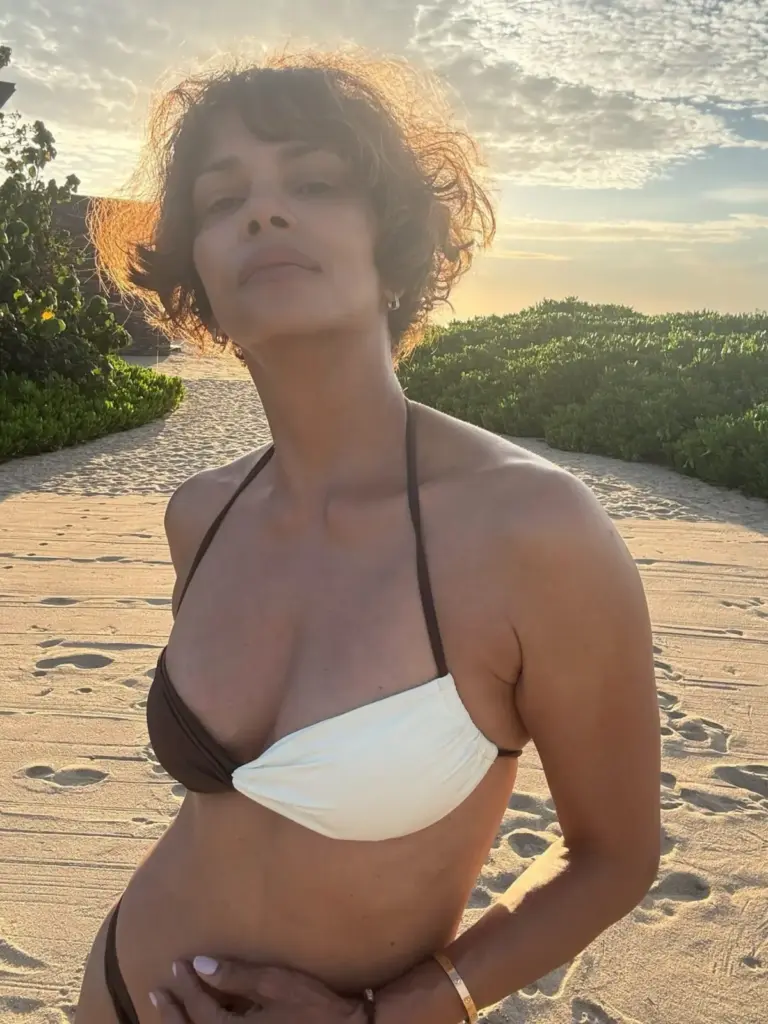
Positioned precisely at the intersection of a traditional pixie crop and a classic bob, the bixie sits comfortably at the nape of the neck, mirroring the effortless silhouette of a grown-out pixie or a micro-bob. Endorsed by style icons such as Halle Berry—who famously pairs the cut with natural, textured curls and a face-framing fringe—and championed by mature trendsetters like Pamela Anderson, the bixie defies conventional age-related styling boundaries. Its relaxed, lived-in aesthetic delivers effortless elegance, proving that sophisticated hair has no age limit.
Detailed Chronology: The Evolution of the Short Hair Renaissance
To understand the meteoric rise of the bixie, it is essential to trace the historical progression of short hair transformations within high fashion and celebrity culture.
The Mid-20th Century Foundation: The Birth of the Crop
The conceptual roots of the bixie trace back to the mid-20th century, when silver-screen icons first challenged conventional femininity by shedding long tresses. Audrey Hepburn’s iconic pixie in Roman Holiday (1953) and Jean Seberg’s uncompromising crop in Breathless (1960) proved that short hair could exude profound sophistication. However, these early iterations relied on strict geometric lines and precise styling, requiring rigorous upkeep.

The 1990s Supermodel Shift and the "Choppy" Era
As decades progressed, the desire for rigid styling gave way to more tactile, textured approaches. The 1990s introduced a precursor to the modern bixie, characterized by piece-y layers and face-framing tendrils popularized by supermodels and indie-film stars alike. This era established the foundational philosophy that short hair did not need to feel severe; softness around the face could completely alter the geometry of a crop.
The Contemporary Revival: Enter the Bixie
In recent years, post-pandemic lifestyle shifts accelerated a massive cultural pivot toward low-maintenance, high-impact beauty. Consumers sought styles that minimized daily heat styling while maximizing natural texture. Salons worldwide began reporting an unprecedented surge in requests for transitional cuts that bridged the gap between commitment-heavy pixies and traditional bobs.
Industry lexicographers quickly coined the portmanteau "bixie" to define this specific length. By combining the lightness of the back and sides of a pixie with the structural weight and perimeter of a bob, the style rapidly ascended to mainstream prominence. Today, high-profile red-carpet debuts by trendsetters across generations—from Oscar winners like Michelle Yeoh to style chameleons like Halle Berry and Pamela Anderson—have cemented the bixie not as a fleeting fad, but as a permanent fixture in modern hairdressing.
Supporting Context & Metrics: Hair Health, Texture, and Demographics
The popularity of the bixie cut is backed by structural shifts in how consumers approach hair care and aging. Modern beauty metrics indicate a significant rise in demand for "hair wellness" cuts—hairstyles designed to eliminate damage while enhancing natural movement.
The Anatomy of the Cut
Unlike a standard pixie, which often features closely cropped sides and an exposed neckline, the bixie retains more weight and length through the crown and perimeter. This intentional distribution of volume creates a softer silhouette that flatters a wider array of facial structures.

[Traditional Pixie] ---> [The Bixie Hybrid] ---> [Micro Bob]
   (Shorter, Exposed Nape)    (Nape-Grazing, Layered)   (Even Perimeter)
Tailoring by Hair Texture
Industry experts emphasize that a successful bixie relies entirely on customization based on individual hair type:
- Thicker and Curly Hair: For dense or curly textures, senior hairstylists recommend utilizing internal texturizing or "undercut" techniques. This removes unwanted bulk and prevents the hair from expanding into a triangular shape, while maintaining enough length to celebrate natural curl patterns.
- Fine and Straight Hair: Conversely, fine strands benefit from stronger, more graduated silhouettes. By building internal structure and strategic layering, stylists can create the optical illusion of increased density and volume at the crown.
- Maintenance Schedules: For individuals with demanding schedules who cannot commit to frequent salon visits to maintain a strict pixie crop, a longer bixie that hugs the jawline allows for a seamless, effortless grow-out phase.
Official Statements & Expert Insights
Navigating a major hair transformation requires professional guidance. Industry leaders emphasize that personal lifestyle, daily routine, and individual aesthetic must dictate the final look rather than arbitrary rules regarding age or hair type.
Sasha Leslie on Modern Styling and Customization
Sasha Leslie, a senior hairstylist at the prestigious Nicola Clarke salon, highlights the psychological and physical benefits of the hybrid cut.
"A bixie has all the benefits of a short style, but because the front is kept longer and softer, it has none of the severity of other short haircuts," Leslie explains.
Addressing the myth that specific haircuts belong to specific age brackets, Leslie advocates for individualized consultations.

"Your age shouldn’t dictate your haircut. Instead, have a thorough consultation with your hairdresser about your lifestyle and fashion aesthetic to find the best bixie for you. After all, there is no one-size-fits-all when it comes to hair."
Product Recommendations for Effortless Styling
One of the primary selling points of the bixie cut is its adaptability to low-effort, high-reward daily routines. Leslie outlines a straightforward regimen utilizing professional styling formulations:
- For Natural, Lived-In Textures: Air-dry or roughly blow-dry the hair, then work in a small amount of a defining cream or sculpting clay. Products such as Hair by Sam McKnight Dressed To Kill Crème or Perfect Mess Matt Sculpting Clay help control frizz while accentuating individual layers and piece-y ends.
- For Polished Volume: To achieve a smoother, more voluminous finish for formal occasions or professional settings, blow-dry the hair using a targeted root-lifting spray, such as Sam McKnight’s Superlift, to create enduring lift and body at the crown.
Future Outlook: The Longevity of Low-Maintenance Luxury
As the beauty industry continues its trajectory toward intentional, sustainable, and highly personalized self-care, the bixie cut represents the pinnacle of modern styling. It successfully bridges the gap between structured polish and effortless nonchalance, making it uniquely suited to contemporary lifestyles.
Looking ahead, hair trends are expected to lean even further into individualized tailoring. The rigid categorization of cuts by age or gender is rapidly dissolving, replaced by an inclusive philosophy that prioritizes hair integrity, ease of maintenance, and personal expression. Whether worn with wild, natural curls, sleek straight lines, or tousled waves, the bixie cut has firmly secured its status as a timeless modern classic. Consider your next hair transformation officially sorted.