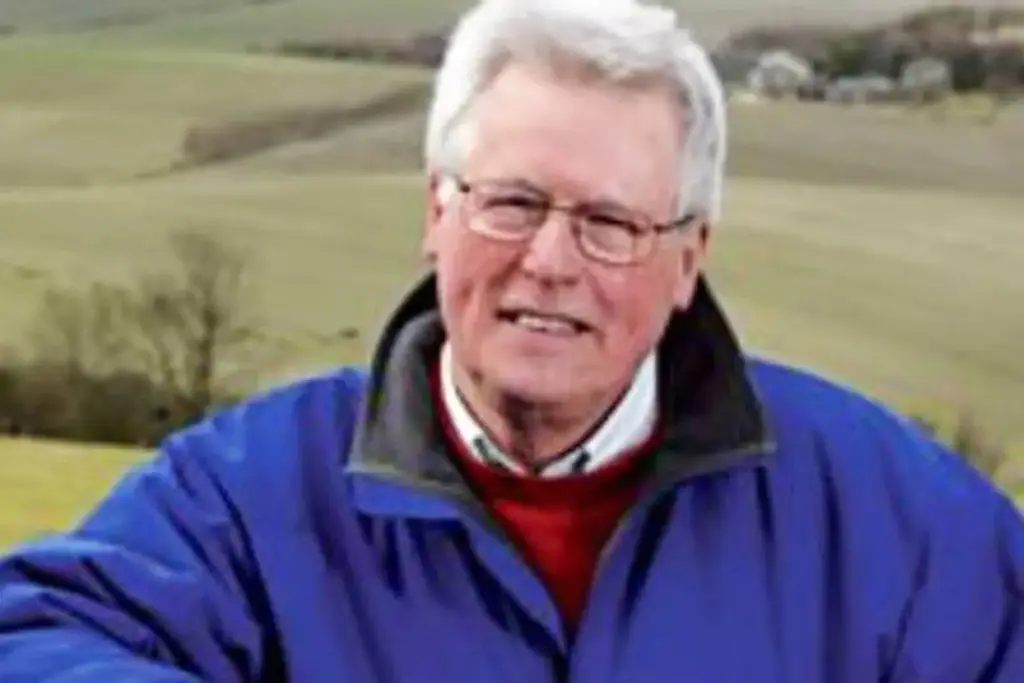
For generations of British television viewers, the voice and visage of John Craven have served as a reassuring, steadfast presence across the nation’s living rooms. Best known as the beloved stalwart of the BBC’s flagship rural affairs programme Countryfile, Craven has occupied a unique place in the cultural fabric of the United Kingdom for more than half a century. From pioneering children’s news programming in the 1970s to becoming the face of rural preservation, his career is a masterclass in enduring public service broadcasting.
Recently, at the age of 86, Craven shared a deeply personal and poignant sentiment during an interview with the Farmers’ Guardian. Reflecting on a remarkable life dedicated to chronicling the stories of others, the veteran broadcaster turned his gaze inward, articulating his final farewell wishes. He expressed a poignant desire to return to his geographic and emotional roots, revealing his wish to have his ashes scattered atop Otley Chevin in West Yorkshire—a landscape etched with memories of his youth.
This announcement has prompted an outpouring of affection from fans, colleagues, and the farming community alike. It marks a reflective chapter for a man who has witnessed the dramatic evolution of British agriculture, media, and rural communities. This comprehensive report explores Craven’s profound end-of-life reflections, his unparalleled career trajectory from Newsround to Countryfile, the historical hurdles he faced in gaining the trust of Britain’s farmers, and his expert insights into the modern challenges facing the nation’s agricultural sector.
Detailed Chronology: From Youthful Cycling in Yorkshire to Broadcasting Stardom
To understand John Craven’s deep-seated connection to the British countryside, one must trace a timeline that stretches back to the mid-20th century, long before studio cameras and broadcast networks defined his daily routine.
Early Beginnings and Yorkshire Roots
Born in Leeds in 1940, Craven’s formative years were deeply intertwined with the rugged, picturesque landscapes of Yorkshire. Long before he was a household name, he spent his youth exploring the verdant expanses of Wharfedale and cycling alongside boyhood friends up the steep, sweeping slopes of Otley Chevin. These early adventures fostered an abiding love for the North of England—a passion that would quietly anchor his entire life, even as his career pulled him toward London studios and his current residence in Oxfordshire.
In addition to his cycling excursions, Craven’s childhood summers were spent holidaying along the Yorkshire coast. While he held a particular fondness for the historic, atmospheric port of Whitby, his family frequently frequented Bridlington, a destination he humorously suspects was chosen because it was "a bit cheaper." These modest, salt-and-sand holidays laid the bedrock for a lifelong romance with the British seaside and rural topography.
The Journalistic Foundation
Craven’s professional journey began not in television, but in print journalism. He cut his teeth working for local newspapers in the North of England, mastering the craft of concise, impactful storytelling. This rigorous foundation in regional reporting instilled in him an innate curiosity and an ability to connect with everyday people—qualities that would become his trademark as he transitioned to the burgeoning medium of television.
The Newsround Revolution (1972)
In 1972, Craven achieved his first major national breakthrough when he launched and anchored John Craven’s Newsround on BBC One. At a time when television news was produced strictly for adults, Craven revolutionized the medium by presenting complex global and domestic events in a manner that was accessible, engaging, and digestible for children.
For nearly two decades, he served as the trusted anchor of Newsround, guiding millions of children through historical milestones, political shifts, and human-interest stories. His calm, empathetic delivery made him a paternal figure to a generation of viewers. By the time he stepped down from the children’s programme in 1989, he had already cemented his legacy as one of Britain’s most reliable and respected television journalists.
The Countryfile Era (1989–Present)
Rather than fading into retirement after his departure from Newsround, Craven embarked on the second great act of his career. In 1989, he joined the newly launched Countryfile team. Initially broadcast on Sunday mornings, the show was designed to examine rural issues, farming practices, and environmental concerns.
Over the subsequent four decades, Countryfile transformed from a niche Sunday-morning farming broadcast into a primetime ratings juggernaut, regularly pulling in millions of viewers on Sunday evenings. Through shifting political landscapes, agricultural crises (such as BSE and Foot-and-Mouth), and the rapid modernization of the countryside, Craven remained the anchor, continuity, and moral compass of the programme. Today, at 86, his dedication to the show remains a testament to his indefatigable work ethic and genuine passion for rural affairs.
Supporting Context & Metrics: The Evolution of Countryfile and British Agriculture
John Craven’s tenure on Countryfile provides a unique vantage point from which to observe the sweeping changes that have reshaped rural Britain over the last forty years. When the show premiered in the late 1980s, the relationship between the media and the agricultural community was vastly different from what it is today.
Breaking Down Farmhouse Doors: The Battle for Access
Reflecting on the early days of the programme, Craven has frequently spoken about the immense logistical and diplomatic challenges the production team faced. In an era before digital cameras and pervasive social media, television crews were often viewed with intense suspicion by rural communities.
"In the very early days of Countryfile, it was very difficult to get cameras onto farms and to get farmers to speak to us," Craven recalled. "It took a long time to win farmers over and let them open the gates of the farm and let us in."
Farmers, traditionally fiercely independent and protective of their land, livelihoods, and privacy, were hesitant to let urban media figures chronicle their daily hardships and triumphs. Craven noted that it required immense patience, respect, and a genuine understanding of rural life to bridge the cultural divide between city-based production companies and country folk. Over time, that persistence paid off. Today, that initial hesitation has virtually dissolved, with farmers and rural landowners eager to share their stories, challenges, and innovations with a national audience.
The Modern Agricultural Dilemma: Food vs. Environment
While access to farms has become markedly easier, the issues facing British agriculture have grown exponentially more complex. Craven has consistently used his platform to highlight the existential balancing act currently confronting the nation’s farming sector.
According to data from the Department for Environment, Food & Rural Affairs (Defra) and the National Farmers’ Union (NFU), British agriculture contributes billions to the national economy while managing the vast majority of the UK’s landmass. However, farmers are increasingly caught in a high-stakes squeeze between two vital national imperatives:
Environmental Stewardship: Meeting aggressive government targets for carbon reduction, biodiversity net gain, woodland expansion, and river restoration.
Food Security: Maintaining domestic food production levels in the face of supply chain volatility, climate change, extreme weather events, and geopolitical instability affecting global trade.
Summarizing this delicate tightrope walk, Craven astutely noted: "The balance between environmental concern and the need to produce more food, that is the big issue that faces the country today."
Official Statements and Personal Reflections
The revelation of John Craven’s end-of-life wishes offers a rare, intimate glimpse into the mind of a man who has spent decades entering the homes of millions while remaining intensely private about his personal affairs.
The Farmers’ Guardian Interview
In his conversation with the Farmers’ Guardian, Craven moved away from professional commentary to reflect on the topography of his heart. Speaking candidly about his attachment to the North, he stated:
"Still one of my favourite places in the world is Wharfedale and Otley Chevin, where I used to cycle with my mates. I love the coast too, especially Whitby, though we had family holidays in Bridlington because I suspect it was a bit cheaper. I’d like to come home and have my ashes scattered in Yorkshire, maybe on the top of Otley Chevin."
These remarks encapsulate a universal human sentiment: the deep-seated urge to return, in perpetuity, to the landscapes that forged our identities. For Craven, who has lived for many years in a quiet village near Banbury, Oxfordshire, with his wife (where they raised their two daughters), the call of Yorkshire remains as compelling in his twilight years as it was during his boyhood.
Industry and Public Response
The broadcasting and agricultural communities responded to Craven’s reflections with widespread warmth, respect, and admiration. Representatives from rural charities, farming unions, and BBC colleagues praised his candidness, noting that his grace in addressing end-of-life matters mirrors the dignity with which he has conducted his professional career.
Fans across social media and rural forums shared their own memories of growing up watching Newsround and transitioning into Countryfile, cementing Craven’s status as a national treasure whose legacy is already firmly secure.
Future Outlook: A Lasting Legacy in the British Countryside
As John Craven looks toward the horizon, his legacy is already etched into the annals of British broadcasting history. He represents an era of television defined by trust, authority, and genuine public engagement—qualities that are increasingly rare in a fragmented media landscape.
The Future of Countryfile and Rural Journalism
The path that Craven helped pave—one of respectful, in-depth rural reporting—will continue to serve as a blueprint for future generations of broadcasters. As climate change accelerates and the debate over land use, food security, and rewilding intensifies, programs like Countryfile will play an indispensable role in educating the urban public about the realities of rural life. The trust that Craven painstakingly built with the farming community over four decades has ensured that rural voices will continue to be heard at the highest levels of national discourse.
A Final Return to Yorkshire
Though John Craven remains an active and sharp-minded presence on television, his open reflection on where he wishes to rest serves as a poetic reminder of the transient nature of life, even for those whose voices seem permanent fixtures of our culture.
Should the day eventually arrive when his ashes are carried up the steep slopes of Otley Chevin and scattered across the Yorkshire landscape he cherished as a boy, it will mark the final chapter of an extraordinary journey. Until then, John Craven continues to do what he has done for over fifty years: inform, inspire, and connect the British public with the land beneath their feet.