Executive Overview
For millennia, Sicily has stood at the crossroads of empires, a magnificent and sun-drenched triangle of land where Phoenicians, Greeks, Romans, Arabs, Normans, and Spaniards have all left an indelible imprint. Despite centuries of written accounts, the ancient island remains a cultural enigma. The convergence of these diverse civilizations over thousands of years has molded everything—from its monumental art and Byzantine-influenced architecture to its layered cuisine and fierce local ethos—into a singular, unmistakable identity. Sicily is not merely a region of Italy; it is a world unto itself, fiercely and proudly Sicilian.

In contemporary travel culture, traversing Sicily has evolved from a grand tour undertaking into a modern pilgrimage. Travelers arrive in droves, tracking the mythical Odyssey filming locations of Favignana, seeking out the cinematic drama of Taormina’s cliffside resorts, or simply fleeing the humdrum of modern life for the cobalt embrace of the Mediterranean Sea. While traditional grand hotels have long anchored the island’s hospitality landscape, a new movement in experiential travel has shifted the paradigm. Today, discerning visitors looking to bypass cookie-cutter accommodations choose to immerse themselves directly in the fabric of daily island life through private residential stays.

With over 2,500 hours of annual sunshine and a mild Mediterranean climate that defies the traditional boundaries of high and low seasons, Sicily has solidified its status as a premier year-round destination. From morning espressos overlooking historic baroque piazzas to twilight aperitivi enjoyed on trellised rooftop terraces scented with jasmine and sea salt, private home rentals offer an intimate portal into the region’s soul. Below is an authoritative guide to the finest private sanctuaries across the island, curated for travelers seeking architecture, history, and uncompromising style.

Detailed Chronology: The Architectural Evolution of Sicilian Spaces
To truly appreciate the design and atmosphere of Sicily’s most exclusive residential rentals, one must examine the historical architecture that birthed them. The island’s built environment is a physical timeline of conquests and cultural syntheses.

The Late Baroque and Rural Baglio Eras (18th to 19th Century)
Following the catastrophic Val di Noto earthquake of 1693, the southeastern region underwent a dramatic architectural rebirth. Master builders erected sweeping palazzos and country estates defined by dramatic balconies, wrought-iron grillwork, and golden local stone. Concurrently, agricultural hubs across the interior and volcanic foothills gave rise to the baglio—fortified farmhouses constructed from dark, hand-carved lava stone designed to withstand both bandits and the elements.

- The Sicilian Escape (Modica): Transporting guests back to the waning decades of the 18th century, this garden sanctuary exemplifies the grandeur of the late Baroque period. High ceilings, original antique flooring, and materials reclaimed from the surrounding Modica valley ground the property in authentic local history, all while framing panoramic views of the Noto valley.
- Pantanello Country House (Noto) & La Pagliera (Agrigento): Rooted in the agrarian history of the late 19th century, these properties showcase how old farmhouses have been meticulously resurrected. Retaining original structural elements like exposed tuff arches and rustic stone walls, they blend historical reverence with contemporary luxury, featuring state-of-the-art culinary stations designed for modern epicureans.
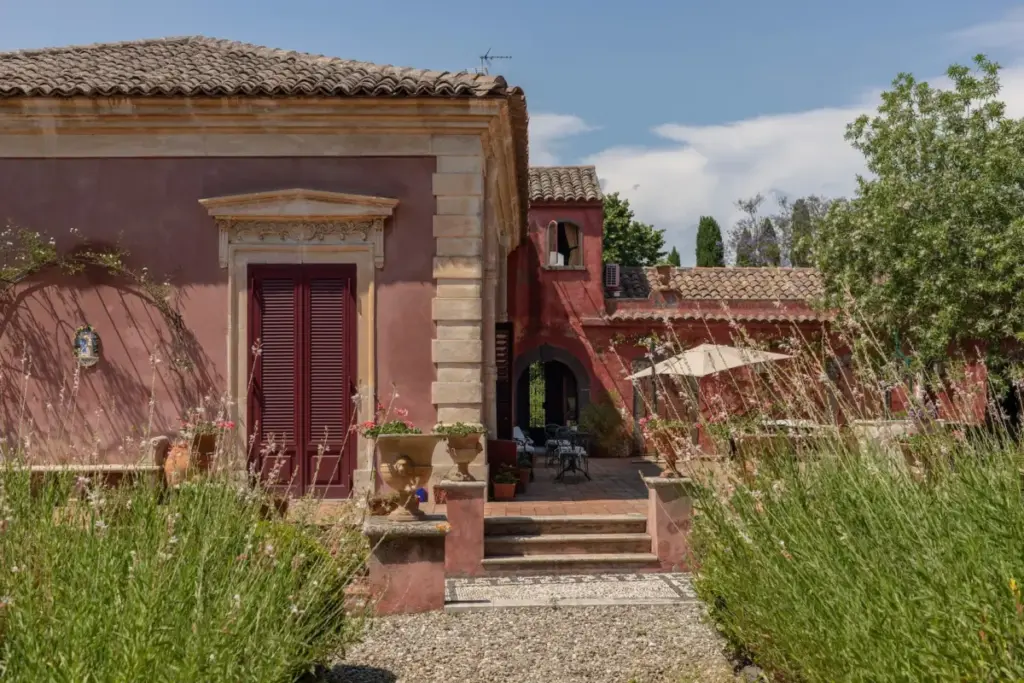
- Villa Gravina (Catania): Belonging historically to the noble family of the Marquises Gravina, this pink-hued estate embodies aristocratic heritage. Featuring a trompe-l’œil frescoed hallway and 19th-century heirlooms, it places guests directly inside living Sicilian nobility.
The Art Nouveau and Early 20th-Century Revival (1900–1930s)
As Europe entered the 20th century, the Stile Liberty (Italy’s iteration of Art Nouveau) swept through Sicilian coastal towns and urban centers like Palermo and Porticello. Architects embraced flowing organic lines, delicate floral ceramics, and whimsical turrets that honored the maritime landscape.

- Fishing Village House (Porticello): Tucked within a historic fishing enclave near Palermo, this 1920s seaside home retains its original polychrome floor tiles and delicate ceiling paintings. Its wrap-around balcony offers front-row seats to the daily rhythms of local fishermen and the crystalline waters of Santa Nicholicchia.
- Beachfront Estate (Palermo): Constructed during the height of the 1920s architectural renaissance, this sprawling property boasts striking Art Nouveau facades and a formidable turret. Shaded by centenarian maritime pines, it offers direct access to the Tyrrhenian Sea from a private garden steeped in century-old glamour.
Supporting Context & Metrics: The Modern Landscape of Sicilian Travel
The appeal of private residential rentals in Sicily is underpinned by solid macroeconomic and tourism metrics. According to regional tourism boards, visitor arrivals to Sicily have sustained an upward trajectory, driven largely by an increased demand for slow travel, experiential hospitality, and multigenerational family vacations.

Key Travel Metrics & Environmental Advantages:
- Climatic Reliability: Sicily boasts an average of 2,500 to 2,800 hours of sunshine per year, making it one of the most reliable sun-soaked destinations in Europe, mitigating seasonality dips.
- Diverse Geographic Footprint: Spanning over 25,000 square kilometers, the island requires strategic base selection. Coastal properties in Western Sicily (Palermo, Makari, Sciacca) cater to beach lovers and seafood purveyors, while eastern hubs (Noto, Modica, Catania, Syracuse) draw architecture and wine enthusiasts.
- The Rise of Multi-Room Estates: High-end travel trends indicate a 40% surge in demand for properties sleeping six to ten guests, reflecting a post-pandemic shift toward group travel, family reunions, and curated private-chef experiences (such as those available at Domus Gratiae in Cefalù).
Official Statements & Curated Property Portfolio
Vogue’s editorial team and architectural contributors have highlighted a definitive selection of properties that define the pinnacle of Sicilian living. Here is the curated breakdown of the island’s most exceptional private stays:

Southern Baroque & Country Sanctuaries (Noto, Modica, Agrigento, Catania)
- The Sicilian Escape (Modica): 2 bedrooms, 1.5 bathrooms. A historic garden home featuring lemon and carob trees with cinematic views toward the Noto valley.
- Pantanello Country House (Noto): 3 bedrooms, 2.5 bathrooms. An authentic farm estate featuring a working garden, outdoor pizza oven, and a plunge pool overlooking a tree-lined valley.
- La Pagliera (Agrigento): 3 bedrooms, 3.5 bathrooms. Situated near the Valley of the Temples, marrying 19th-century farmhouse roots with a top-tier Lofra gas stove for culinary enthusiasts.
- Villa Gravina (Catania): 3 bedrooms, 2.5 bathrooms. A noble estate featuring frescoed corridors, a hot tub, and sprawling Italian gardens.
- Casa Margherita (Noto): 1 bedroom, 1 bathroom. A secluded couples’ sanctuary nestled among vineyards and olive groves, complete with a private pool and absolute privacy.
- Casa Telesio (Noto): 2 bedrooms, 2 bathrooms. A light-filled, two-floor apartment overlooking the historic town center and the Church of the Crucifix.
Coastal Escapes & Fishing Villages (Makari, Porticello, Cefalù, Sciacca, Acireale)
- Villa Ciusca (Makari): 2 bedrooms, 1 bathroom. A 2,400-square-meter seaside property featuring a massive terrace, outdoor shower, and French windows framing the horizon.
- Fishing Village House (Porticello): 2 bedrooms, 1 bathroom. A 1920s gem with original ceiling paintings, steps away from the Santa Nicholicchia natural bay.
- Domus Gratiae (Cefalù): 4 bedrooms, 4 bathrooms. Ideal for large groups and families, offering panoramic sea-view windows and available private chef services.
- Casa Gina (Acireale): 1 bedroom, 1 bathroom. An outdoor lover’s paradise complete with a hammock, barbecue, and immediate proximity to the water.
- Breathtaking Sea View (Sciacca): 2 bedrooms, 1.5 bathrooms. Celebrated for its clawfoot bathtub positioned directly against swing-open balcony doors overlooking the Mediterranean breeze.
- Charming Sea View Retreat (Sciacca): 2 bedrooms, 1 bathroom. An intimate couple’s haven featuring earthy ceramics, antique accents, and an open-air shower with sea views.
- Beachfront Villa (Palermo): 5 bedrooms, 4 bathrooms. A 1920s historic estate nestled beneath maritime pines with private shoreline access.
Urban Pied-à-Terres & Artistic Rooftops (Palermo & Taormina)
- Casa Magione (Palermo): 2 bedrooms, 2.5 bathrooms. An artist’s retreat in the heart of the city, featuring a floor-to-ceiling bookshelf, a grand piano, and a tiled breakfast terrace.
- Bohemian Rooftop (Palermo): 3 bedrooms, 1 bathroom. Centered around a sun-drenched entertaining deck designed for slow afternoons following museum visits.
- Palermo Rooftop (Palermo): 1 bedroom, 1 bathroom. Architect-renovated with dual terraces in the historic Kalsa neighborhood.
- Casa Spella Splendid (Palermo): 3 bedrooms, 1.5 bathrooms. A spacious coastal villa situated a mere two-minute walk from the Mediterranean surf.
- Casa Letizia (Taormina): 3 bedrooms, 2 bathrooms. An elegant coastal apartment featuring wrought iron, lava stone, terracotta finishes, and a record player for twilight listening.
Future Outlook: The Trajectory of Luxury Travel in Sicily
As global tourism continues to evolve, Sicily’s position as a premier destination relies on its ability to balance modernization with the preservation of its fragile historical identity. The proliferation of design-forward, heritage-conscious private rentals signals a departure from mass tourism toward a more respectful, immersive style of exploration.

Looking ahead, industry experts predict an increased emphasis on sustainable tourism practices across the island—including renewable energy integration, water conservation in rural estates, and the championing of hyper-local agricultural economies. Properties that successfully bridge the gap between 19th-century architectural heritage and 21st-century creature comforts will continue to set the gold standard. For the traveler willing to look beyond the surface of the standard resort itinerary, Sicily’s private homes do not merely offer a place to sleep; they offer an invitation to become part of an ancient, ongoing narrative.