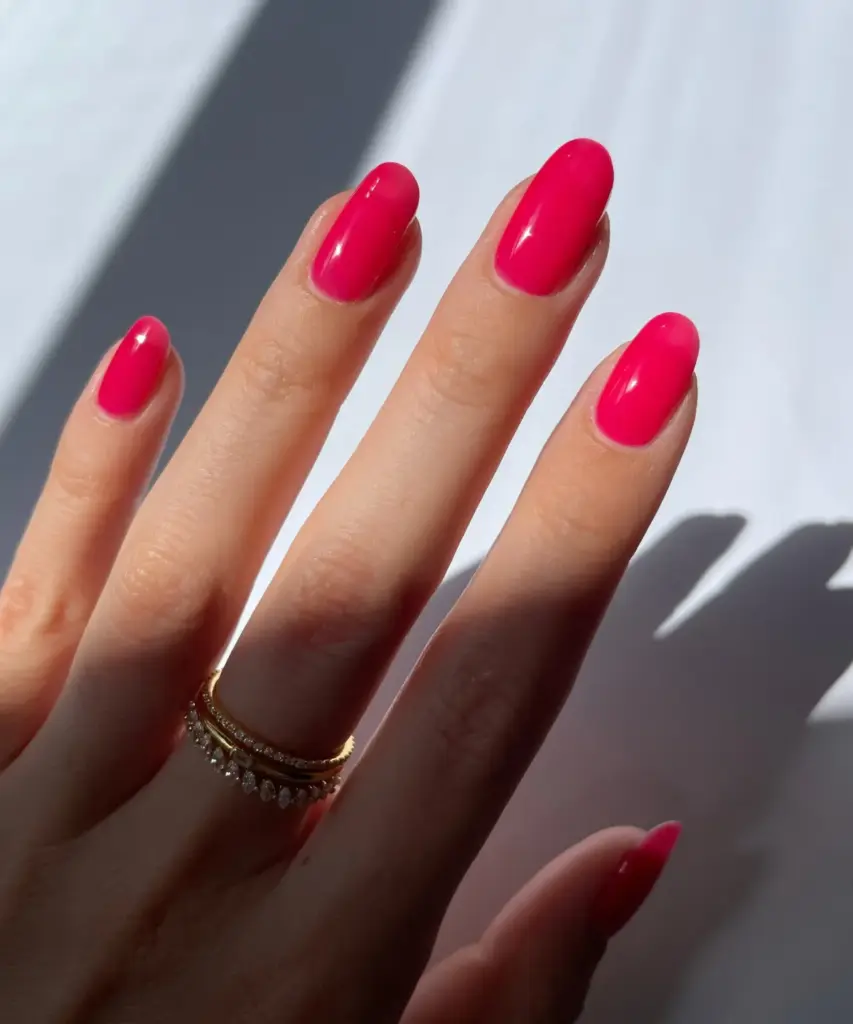
Executive Overview
In the age of hyper-curated social media feeds, flawless macro-shots, and digitized aesthetic perfection, a subtle yet pervasive psychological phenomenon has taken root: “Nail Anxiety.”
What was once a simple, relaxing self-care ritual—visiting the local nail salon for a fresh set of acrylics, gels, or intricate nail art—has, for a growing segment of the population, transformed into a source of acute stress, performance pressure, and emotional turmoil. Across platforms like TikTok, where the hashtag #nailanxiety has amassed tens of thousands of views, users are increasingly opening up about an unexpected emotional toll. From the dread of speaking up when a technician misses the mark to the obsessive perfectionism of DIY creators who cannot tolerate a single displaced micro-line, the psychological weight of our fingertips has never been heavier.
This investigative report examines the driving forces behind nail-related anxiety. By exploring the perspectives of prominent nail artists, beauty creators, and dermatological experts, we dissect how the pursuit of aesthetic perfection intersects with modern control issues, societal gender norms, and the therapeutic paradox of nail care. Ultimately, this piece offers a comprehensive look at how a seemingly superficial beauty routine became a mirror for our deepest anxieties—and how individuals are reclaiming control over their hands.
Detailed Chronology: The Evolution of Salon Culture to Digital DIY
To understand the current anxiety surrounding manicures, one must trace how the relationship between consumer and nail technician has shifted over the past decade.
Phase 1: The Traditional Salon Experience
Historically, the nail salon was viewed as a sanctuary—a communal space where patrons relinquished control to trained professionals. Clients sat back, flipped through magazines, and trusted the expertise of the technician. While minor discrepancies occurred, the cultural expectation was polite acceptance. Speaking up was often discouraged by the social dynamic of the salon, leading many to accept nail art or colors that did not quite match their internal vision.
Phase 2: The Social Media Aesthetic Boom
As platforms like Instagram and TikTok popularized hyper-detailed nail art—ranging from 3D chrome details to glass-shard aesthetics—the standard for what a manicure should look like skyrocketed. Photos were meticulously lit, color-corrected, and smoothed out. This created an impossible benchmark for everyday reality.
For prominent nail content creator Sarah Haider (known to her half-million Instagram followers as @heluviee), the gap between salon reality and digital perfection became a breaking point.
"Every time I came home from the salon, I immediately had to reach for the nail file," Haider recalls.
Unable to shake the frustration of a manicure failing to mirror the exact vision in her head, Haider—like many others—transitioned away from traditional salons entirely, opting instead for at-home DIY manicures where she could control every variable.
Phase 3: The Birth of the DIY Counter-Movement
Today, a thriving subculture of creators manages their own nail routines entirely. Yet, as our chronological dive shows, moving the workspace to the kitchen table did not eradicate stress; it simply shifted its nature. The anxiety of pleasing a salon technician was replaced by the crushing self-criticism of the solo perfectionist.
Supporting Context & Metrics: The Anatomy of Nail Anxiety
Nail anxiety manifests in diverse ways, reflecting broader cultural anxieties surrounding self-presentation, bodily autonomy, and modern stressors.
1. The Perfectionism Paradox
For Jess Brush, a nail-art creator known online as @nailbetch, visiting a salon induces a specific type of social paralysis. As a self-described perfectionist, Brush enters appointments with an exact blueprint in mind. However, fear of being perceived as "too difficult" or "too picky" prevents her from speaking up.
"I don’t want to micromanage anyone," Brush explains. "But watching someone else work on my hands makes me deeply unsettled."
This fear of judgment is compounded by the digital landscape. Dr. Dana Stern, a prominent board-certified dermatologist and nail specialist, notes a clear generational shift in how people view their hands.
"I’ve observed that younger generations are hyper-fixated on their physical appearance," Dr. Stern states. "This seems directly tied to the heavily edited, flawless images we are constantly bombarded with. The desire for ‘perfect’ nails is a prime manifestation of this phenomenon."
Dr. Stern reports treating an increasing number of patients paralyzed by insecurity regarding their nail beds, cuticles, and overall hand aesthetics—with some experiencing profound social anxiety, particularly during intimate scenarios like dates.
2. Physical Discomfort and Loss of Bodily Autonomy
Anxiety in the nail salon is not strictly aesthetic; it is frequently tactile. The use of aggressive tools, such as electric files (E-files) for cuticle remediation, has left physical scars on unsuspecting clients.
Abe, a well-known male nail content creator (@abe.nailbabe), recalls a harrowing early experience:
"During my first professional manicure, the technician used an electric file on my cuticles. Weeks later, when I removed the polish, I could clearly see where the file had gouged a line directly into my nail plate. It had to grow out entirely."
While Abe does not hold malice toward the salon industry, the incident forced him to establish strict boundaries. Today, he explicitly requests that his cuticles remain untouched. His experience highlights a broader issue: many consumers are unaware that they possess the right to decline specific procedures, often suffering in silence out of fear of causing friction.
3. Navigating Gender Norms and Public Scrutiny
For Abe, nail anxiety carries an additional, societal layer. As a man wearing elaborately painted, artistic manicures, entering a traditionally female-coded space like a nail salon can be intimidating.
"I feel anxious walking into the salon," he admits. "And outside the salon, the world isn’t always tolerant."
Abe notes the constant, exhausting hyper-awareness required to keep his hands visible rather than instinctively hiding them in his pockets—a defense mechanism born of fear regarding public judgment. Furthermore, as his online platform grew, a new fear emerged: the terror of breaking a nail. Maintaining long, natural nails required a complete rewiring of his physical movements, forcing him to consciously calculate every interaction with the physical world to protect his art. He eventually adopted shorter, more functional lengths to preserve his peace of mind.
Official Statements & Expert Insights
To contextualize the psychological mechanisms driving nail anxiety, industry leaders and medical professionals offer vital clinical perspectives.
- On the Psychology of Control:
Jess Brush acknowledges that her obsessive nail routine is fundamentally driven by a deep-seated need for control. While control can tip into frantic self-punishment when a mistake occurs, both she and Sarah Haider agree that the hyper-focus required for nail art can serve a dual purpose—acting simultaneously as a stressor and an outlet. - On Dermatological Impacts and Habits:
Dr. Stern emphasizes that compulsive nail behaviors—such as biting, picking at cuticles, or skin-picking—are frequently tied to emotional states like anxiety or boredom. Interestingly, Dr. Stern notes that a professional or well-maintained DIY manicure can act as a behavioral deterrent: "When you’ve invested time, effort, and money into a set of nails, you are far less likely to destroy them." Conversely, for those who pick out of sheer under-stimulation or restlessness, barrier methods—such as wearing gloves while watching television or applying protective bandages—can interrupt the subconscious cycle.
Future Outlook: Healing the Relationship with Our Hands
As the conversation around mental health continues to destigmatize everyday struggles, "nail anxiety" is stepping out of the shadows of TikTok and into mainstream wellness dialogues. The future of nail care is trending away from unattainable perfectionism and moving toward mindfulness, self-compassion, and structural boundaries.
Actionable Strategies for Managing Nail Anxiety
- Embrace the Power of "No":
Consumers must remember that they hold ultimate authority over their bodies. Whether requesting that an E-file be put down or asking to skip cuticle trimming entirely, clear and polite communication is well-received by professionals who ultimately want a satisfied client. - Inspect Before Curing:
For those utilizing gel manicures, Sarah Haider recommends utilizing the window of opportunity before curing the polish under a UV/LED lamp. "Check your nails before the artist asks you to put your hand under the light," she advises. Wiping away wet polish is effortless; correcting a fully cured, hardened gel layer requires abrasive filing. - Reframing Mistakes as "Nail Fails":
Creators like Abe are championing imperfection by intentionally sharing their "nail fails" online. By normalizing smudged lines, clumsy applications, and off-days, the community is dismantling the toxic myth of effortless perfection. - Aromatherapy and Cuticle Care as Mindfulness:
Rather than treating nail care as a high-stakes performance, many are returning to its roots as a tactile, repetitive form of meditation. Applying cuticle oil whenever the urge to pick arises redirects nervous energy into an act of physical nourishment.
Ultimately, as Abe wisely points out to anyone paralyzed by minor nail flaws: "Let’s be honest: nobody is ever going to look at your nails that closely." By shedding the armor of perfectionism, the beauty community is slowly transforming the manicure from an anxious cage into a genuine canvas of self-expression.